


A Right-Wing Turn and a Power Struggle in the Czech Republic.
In October 2025, the Czech election brought victory to the party of Andrej Babiš. A Eurosceptic, three-party coalition is preparing to take the helm of the country. Still, the formation of the government is accompanied by unexpected tension: President Petr Pavel is delaying Babiš’s appointment until the billionaire politician clarifies his business interests. The situation simultaneously signals a right-wing shift in Czech politics and a new chapter in the long-standing power struggle between Prague Castle and the government – a battle whose stakes include not only Babiš’s political future but also the direction of Visegrád cooperation.
In the October 2025 parliamentary election, the party of former prime minister Andrej Babiš, ANO, achieved a commanding victory, securing 80 seats with 34.5% of the vote. Since it did not gain an absolute majority, Babiš – through adroit political bargaining – brought two smaller right-wing parties to his side: the anti-immigration, EU-sceptic Freedom and Direct Democracy party, and the Patriot-affiliated Motorcyclists party.
However, the government formation process did not proceed smoothly. Babiš submitted the list of the new cabinet to President Petr Pavel immediately after the election, but one nominee quickly got stuck in the presidential filter. Filip Turek, the honorary president of the Motorcyclists, who had become infamous for racist and homophobic online posts and even a photograph of a Nazi salute, was slated to become foreign minister, triggering immediate public outrage. Pavel indicated that he was unwilling to appoint Turek to the head of the foreign ministry under such circumstances.
The Motorcyclists reacted at the last moment by reshuffling roles: Turek was re-designated as minister of the environment, while the party leader was nominated as foreign minister. Yet the manoeuvre did not lift the presidential veto: Pavel made it clear that because of Turek’s past extremist expressions, he considered him unfit for any governmental position whatsoever.
Pavel–Babiš: A New Chapter in an Old Conflict
The formation of the new government is hindered by an unusual tug-of-war for power between Prague Castle and the incoming prime minister. President Petr Pavel demands that Babiš publicly clarify, before his appointment, how he will eliminate the conflict of interest between his business empire (the Agrofert conglomerate) and the office of the prime minister.
Babiš, however, argues that, under the law, it is sufficient for him to resolve the issue within 30 days of taking office, and therefore, the president is overstepping his constitutional authority.
The stalemate has dominated the Czech press for weeks; many regard Pavel’s tough stance as unprecedented, though Czech history is full of similar clashes between presidents and prime ministers. During the First Republic, the conflicts between Masaryk and Kramář, Edvard Beneš and Milan Hodža (and later communist Klement Gottwald), or the later frictions between Václav Havel and Václav Klaus, as well as the disputes involving the directly elected Miloš Zeman, all show that institutional friction between Prague Castle and the prime minister’s office is a recurring phenomenon.
The Great Comeback
Andrej Babiš, the billionaire businessman-turned-politician, served as the prime minister of the Czech Republic from 2017 to 2021. His career has been accompanied by several conflict-of-interest scandals (such as EU subsidies granted to his own company, Agrofert), yet his outsider style won him broad voter support.
In 2021, Babiš was pushed out of power, and in early 2023, he also lost the presidential election to Petr Pavel, leading many to predict the end of his political career. His return this year, however, has proven that his support base remains stable: the Czech left has disappeared, and politics has split into two camps centred around Babiš (pro-Babiš and anti-Babiš).
In the 2025 campaign, he capitalised on voter dissatisfaction, promising financial relief (tax and utility bill reductions). Although he struck a Eurosceptic tone – with Brussels-critical rhetoric and rejection of migration quotas – he took care not to question the country’s Euro-Atlantic orientation: together with his coalition partners, he affirmed that Czech EU and NATO membership is not up for debate.
It has been suggested that because of the conflict-of-interest dispute, he might nominate a confidant as prime minister in his stead. Still, according to veteran political analyst Jiří Pehe, Babiš “is not the kind of man who would give up his prime-ministerial ambitions.” Babiš does not hide his historical aspirations: he seeks to assert his influence not only at home but also in Central Europe – including reshaping cooperation among the Visegrád countries.
A Conservative Axis on the Horizon?
Babiš’s new government brings change not only domestically but also across Central Europe. In recent years, the Visegrád Group (V4) countries have followed divergent paths, but the Czech election result now suggests renewed convergence among the four.
Immediately after his victory, Babiš signalled that the Czech Republic must once again cooperate closely with Slovakia and Hungary, “restoring the functionality of the V4.” This vision is shared by his two political allies, the similarly EU-critical Slovak prime minister Robert Fico and Hungarian prime minister Viktor Orbán. The cooperation among the three governments may represent a new force within the EU – the coalition agreement itself states that the Czech government intends to strengthen relations with these Visegrád partners.
The new Prague cabinet is likely to align with the existing common positions of Warsaw, Budapest, and Bratislava, which reject mandatory EU migration quotas, tightening climate policy, and further expansion of EU competences.
Poland, however, remains governed by a liberal coalition unlikely to join this approach – thus the V4 will likely function more as a trilateral alliance, a kind of “V3.” Even so, it is a significant shift that Prague re-enters the V4 mainstream: Czech foreign policy will likely strike a more national tone, aligning with Budapest and Bratislava.
President Pavel, however, has signalled that he will not approve any EU- or NATO-opposed steps. The Babiš government will therefore change the tone and emphasis primarily – likely reducing support for Ukraine and criticising Brussels more sharply – but the Czech Republic’s Western-aligned strategic orientation will remain firmly in place.
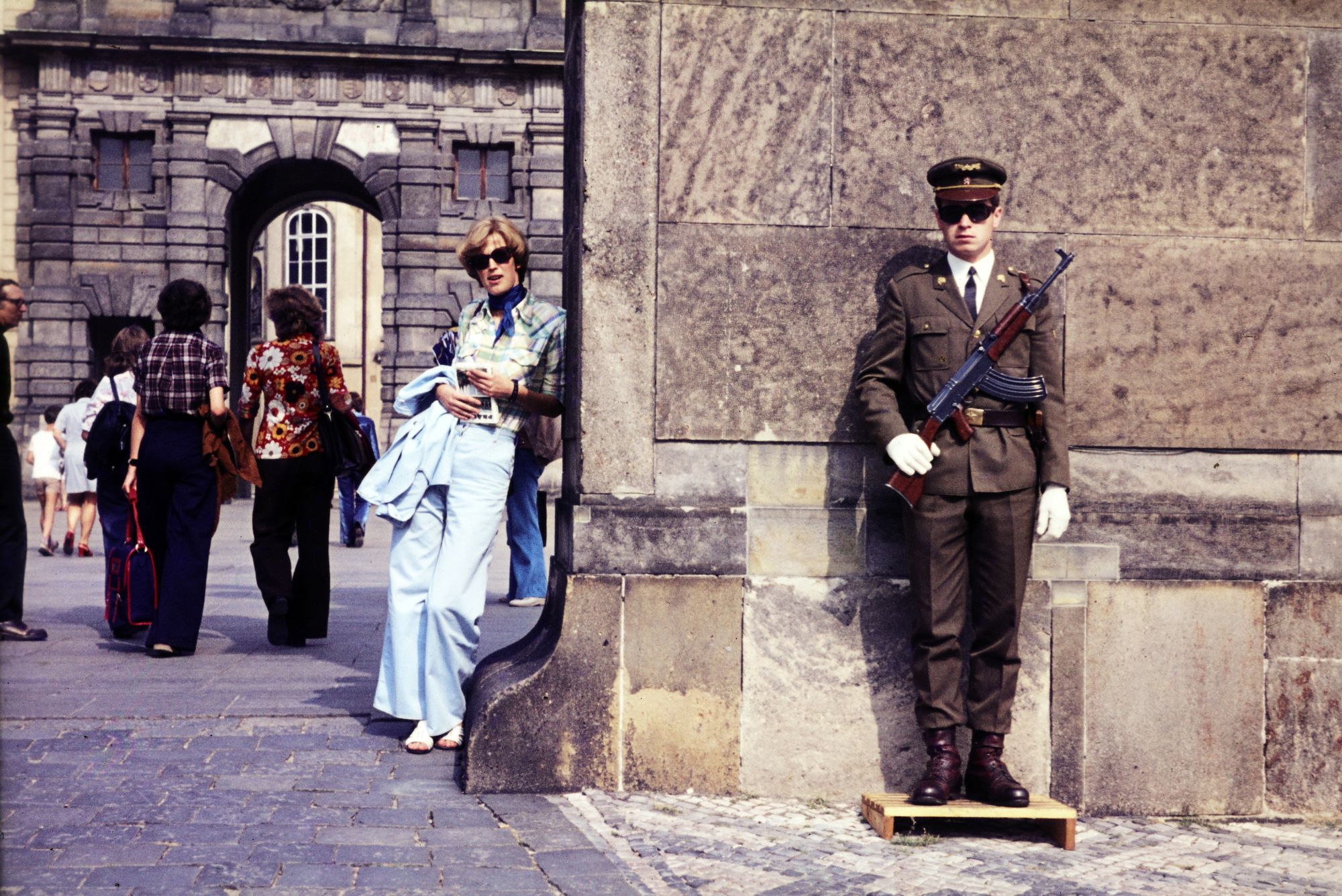
Opening image: Hrádzin, Prague, 1976 / Fortepan / András Mezey