


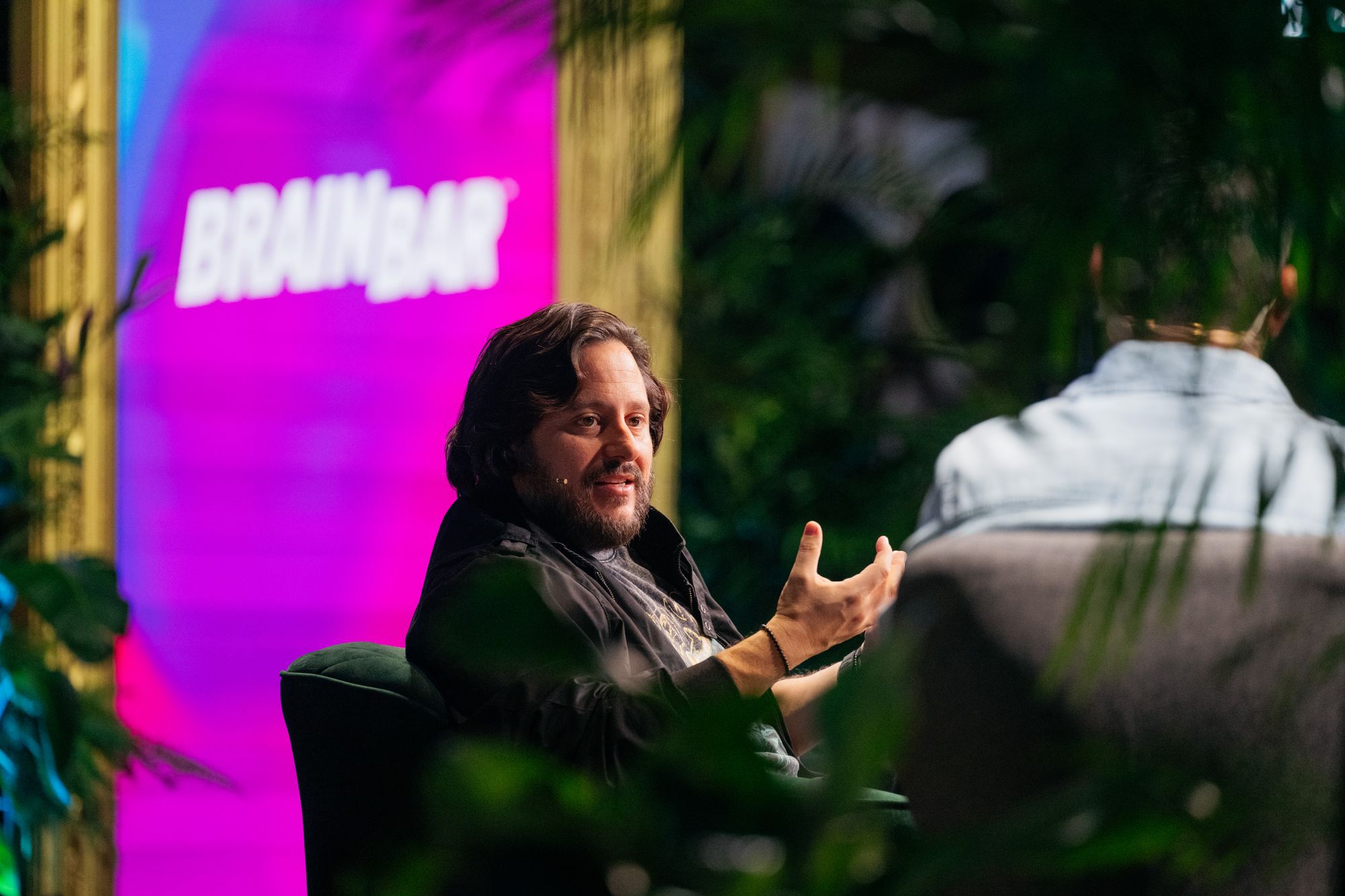
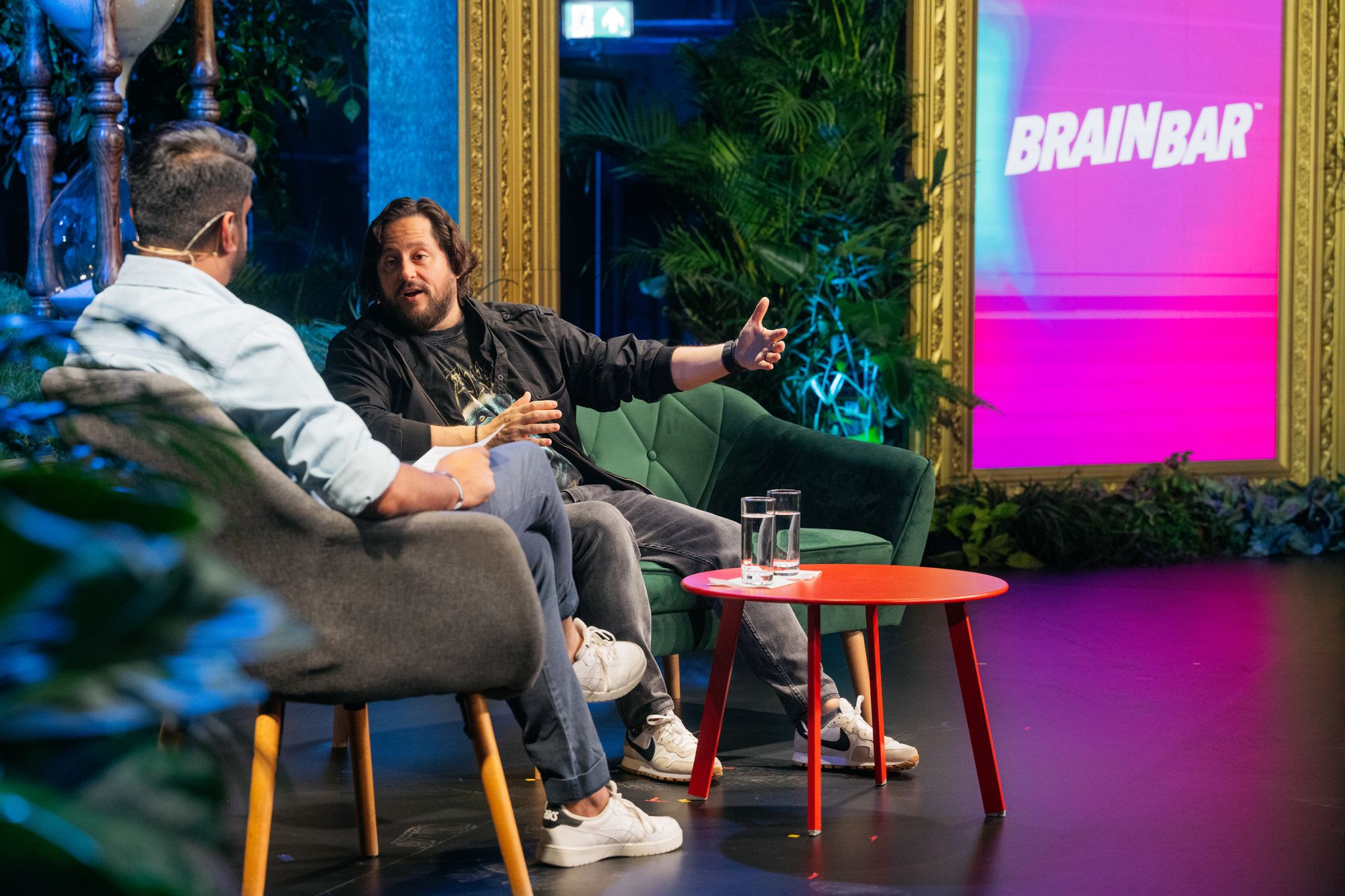
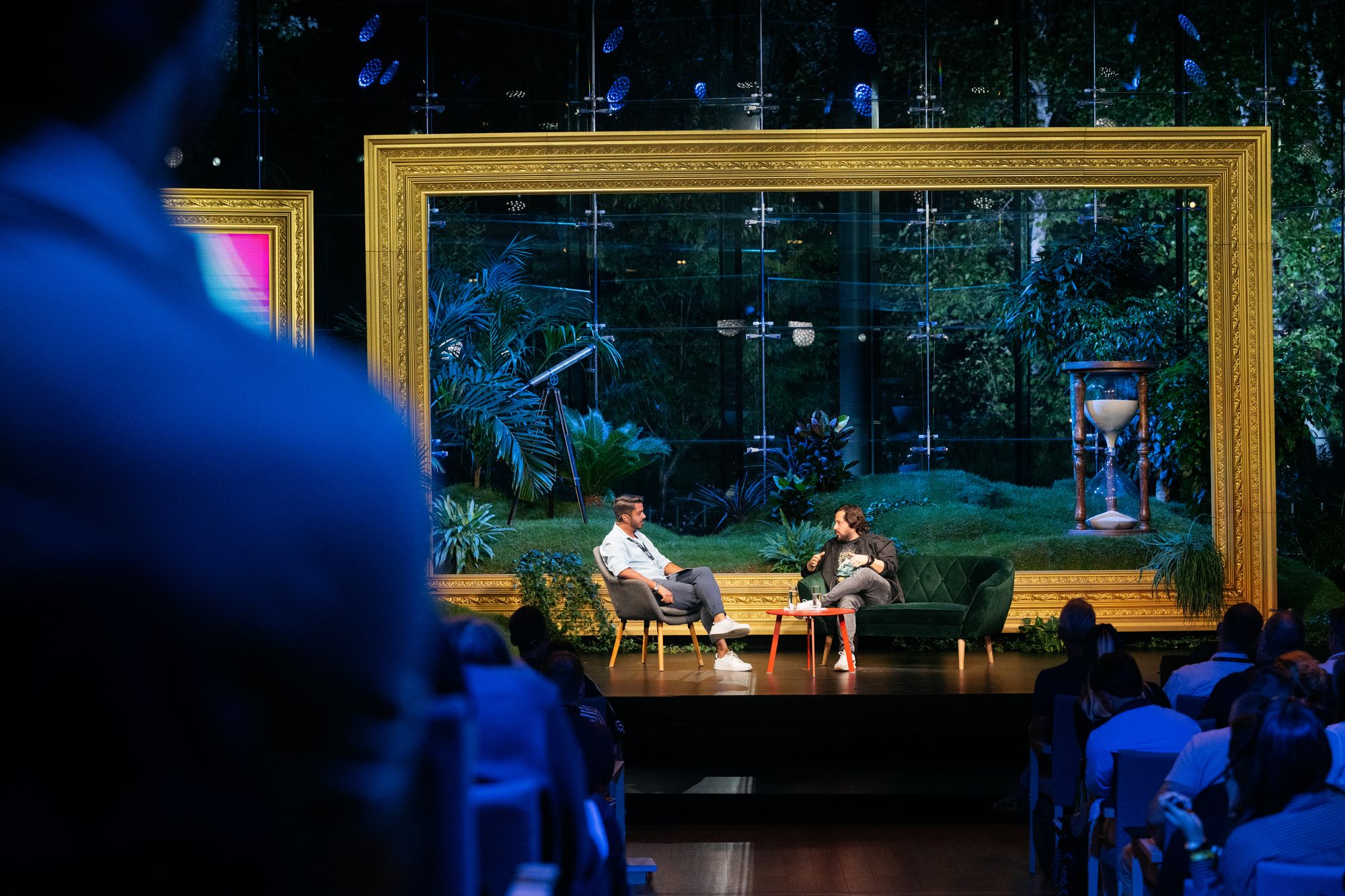
As part of the Brain Bar festival, serial entrepreneur and co-founder of Colossal Biosciences Ben Lamm arrived in Budapest on September 18-19. As the leader of one the world’s most well-known de-extinction projects, his name may sound familiar from the headlines about reviving the dire wolf, which vanished more than 12,000 years ago. But bringing back extinct species is only one part of Colossal’s long-term mission: Ben Lamm dreams of a world where no living species ever again drifts to the edge of extinction.
Hardly any adult who grew up in the ’90s can say that Jurassic Park wasn’t a defining cinematic experience. The resurrection of creatures that once walked the Earth is a fantasy whose allure spans generations. We’ve all wondered: what would happen if those animals – now familiar only from stories and books, but once rulers of the prehistoric world – were to return? What must it have felt like for the first humans to encounter woolly mammoths or saber-toothed tigers?
For Ben Lamm, a Silicon Valley entrepreneur – and, through him, for modern humanity – this dream has now come within tangible reach. Thanks to the rapid progress of genetic technologies, we have never been closer to the reappearance of megafauna on Earth. Yet this bold proposition raises countless questions, which Ben Lamm set out to address in detail in an exclusive roundtable discussion.
“The most important thing I learned in school was to dare to ask questions,” Lamm recalls. “I never thought of myself as an expert in software, artificial intelligence, or biotechnology. My secret has always been surrounding myself with the best people and focusing on asking them the right questions. Curiosity has been my compass.”
That same insatiable curiosity drives Colossal’s research today – from reviving long-lost species like the woolly mammoth or the dodo, to developing tools that can protect existing biodiversity. However unbelievable it may sound, Lamm insists that the technology already exists – and now is the time to use it in service of protecting our planet.
Why de-extinction?
For Lamm, reviving extinct species is not about nostalgia. “It will always be cheaper to save a species that still exists than to bring one back from extinction.” he explains. “But extinction is happening so quickly that for some keystone species, intervention will be necessary. At the same time, existing technologies, like vaccines and genome engineering – can already be applied to protect endangered animals today.”
As an example, he points to Colossal’s partnership with the Baylor College of Medicine, where researchers are developing a vaccine against elephant endotheliotropic herpesvirus (EEHV), which kills more elephants each year than poaching. “This one vaccine alone could save more elephants than a hundred years of conservation work.” – Lamm says.
Myths and misconceptions
Much of Lamm’s work involves dispelling myths. Take the woolly mammoth: despite popular belief, it wasn’t just a creature of the Ice Age. “Mammoths lived for over 100,000 years in both cold and warm climates” – he says. “The idea that they could only survive in snow and ice is a Hollywood invention.”
Some critics dismiss Colossal’s animals as mere “hybrids.” Lamm responds: “Every living thing on this planet is a biological admixture – that’s how evolution works. What we do is identify the core genes that define a species and engineer those into its closest living relative. Whether you call it a mammoth or a cold-tolerant, shaggy elephant doesn’t matter. What matters is the positive ecological impact.”
Ethics first
Lamm and his team have been deliberate about creating ethical frameworks for their work. One of the first experts they recruited was Alta Charo, a leading bioethicist who had once argued passionately against bringing back the mammoth. “That’s exactly why we wanted her,” Lamm explains. “Skeptics force you to think hardest about the risks. It turned out to be one of the best decisions we made.”
From mammoths to sustainable innovation
While the headlines focus on mammoths and dodos, Colossal is in fact a large-scale technology company. Lamm compares the model to the Apollo program: “People only remember the images of the moon landing, but the real value was the innovation it produced. Colossal works the same way.”
In the future, they may also contribute to new breakthroughs such as endothelial stem cell cryopreservation. This method would make it possible to store cells from endangered or even extinct species long-term, allowing scientists far greater access to genetic diversity and expanding the possibilities for cloning experiments.
Education and inspiration
For Lamm, the project is as much about inspiring the future and advancing science. “NASA and SpaceX inspired generations of engineers and astrophysicists. I hope Colossal will inspire the next generation of biologists and genome engineers.”
Teachers already send the company drawings from children excited about mammoths and dodos, and Colossal is in discussions to integrate de-extinction into school curricula. “When kids see these animals, they don’t think of science fiction – they see hope for the future,” Lamm says.
Righting the wrongs of the past
Lamm is keenly aware of the cultural weight of his work. In New Zealand, for instance, Colossal is collaborating with the Ngāi Tahu Māori on the moa project – reviving a bird their ancestors once hunted to extinction. “The excitement comes from the chance to right the wrongs of the past,” he explains.
And while some critics worry that de-extinction distracts from existing conservation, the evidence suggests the opposite. Elephant conservation groups, for example, report increased funding since the mammoth project entered the headlines. “The mammoth has been a blessing for elephant conservation too,” Lamm notes.
Biology’s Moon Landing
The mission is noble, and the future is already knocking on our door. As Lamm puts it: “Biology deserves its own moon landing project. NASA and SpaceX gave humanity the stars – we want humanity to look at life on Earth again, with wonder and with responsibility.”
Photo: Brain Bar