


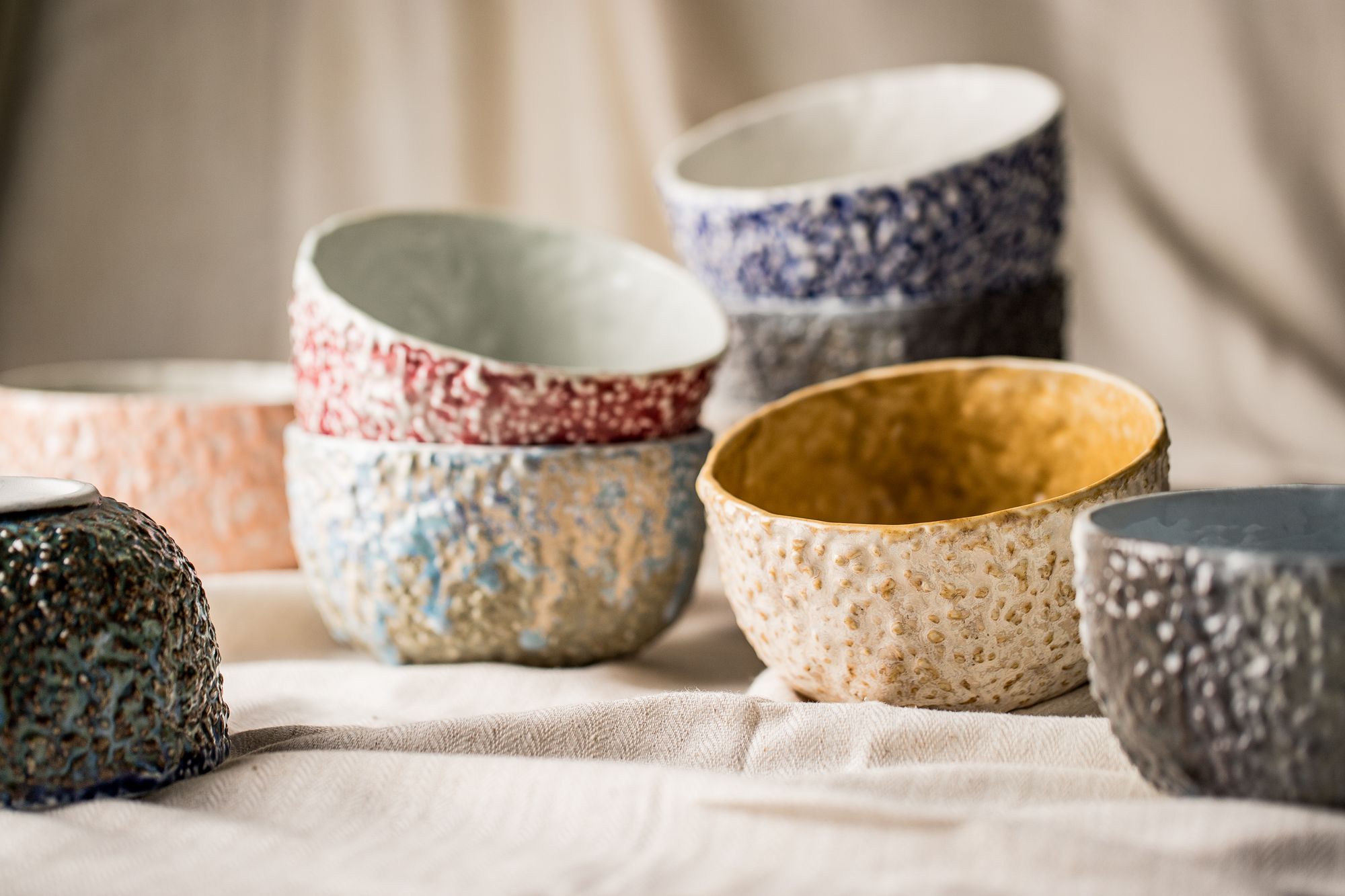
Luca Várady’s vocation does not trace the arc of a classical artistic career: she arrived in the world of ceramics from the field of gastronomy, where today she is building her own visual language. Her objects are both functional and sensitively reflect on the environments in which they are used. In our interview, she talks about the everyday life of her studio in Óbuda, creative freedom, and the ideas behind her creations.
Author: Nóra Ihász
What are you working on at the moment? What are your everyday days in the studio like?
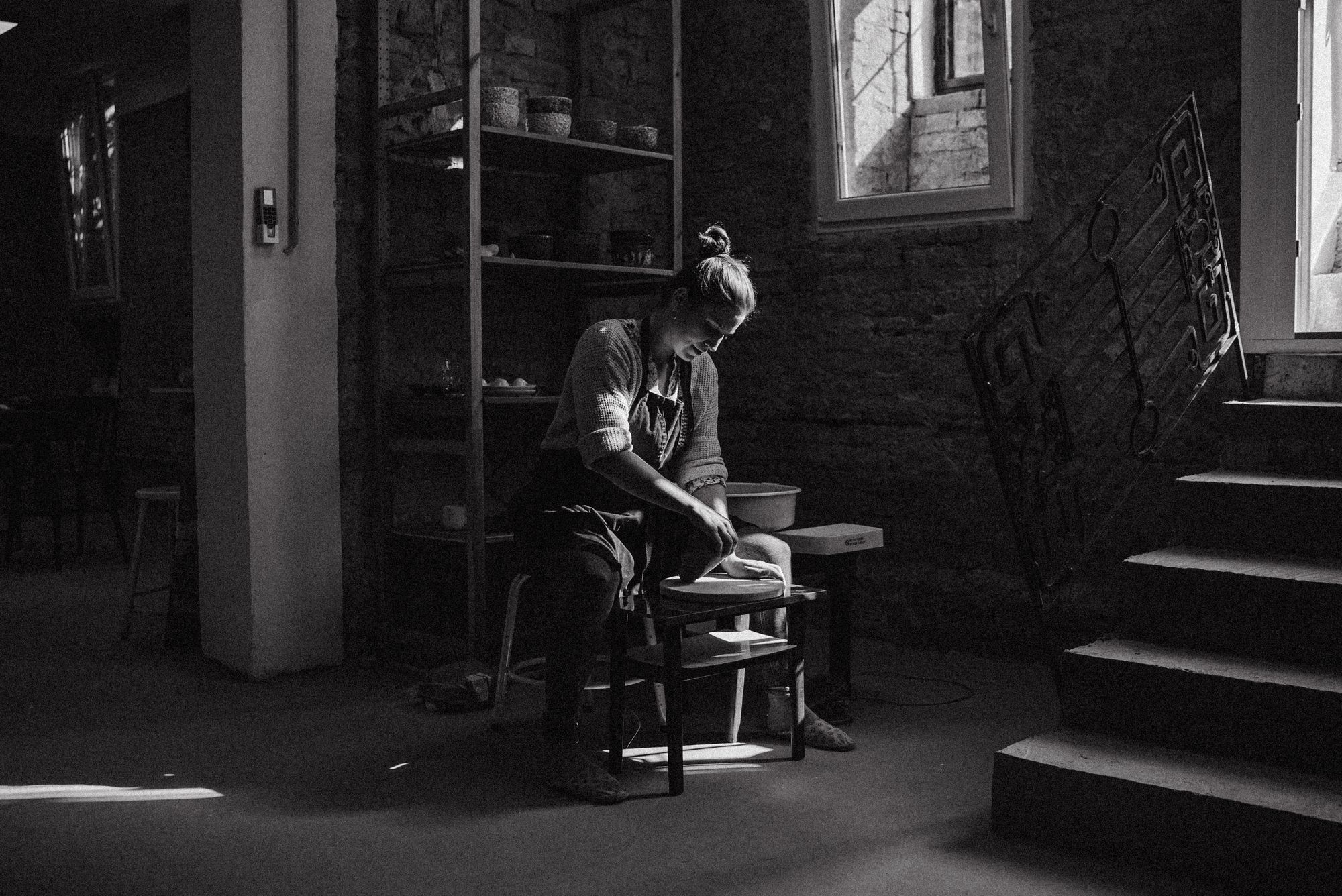
I share this space with a few fellow creators. Quite a lot of different things happen in parallel: I create my own ceramic collections and new pieces, fulfill commissions, hold workshops and a free school, and organize the Czakó Farmers’ Markets. Once a month I’m definitely there at the market as well, where my friend Afrodite Dömök usually helps with sales. Together we also run a vintage brand called Past Perfect, so we are no longer just friends, but creative and business partners too. Among other things, we collect glass objects, and now we are also blowing our own.
Beyond the market, I also appear at other venues and events, for example at Editory or at gatherings that I feel are somehow unique. We hold the aforementioned free school in the studio every Wednesday — people are welcome to come then, but with a pre-arranged appointment the space can be visited almost anytime.
Orders are constantly coming in, even from abroad — I’ve already had inquiries from London and South America — though people mostly find me locally. I’m not consciously targeting a specific market: I rather focus on realizing my own ideas. It’s important to me that ceramics remains a source of enjoyment and doesn’t turn into a mere production process.
Your path to ceramics came after hospitality. How did your career evolve?
My family has a rather realistic mindset, so before choosing a career — or around that time — the idea of pursuing an artistic path never really came up for me. At the same time, I always loved creating, doing crafts, and giving handmade objects as gifts. I attended Óbudai Árpád Gimnázium in the mathematics program (the school building is only two corners away from the studio — somehow all my paths lead back to Óbuda), and later continued my studies in viticulture and oenology.
I started working in kitchens at the age of fifteen; my first workplace was Symbol. In my free time, cooking was what I loved doing the most, so alongside university I also completed chef training. In the end I didn’t enter the wine industry — partly because of my histamine intolerance, which was discovered in the meantime — and I gradually shifted from wine toward food. Cooking and dessert-making were always creative processes for me. Meanwhile I became more and more immersed in pastry, which perhaps felt even closer to me than cooking. I found it exciting that desserts could also become complex, detail-rich plates.
At the same time, I also got a glimpse behind the scenes of the Bocuse d’Or, where I met a couple, Lili Zsabokorszky and Apor Püspöki, the founders of APLI Design, who created beautiful objects for the competitors. This was extremely inspiring: that was when I truly understood that unique object-making could also create a new quality within the world of gastronomy.
Beyond the creations of APLI Design, what other influences and experiences eventually guided you toward ceramics?
I received a great deal of inspiration from the gastronomic scene. For example, when we served food on the plates of Júlia Néma, visual artist and porcelain and ceramic designer, or when I saw at the Czifray competitions that chefs were already commissioning or making their own unique plates for the competition. This approach stayed with me deeply. Later, when I studied at Moholy-Nagy University of Art and Design, I felt as if I had grown wings. I was exposed to a huge amount of inspiration; among others, the work of our department head Edit Kondor had a major impact on me — she had previously designed plates for the Costes restaurant — as did master instructor and workshop leader Zsuzsa Bokor. Later, the International Ceramics Sculpture Triennale in Warsaw also gave me a great deal of inspiration.
How actively has gastronomy remained part of your life?
Although I happily bake for my family, that is completely different from working in a professional kitchen. Sometimes I step in to help restaurants or friends, for example at festivals — such as an event held at the Turay Family Winery, where I supported the Lokal at the Lake team. So this line is still gently present in my life, but it is no longer primary. I had to realize that it’s impossible to do everything at once: up to a certain point I function very efficiently under pressure, but I don’t want to overextend myself because that would come at the expense of quality.
How does the process of creating a commissioned ceramic collection work for you?
At the beginning, understanding the needs is always the most important thing: what the object will be used for, what kinds of dishes will be served on it, what motivates the chef. Some people give me complete creative freedom, while others arrive with more concrete ideas — sometimes choosing a direction based on my existing works, or sharing other inspirations with me as well.
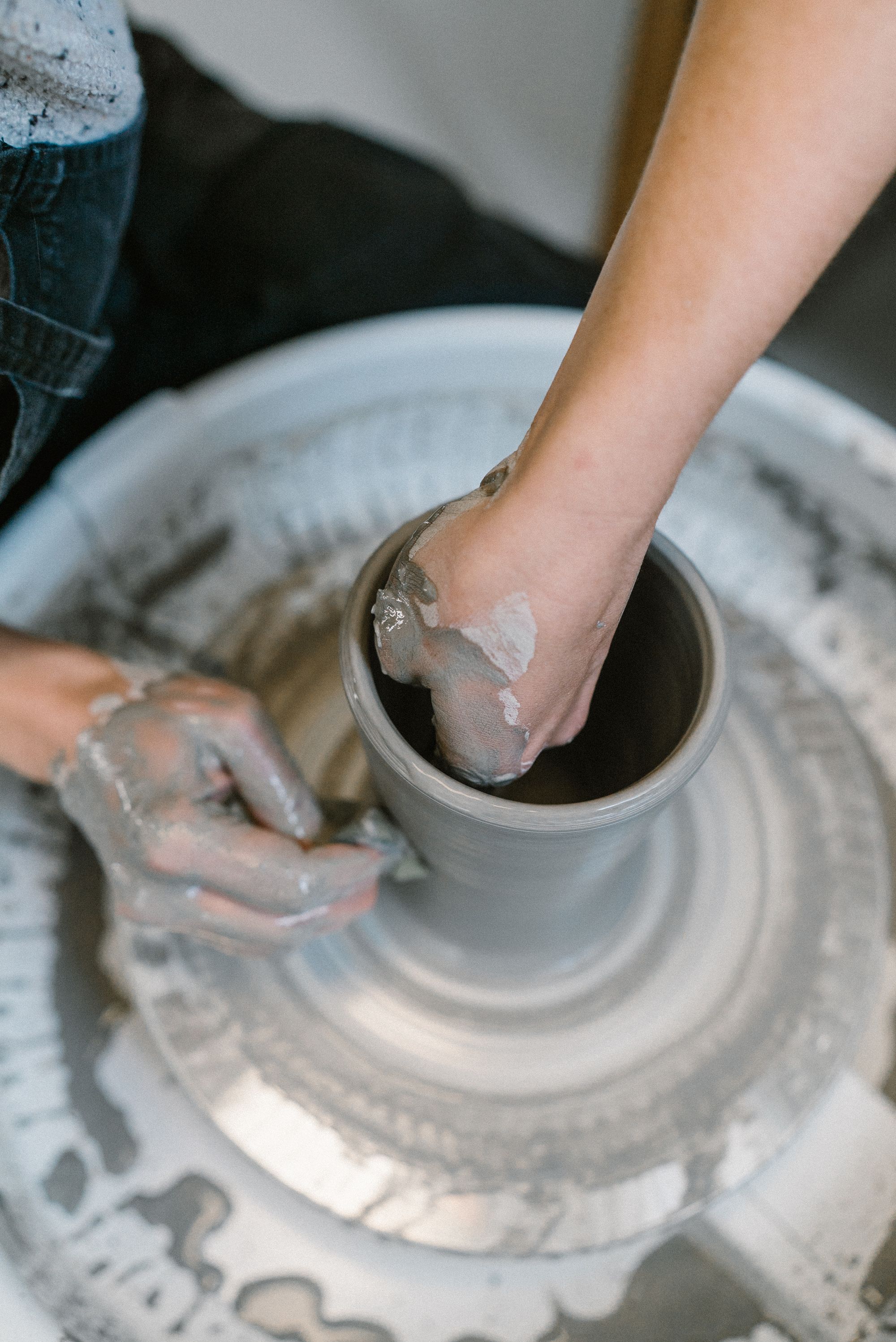
I work with many different techniques: porcelain, wheel throwing, casting, pressing. Once the concrete idea starts to take shape, I create prototypes or mock-ups that I receive feedback on. I always visit the location so I can see the interior and the spirit they represent — whether, for example, they prioritize seasonality and sustainable operation. Naturally, I also eat there, so I can experience the atmosphere they want to create. At the same time, very practical considerations also have to be taken into account: storage, stackability, ease of cleaning. These determine the final result just as much.
What happens to the objects after delivery?
It happens that every one or two years they come back with repeat orders if something needs replacing or if they want new pieces. In fact, it’s not uncommon for chefs to come to the studio and create themselves, which makes me very happy. I think it would be important for more people to see how much time and work stand behind these objects.
I also always keep a few pieces for myself so I can test them over the long term. I learn a lot from this. It’s a wonderful feeling to see my works again in restaurants or even on social media platforms. It’s also becoming increasingly common for guests to contact me because they encountered one of my objects in a hospitality venue.
Where can we currently encounter your ceramics, and what are you working on now?
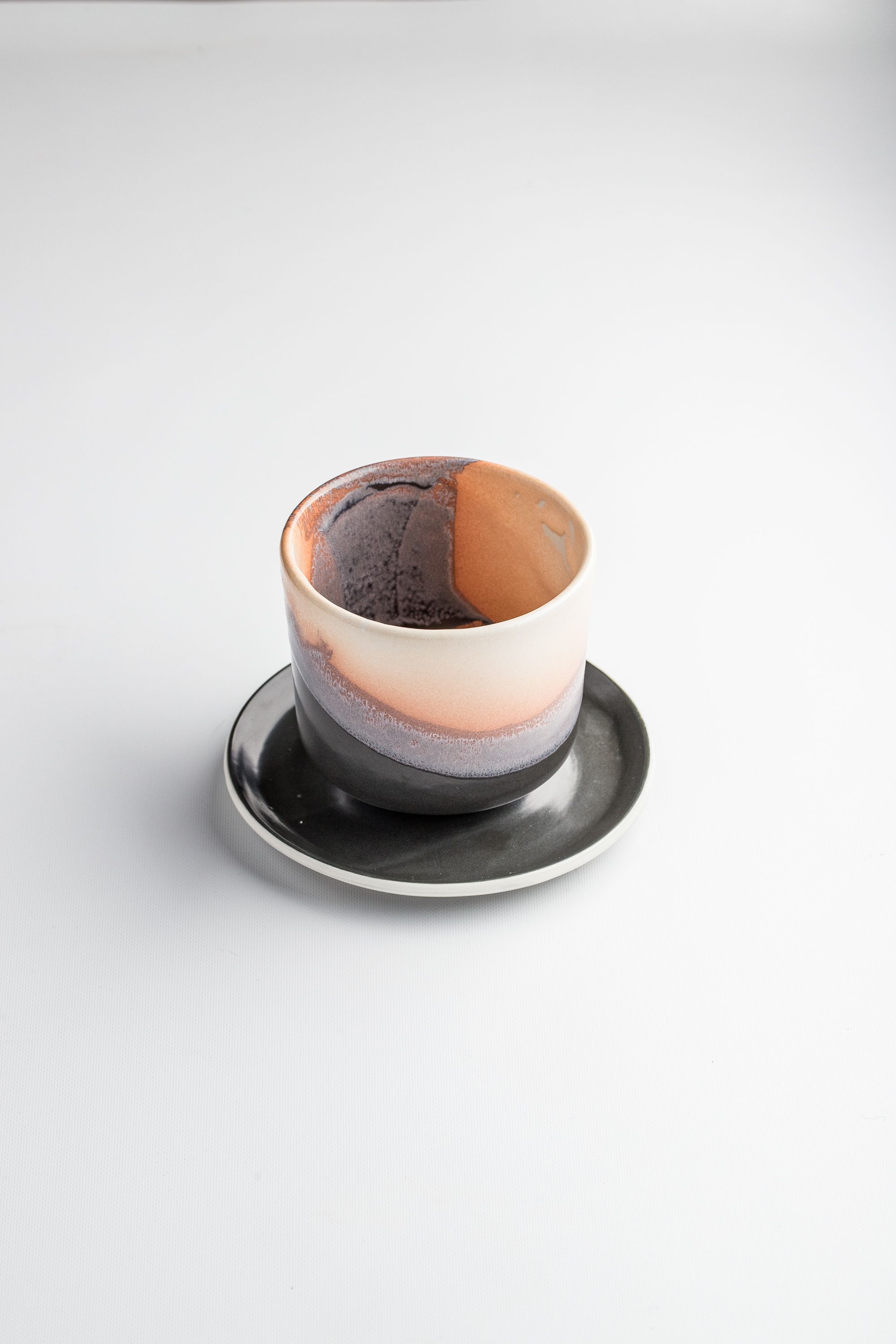
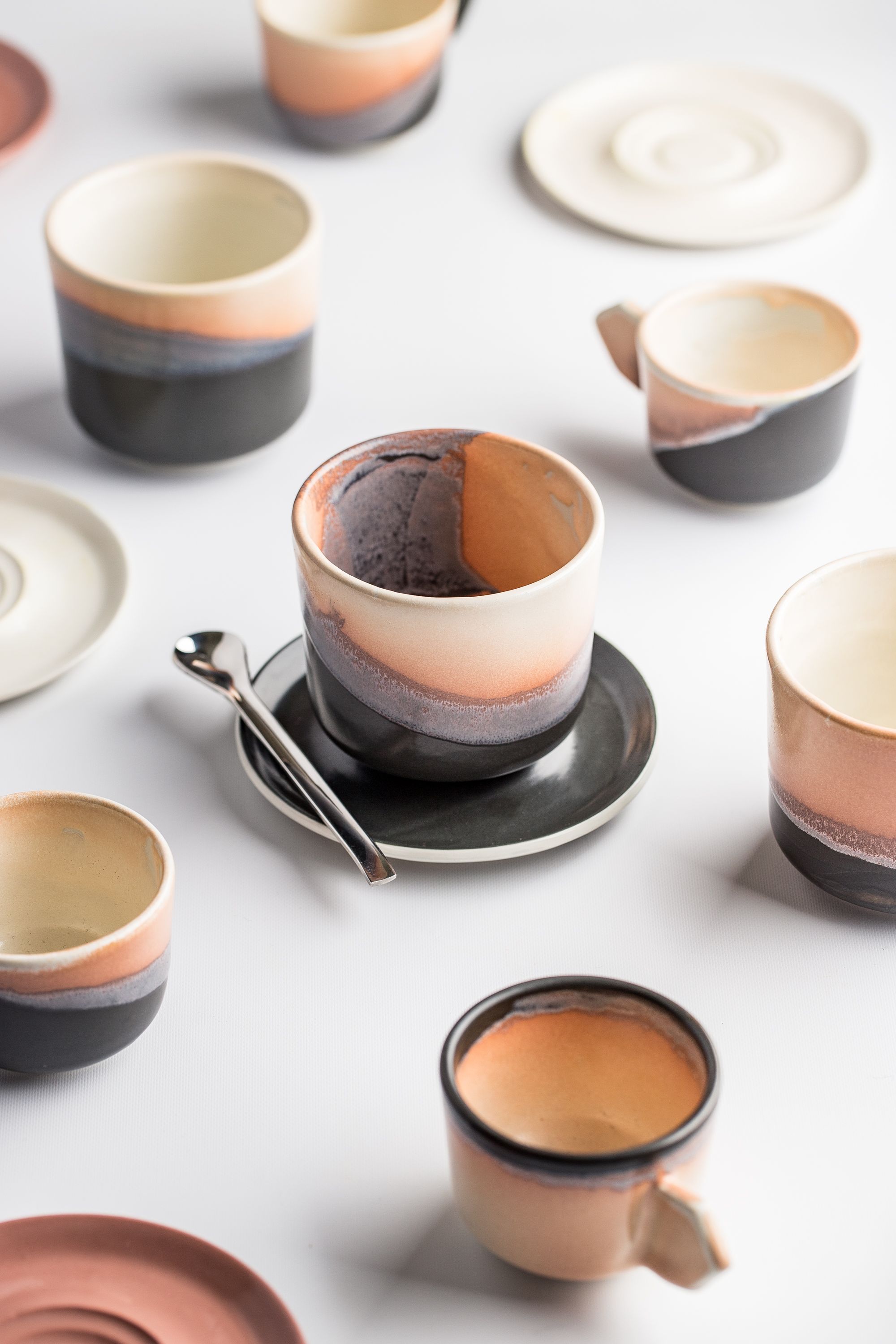
Among other places, at Mon Petit Dessert Boutique, Orient Café, and Lokal at the Lake; previously also at ENSŌ Budapest. At the same time, I also receive wedding commissions, and right now I’m participating in an exhibition as well: one of my mugs is on display at the “Coffee Is Brewing” exhibition at the Hungarian Museum of Science, Technology and Transport.
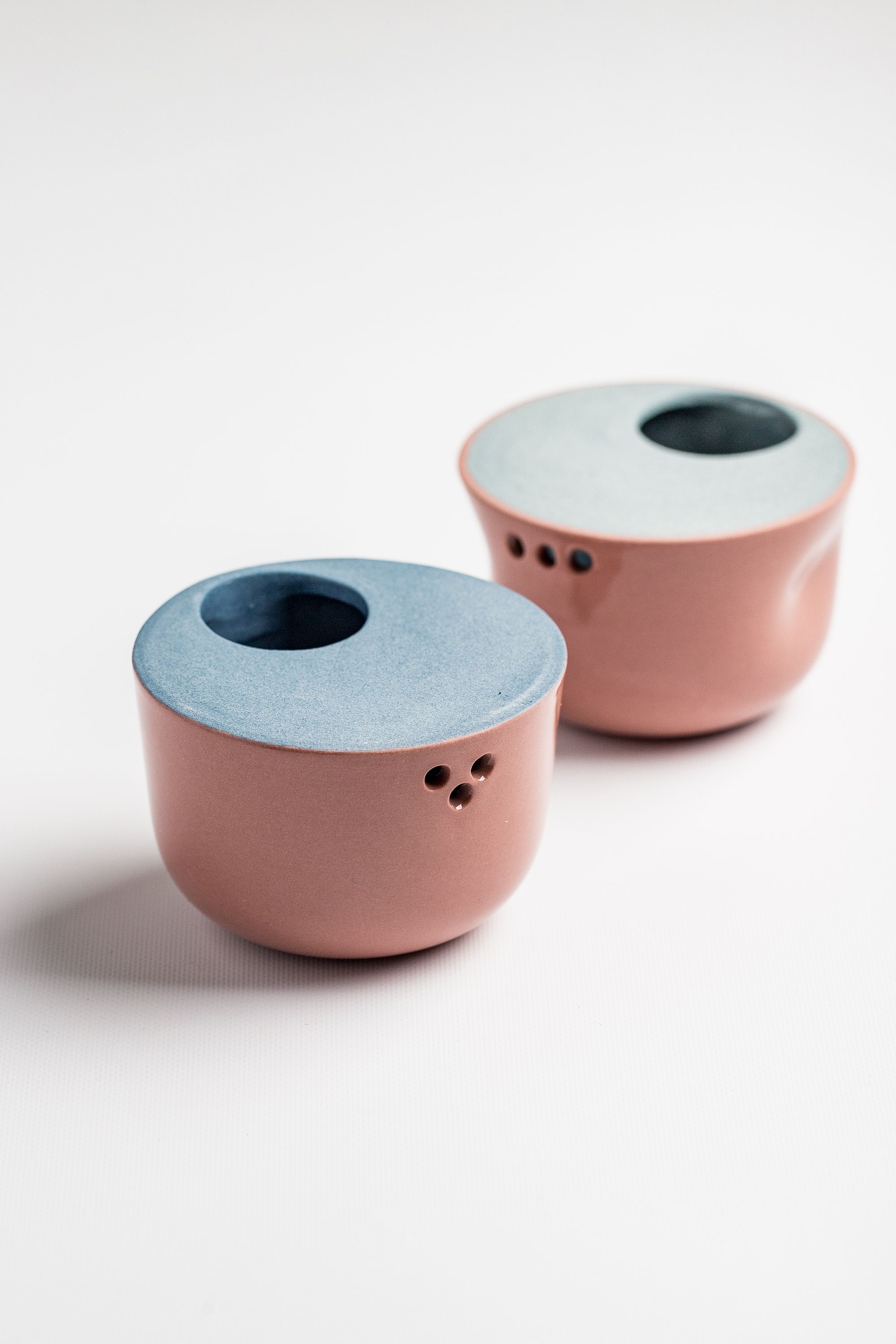
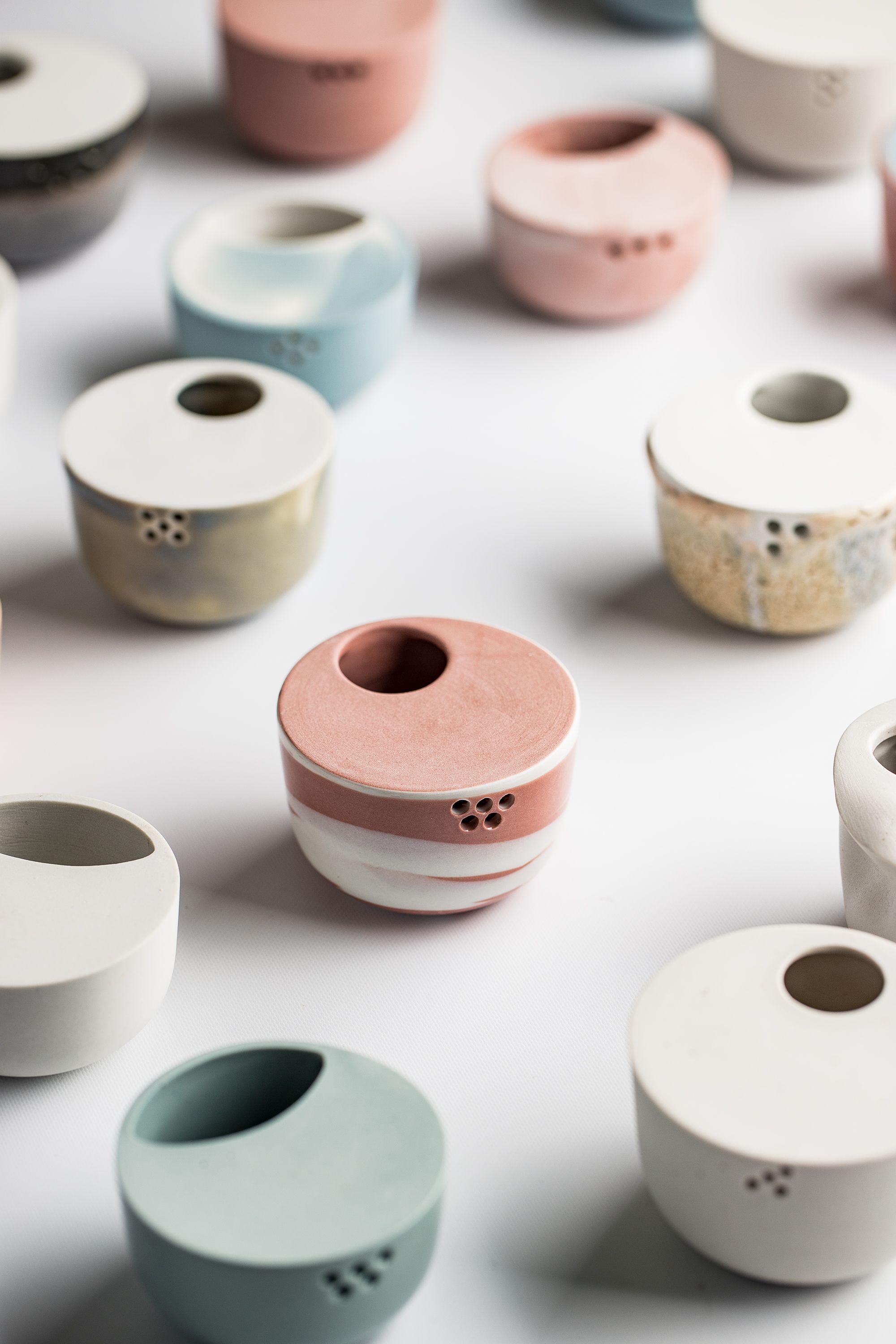
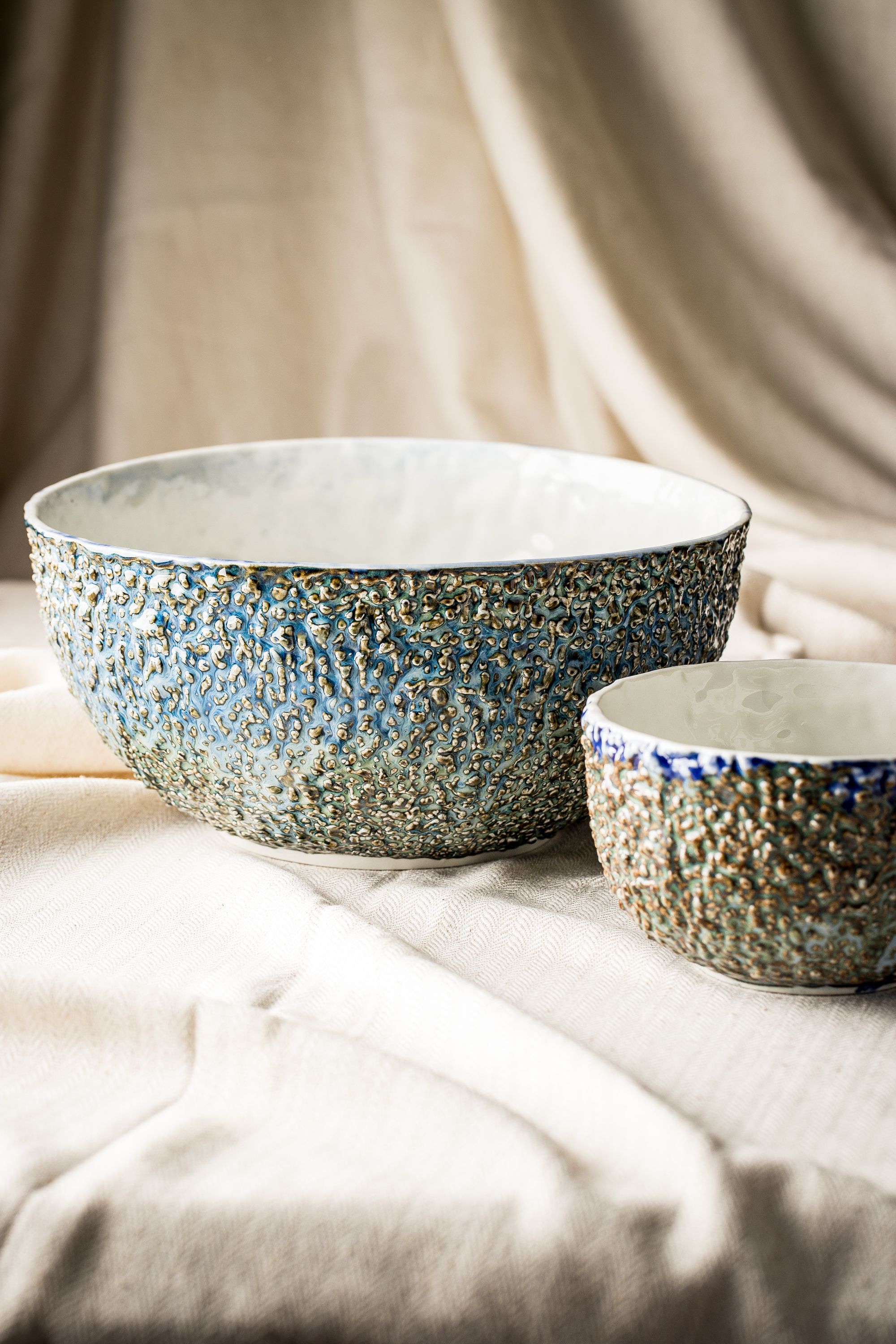
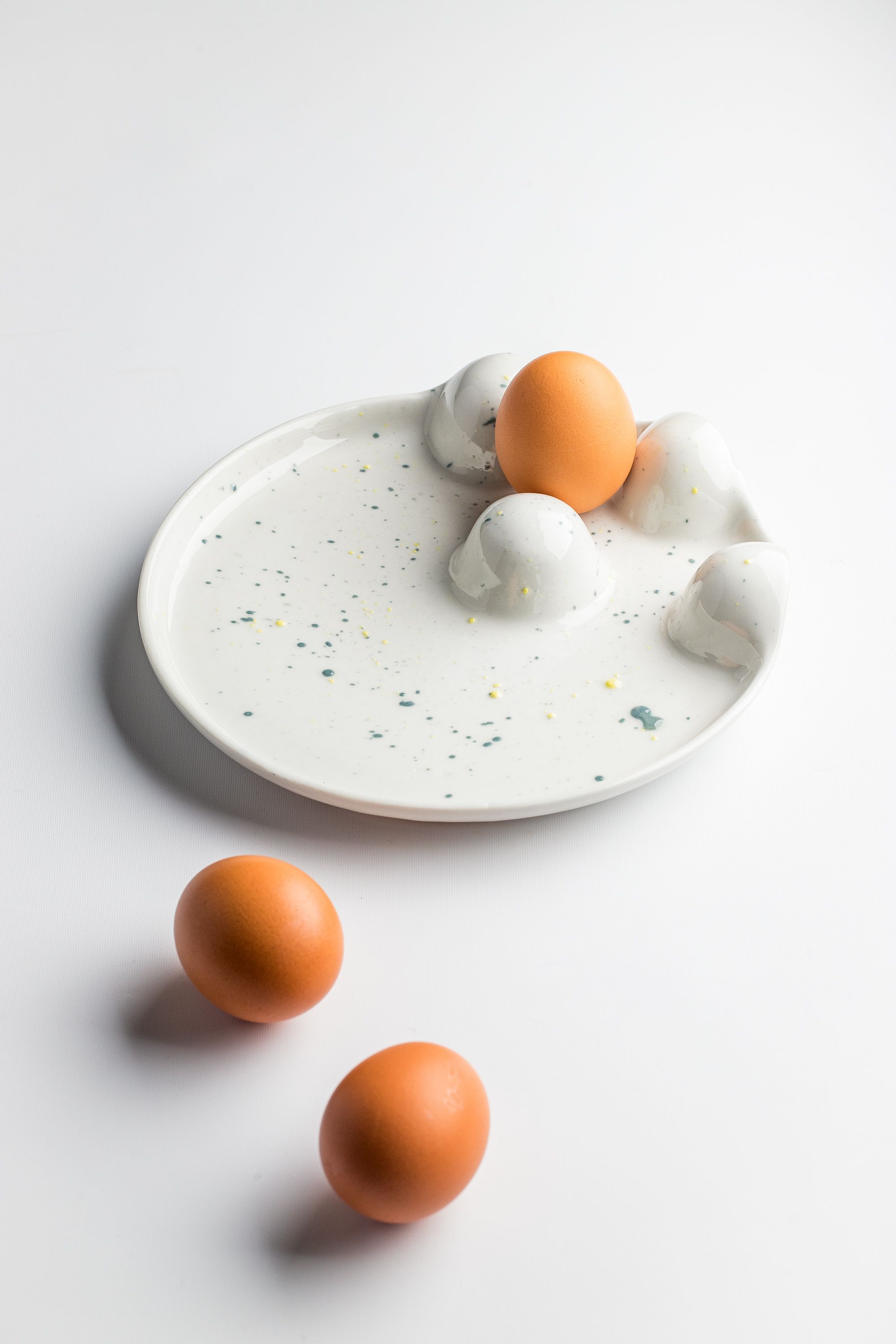
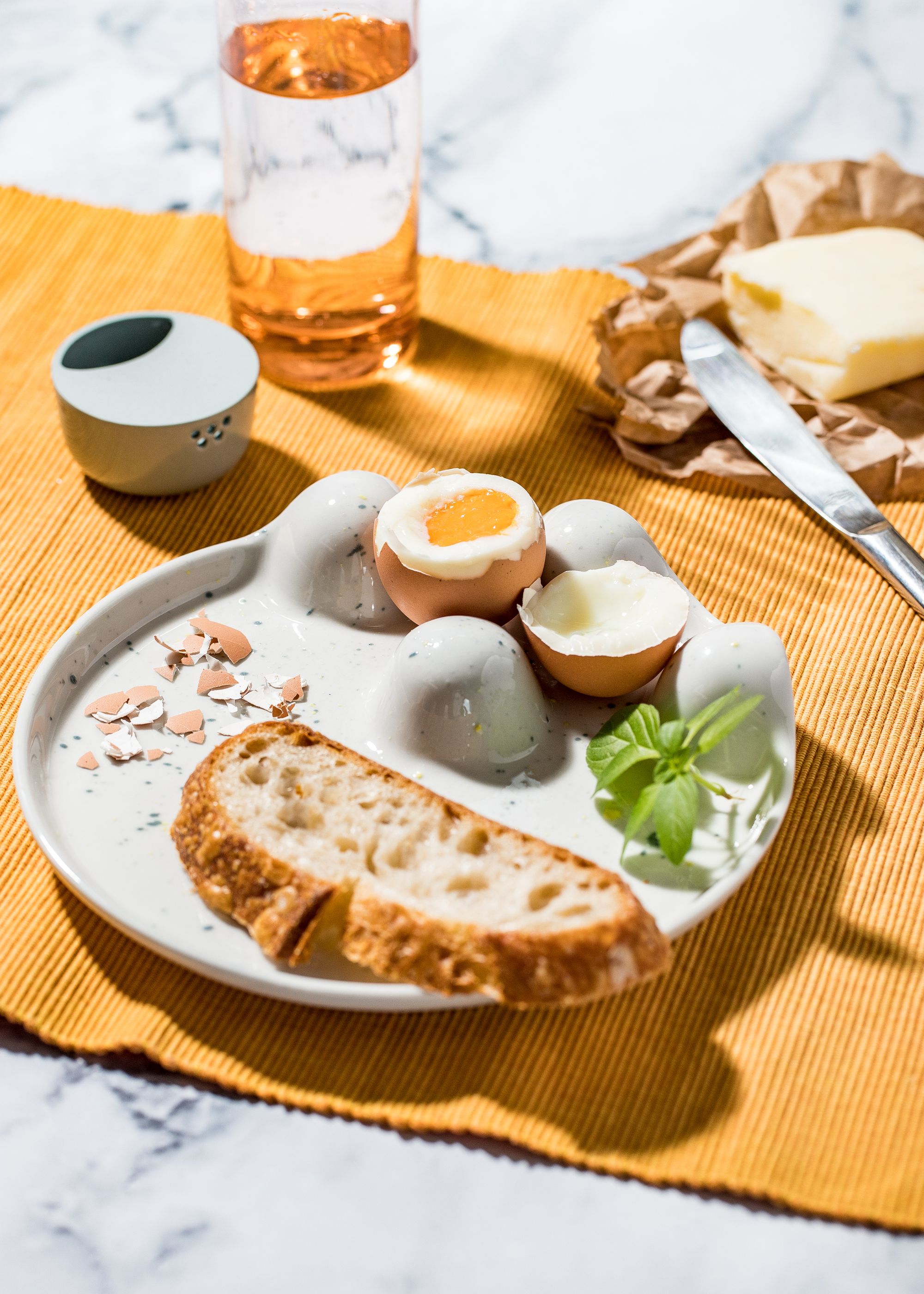
Currently I’m working on private commissions and a new limited collection. It will be a porcelain set decorated with water lilies, including cups — in espresso and cappuccino versions — numbered in gold. I’m already at the final touches. I would like to further expand the Popcorn collection with new colors and forms, and I’m also experimenting with my own glazes: I work with collected soil and ash, which result in natural colors. The pieces from my salt shaker and soft-boiled egg collections have also become very popular, and I’m planning new variations for those too.
What future plans or desired milestones do you have?
I would like to apply again to the National Ceramics Triennale; previously I participated as a university student. It would be great to return to Pécs now as a more experienced creator, perhaps even as an exhibitor. In addition, I’m also planning to bring an object to the Vajda Lajos Studio’s group exhibition in August.
Together with my friend Afrodite Dömök, we would also like to continue building Past Perfect: through glassblowing and through curated selections of treasures from the past that can be rented for events or film shoots (Afrodite also works separately with the latter as an interior designer under the brand name Pez Lab). And if we cannot find a specific type of object, then we make it ourselves. Above all, one of my main goals is always to preserve the joy of creating. It’s important that the process remains enjoyable for me too.
Várady Luca | Instagram
Photos: Dömök Noel, Mochnács Andrea, Balkányi László, Kaunitz Tamás