


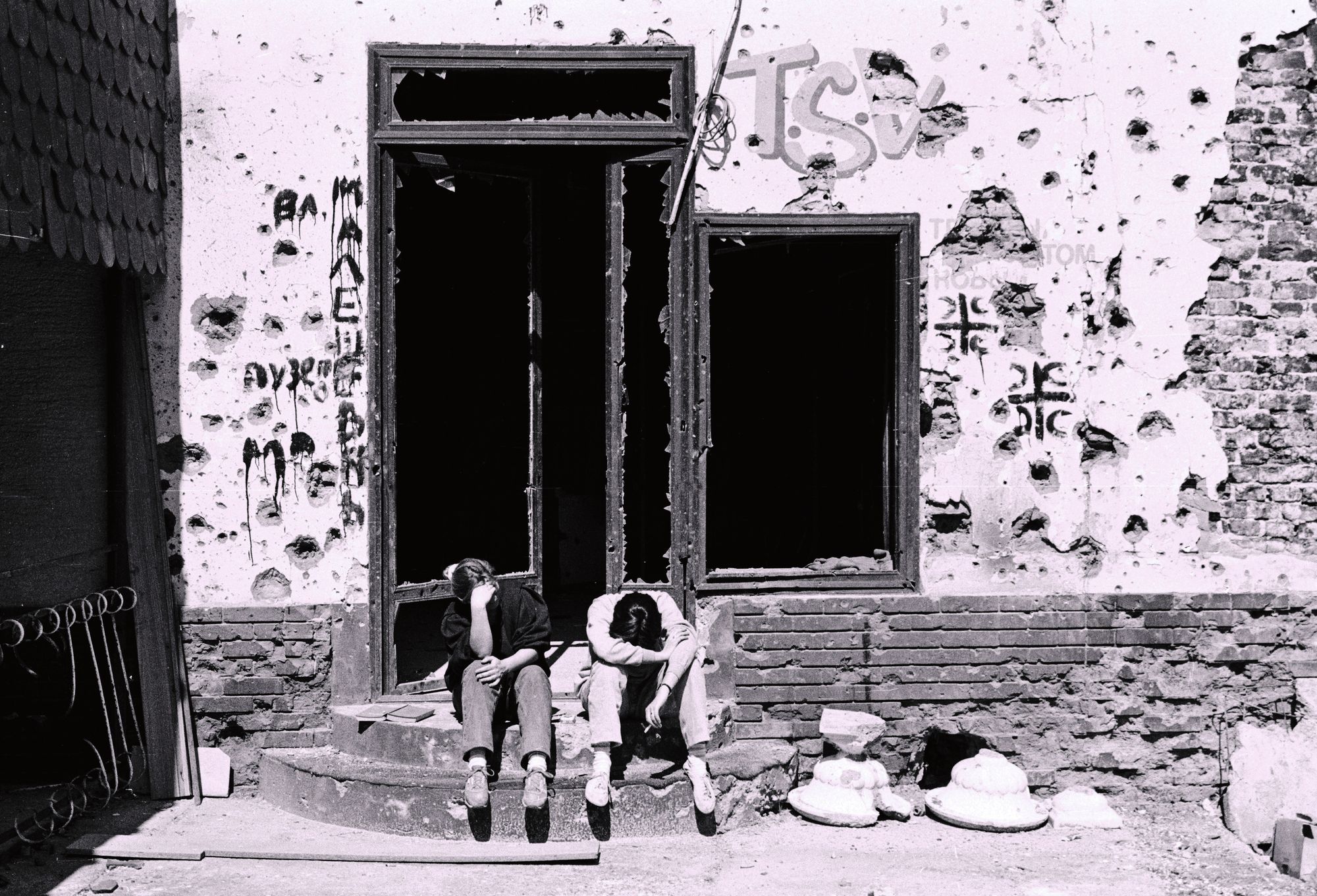
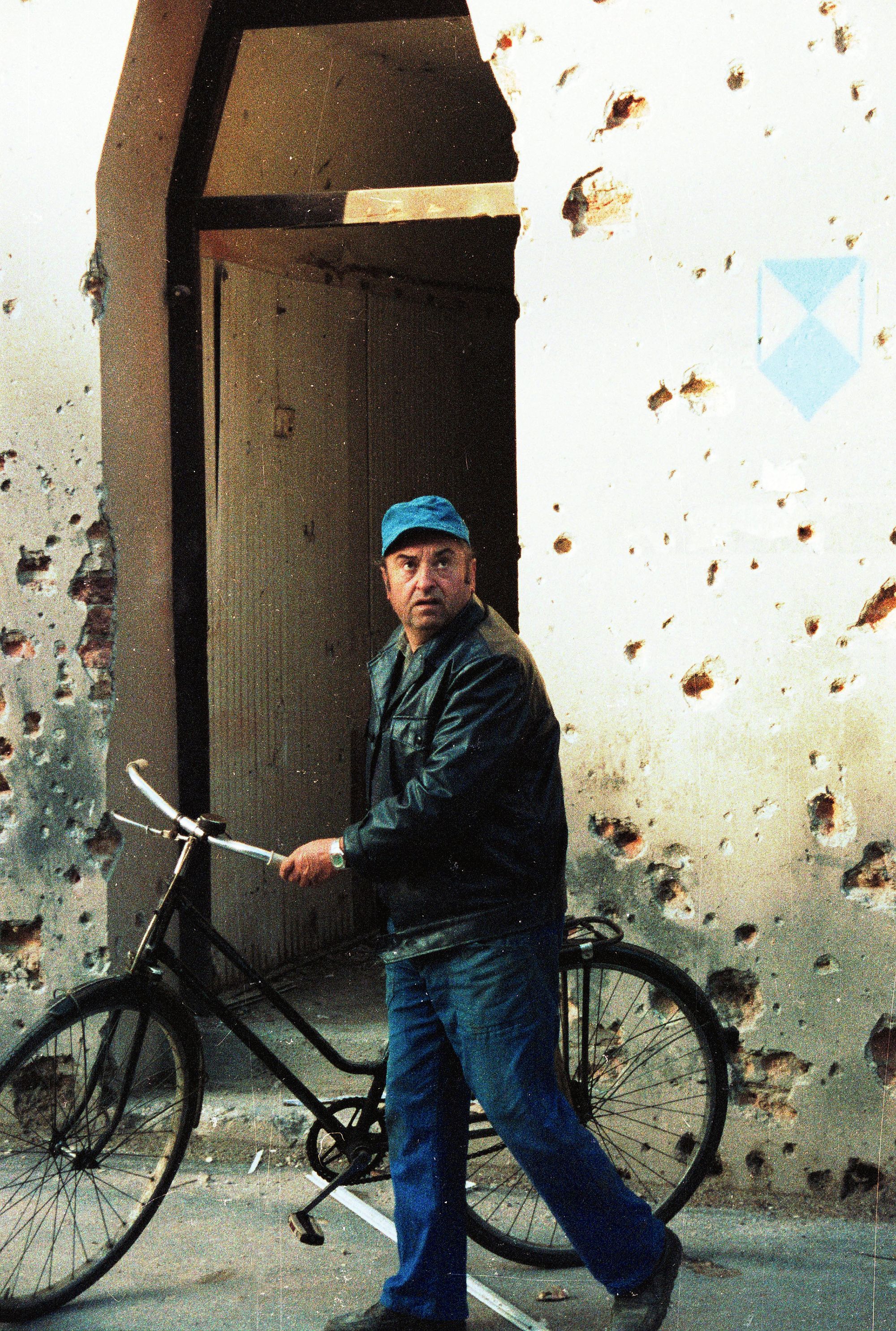
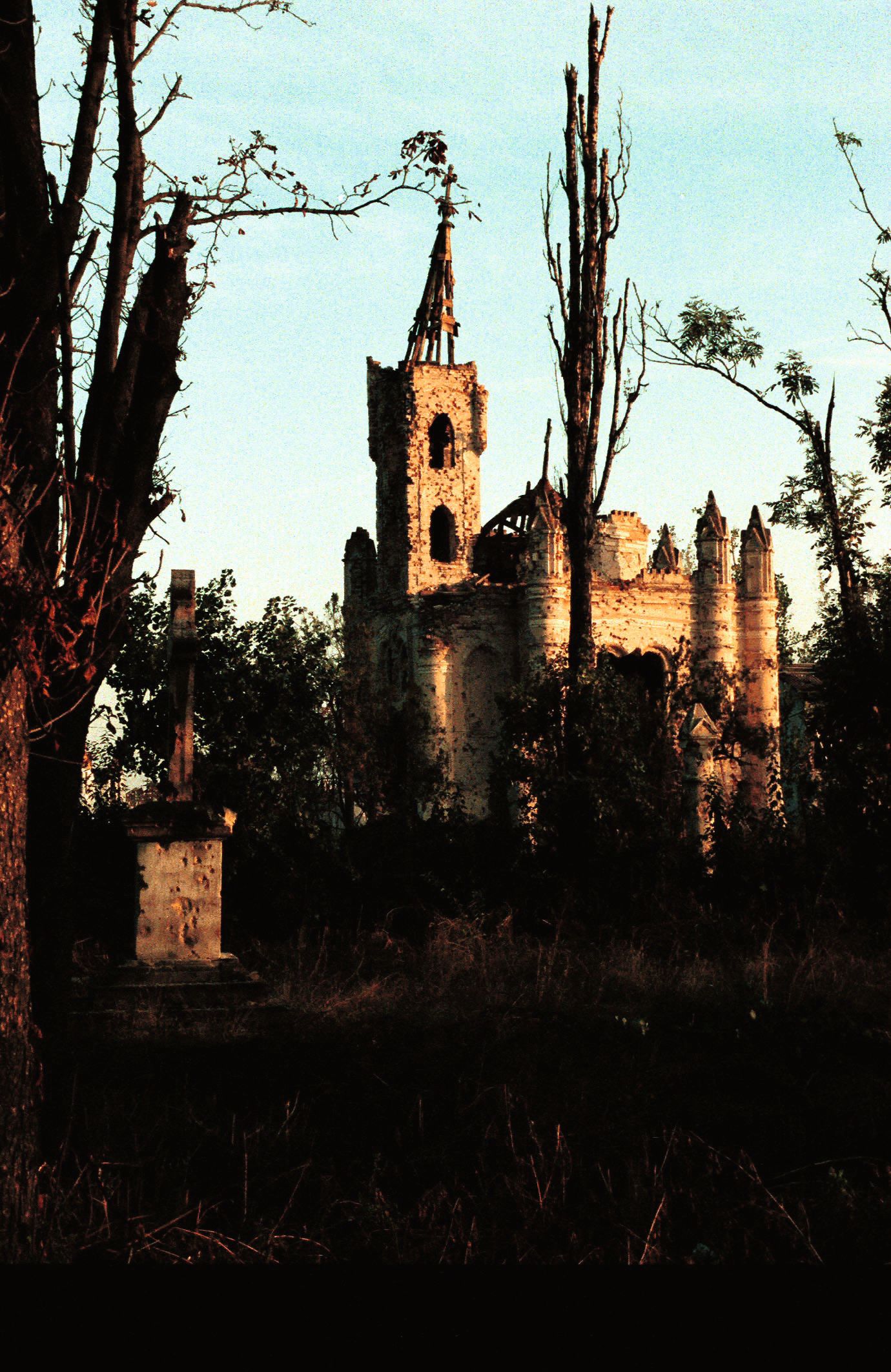
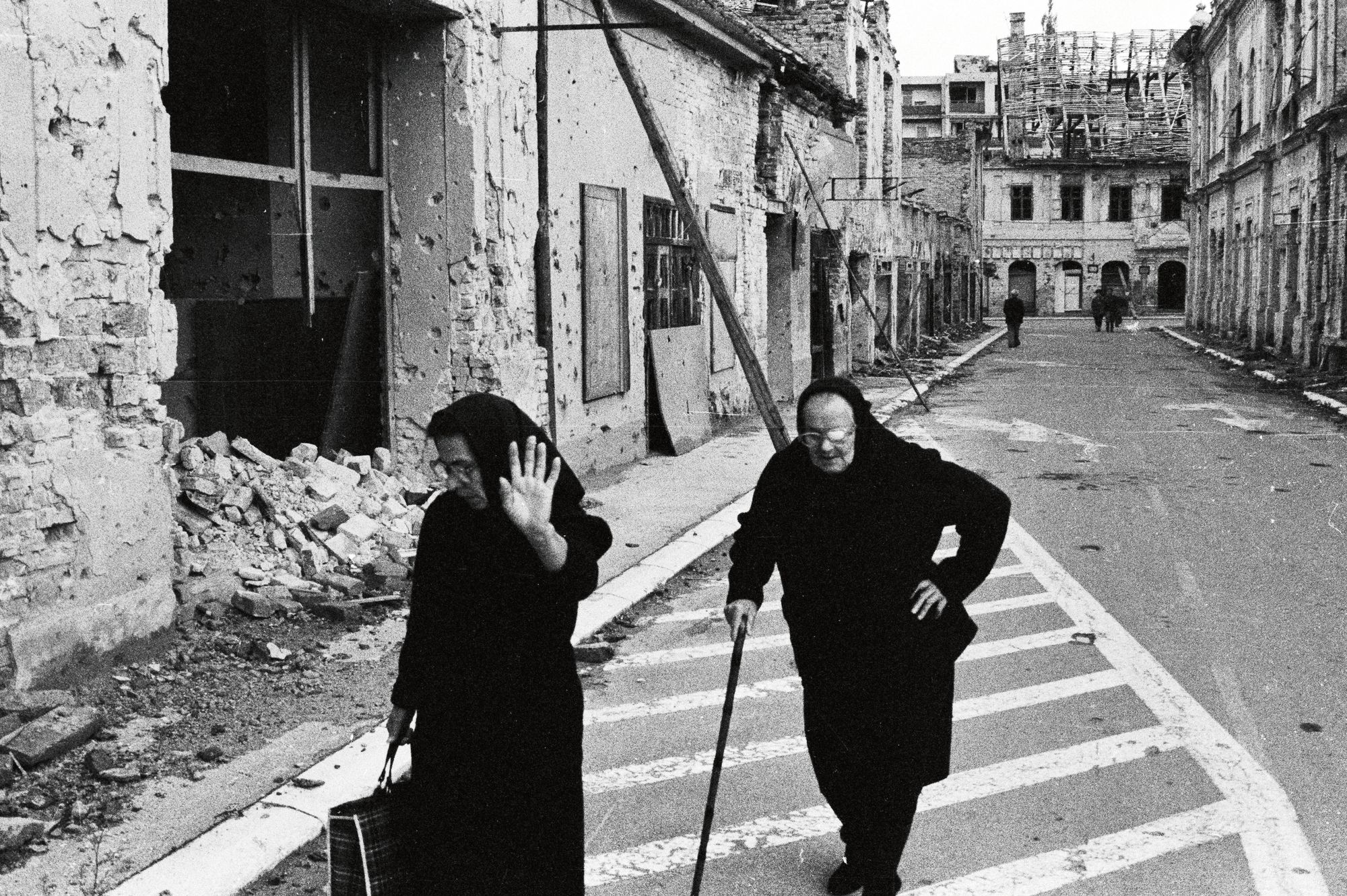
In the autumn of 1991, as the once-elegant streets of Vukovar were transformed into a wasteland of shattered brick and scorched earth, a handful of rag-tag volunteers—Hungarians among them—stood shoulder to shoulder with Croatian defenders against the onslaught of a mechanized Yugoslav People’s Army. Twenty-five years later, the ghostly echoes of that siege still linger in shattered façades, in veterans’ silent gazes, and in the unspoken questions of a Europe that hesitated when its hour of reckoning came. Interview with Adam LeBor.
The Battle of Vukovar was the eighty-seven-day siege of the eastern Croatian city of Vukovar, during which it was assailed by the Yugoslav People’s Army (JNA) and various Serbian paramilitary forces. Prior to the Croatian War of Independence, this Baroque city had been a flourishing, multicultural community, inhabited predominantly by Croats and Serbs, alongside significant numbers of other nationalities, including Hungarians. In 1991, the nationalist policies pursued by Serbia’s Slobodan Milošević and Croatia’s Franjo Tuđman precipitated an armed uprising by Croatia’s Serb population, supported by both the Serbian government and paramilitary groups. Once the Croatian Serbs seized control of Serb-populated areas of Croatia, the JNA intervened on their behalf. Tensions had already flared in May in the eastern Slavonian region, and in August the JNA launched a full-scale assault on the Croatian-held parts of Eastern Slavonia, including Vukovar.
The city was defended by roughly 1,800 lightly armed soldiers of the Croatian National Guard (ZNG) and civilian volunteers against some 36,000 JNA troops and heavily armed Serbian fighters. On one particularly fierce day of the siege, no fewer than 12,000 rounds of artillery—among them rockets and high-explosive shells—fell on the city. At the time, it was the most destructive and prolonged battle in Europe since the Second World War, and Vukovar became the first major European city to be utterly devastated since 1945. When the city finally fell on 18 November 1991, Serbian forces massacred several hundred soldiers and civilians and deported at least 31,000 residents from Vukovar and its environs. The city was subjected to ethnic cleansing, incorporated into the self-declared Republic of Serbian Krajina, and its Croatian identity suppressed.
Yet the siege also exhausted the Yugoslav People’s Army and proved a turning point in the Croatian War. A ceasefire was agreed only weeks later. The prolonged defence of Vukovar afforded Croatia the time needed to train and reinforce its armed forces, enabling it subsequently to confront Serbian forces with greater success. Vukovar remained under Serbian control until 1995 and, thereafter, under United Nations administration until 1998, when it was peacefully reintegrated into Croatia. Although much of the city has since been rebuilt, its population remains only half what it was before the war, and the scars of conflict are still visible on many buildings. A deep divide persists between the two principal ethnic communities, and Vukovar has yet to reclaim its former vitality.
Your experiences and point of view from the decade you spent in Hungary—living through the post-communist years under the shadow of Yugoslavia—are at the heart of what I’d like to discuss. We’re talking about the 1990s, right?
Yes, the 1990s. It was a time of enormous change—for Hungary, for Europe, for the world. NATO expansion, EU accession talks… and today we’re experiencing another big shift. Some argue it’s a new world order; others speak more generally about European society evolving.
So, back then—when you first arrived in the 1990s—how did you see Hungary?
The first time I came was November 1990, to write a travel piece for Elle magazine. I’d already been through what we Brits lumped together as “Eastern Europe” (though Hungary calls itself Central Europe). I’d seen the Czech lands, East Germany, the Soviet Union. I thought I knew what to expect, but Hungary delighted me more than I could have imagined. I remember that November morning vividly: walking down Fő utca, crossing the Chain Bridge, gazing at the city’s grand architecture. Gresham Palace stood there, an unrestored apartment block bearing unhealed scars from WWII—bullet holes everywhere. You could feel the weight of history: wartime destruction, the scars of ’56. Then you talked to people who’d lived through the Holocaust, the ’56 revolution… all the things I’d read about, suddenly real and present. That trip lasted a week and focused on the tourist trail—but I sensed something deeper in Budapest. The following summer, I returned to move there as the Independent’s correspondent. By summer 1991, the Yugoslav Wars had begun in Croatia. I was on trains to Zagreb, Osijek, Karlovac… towns taped up against shell fragments, sirens wailing, civilians fleeing. It was surreal. You saw buildings riddled with shots, then civilians hiding in basements or streaming across borders. I’d ask myself, “How is this happening? Why isn’t it stopped?”
In summer 1995, NATO finally bombed the Bosnian Serb positions, ending the war almost overnight. From the West’s perspective, was that a good choice?
Yes—but it came four years too late. If, at the first shelling of Osijek or Vukovar, Europe and the U.S. had issued a firm ultimatum—“Stop this or we will intervene”—I’m convinced the aggression would have ceased. The Yugoslav army was powerful—artillery, tanks, jets—while local defenders had little more than worn Kalashnikovs. A clear show of resolve would have prevented the massacre. Instead, Western leaders parroted that it was a “civil war,” sidestepping their responsibility and allowing the carnage to continue.
Why that lack of will? Fear of political fallout?
Largely, yes. I recall Luxembourg’s foreign minister Jacques Poos declaring, “This is the hour of Europe.” America replied, “It’s your war; you fix it.” Europe floundered. After Vukovar fell in November 1991, hundreds were massacred, yet no decisive action followed—right up to Srebrenica in ’95. It was a catastrophe of inaction.
You mentioned speaking with Croatians—many Hungarians volunteered in Vukovar. How did the war change their society?
It became militarized and aggressive. In early-’90s Zagreb, cafés on Jelačić Square filled with armed soldiers; street life took on a martial character. To turn civilians into fighters, you strip away sensitivities—it’s necessary for survival in wartime, but it leaves a society hardened and desensitized. Corruption and organized crime also flourished—guns and fuel smuggled across front lines, alliances shifting with convenience. Bosnia, too, became a nexus of criminal gangs profiting from the chaos.
And the long-term psychological effects—how did former defenders cope?
Trauma is inevitable. Veterans of Vukovar witnessed scenes akin to Stalingrad: a beautiful Danube town flattened, mass graves, burned-out homes. Anyone who lived it carried PTSD. Recognition and humane treatment by post-war institutions are vital. I remember a doorman at the Esplanade in Zagreb wearing a black armband—his son had died in the fighting. I often think of him now: his son would be in his mid-50s, perhaps with a family. But they were gone. Those losses remain raw under the surface.
Hungary’s own revolution of 1956 looms large in national memory. How can a society build healthy remembrance without retraumatizing people?
There’s no one-size-fits-all answer. Start by treating survivors and victims’ families with respect, cutting through bureaucracy to honor their losses. Then foster open dialogue: examine the choices made, the horrors endured. Hungary’s evolving debate over its Holocaust role—from denial in the ’90s to more candid official acknowledgment today—shows how historical memory can mature when there’s a willingness to listen and learn.
Turning to Russia’s invasion of Ukraine—do you see parallels with the Yugoslav Wars?
Certainly. In the early ’90s, Hungarians in border towns like Pécs or Mohács sometimes heard shelling, yet for most of Budapest it felt distant. Today, many seem similarly detached from Ukraine’s front. Still, Hungary’s grassroots response to Ukrainian refugees—local NGOs and communities providing aid—was heartening. Civilians often lead with compassion when politics stalls. The choices faced by young Ukrainians—fight or flee, duty or survival—mirror those in Croatia in 1991. The longer the conflict drags on, the more it tests morale. Western military aid is essential, but it may also prolong the agony. A negotiated settlement—perhaps autonomy for Eastern regions, some agreement on Crimea—seems the only realistic path to peace, rather than grinding attrition.
What about Serbia’s reckoning with Srebrenica?
Serbia still struggles with denial. Admitting genocide—nearly 8,000 men and boys machine-gunned in terror—would force a reckoning: Sarajevo’s sniper siege, massacres in Bijeljina and Banja Luka. It’s painful, but honest dialogue—where both survivors and those complicit can speak—is the only way to integrate such memories constructively.
Finally, reflecting on Hungary’s “successful” transition from communism, what key lessons emerge for countries undergoing regime change?
Rule of law above all. Impartial institutions give citizens confidence that rights will be protected. Hungary—and Poland, the Czech Republic, Slovakia—showed that former Soviet satellites could become functioning democracies. They lost centralized control, but gained freedoms: open markets, free travel, political pluralism. That achievement—turning client states into free societies in a generation—is extraordinary. Wherever regime change beckons, strong, fair legal frameworks are the bedrock of lasting stability.
Adam LeBor is a British writer and journalist who, for many years, has reported on Hungary and Central Europe for The Times, The Independent, The Economist, and numerous other publications. He is the author of sixteen acclaimed novels and works of non-fiction, including Sleeping Accounts, which was shortlisted for the Orwell Prize; a biography of Slobodan Milošević; and The City of Oranges, which explores the intertwined lives of Jewish and Arab families in Jaffa. His most recent book, The Last Days of Budapest, is the first English-language account of the Hungarian capital’s experience during World War II. An experienced editorial consultant and journalism instructor, he also teaches creative writing. He lives with his wife and two children, and in his spare time still delights in discovering new stories hidden within the streets of Budapest.
Photo: Mark Milstein Northfoto