


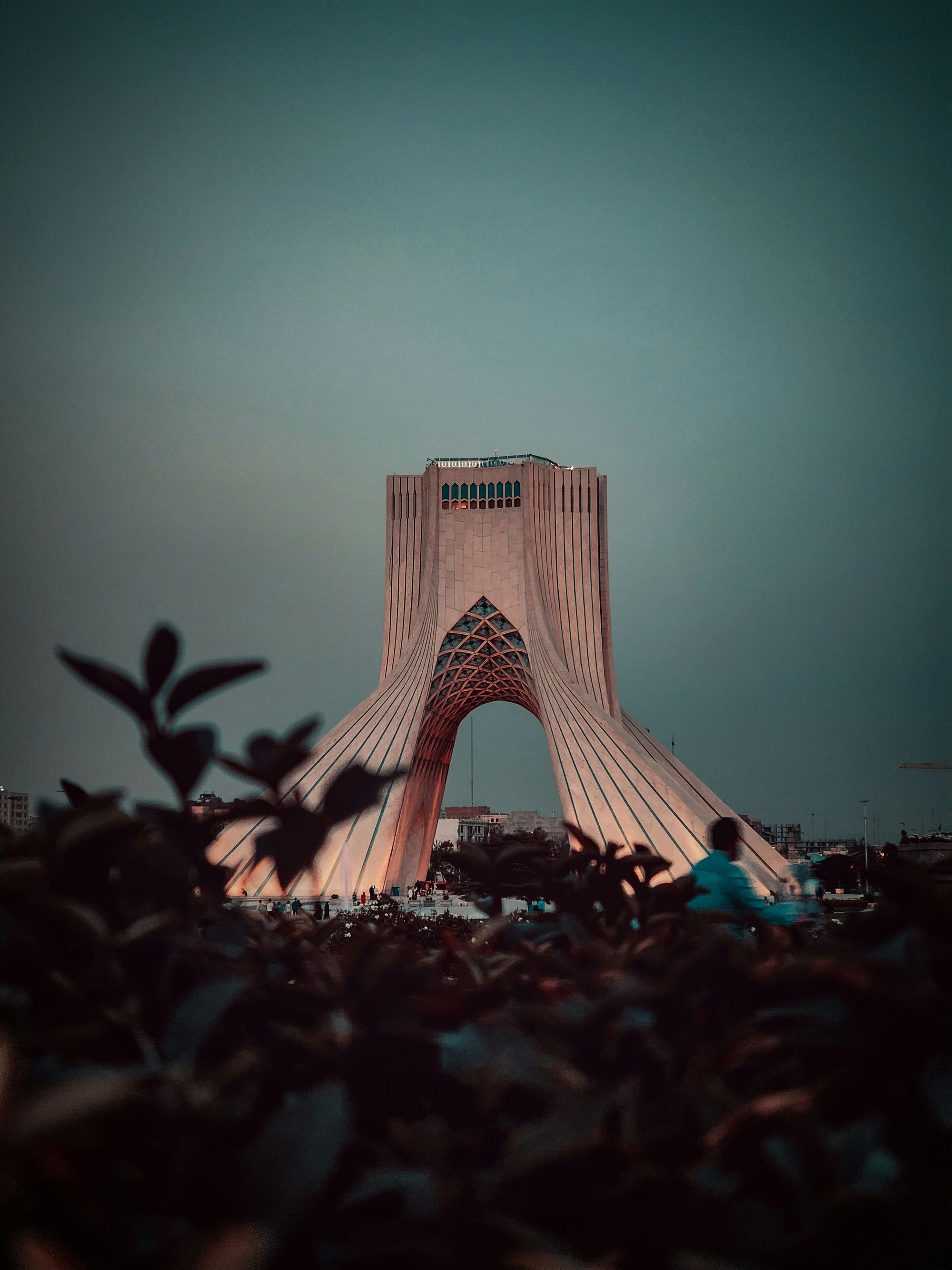
We tend to view Iran exclusively through the lens of conflict, the nuclear dispute, or its authoritarian nature. At the same time, in doing so, we lose sight of precisely those elements that would make the country’s internal logic comprehensible. In our conversation with Erzsébet N. Rózsa, we discussed why the simplified Western image of Iran is misleading, how civilizational memory, Shiite state ideology, and modern republican institutions coexist, and why such a society cannot be reprogrammed from the outside.
Why is it so difficult to understand Iranian society from the outside? Are there key fundamentals without which we misinterpret how the country functions?
Partly because for decades, we have spoken about Iran almost exclusively in negative terms. Most Europeans have no personal experience with the country, so the image quickly becomes simplified: fundamentalism, terror, Shiite theocracy, oppression. Yet the first important statement is that Iran is not merely a regime, but a nation-state with a strong historical consciousness. The Islamic Revolution did not create a caliphate, an imamate, or an emirate, but rather a republic – moreover, within a political culture in which modern institutions have more than a century of tradition. The Constitutional Revolution of 1905-1911 established a parliament and a constitutional monarchy, meaning these elements were not imported from outside Iran. From the outside, therefore, we see a dual system: the institutions of the republic formally function, while behind them stands a strong ideological supervisory system.
Iran’s historical self-image also reaches much deeper than we tend to assume, from Europe. One of its key texts is the Shahnameh, Ferdowsi’s great epic, which reached its final form by 1010 and has remained a foundational work of Persian historical consciousness. This also helps explain why, in the face of external threats, internal grievances often recede into the background: in such moments, for many, the existence of the country comes first, and only afterward does the question of their relationship to the system arise.
It is often said that Iran represents a civilization spanning several thousand years. At the same time, the current system emerged from a revolutionary foundation. How can it appropriate this past if it originally arose partly in opposition to it?
When the Shah’s system collapsed, it was driven by genuine, deep, society-wide dissatisfaction. At the beginning of the process, it was not at all predetermined that it would result in an Islamic Republic. The revolution initially did attempt to eliminate many old, pre-Islamic or popular traditions, but it soon became clear that these could not simply be erased. Even customs associated with the Iranian New Year and spring renewal could not be eliminated; instead, they gradually became integrated into the system's new symbolic order. The Iran-Iraq War also played a very important role in this, ultimately consolidating the post-revolutionary order.
This is why I usually teach Iran as having a three-layered identity: Iranian-ness, Islam, and the republic. Iranian-ness represents historical depth and civilizational self-image; Islam within this specifically refers to the Shiite tradition, while the republic represents modern political institutions. The Safavid era is particularly decisive in this respect: from 1501 onward, Twelver Shiism became the state religion of Iran, which, in the long term, fundamentally shaped the country’s political and identity structures.
How unified is Iranian society during wartime? From the outside, one often sees images of both street celebrations and mourning.
The image of people on one side celebrating while on the other mourning the leadership is, in my view, overly simplistic. Certainly, there were those who, in certain moments, reacted out of anger toward the regime. But when civilian casualties appear, when people see their own cities, families, schools, and hospitals in danger, a completely different logic comes into play. In such cases, the question is not how angry someone is at the regime, but rather that the war should end.
Dissatisfaction with the system does not disappear, but it is temporarily pushed into the background. In times of external attack, the logic of resistance becomes stronger: people primarily want their country not to be further destroyed, and they do not want to fear that in six months or a year, they will find themselves in the same situation again.
And what happens if a conflict drags on? Do social fault lines intensify?
As long as there is shooting, I think less so. During external attacks, society often temporarily suspends its internal disputes. The post-war period is another matter: there, what will be decisive is what political changes follow and what bargaining positions emerge. But it is important to see that, institutionally, the state does not necessarily collapse, even when many outside expect it to. This is often reflected in the composition of negotiating delegations: if competent actors from foreign policy, military, national security, economic, and technical fields are all present at the same time, it indicates that the state is still capable of structured thinking and preparing agreements.
Analyses of Iran often refer to concepts such as pragmatism, cunning, bargaining logic, or indirect communication. Are these accurate?
More or less yes – but only if we do not treat them as exotic characteristics. Pragmatism is very much observable: it is already a pragmatic approach when a state sits down to negotiate with competent actors from all relevant fields present. But it is also true of the system as a whole that the ultimate measure of every decision is its own survival and the preservation of its room for maneuver.
Cunning and the logic of bargaining are diplomacy itself. Diplomacy is not a diktat. It is not about someone showing up and declaring what will happen. Iranians find it difficult to accept ultimatums, but they can and want to negotiate – even if the outcome is not ideal for them. This is based on a very long accumulation of historical experience.
Indirect communication is not exclusively an Iranian phenomenon either. In Middle Eastern diplomacy and great-power politics alike, it is common for public statements and behind-the-scenes negotiations to differ. To understand how Iran operates, it is not enough to look only at what is said at a press conference; one must also observe the channels, intermediaries, and implicit messages operating in the background.
How does all this appear in the debate over the nuclear program?
Negotiations over Iran’s nuclear program did not begin yesterday. They have been ongoing for decades, and there was an agreement in which Iran committed to keeping the program within civilian limits under international supervision. The JCPOA set the upper limit of enrichment at 3.67 percent and imposed detailed technical restrictions; the turning point came when the United States withdrew from this agreement in 2018. The question, therefore, is not whether we believe what the Iranians say, but that there once existed a controlled framework that made this not a matter of belief, but of verification. From this perspective, a recurring element of the Iranian position is that the crisis of trust was deepened not only by Tehran but also by decisions in Washington.
Can external geopolitical pressure meaningfully steer Iran’s direction?
In my view, lasting political change cannot be forced from the outside. Ultimately, Iran’s internal transformation can only be determined by the Iranian society itself – if it wants it. External pressure can increase costs, and military or economic coercion can be applied, but that does not automatically make a society different. Bombing certainly cannot create a legitimate and stable internal transformation.
Erzsébet N. Rózsa is a Middle East expert, senior research advisor at the Institute of World Economics, and a professor at the University of Public Service. Her research focuses on the political, social, and security processes of Egypt, Iran, and the broader Middle East, with particular attention to nuclear non-proliferation and the Iranian nuclear program. She obtained degrees in English, Arabic, and Iranian studies at ELTE, followed by a PhD and habilitation in international relations. She also holds the Doctor of the Hungarian Academy of Sciences title. With several decades of research and teaching experience, she previously served as a senior researcher at the Hungarian Institute of International Affairs and has participated in and led numerous international research projects.