


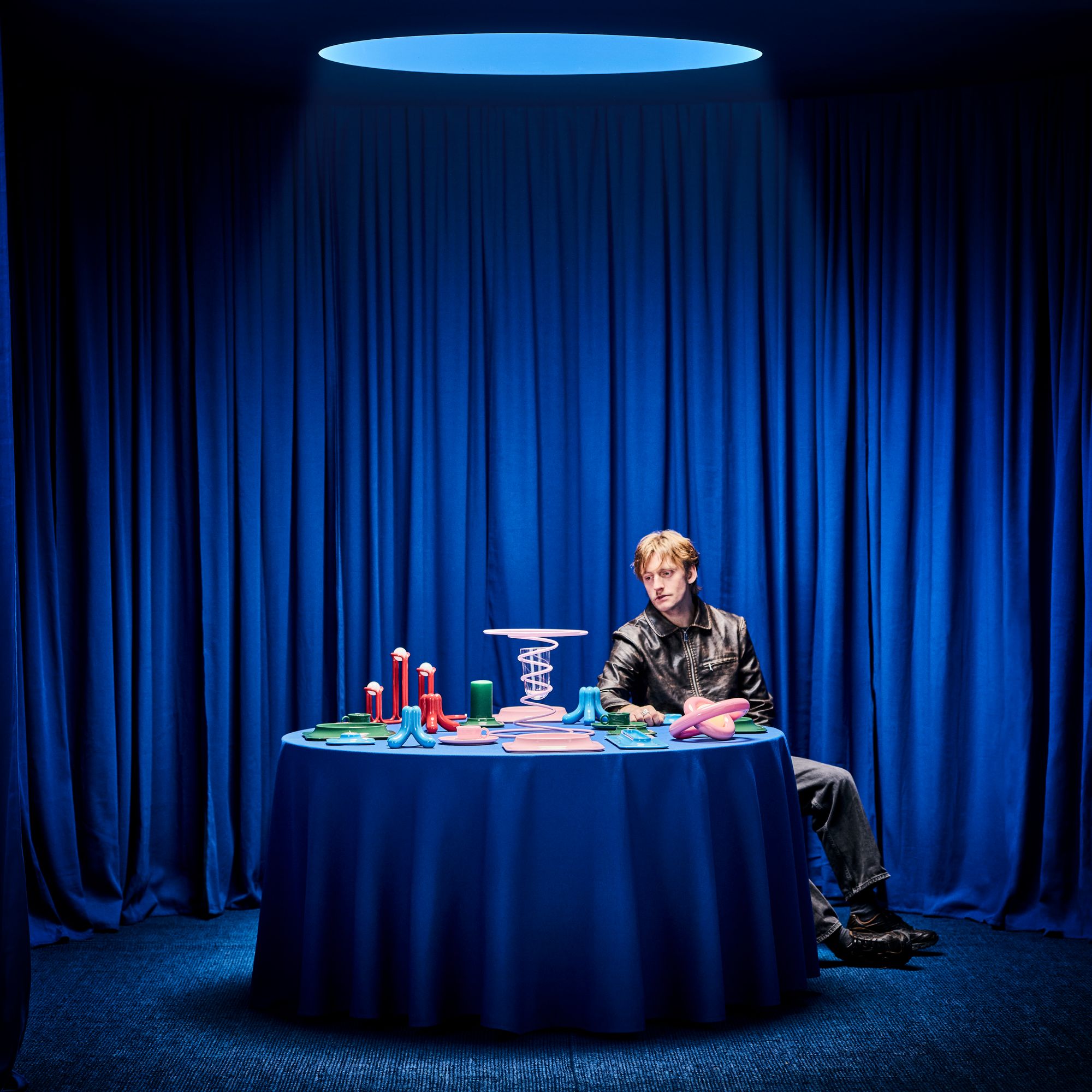
When IKEA asked creative leader Maria O’Brian, the company’s Range Identity Leader, to develop its annual holiday collection, instead of relying on the tried-and-true holiday clichés she found the answer in a bold design territory, in the form of a collaboration with Swedish designer Gustaf Westman. The design icon’s playful, non-traditional aesthetic – marked by funky forms, fluid curves and a childlike sense of joy – has rewritten the rules of Christmas with a wink of Swedish cheekiness, turning festive stereotypes into something fresh, unexpected and irresistibly joyful: objects for hosting, gathering, and celebrating. In this conversation, O’Brian and Westman discuss the values, challenges and humor behind a collection that brings design to the Christmas tree and the holiday table alike.
Were there festive elements – or elements typically associated with festivity – that you wanted to include?
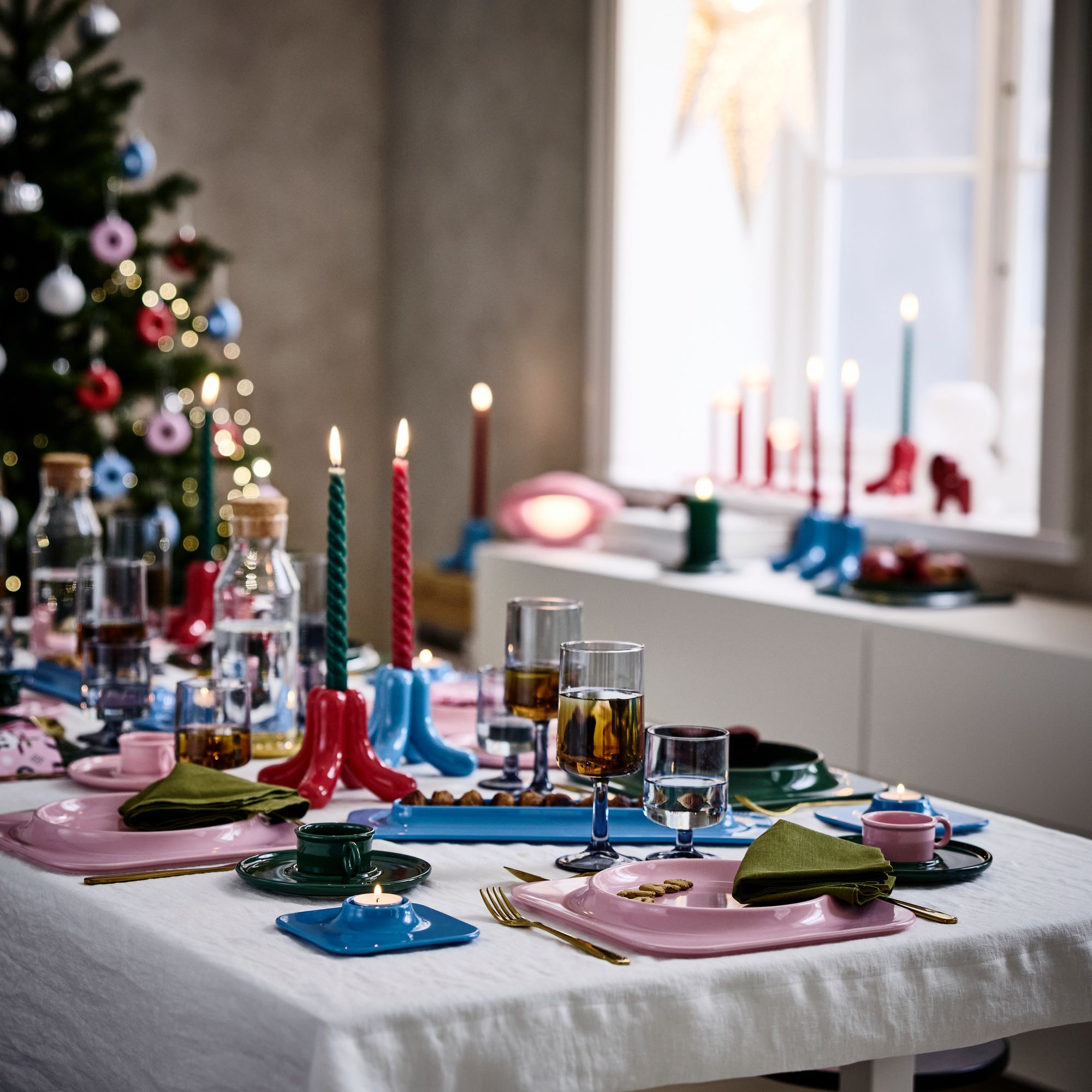
Gustaf: We didn’t really have a very strict brief from the start. When I think of objects connected to festive moments or holidays, I recall memories from my childhood – for instance, my mom had these special cups in a cabin that she only brought out when guests came over. I see my objects as an interpretation of that feeling: it’s still a plate, but perhaps a little different, not the most ordinary one. If you want to set a table that feels a bit more playful, you can use these pieces, maybe mixing them with others.
Maria: We worked quite organically together with Gustaf. He came with many ideas, and we evaluated them, asking ourselves what we could realistically bring to life. In the end, the collection became a selection of products we all truly loved, the ones we felt were the strongest. For example, there were ideas for cutlery, but they didn’t feel right, and we couldn’t make them work. So we decided not to force cutlery into the collection. Instead, we focused on the plates and the vase we genuinely loved. Nothing was included just for the sake of it, and that is really how I enjoy working with design as well – concentrating on the pieces that feel truly good.
What shared values and creative visions made this collaboration feel like the perfect match?
Gustaf: We talked about this a lot. I think the collaboration challenged IKEA in some ways, encouraging them to think outside the box. For me, it was really about two design worlds coming together, and that is what shaped the partnership. The whole process was very collaborative – I worked with a small team, and it almost felt like a little family. Obviously, when working with a company like IKEA, there are certain conditions you have to meet, which is very different from working independently. I can do whatever I want on my own, but here I had to understand what was possible and what was not. The designs also needed to be affordable and appealing to a broader audience.
It must have been challenging for you, right?
Gustaf: Yes, but I actually found that part enjoyable to learn from. The main challenge was working under time pressure and developing a collection of this scale – that was demanding, because I never want to release something I am not fully happy with. It required a lot of effort, but now I feel satisfied with every piece!
I find the color palette really striking. Could you talk a little about how you arrived at it for this collection?
Gustaf: One interesting aspect is that we couldn’t create too many variations, so much of the decision-making came down to which color should go on which product. We settled on four main colors that we spread across the collection. There’s a pink and a blue, which are very much signature colors for me, and I thought it would be fun to bring them into this collaboration. Then there’s a darker green and a red, which connect more closely to Christmas – a kind of playful nod to the holiday season. Beyond that, I usually just follow my instincts when it comes to color, choosing shades that feel right. We went through a lot of samples along the way.
Maria: Another nice aspect is that the same colors are used across IKEA’s broader holiday range. So even if you don’t buy only Gustaf’s products, the pieces still match – whether it’s coasters, wrapping paper, or a tablecloth. We’ve been quite intentional about weaving everything together in that way.
The value of togetherness is the heart of the collection. How did you translate that into the shapes and materials?
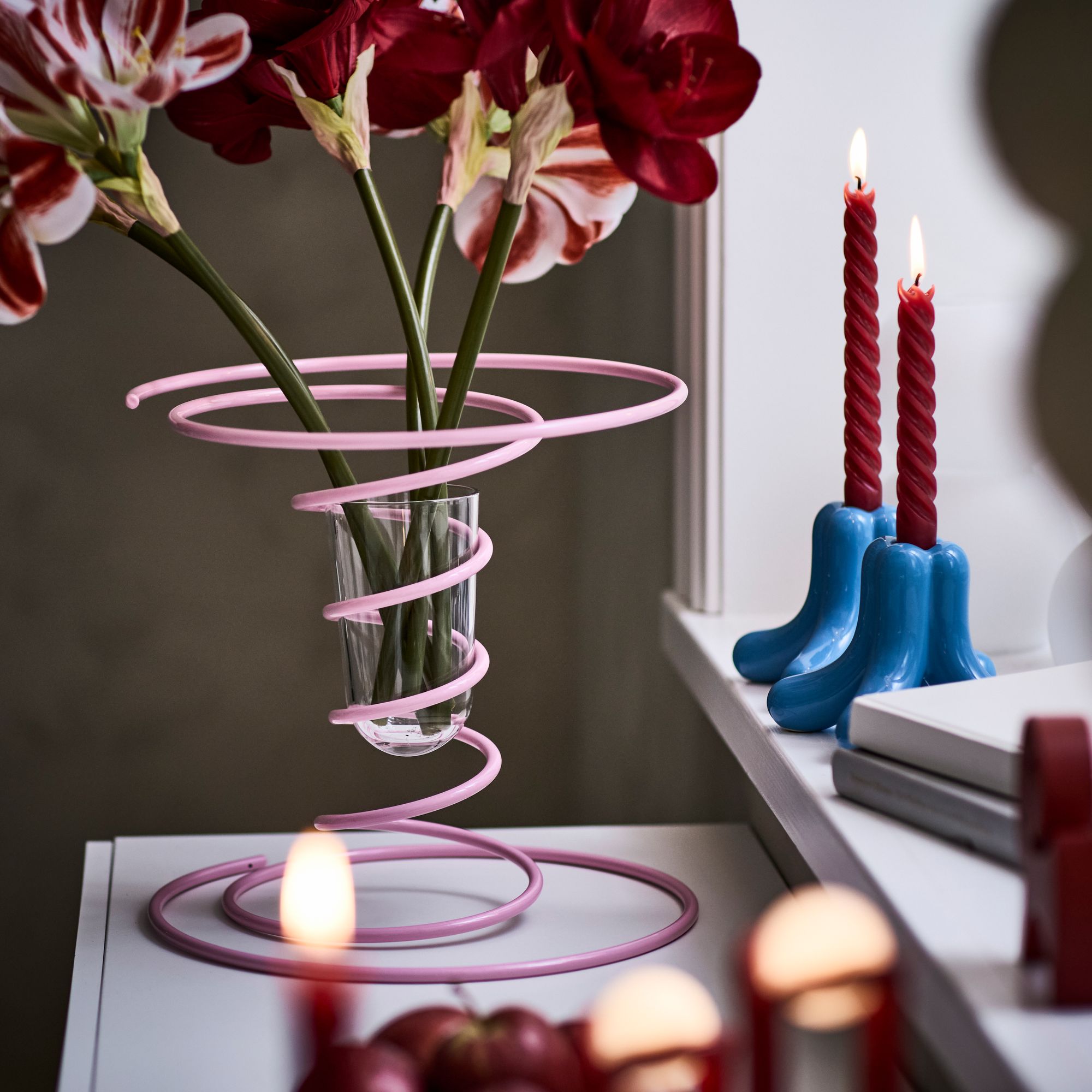
Gustaf: The collection feels like a celebration – it’s about bringing different people together, friends and family, in a joyful way. If you look at the pieces, they are almost like a quirky little family themselves. They have different functions, different heights and sizes, yet when placed together, they look playful and fun – that spirit of playfulness is very important to me. I often begin with small, whimsical ideas and want to bring them to life. For example, there’s a vase that bounces slightly when you put a flower in it, or the meatball plate, which adds a humorous touch. These objects might not seem to “fit” perfectly with one another, but when combined, they create harmony in their own way. Versatility is also essential in celebrations. Many of the pieces serve more than one purpose – a plate can also work as a serving dish, for instance. I like when objects allow for multiple uses, because it reflects the openness of a festive gathering.
Do you have a specific personal memory of a holiday table or a family meal that influenced an object in this collection?
Gustaf: At Christmas we always visited my grandmother’s, where she would bake an incredible variety of cookies. That tradition inspired one of the designs: we created a cup with a large saucer. The idea is that you can have an espresso or mulled wine in the cup, and the oversized saucer is meant to hold all the different cookies. Where I grew up – and certainly with my grandma, but probably with every grandma – you had to take one of each cookie, otherwise you were considered a “bad grandchild.” So I felt I had to design something that could accommodate that ritual.
How did you get yourself into a „Christmassy” mood while working on the collection? After all, you probably had to do it in the spring or at some other time of year. And what are your plans for this Christmas? Will you celebrate with your designs and give them away as gifts?
Gustaf: I wouldn’t say the collection itself is overly Christmassy, so I don’t know if I ever fully got into “Christmas mode.” But of course, part of the IKEA team I worked with focuses on the holiday collection year-round, so they definitely live in that spirit. As for my own plans, I usually just give away the things I design myself – it’s convenient, and it means I don’t have to buy so many gifts.
Do you have a favorite piece that you designed for this collection?
Gustaf: I would probably say the plate. It’s such a simple product, with a simple design, yet still playful – and I really enjoy that simplicity. Of course, there are other pieces that are more unusual, like the bouncy vase, you can’t really see in the photos that it actually bounces when you put a flower in it, but it’s a lot of fun. Still, if I had to choose, I’d go with the plate.
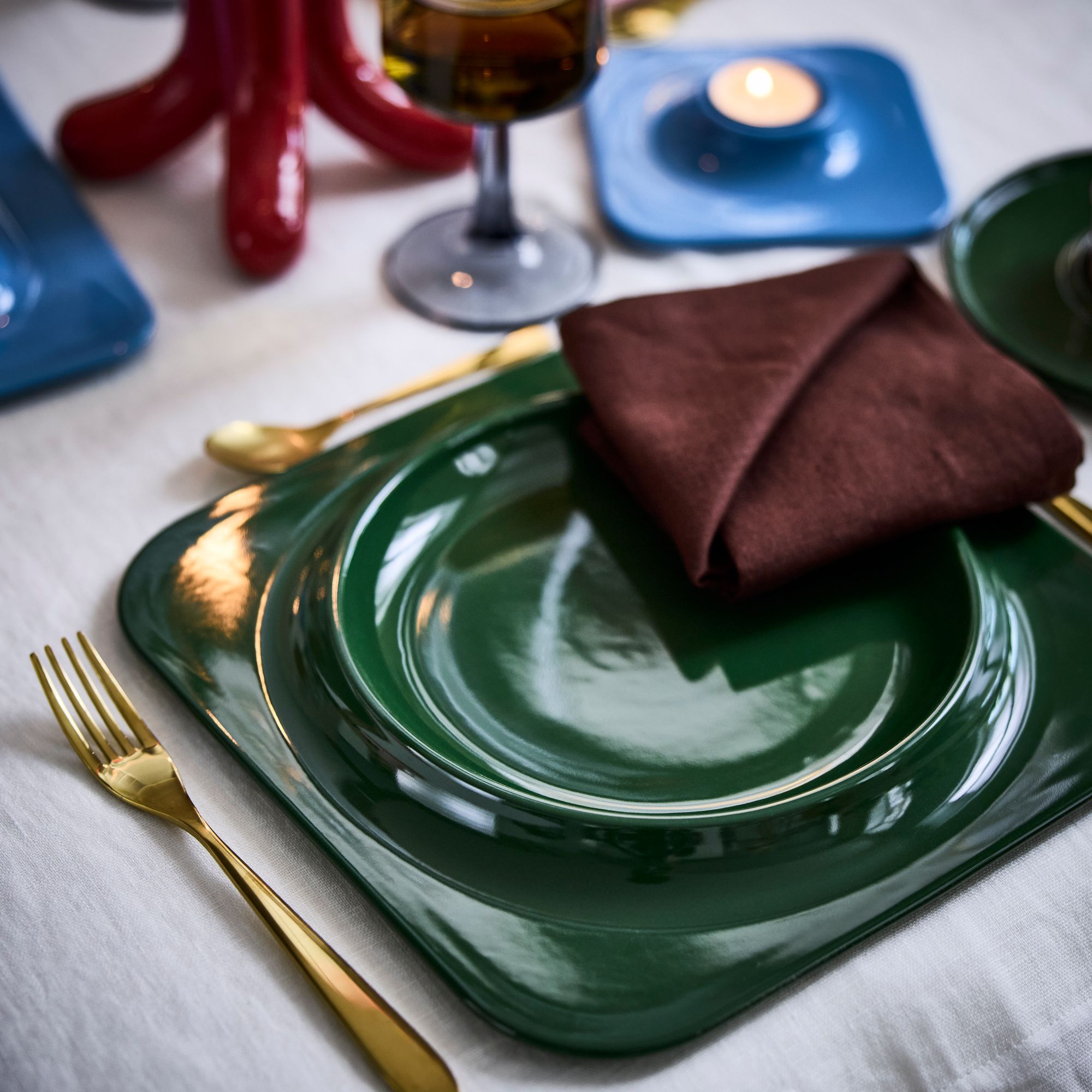
Do you hope or encourage users to treat these objects not only as seasonal items but also as everyday pieces? As I see it, they could work equally well as daily objects or as decoration.
Gustaf: I don’t really see them as seasonal. It’s fun to launch them as part of a holiday collection and see how the style works in a Christmas setting, but the designs themselves are quite versatile. I think most people who buy them won’t necessarily view them as Christmas objects. Do you agree, Maria?
Maria: Yes, absolutely. That was something Gustaf really pushed for, and I think it was a very good point. While we were thinking a lot about holidays and celebrations, he reminded us that hosting happens all the time. The pieces should work within a festive context, but also live on well beyond that. I think this approach is important not only from a sustainability perspective – the more you use an object, the better – but also in terms of relevance. People celebrate in many different ways all over the world, and since IKEA is present globally, it was crucial to create something adaptable. I think that was a very smart move.
As Maria mentioned holiday celebrations and aesthetics can look quite different from country to country. What would you say is the festive Swedish spirit that you wanted to express to the world with this collection?
Gustaf: I wanted to create something quite general, something that could work anywhere in the world. So instead of focusing on a specifically Swedish expression, I designed from my own holiday memories and the functions I associate with those occasions. At the same time, my design language is very Scandinavian by nature, so I think that quality comes through anyway.
Which reactions from the early previews have surprised you the most?
Gustaf: The teaser post definitely created a big response. People seemed genuinely excited, which is overwhelming but also fun. I’ve seen a lot of buzz on TikTok as well – it’s a little strange, but also great, that people are so enthusiastic. I think part of it is that my usual work isn’t very accessible – my website is terrible, and normally it’s harder for people to get hold of what I design, but with this collaboration, anyone can simply go to IKEA and buy something I created.
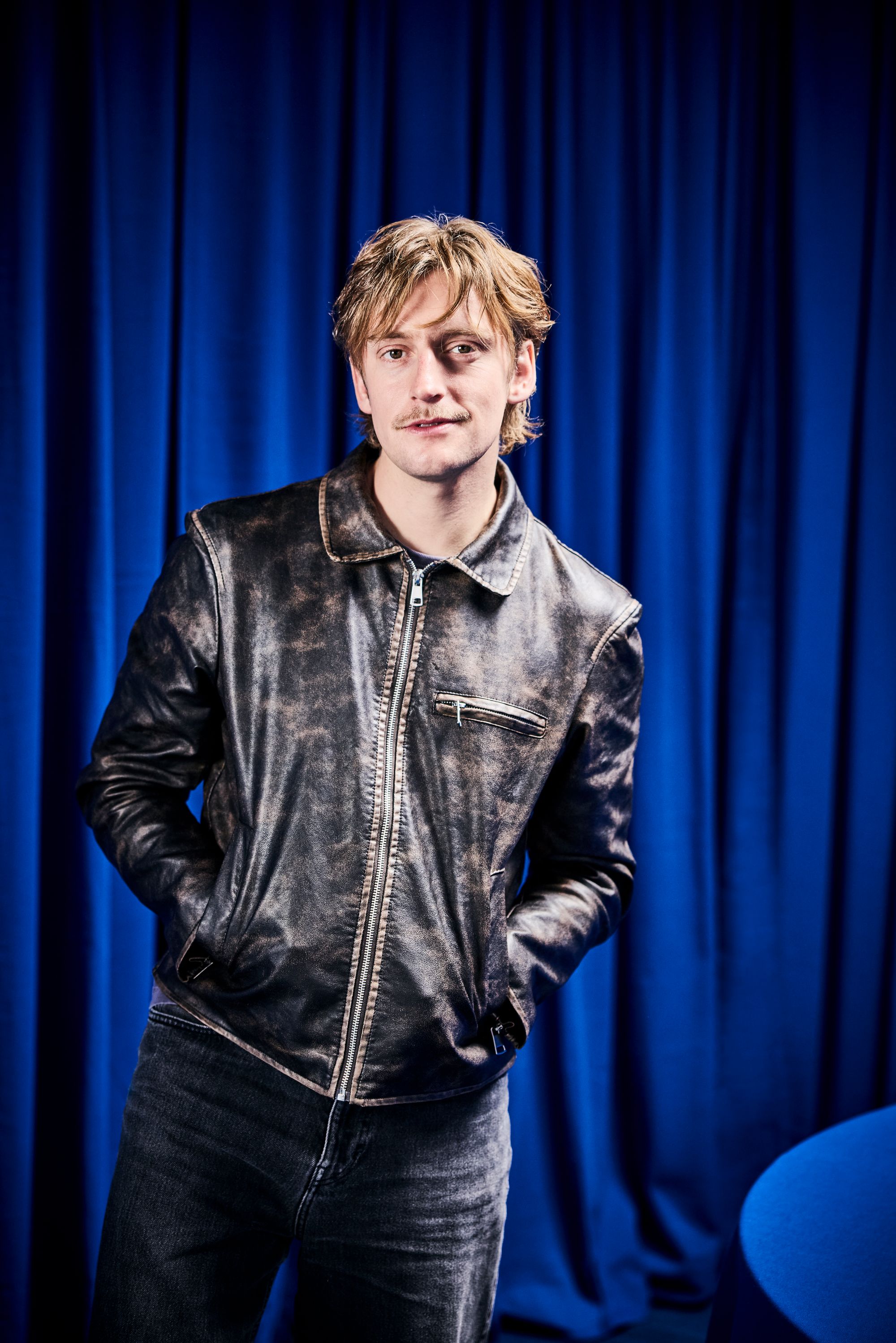
Referring back to accessibility, this collection is much more approachable than your usual work. Did you have any second thoughts before the collaboration came to life? Were you ready to create something that could be on tables all over the world? A lot of companies make popular products, but IKEA is different – it is about household items in millions of homes. Did that scare you a little?
Gustaf: IKEA is such a classic brand. They’ve produced some of the best designs in history, and their design philosophy is incredibly strong. As a Swedish designer, it truly is a dream come true to collaborate with them, and the most rewarding thing, really, is seeing your objects in someone’s home, being used in so many different ways.
Were there any iconic IKEA collaborations or pieces you had in mind, where you thought: That was so good, I’d love to be part of that tradition?
Gustaf: Sabine Marcelis’s work with IKEA is already a modern classic. Wery Laboulais is also a big inspiration for me – both his overall work and the project he did with IKEA. And then there are the older collaborations I’ve always admired, like the PS collection: that series gave smaller designers the chance to create pieces that stretched the IKEA design language in new directions. There are really so many great examples to look up to.
You have designed some food-related pieces before, with dishes dedicated to specific foods such as baguettes or hot dogs. Could you give us a bit of backstory on the meatball serving plate?
Gustaf: I first designed a plate that looked a bit different, and then the meatball plate became the final addition to the collection. I had wanted to do something with meatballs from the start, but I struggled to find the right idea. At one point, I tried designing spirals where the meatballs could roll down, or concepts where you’d remove one meatball and another would appear. But in the end, the simplest – and in many ways the best – solution was to give the meatball its own plate. It became almost like a throne, where the meatballs sit in a row, held in place at the center. I love that they finally have their own dedicated plate! After all, meatballs are such an iconic food for both Sweden and IKEA – they truly deserve their own spot.
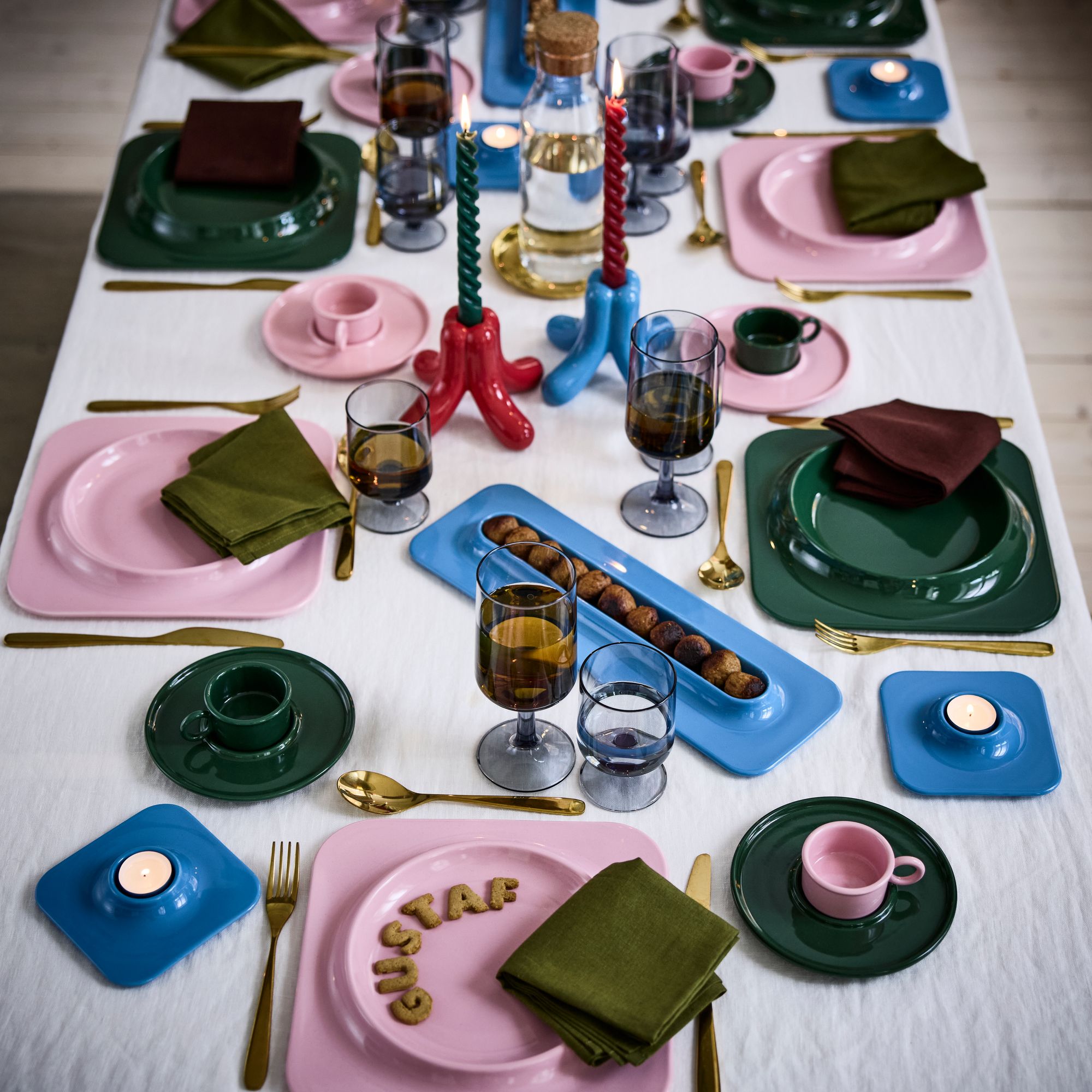
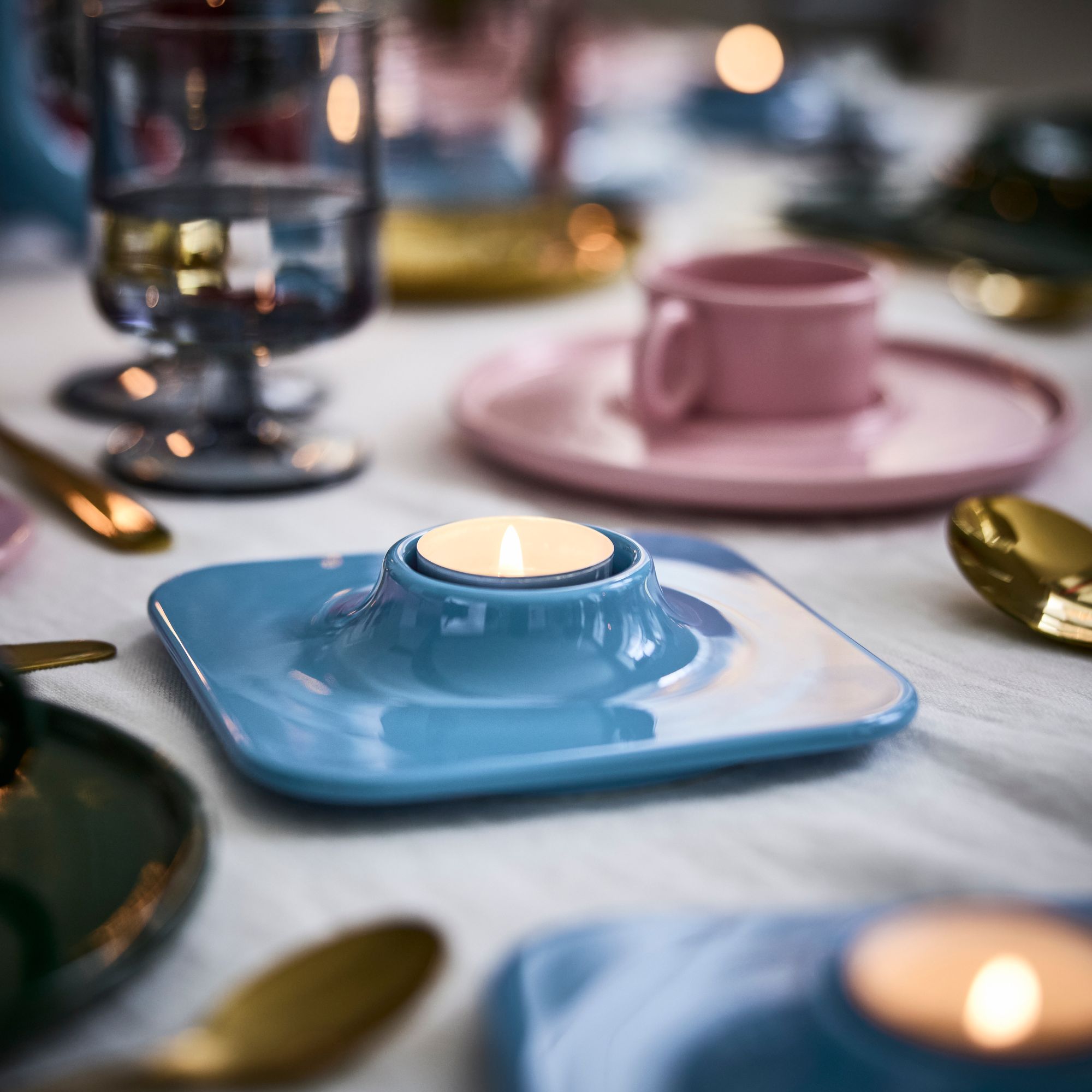
Is there a special significance to meatballs specifically around the holidays?
Gustaf: In Sweden, yes. At every holiday – Easter, Christmas, even in summer – we eat the same things, we’re very predictable in that way. As a child I was quite picky, so while the table was filled with traditional Swedish foods like pickled herring and other dishes I didn’t enjoy, the only thing I would eat was meatball – that became my childhood memory of celebrations. So honestly, the meatball plate is the only plate I really need at Christmas!
Were there specific design or material decisions that were particularly important to you – things that ensured the collection still feels like yours, even though it’s being produced on a much larger scale than usual?
Gustaf: I didn’t insist on particular materials that would make production more difficult. For me, it was more about the designs themselves and making sure they carried my signature spirit. Things can change along the way – materials, details – so they fit IKEA’s processes. But as long as the core idea is there, I’m fine with that. If I had an idea and someone explained why it wouldn’t work, the conversation then became: okay, is there another material or method we can use? That kind of dialogue was invaluable, and I learned a lot from it.
Maria: What mattered more was keeping Gustaf’s initial ideas clear throughout the process. That’s something I’ll take with me from this collaboration – he always knew, even from the tiniest sketch, what was essential about a design. Our job was to safeguard that essence until the very end, even if we had to adjust radiuses or change a few millimeters to make the product more production-friendly, more sustainable, or easier to ship. So the focus was less on materials and more on preserving the design intent.
The limited holiday collection will be available from October on the IKEA website and in stores.