


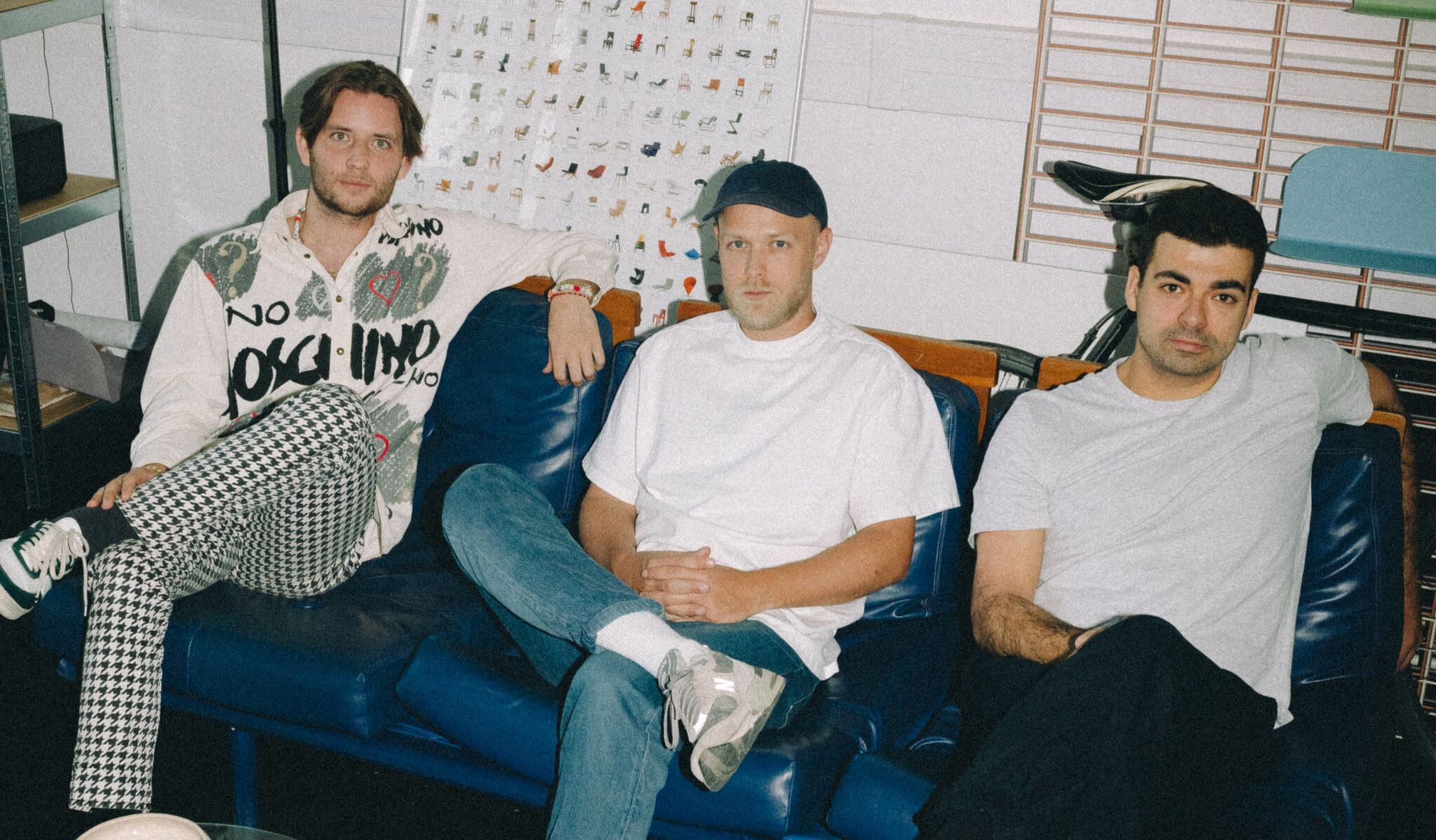
Budapest can become one of the region’s defining creative centres if it gives space to small, agile studios and fresh talents, while also building its own strong local identity. Developing the city’s visual environment is key—since this is what shapes the creators of the future. The goal of the POV Budapest conference is precisely this: to bring the global creative scene to Budapest and to continue writing the story here, locally. OpenAI, Revolut, Budapest—rare combinations. We spoke with the founders, Mátyás Czél and Boldizsár Mátyás, as well as head organizer Belián Jordán!
How do you see Budapest’s place in the global creative scene? I lived in Warsaw, and when I think about Central and Eastern Europe’s creative industry, Warsaw comes to mind first, not Budapest. Where does the Hungarian capital stand in this comparison?
Mátyás Czél: The term “creative industry” is a huge umbrella: some areas are strong, others less so. If we look at the classic definition—advertising agencies, big campaigns—Budapest has plenty, and many of the region’s campaigns are coordinated from here. But most of these are not Hungarian-owned companies; they’re local offices of global networks, mainly doing local adaptations of ideas conceived elsewhere. At the same time, our film industry is especially strong, our photographers achieve international success, and we have a serious developer–startup scene. We also consider these part of the creative industry. That’s why we call POV Budapest a platform for the “visual professions”: it shows more clearly how, for example, software development connects to visual experiences and interaction design. With this focus, Hungary’s current position becomes more understandable—and I think in recent years we’ve seen remarkable progress.
Hungarian film contributes tangibly to GDP; it’s no coincidence that world stars keep coming to Budapest. But you’ve also pointed out that much of the domestic creative sector is engaged in “translating” global campaigns locally. Looking ahead: what opportunities and optimal development paths could lie ahead for Budapest and Hungarian creative thinking?
Boldizsár Mátyás: From a studio perspective, we see that “legacy” agencies dominate here. But if you go just as far as Austria or Slovakia, the visibility of small and mid-sized studios is already stronger: those teams handle much larger projects. Artificial intelligence plays a huge role in this: new tools keep emerging, and you no longer need a 40–100-person apparatus to deliver fast, high-quality work for big brands. At POV Budapest we also showcase such smaller but globally impactful, agile teams. We’d love to see this scene gain more visibility here at home, and for brands—which today mostly work with agencies—to recognize the potential in smaller studios. Lots of fresh talent is graduating who don’t want to sit in agencies but would rather start their own studios. This freshness can push forward Hungary’s visual environment and aesthetic quality—something we badly need. There’s also an environmental dimension: what we see every day—billboards, interiors, restaurant identities—all shape our taste. If this stagnates or declines, the next generation won’t get inspiring stimuli.
Mátyás Czél: Exactly this kind of corporate–studio diversification raises the overall level. The more local players there are, the more perspectives collide, decisions aren’t born in monopoly situations, and more relevant messages reach consumers—both here and in neighboring countries.
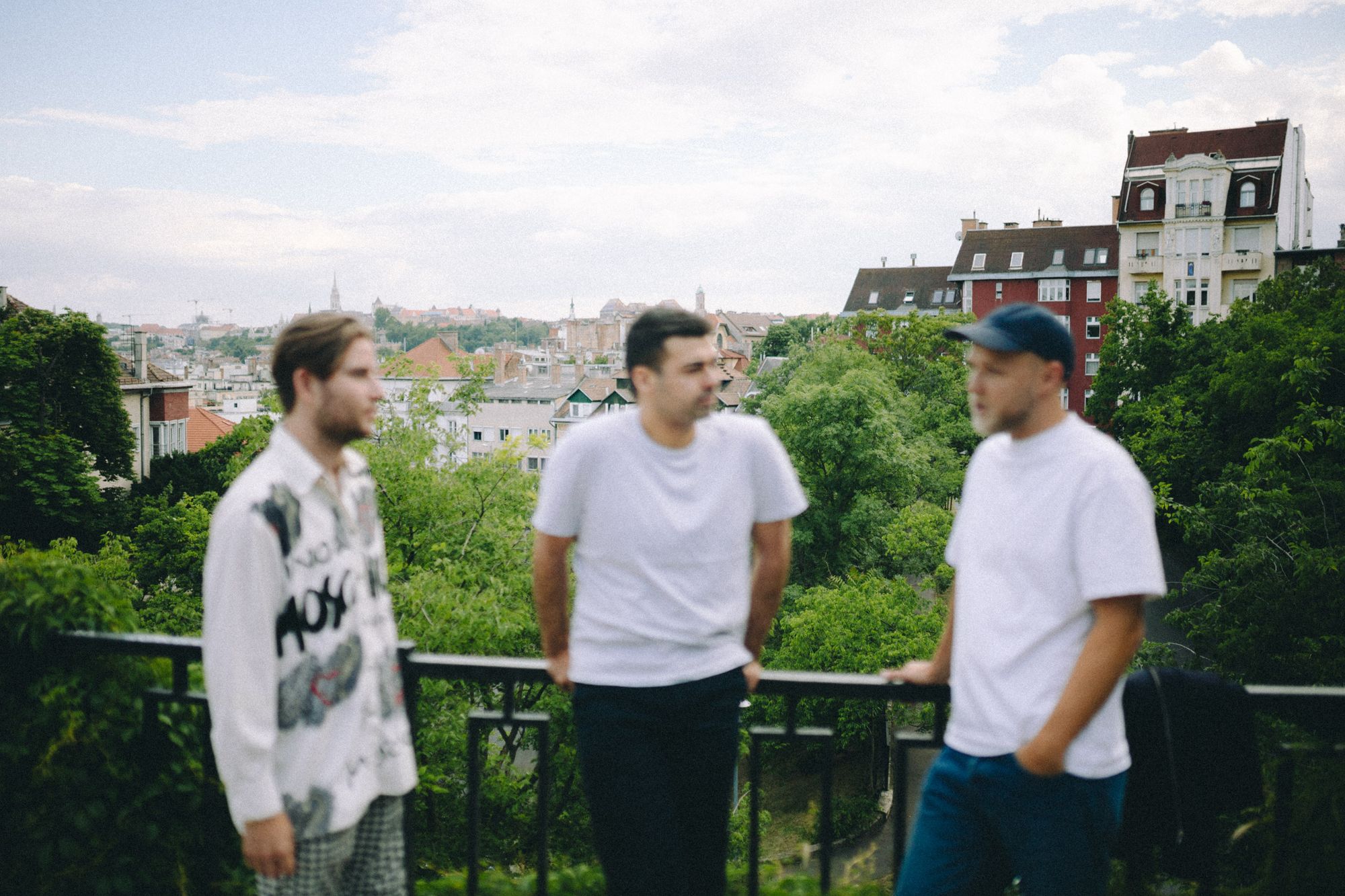
Let’s move on to POV Budapest. What was the spark?
Boldizsár Mátyás: We were at a “competitor” conference in Vienna with the team, and I thought: we can do this at home too. Why should we travel to Vienna and pay millions for tickets and accommodation, when Budapest doesn’t even have a conference, I’d want to take the team to? I came back, sat down with Mátyás—we had only met a month earlier—and it turned out he was thinking the same thing. We started building it in November ’23 and held the first event in September ’24.
What’s the value of such a conference? Knowledge, new perspectives, or are the connections most valuable?
Belián Jordán: For us the experience is completely different from a classic conference. It’s much more fun. At once cultural, professional, but also extremely informal. Last year, for example, PayPal unveiled its new brand elements here first, and then the designer came down to have beers with participants at the networking event.
Mátyás Czél: We’d like those two days—this year, with the side events, really four—to provide both professional and cultural impulses. The global creative market, which many only see on Instagram, suddenly becomes tangible. At the same time, Budapest’s atmosphere colours the experience: we’re not a stripped-down, franchise-style conference, but one that builds a strong local identity and character.
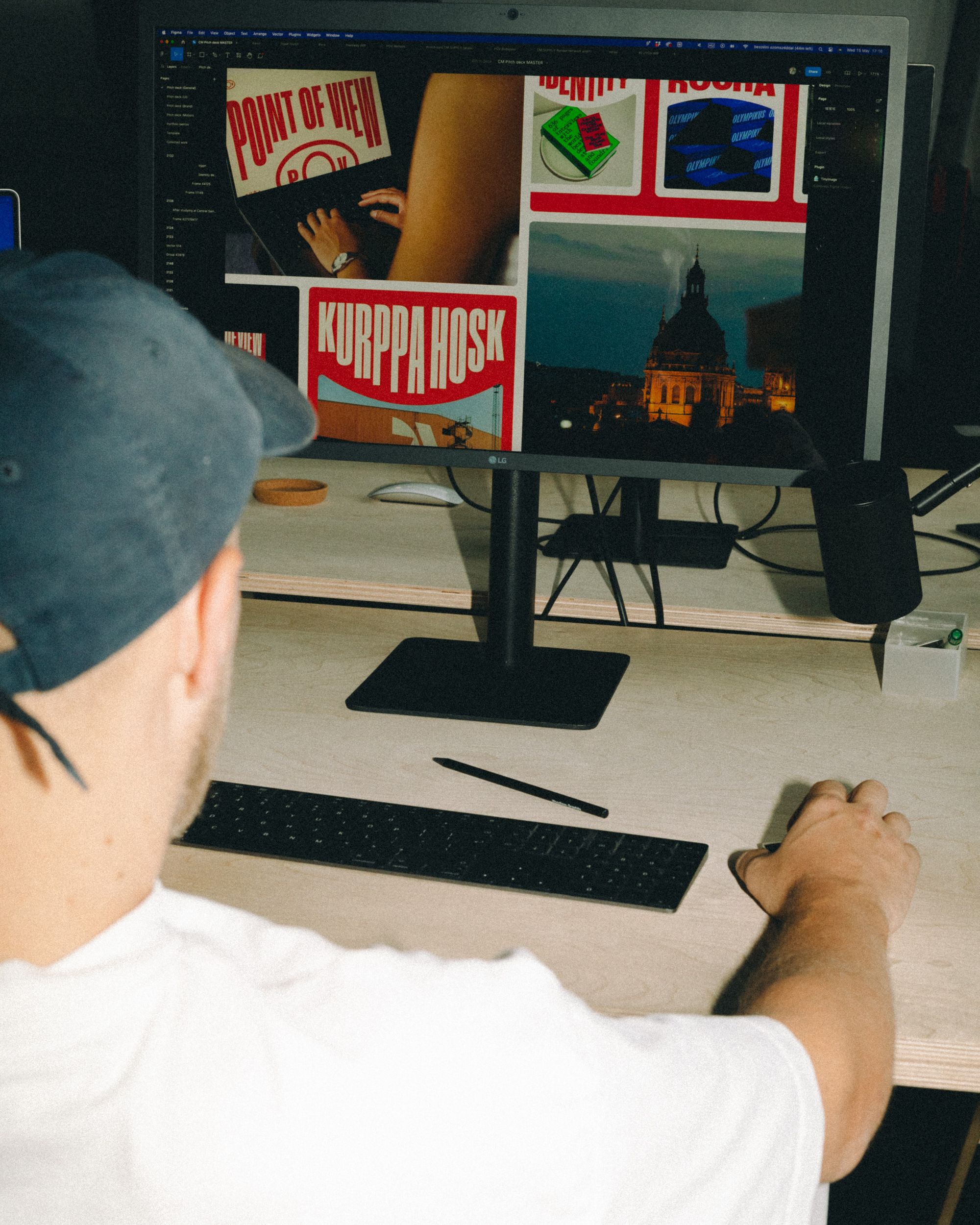
Boldizsár Mátyás: We also like to say we’re engaged in continuous, very personal storytelling. We bring the city’s exciting events and places to the surface, through a strongly curated design lens. Our guests and speakers become part of this continuously unfolding story. This is not an “identity-less” event, but a carefully curated arc: talks, side events, the food, the networking structure—even the break signal is the work of a Budapest sound artist. Our intro is built from the sounds of Budapest, accompanying the talks throughout. We pay attention to every touchpoint to deliver a holistic experience.
Mátyás Czél: From a design perspective this is a bit “meta”: the event itself is a design object. We couldn’t allow ourselves not to do it this way—we didn’t want to end up in a “shoemaker without shoes” situation.

What’s your point of view—the top 3 things that set you apart from other creative events?
Mátyás Czél: In no particular order: Critical perspective. We don’t ask for portfolio screenings. We consult with speakers throughout the year and expect real questions and statements tied to the theme. The Budapest experience: the city’s cultural fabric—sounds, tastes, places—is built in. Not a franchise event, but a Central Eastern European character. And the atmosphere: the region’s friendly, laid-back vibe is given—many come here as if also on a little holiday. This immediately removes the “prestige pressure.”
Belián Jordán: And the touchpoint obsession in the background: venue, social, web, ticketing—every detail matters. This year we already have four days with side events, and we choose Hungarian partners so they “match” well with the international audience. We give a curated city map: not just restaurants and bars, but lookout points, baths, beaches—a complex, diverse experience, so the event doesn’t speak to just one interest group.
Boldizsár Mátyás: Another big difference is the line-up: smaller conferences typically have 1–2 headliners and a lot of “filler.” With us, 12–15 of the 15–16 speakers are headliners in their own right. That’s why internationals come too: last year about 70% of attendees were from abroad; this year it’s closer to 80%, from more than 40 countries—even though this isn’t a huge festival. This in itself validates that Budapest has a rightful place and relevance for this.
Speaking of line-up: OpenAI is coming too—the iconic figure of the “ChatGPT era.” How do you see the relationship between AI and the creative industry?
Mátyás Czél: Nobody can give a final answer today—not even OpenAI, perhaps. That’s why we don’t even write “artificial intelligence” into our curatorial concept. Instead, we put data-driven and intuitive creative processes side by side. Our theme is “Making Sense”—which means both designing emotion and interpreting today’s world, even through data-based analytics. These perspectives have always coexisted in the creative industry. Our line-up shows the same: we’re far beyond classic logo and book design; we’re in the era of internet- and digital-surface-focused creativity, interactions, and data-based decision-making. The question is: how do emotionally driven studios connect to this world?
Boldizsár Mátyás: In practice, we use AI for process optimization: it speeds things up, makes them more efficient, increases individual capacity. With good use, one person can do the work of 3–4. There’s a downside—fewer new positions—but the positive impact is clear: you can work faster, better, with less money. And all this ethically: we’re not talking about rights-infringing image generation, but optimizing workflows, content and project management, research, and prototyping—from conference organization to studio work.
POV Budapest Agenda
Tickets available here!