


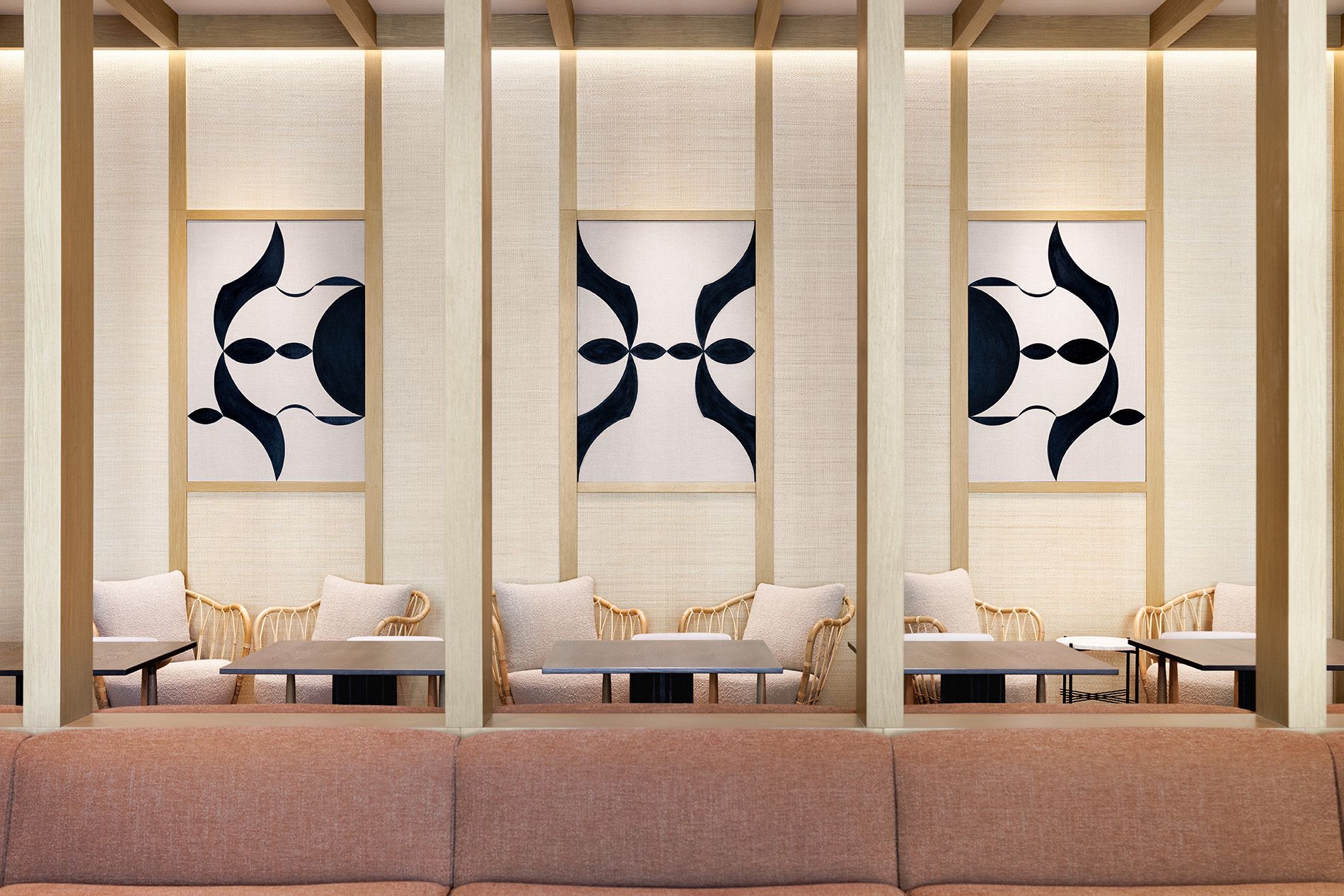
Painter Karolina Bielawska uses natural symbols – river bends, the Northern Lights and willow trees – as carriers of emotions and memories, while urban layers and atmospheres are also organically incorporated into her work.
Author: Nóra Ihász
The landscape of Masuria, her travels across Europe, as well as the work ethic and respect for craftsmanship inherited from her ancestors all shape her thinking about the time and space of painting. In our interview, we talked about all of this, the recurring presence of different shades of blue, and the points of connection between the Polish and Hungarian art scenes.
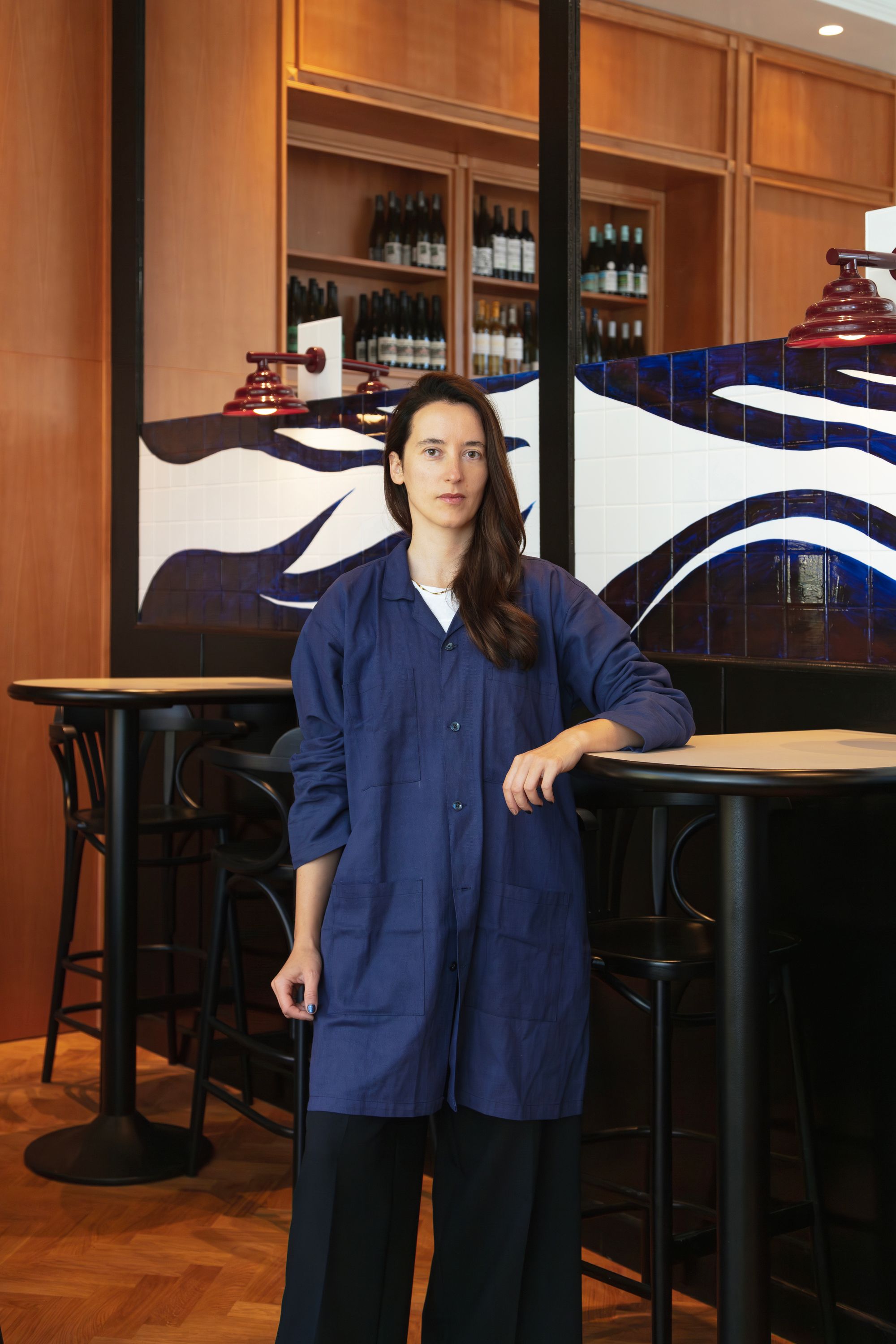
You are surrounded by the vibrant urban environment of Warsaw, while natural motifs regularly reappear in your work: river bends, the Northern Lights, willow trees. How much of the Masurian landscape lives on in these paintings, and what natural spaces inspire you most today?
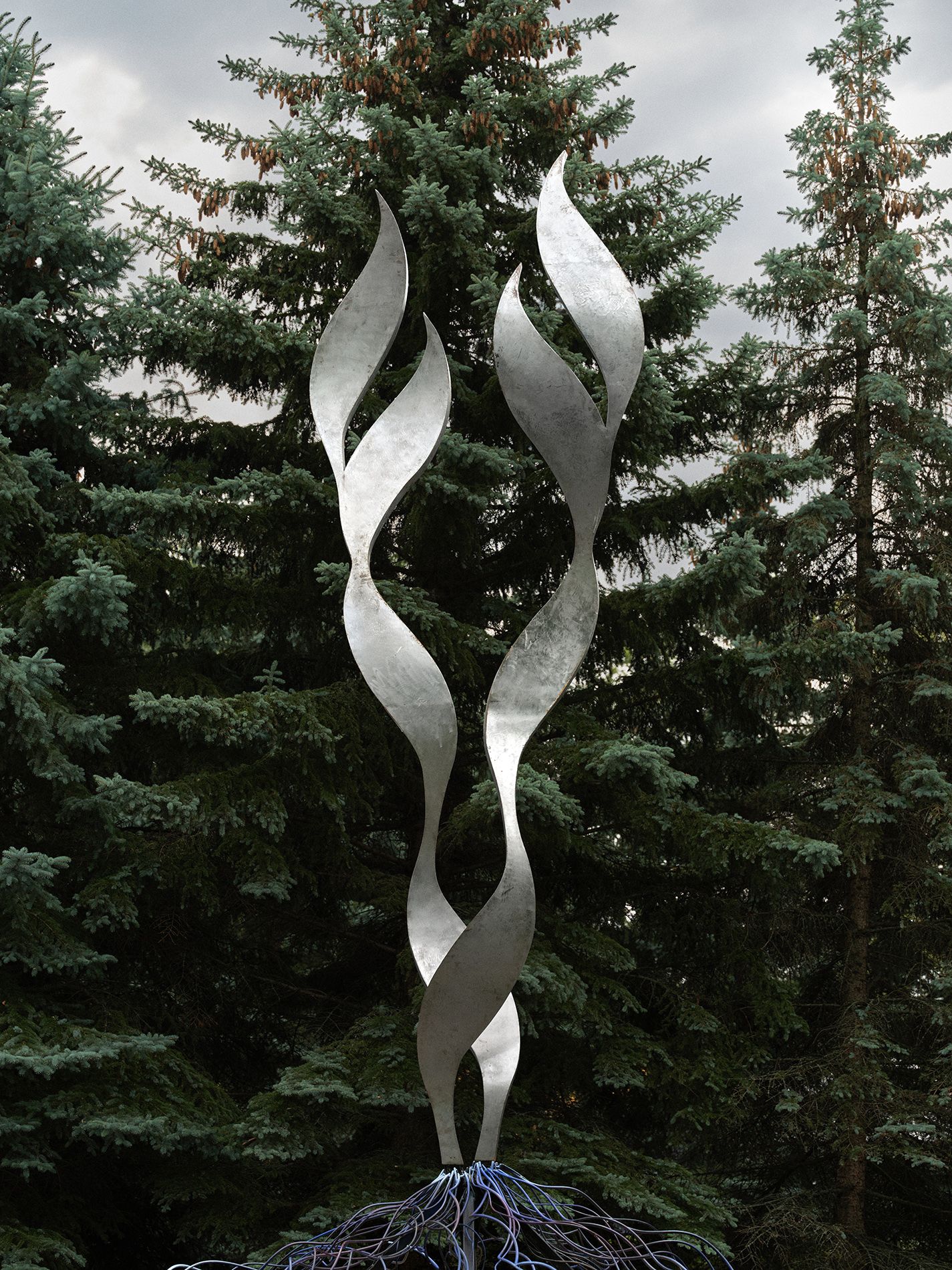
I grew up in Masuria, surrounded by lakes and forests, which undoubtedly shaped my sensitivity, but in my work I do not depict the landscapes of my childhood literally. Instead, I use natural symbols as carriers of emotions and memories. Although I now live in Warsaw, I do not feel that I have become disconnected from nature. My own green oases are found outside the city: Kampinos National Park, as well as the areas around the Vistula and Narew rivers. In 2025, I created my first monumental sculpture, inspired by the Northern Lights. The two steel “flames” created for the Polish Zorza music festival embody the movement of energy and light. My daily routine is also closely connected to nature: I spend long hours walking with my dog through fields and forests, and I have also recently started horseback riding.
Where do you truly feel at home? How much of travel is part of your life, whether because of gallery collaborations or simply for leisure?
Although Warsaw is my everyday base and the centre of my studio life, a part of me is always rooted in the openness of the Masurian landscape. It is more of a mental state: a kind of space where I feel focused and where I am truly at home. Travel is an integral part of my artistic practice, so I move around Europe quite frequently. These trips usually emerge from a meeting point between professional collaborations and the desire for personal renewal. Whether it is a holiday, an exhibition or a gallery project, I see every journey as an opportunity to gather new experiences. When I step outside my familiar surroundings, I have the chance to observe different urban layers and atmospheres, which later seep back into my paintings. For me, even a short trip functions as a kind of quiet research. These days, though, I probably feel most at home in the stable, among the horses (laughs).
Have you ever been to Hungary? How do you see the connections between the Polish and Hungarian art scenes, and is there a Hungarian artist whose work you feel particularly close to?
I visited Budapest in 2021, for the opening of Q Contemporary. I have to admit, I completely fell in love with the Rudas Baths. Earlier, in 2018, I also took part in a group exhibition at Glassyard Gallery, and since then I have continued to feel that the Central European context is extremely important to my own work. I see a very strong connection between the Polish and Hungarian art scenes – we are united by a similar post-socialist sensibility, as well as a deep tradition of avant-garde and conceptual art. Among Hungarian artists, I have a deep respect for the work of Dóra Maurer. What I particularly admire in her practice is the way she examines questions of movement, displacement and the relativity of perception with extraordinary discipline. Her ability to transform these complex, almost mathematical processes into a minimalist yet poetic visual language is truly exceptional. I am also particularly inspired by the way she works with space; for me, this is an important point of reference when reconsidering the boundaries of the canvas. I am also a great admirer of Zsófia Keresztes’s biomorphic sculptures. I feel close to the decentralised, deconstructed way in which she explores questions of textuality and corporeality through her surreal, hybrid creatures. Her large-scale installations almost seem to live together with the exhibition space, as if they were growing directly out of the walls.
In a previous interview, you mentioned that you have communicated through painting since childhood, and that your artistic sensitivity developed naturally. What do your parents and ancestors do or did for a living? Is there another artist in your family? Did you break with any traditions in order to follow your own path?
Art really has always been my primary language, for as long as I can remember, and my family environment played a major role in that, although not necessarily through professional art. My parents are not artists in the academic sense, but they have an extremely strong practical and aesthetic sensibility. As for my ancestors, I would not say that I had to break with any particular tradition. Rather, I feel that I inherited a certain work ethic and a respect for craftsmanship. In my family, there has always been a strong emphasis on independence and on everyone finding their own path. If I departed from anything, it was more the traditional professional path characteristic of my region: choosing the uncertain life of an artist instead of a more conventional career. There are no other professional artists in my immediate family, which in a sense gave me even more freedom. I did not have to follow in anyone’s footsteps or adapt to an existing legacy; I could essentially build my own visual world from scratch.
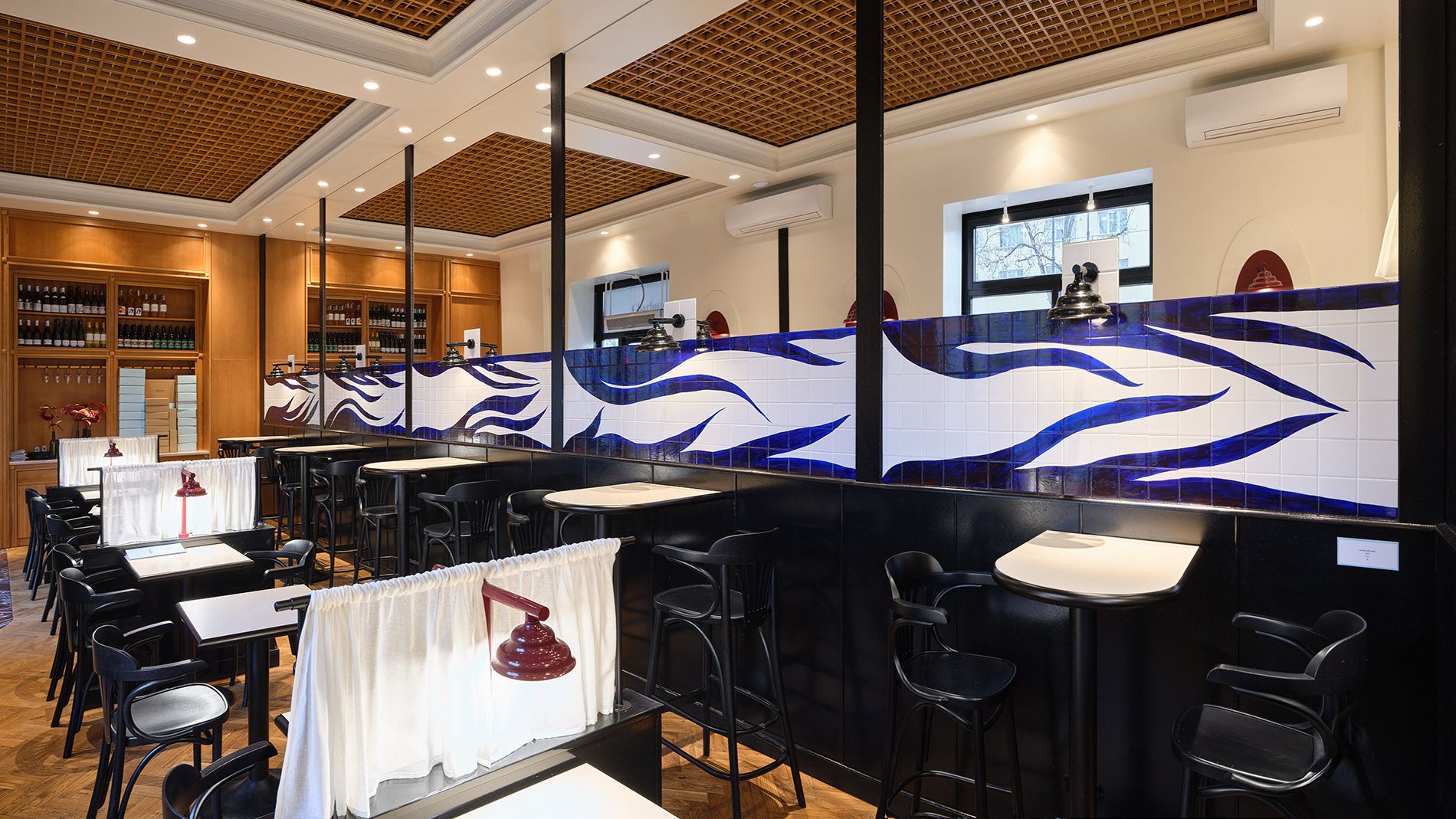
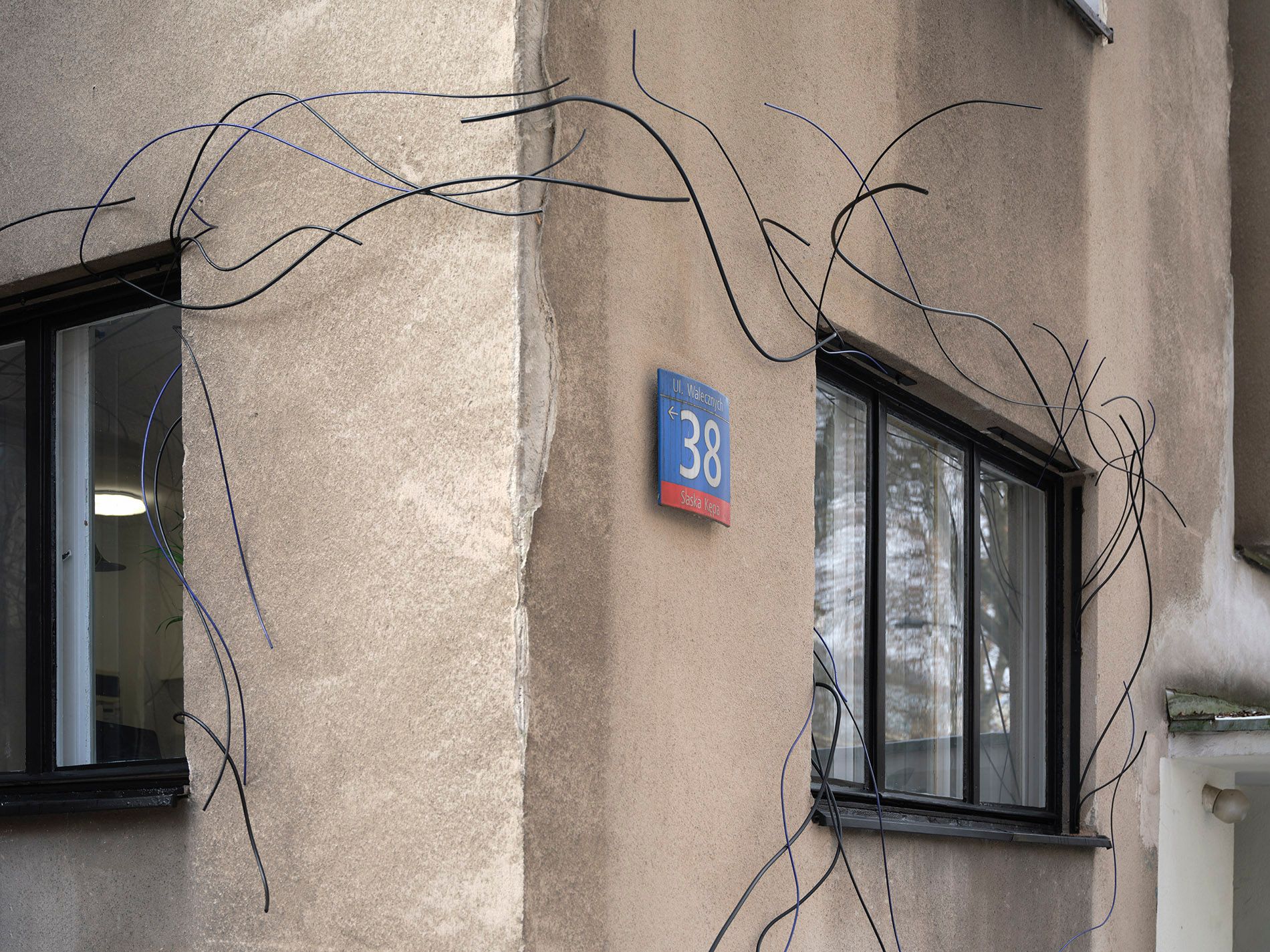
You work with more than traditional canvases and exhibition spaces: your work also appears in urban spaces, whether in the ceramics of the Charlotte bistro, on the walls of the Puro hotel or in your steel installation in the Saska Kępa district. As you put it in a previous interview, you are interested in the “in-between” state. Which mediums and spaces are you most interested in at the moment, and why does this sense of transition resonate so deeply with you?
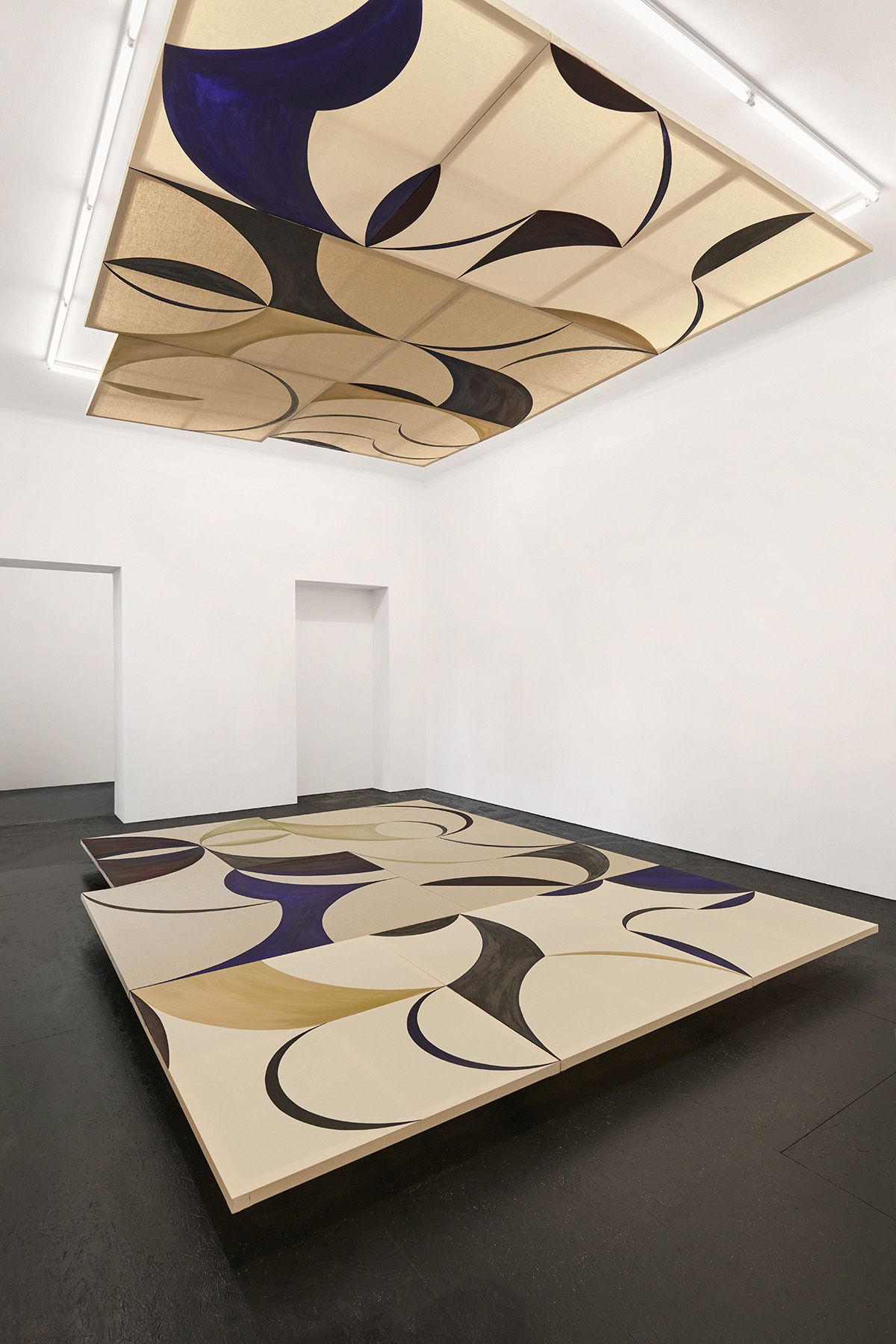
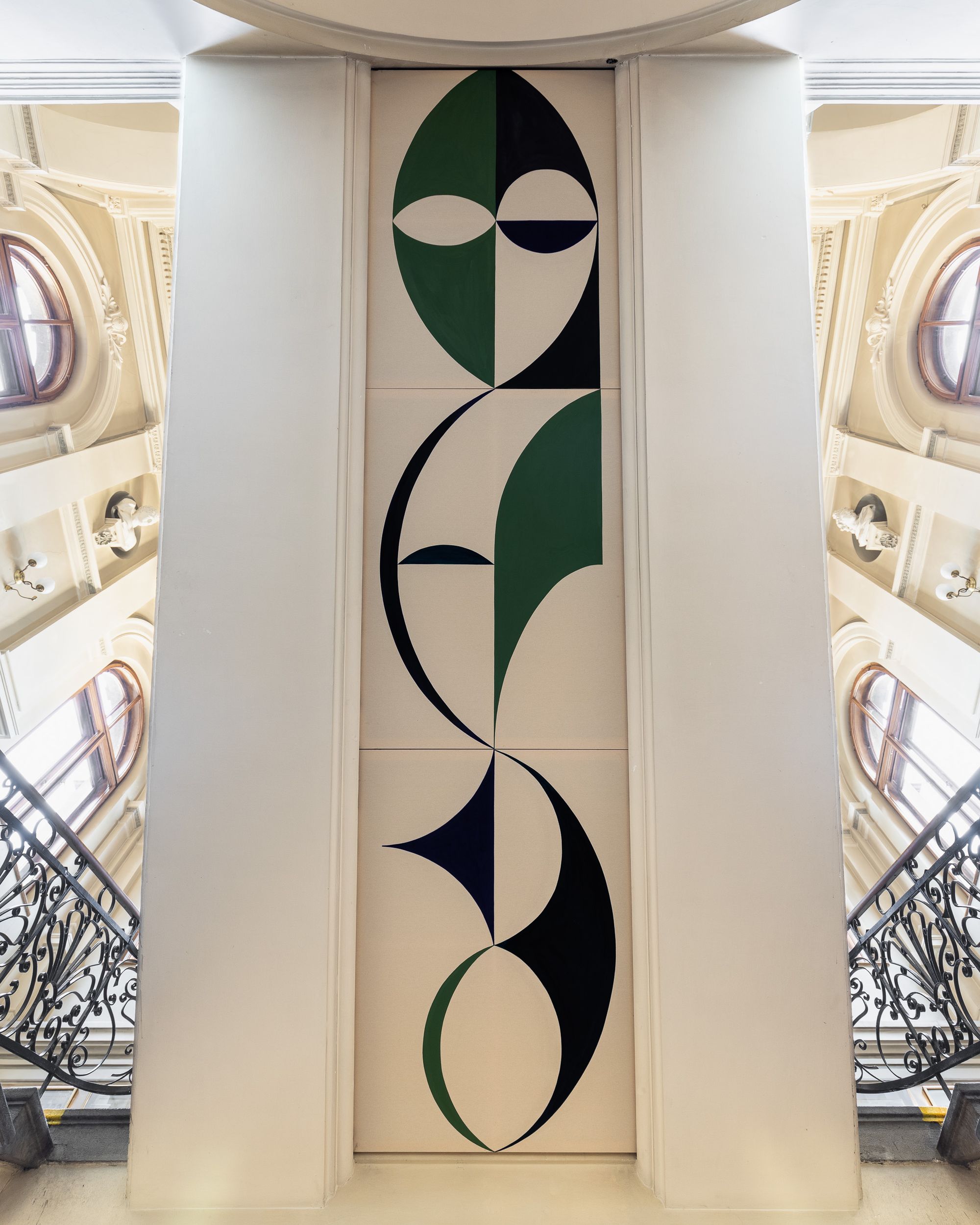
For me, the canvas has never been a boundary, but rather a starting point. Projects such as Charlotte, Puro or the installation in the Saska Kępa district were attempts to integrate art into the rhythm of everyday life, into something one encounters by chance, rather than exclusively through the sterile silence of galleries. In recent years, I have become particularly interested in industrial and raw mediums, as I move towards increasingly large, architectural-scale forms that enter into a direct dialogue with their surroundings.
Different shades of blue are recurring elements in your work. Why are you so drawn to this colour? Why do you find it so expressive in painting? Is there an important art-historical reference connected to blue for you, such as Yves Klein Blue?
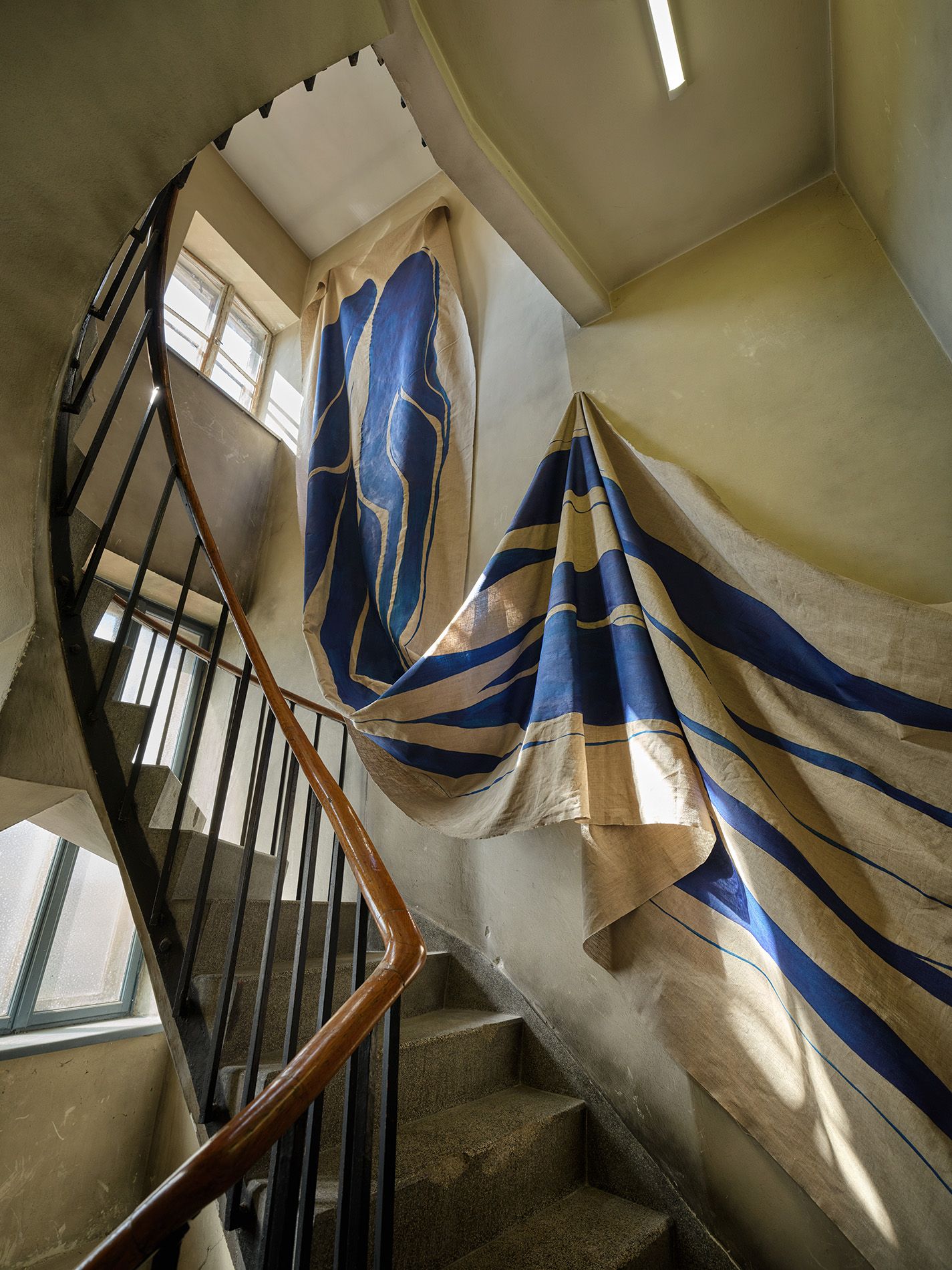
Blue is the colour I instinctively return to, as if it were a recurring impulse. To me, it is the most elusive and expansive colour. It evokes distance, air and water, while also carrying a kind of psychological depth. In painting, I find it extraordinarily expressive: it is not merely a colour, but a space one can step into. As for art history, although Yves Klein’s blue is iconic, I perhaps feel even closer to those in-between shades of blue that constantly change according to light and the texture of the material, for example when they mix with the dark, heavy surface of bitumen.
In your opinion, what are the greatest challenges facing contemporary painters today?
We live in a world saturated with rapidly consumed, fleeting images, while painting, by its very nature, requires an entirely different kind of time: a slow, meditative presence. Another significant challenge is the dialogue with technology and artificial intelligence. We constantly have to ask ourselves: what can a physical painting offer – through its texture, smell and material weight – that a digital image cannot? For me, the answer lies in its irreproducibility: in the irreversible traces left by materials and in the way they react to one another unpredictably. Finally, there is also the pressure of the art market. Finding a balance between professional development, international collaborations and remaining true to one’s own artistic intuition is a constant search for equilibrium. It is about making sure that the noise of the industry does not drown out the quiet, essential work that takes place alone in the studio.
What is a tool, material, medium or space that you have never used but would like to try? Why?
I really love music. If I had to name a new medium, it would be sound, although I am not actually planning to work with sound or music; it is more that I have a deep respect for what it can create. It is incredible that a song can transport you into a completely different space within a few seconds, and instantly evoke nostalgia, emotion or joy. For me, the power of music lies in this astonishing, effortless emotional connection, which has always attracted me.
Karolina Bielawska: Instagram
Opening picture: Karolina Bielawska, "Features", Puro Hotel Warsaw Old Town, photo by: Szymon Sokołowski, 2024