


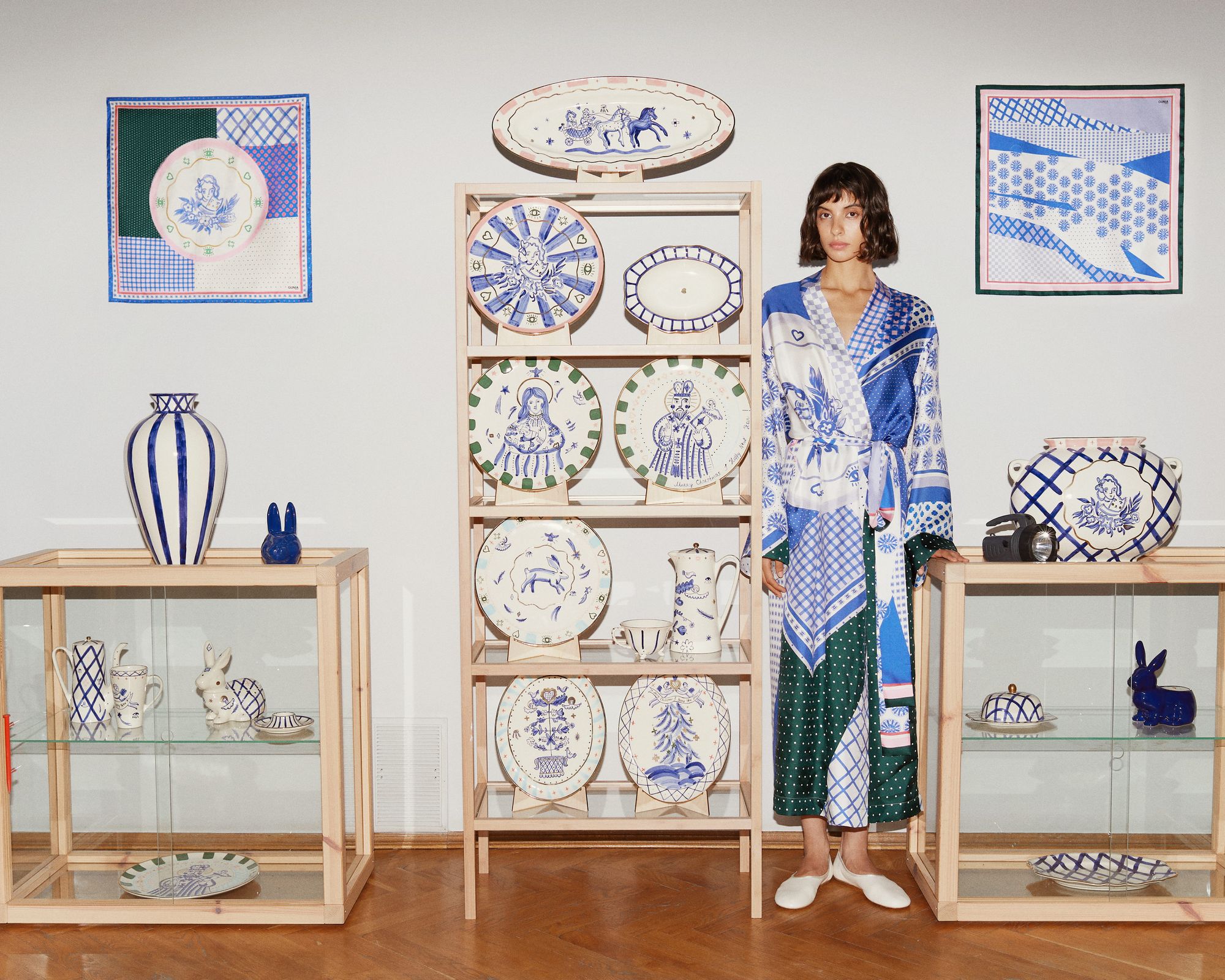
For GUNIA, Ukrainian heritage is a source of creative freedom, from the bold visual language of naïve painting to the knowledge held by living craftspeople. With Naïve My Love, published by Assouline, the brand brings this artistic world to an international audience at a time when war threatens its survival. We speak with GUNIA about questioning the boundaries between folk art and modernism, building a future for traditional craftsmanship, and making Ukrainian culture visible in all its complexity.
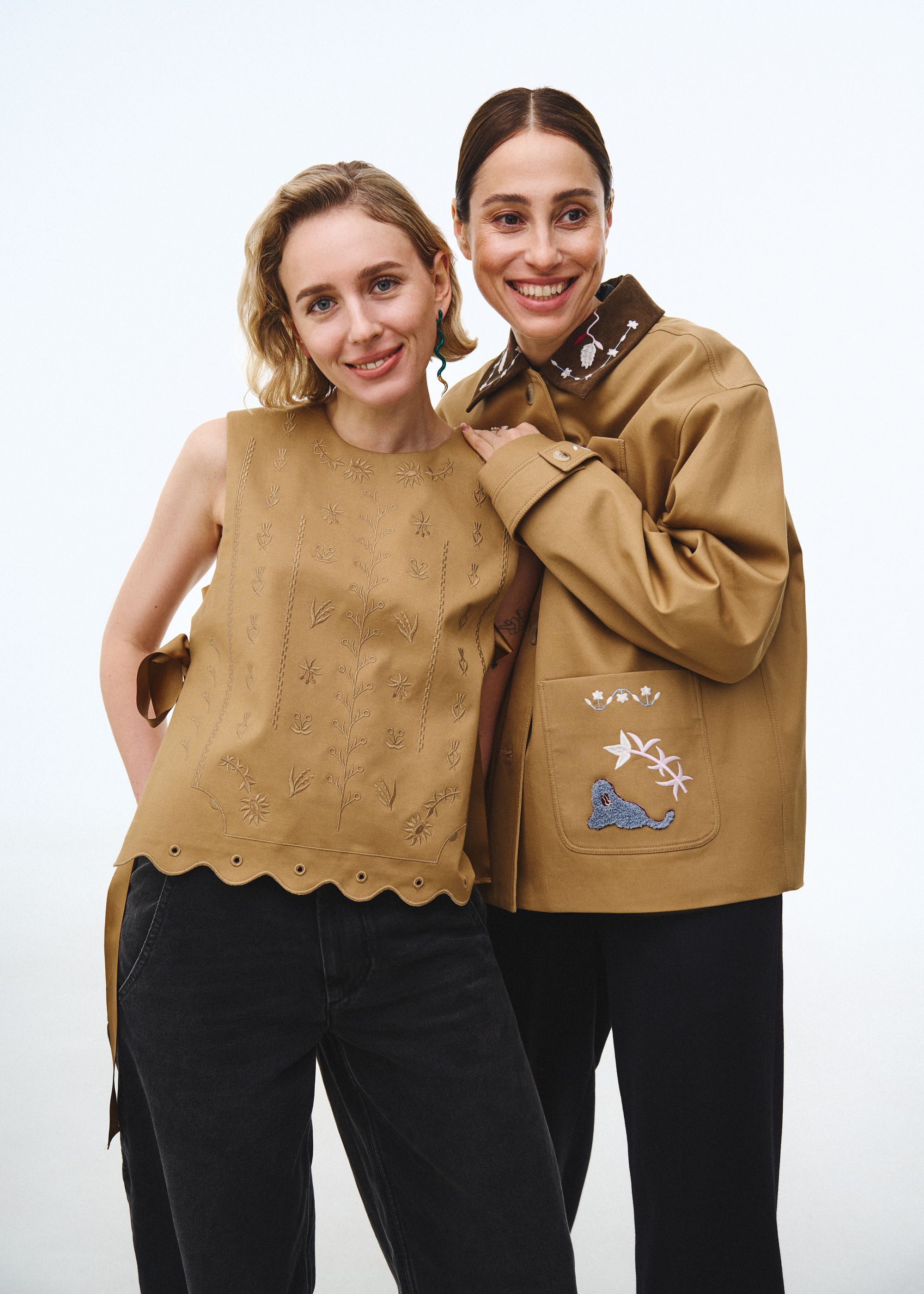
GUNIA began by looking inward — at Ukrainian craft, decorative traditions and objects that were often treated as something belonging to the past. How did you recognise that this heritage could become the foundation of a contemporary, internationally relevant brand rather than simply something to preserve?
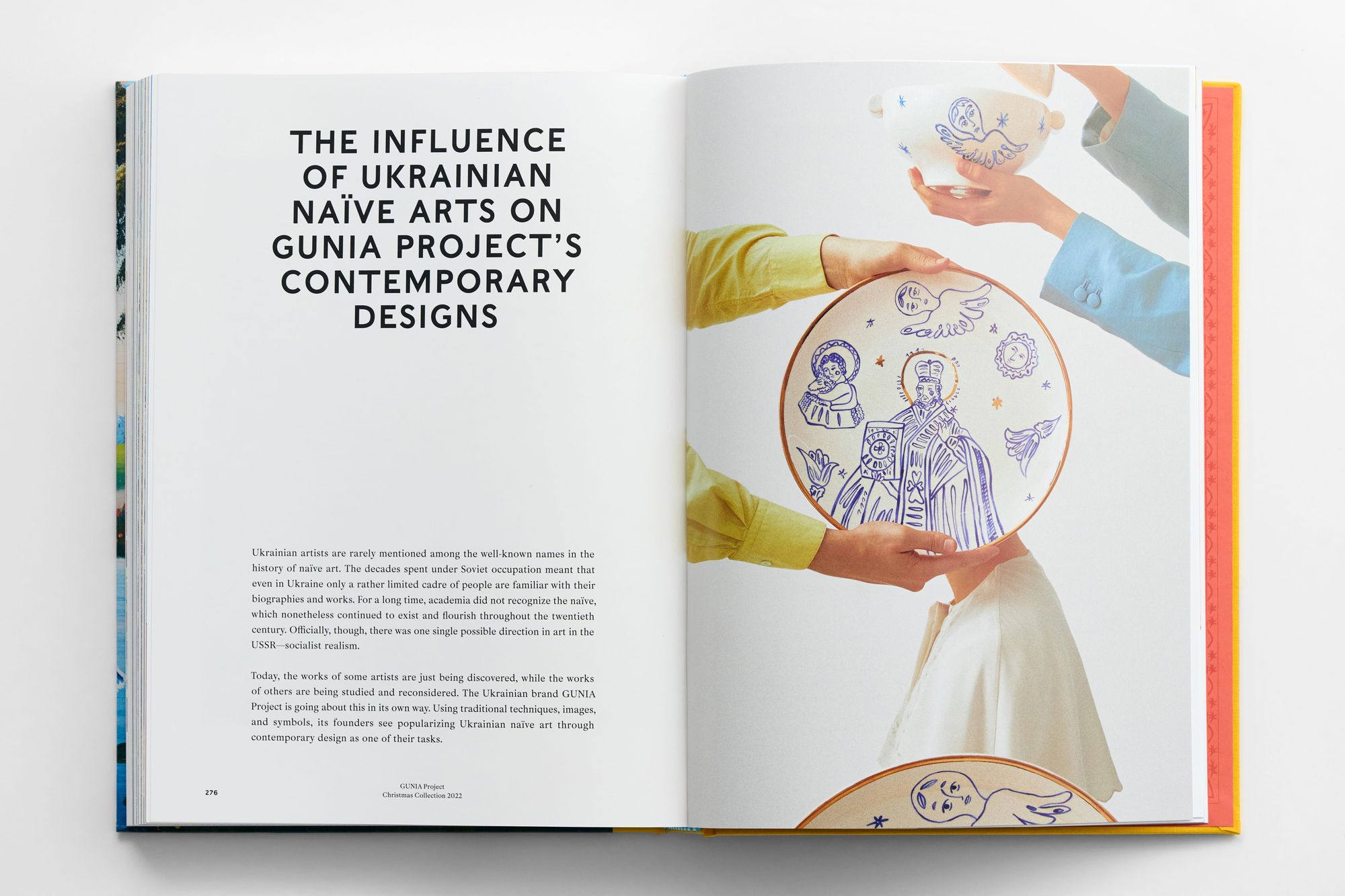
GUNIA started from curiosity rather than from an idea of preservation. Both of us came from fashion, and at some point we felt that constantly producing something “new” was no longer enough. We wanted to understand what we could create from our own cultural context and what could make our work genuinely distinct. We began travelling around Ukraine, visiting museums, studying archives and private collections, and meeting craftspeople. What surprised us was how little of this enormous visual world was actually present in contemporary Ukrainian design. Many objects we encountered were kept within ethnographic collections and discussed mainly as historical evidence, while to us they looked incredibly inventive.
We were interested not only in ornament or technique, but in the freedom behind these objects: unexpected proportions, unusual combinations of colours, humour, simplicity, sometimes even a certain visual boldness. They did not feel outdated. On the contrary, many of them felt surprisingly radical. This became an important starting point for GUNIA. We understood that our role was not to recreate historical objects or build a stylised image of Ukraine. We could take this visual vocabulary apart, understand its logic and use it as material for something completely contemporary.
Over time, this approach became much broader than references to particular historical objects. It became a way of thinking about design itself. We can work with an archival image, a traditional technique or a small detail discovered in a museum, but the final object has to exist independently in the present. Perhaps this is also what makes GUNIA understandable internationally. You do not necessarily need to know the original reference to respond to the object. The cultural context gives it depth, but the design has to speak for itself.
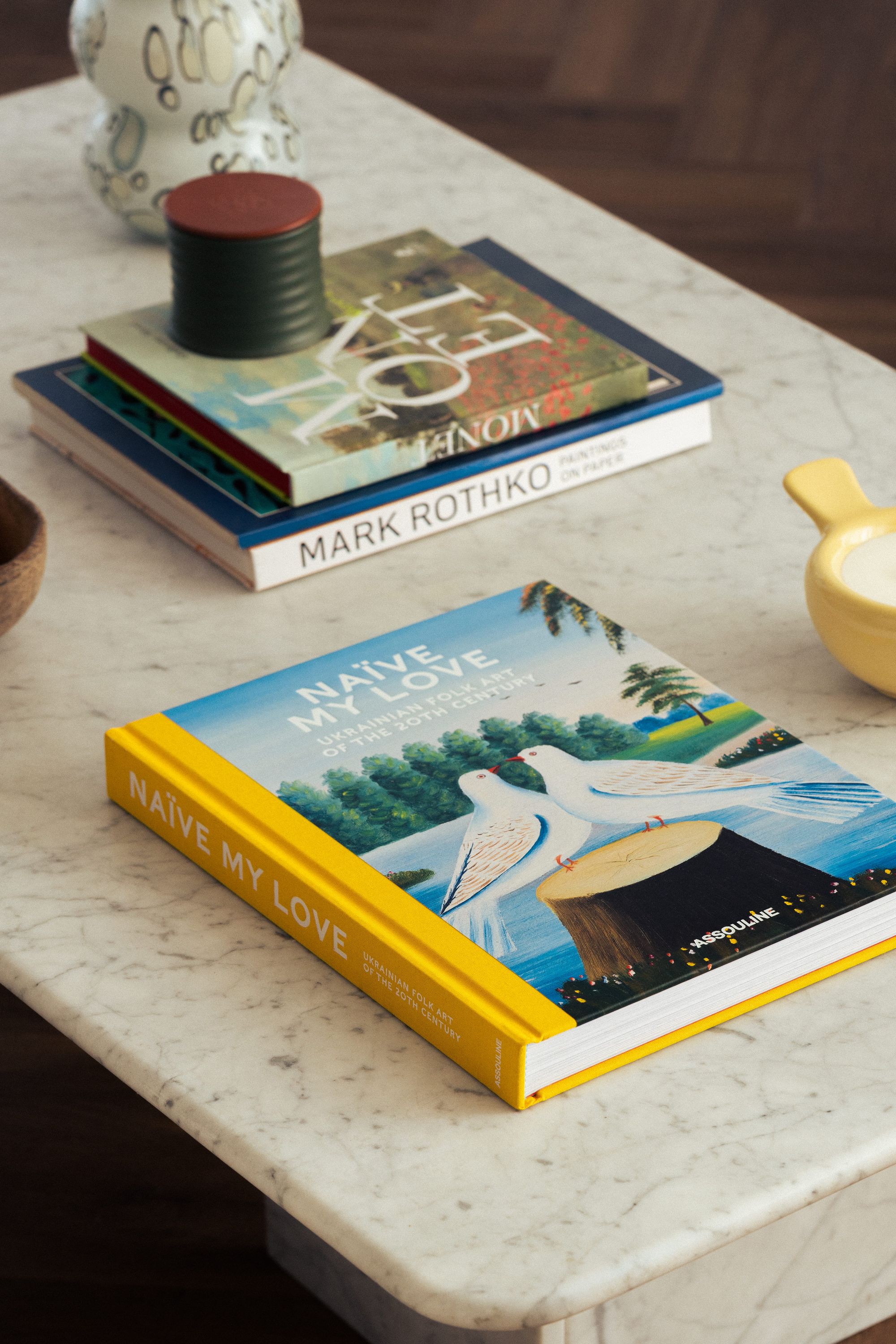
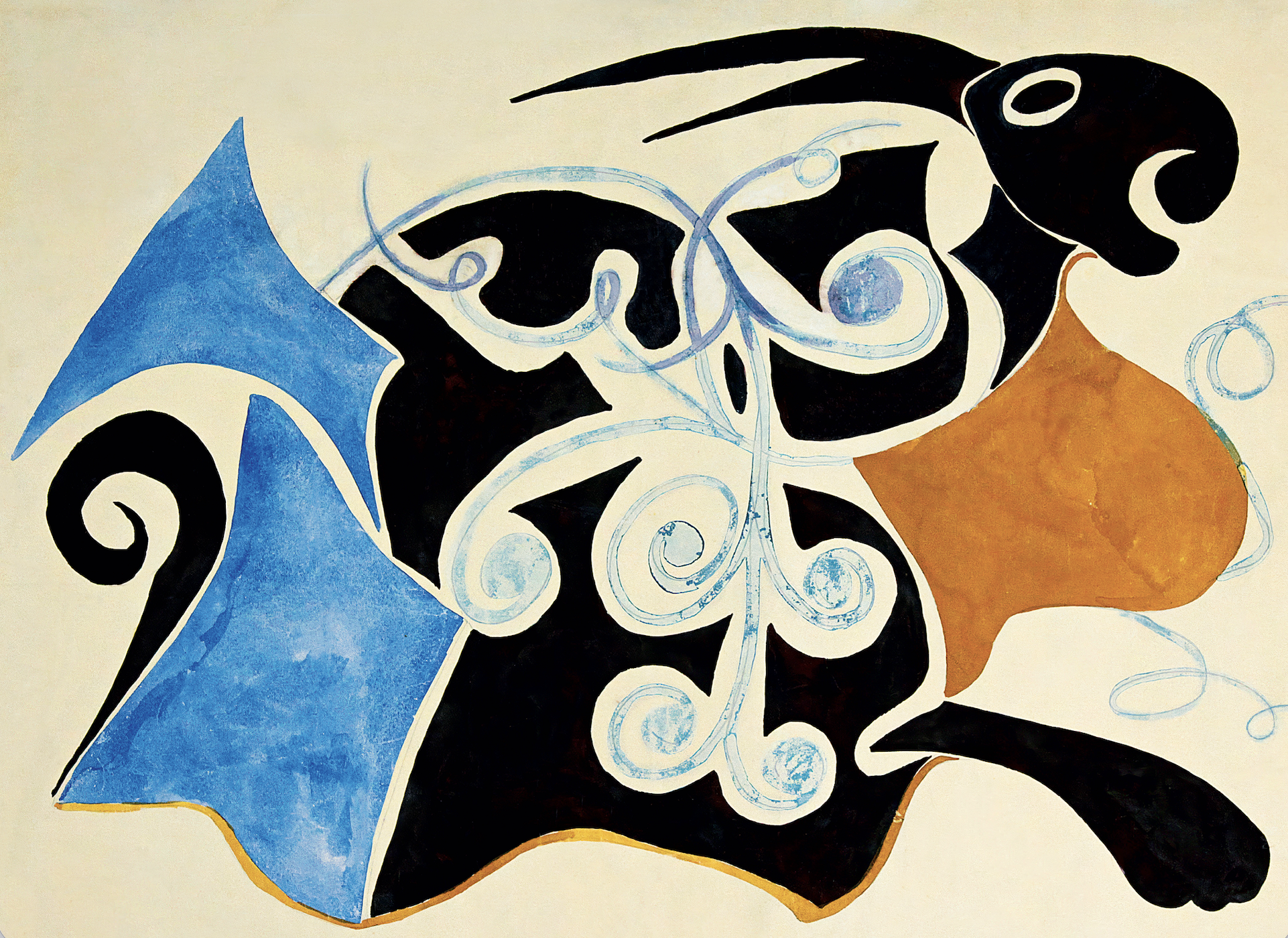
Naïve My Love places Ukrainian naïve art in dialogue with figures such as Kazimir Malevich, Alexandra Exter and Sonia Delaunay. Why is it important to challenge the traditional distinction between “folk art” and “high art”, and what does that distinction tell us about how Ukrainian culture has historically been perceived abroad?
The division between “folk art” and “high art” is largely an institutional construction. It determines which objects enter art history, which enter ethnographic collections, whose names are remembered and whose remain anonymous.
This is particularly important in the Ukrainian context. For decades, works created outside academic institutions were often treated primarily as ethnographic material. At the same time, many ideas coming from the same visual environment — colour, abstraction, rhythm, ornament, simplified form — became part of the language of the European avant-garde. Malevich, Exter and Delaunay are important in this conversation not because we need famous names to legitimise naïve art, but because their work demonstrates how artificial these cultural boundaries can be. Modernism did not emerge in isolation from vernacular culture. There was an exchange between these worlds.
What interests us most is what happens when you remove the hierarchy. Suddenly a work by an academically trained artist and a painting by a self-taught village artist can be looked at with the same degree of attention. You begin to see composition, imagination, experimentation and personal language rather than categories. This is particularly relevant to Ukraine because our culture has so often been interpreted through external frameworks. Some of its most sophisticated expressions were labelled provincial or ethnographic, while internationally recognised artists connected to Ukraine were frequently placed within Russian, Soviet or broader European narratives.
Naïve My Love proposes another way of looking at this history. Instead of treating Ukrainian vernacular culture as a footnote to modernism, we can see it as one of the environments from which modern visual ideas developed. For us, this is not about rewriting history in order to create a new mythology. It is about making the picture more complete.
You spent more than a year researching archives and bringing together works from numerous museum and private collections. What did you discover during this process that fundamentally changed your own understanding of Ukrainian visual culture?
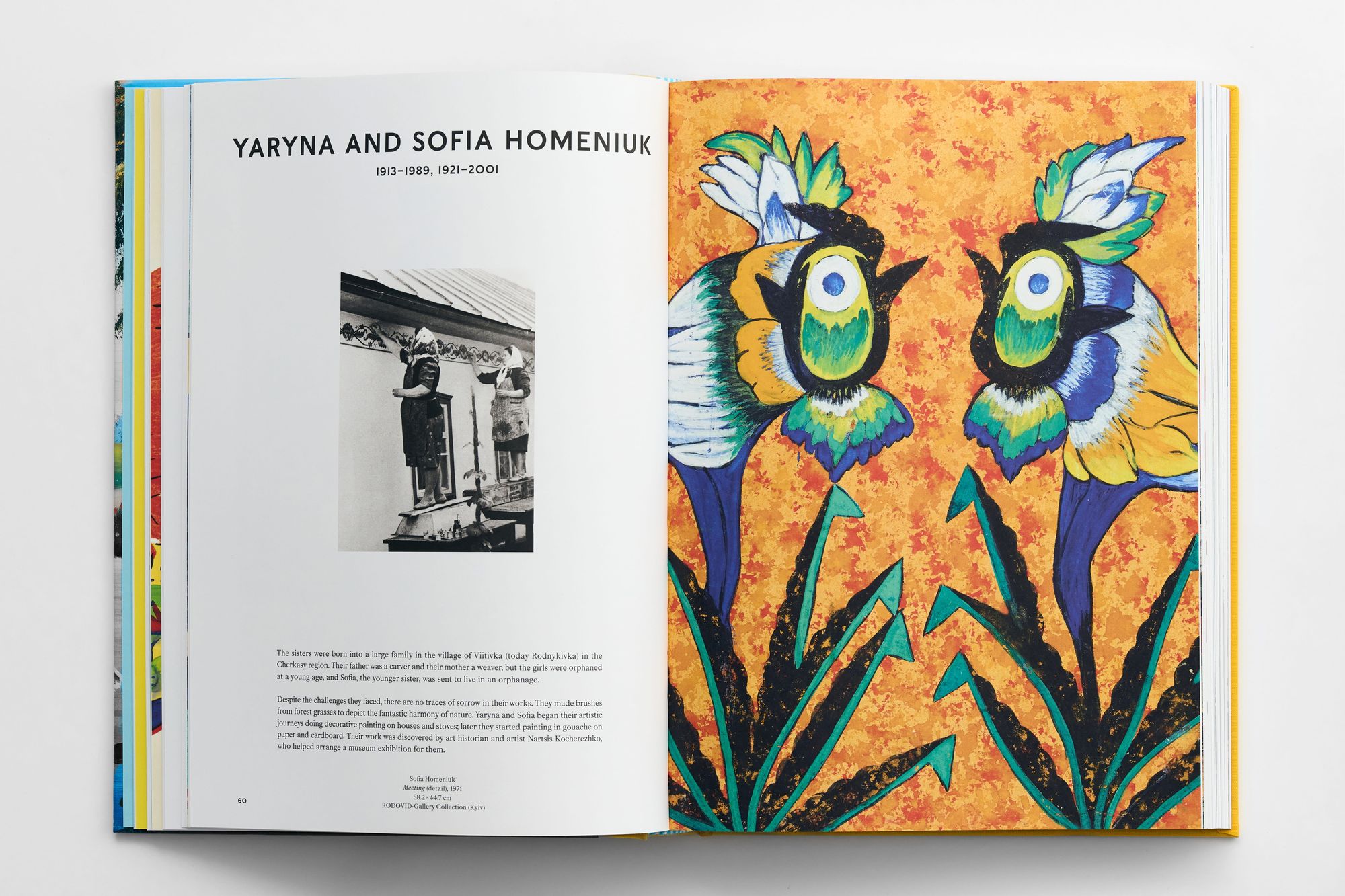
Probably the most important discovery was how difficult it is to define Ukrainian naïve art through a single visual identity. Before working on the book, we already knew many artists and collections, but seeing such a large number of works together changed our perception completely. The deeper we went into museum archives and private collections, the less possible it became to speak about Ukrainian naïve art as one coherent style. There are artists whose works are almost graphic and minimal, and others whose compositions are extremely dense. Some created imaginary animals and fantastic worlds; others painted everyday life, religious subjects, gardens, family scenes or memories. The differences between individual authors can be enormous.
What connected them was not a particular aesthetic but an extraordinary freedom of expression.Many of these artists worked outside professional art institutions. They did not necessarily follow what was considered fashionable or correct in contemporary art. Because of that, their work often developed according to its own internal logic. That independence is incredibly powerful.
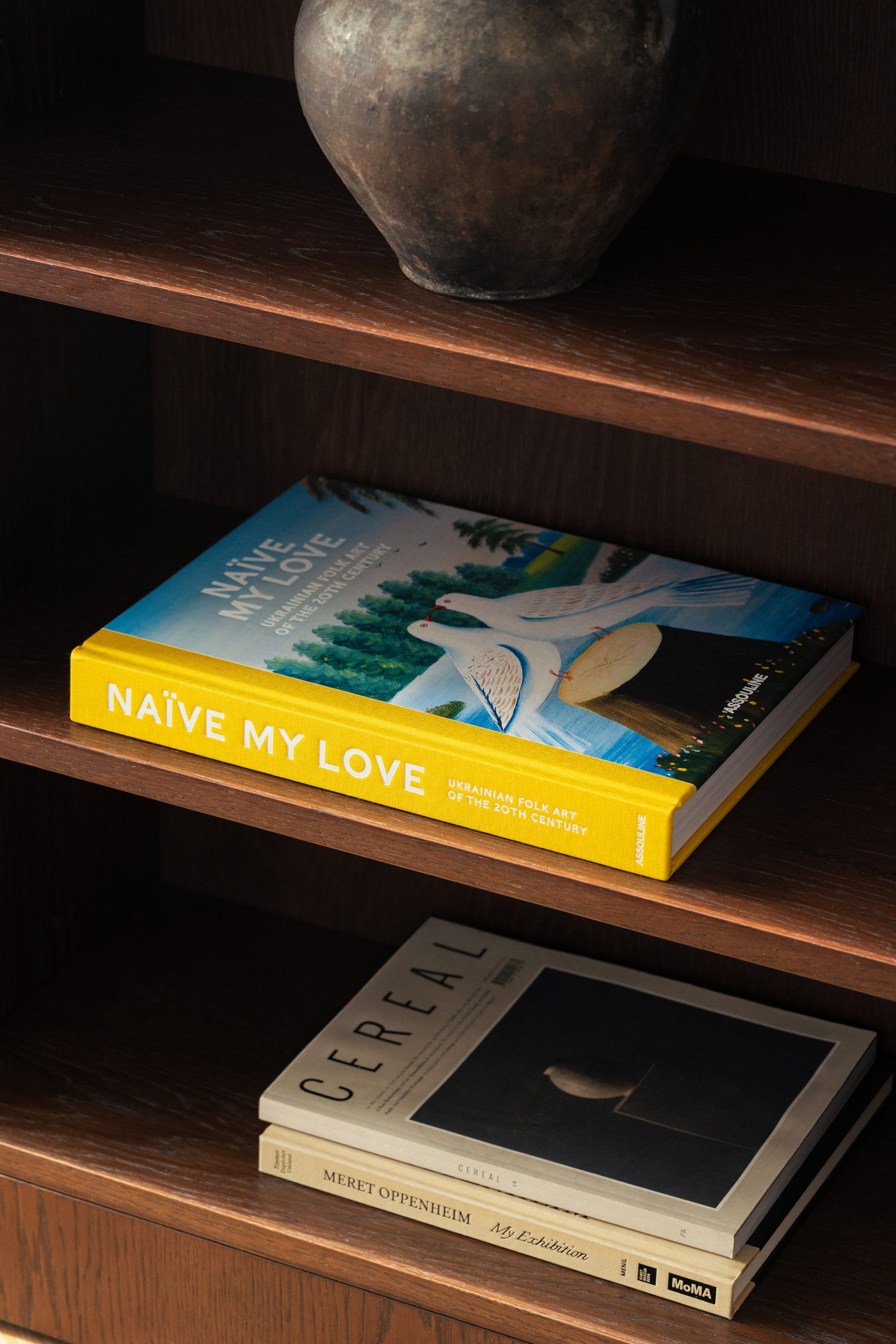
We also discovered how many stories are still incomplete. Sometimes a museum has a remarkable body of work but very little biographical information about its author. Sometimes an object survives while its maker’s name does not. The cover of Naïve My Love became symbolic of this for us. It features two white doves by an unknown artist. We considered many works by established authors, but ultimately this anonymous image felt right. Artistic value does not disappear because history failed to preserve a name. The process made us realise that this book could never be a definitive statement on Ukrainian naïve art. It is an invitation to continue researching it. There are still artists to identify, archives to study and connections to uncover. In that sense, the project made our understanding of Ukrainian visual culture less certain — and much larger.
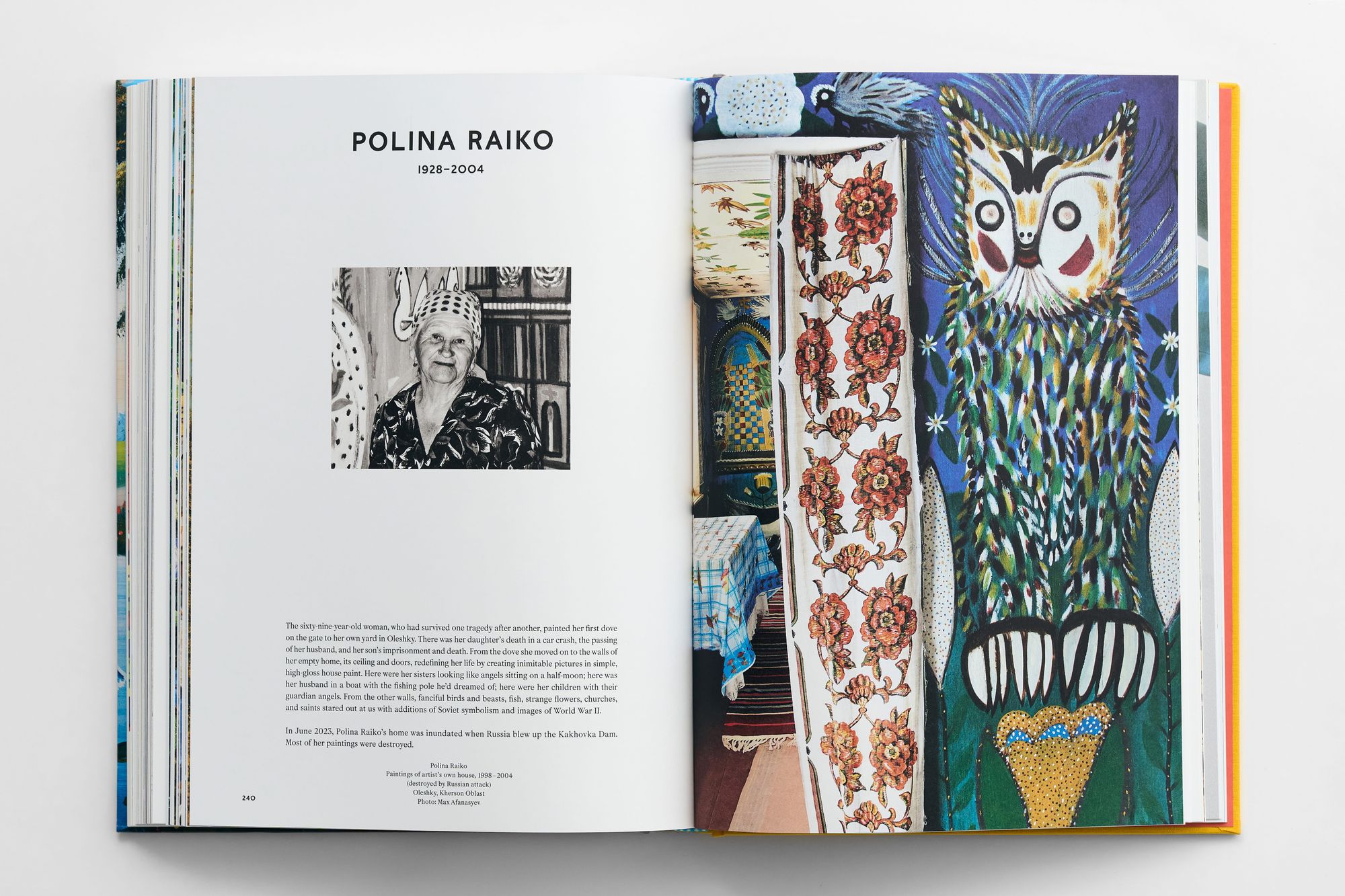
The book arrives at a moment when Ukrainian cultural heritage is not only being rediscovered internationally but is physically under threat. Some of the heritage documented in the book has already disappeared — such as Polina Raiko’s painted house in Kherson Oblast. Has the war changed the meaning of cultural preservation for GUNIA?
The war has completely changed our relationship with time. Before the full-scale invasion, cultural preservation could be understood as something gradual. You could imagine that there would always be another opportunity to document an object, visit a museum collection, photograph a building or speak to a craftsperson. Today we know that this assumption is dangerous. Polina Raiko’s house is perhaps the most striking example within the book. An entire artistic universe created by one person existed physically in one place, and that place was lost. Suddenly photographs, research and publications acquire a completely different significance. The same is true for museums, archives, architecture and private collections across Ukraine. Cultural heritage is no longer something we can assume will simply remain there waiting for us.
This has made documentation much more urgent for GUNIA. Researching an object, identifying its origin, photographing it, publishing it and making information accessible are not peripheral activities anymore. Sometimes documentation may become the only surviving evidence.
At the same time, war has made us think beyond physical preservation. Cultural continuity also depends on people. A technique can disappear even if examples of it remain safely stored in a museum. If nobody knows how to practise it anymore, part of that knowledge is lost. This is why working with living craftspeople has become even more meaningful to us. The continuation of knowledge from one person to another is also a form of preservation. The war has made something very clear: culture is not simply what a country inherits. It is part of what allows a country to remain itself.
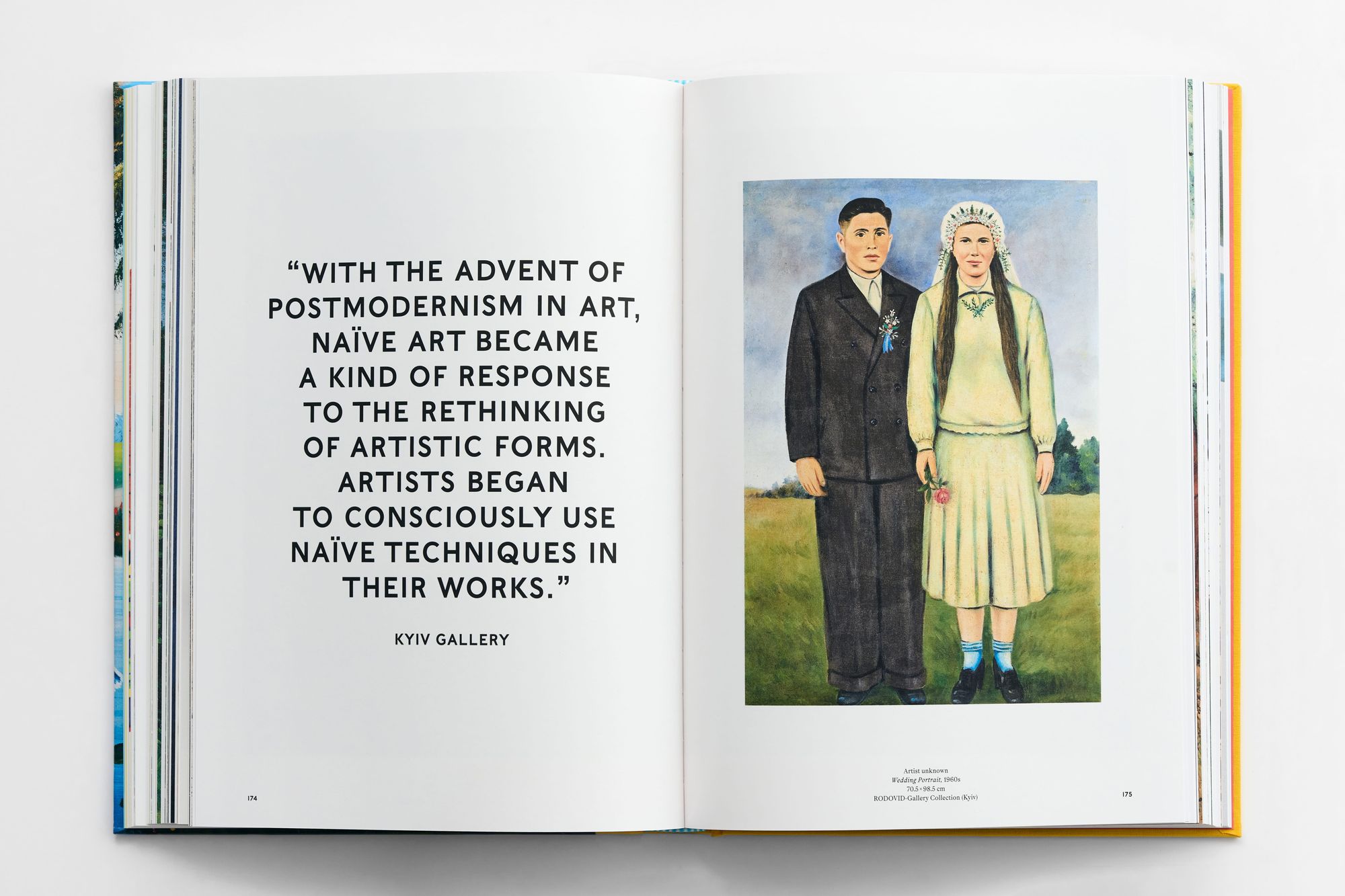
This is the first Assouline publication dedicated to Ukraine in the publisher’s more than thirty-year history. What does entering a global luxury publishing ecosystem like Assouline mean for Ukrainian culture—and how did you make sure that international accessibility did not simplify or exoticise the story you wanted to tell?
We had been in conversation about this project for more than three years, so for us it was never simply about publishing a beautiful book. What mattered was where the book would exist and whom it could reach. Assouline occupies a very particular space internationally. Its books are encountered not only in bookstores but in hotels, galleries, museums, fashion spaces and private homes. People who may never actively search for a publication about Ukrainian art can discover Naïve My Love simply because it exists within this global cultural environment. That was important to us. Ukrainian culture should not only appear internationally when the subject is Ukraine. It should be naturally present in conversations about art, design, collecting and visual culture.
At the same time, we were very careful about how the story was presented. Ukrainian culture is sometimes made “accessible” internationally by reducing it to a set of immediately recognisable images. That was exactly what we wanted to avoid. The book therefore had to work on several levels. Visually, it needed to create an immediate emotional response. But behind that first encounter there had to be serious research, expertise, names, dates, histories and context. We spent a great deal of time on the selection of works and even on the cover because every decision contributed to the way this culture would be introduced to someone encountering it for the first time.
For us, internationalisation does not mean adapting Ukrainian culture until it becomes familiar to everyone. It means giving people enough context to encounter it in its full complexity. The significance of the Assouline collaboration is therefore not simply that a Ukrainian book has entered an international publishing house. It is that Ukrainian visual culture is being presented within a global context without having to become something else first.
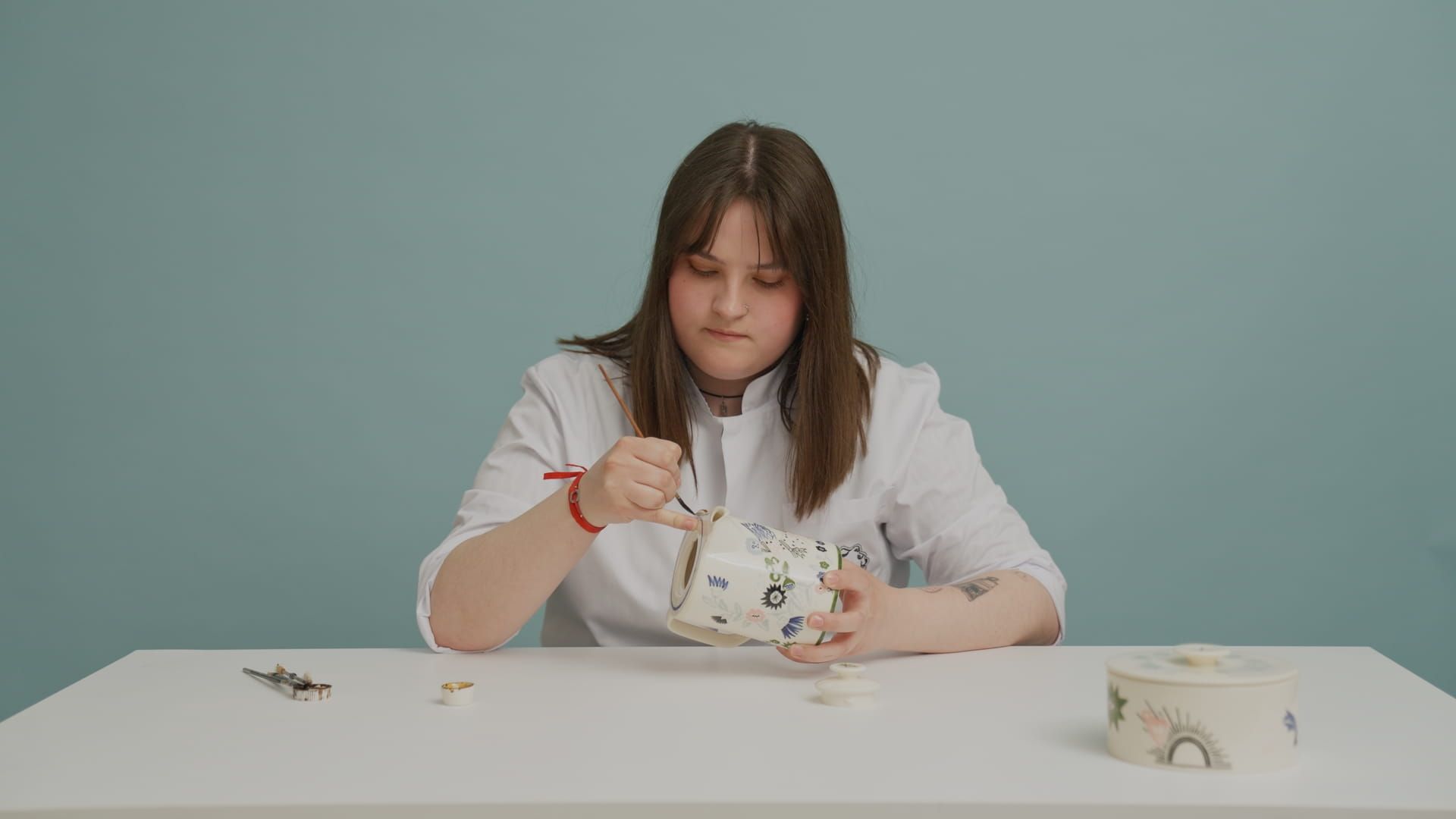
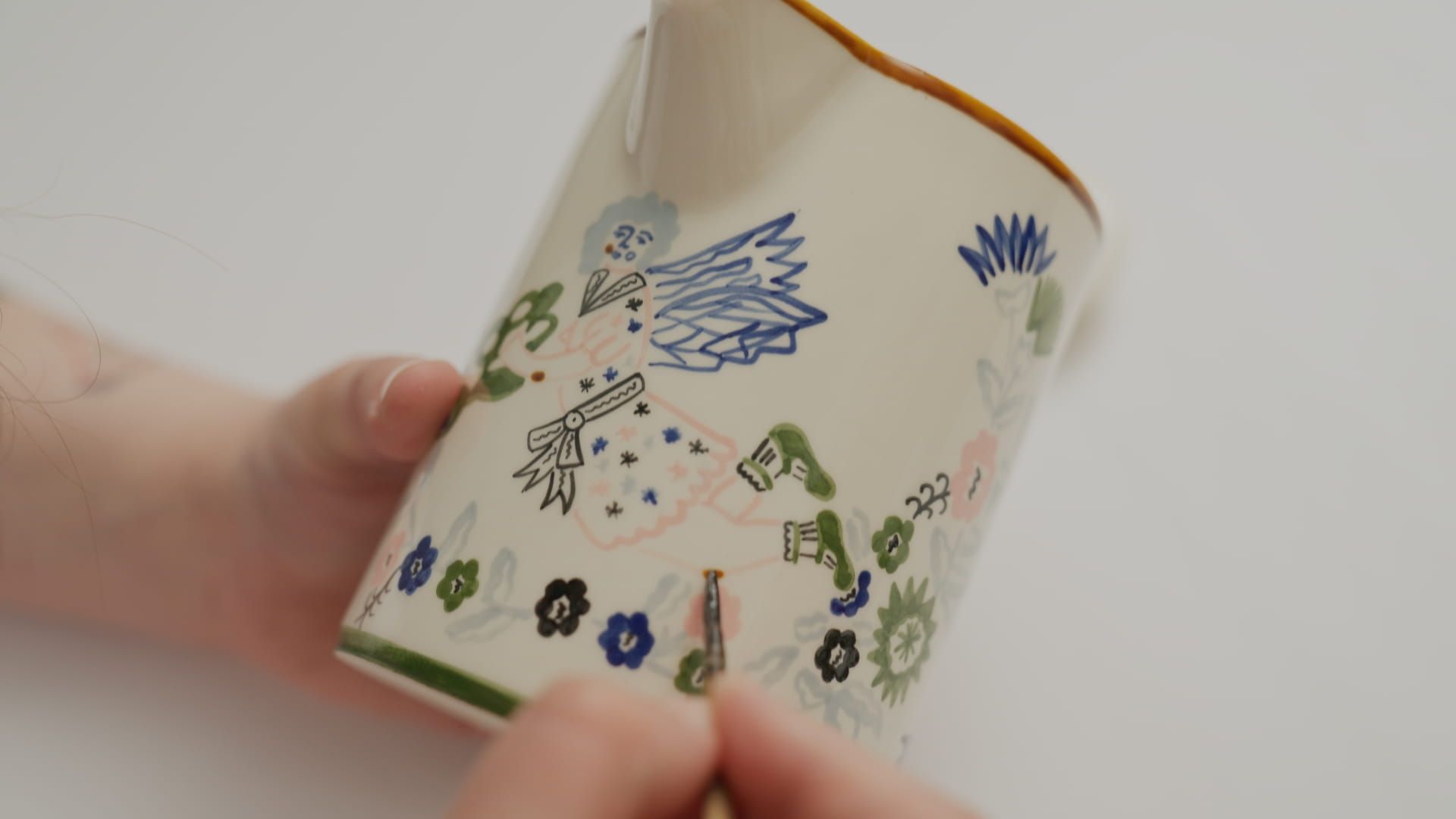
GUNIA has worked with more than 150 artisans across nine traditional crafts. Heritage preservation is often discussed as a cultural mission, but you have also turned it into an operating business model. How do you create economic value around traditional craftsmanship without reducing artisans and their knowledge to a branding tool?
For us, this question is ultimately about whether craftsmanship can have a future as a profession. It is relatively easy to celebrate a beautiful handmade object. It is much harder to create the conditions in which the knowledge required to make it can remain economically relevant. GUNIA now works with more than 150 craftspeople and nine different craft techniques. Behind every finished object there is a much larger system: materials, workshops, production planning, experimentation, quality control and, most importantly, specialised knowledge accumulated over many years.
We have learned that simply commissioning craftspeople is not always enough. In some categories, the production environment we needed did not exist at the required level or scale, so we had to participate in building it: developing processes, investing in production and educating new specialists. This changes the relationship between design and craft. The craftsperson is not someone who simply executes a designer’s drawing. Very often the final result emerges from an exchange. A designer understands the concept; a craftsperson understands what the material can actually do. Both forms of knowledge shape the object.
There is also something important about imperfection. Handmade production inevitably contains variation. For an industrial system, variation is often considered a defect. In craft, it can be evidence of the human process behind the object. Part of our work has been to create a customer culture that understands this difference and values it.
Ultimately, the question of preservation is economic as much as cultural. If younger generations see that specialised craftsmanship can provide meaningful work, professional growth and recognition, there is a reason for the knowledge to continue. We want craft to be valued not because it is disappearing, but because it is exceptional.
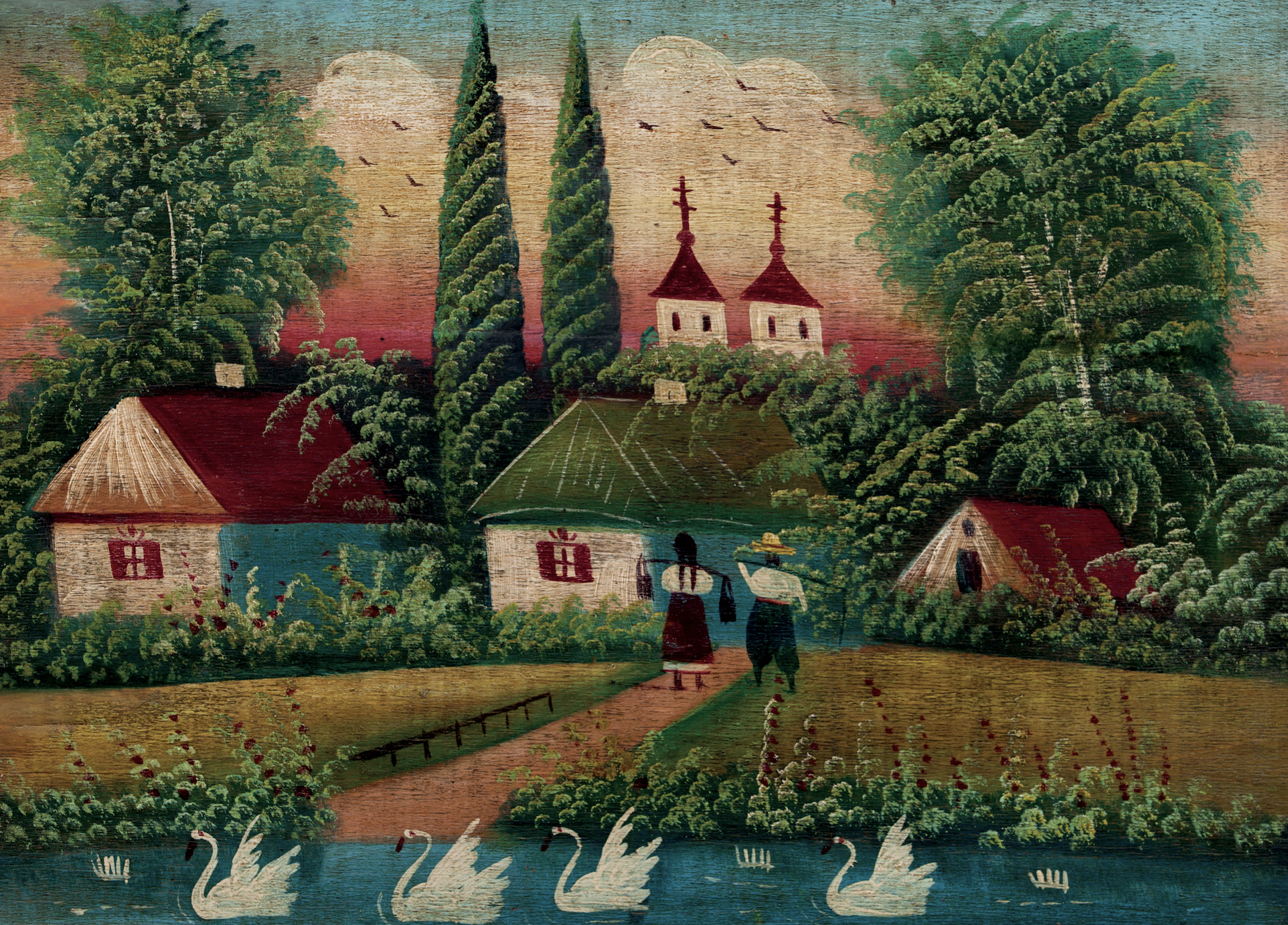
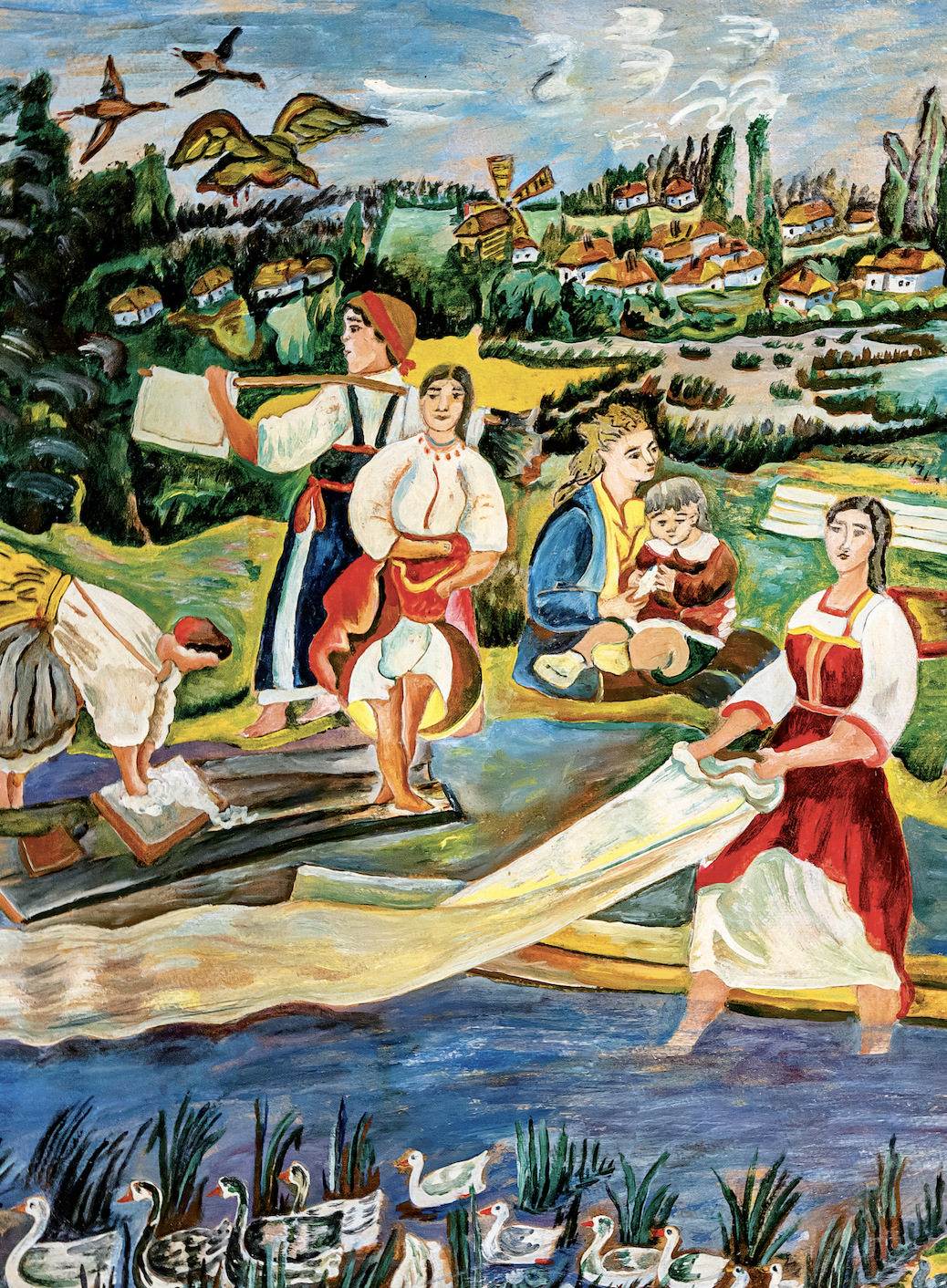
There is a much larger question behind both GUNIA and Naïve My Love: who gets to define how a country is visually represented to the world? Ten or twenty years from now, what would you like people outside Ukraine to understand differently about Ukrainian culture because of projects like this one?
We would like Ukraine to become culturally recognisable without constantly having to explain itself. For many international audiences, the first association with Ukraine today is understandably the war. Before that, the country was often viewed through Soviet or post-Soviet frameworks. Both perspectives are incomplete. What interests us is what happens when Ukraine becomes visible through what it creates rather than only through what has happened to it.
There is enormous cultural diversity here. Ukraine has never had one visual language. Different regions, historical periods and communities produced very different aesthetics. There is restraint and excess, abstraction and ornament, humour and spirituality, urban sophistication and powerful rural traditions. We do not want to replace one simplified image of Ukraine with another, more fashionable one.
Ideally, twenty years from now, Ukrainian design, art and craftsmanship will be internationally recognisable precisely because this complexity has become familiar. People will know Ukrainian artists and makers by name. Museums and institutions will attribute their origins accurately. Ukrainian objects will enter important collections without needing to be presented as discoveries from an unknown part of Europe. And we hope that the next generation of Ukrainian designers will not feel that they need to choose between being contemporary and being connected to their own culture. Those two things should be completely natural together.
GUNIA and Naïve My Love are only two contributions to a much larger process. There are museums, researchers, artists, designers, collectors and cultural institutions doing this work simultaneously. If that process succeeds, Ukraine will no longer be seen primarily as a culture that needs to be explained or rediscovered. It will simply occupy its own place in the global cultural landscape.
Anna Sushko, Co-founder of Sushko Philanthropy, which supported the project, adds: “Ukraine has long been part of the international cultural landscape; it’s simply that more attention is being focused on us now than ever before. This creates a unique opportunity to tell the world more about who we are — not only about our present, but also about a deep artistic tradition that has remained largely overlooked for decades. Naïve painting is a wonderful way to reveal a lesser-known side of Ukraine. Presenting it in London, alongside Assouline, means giving Ukrainian culture the place it deserves — alongside the great artistic traditions of the world.”