


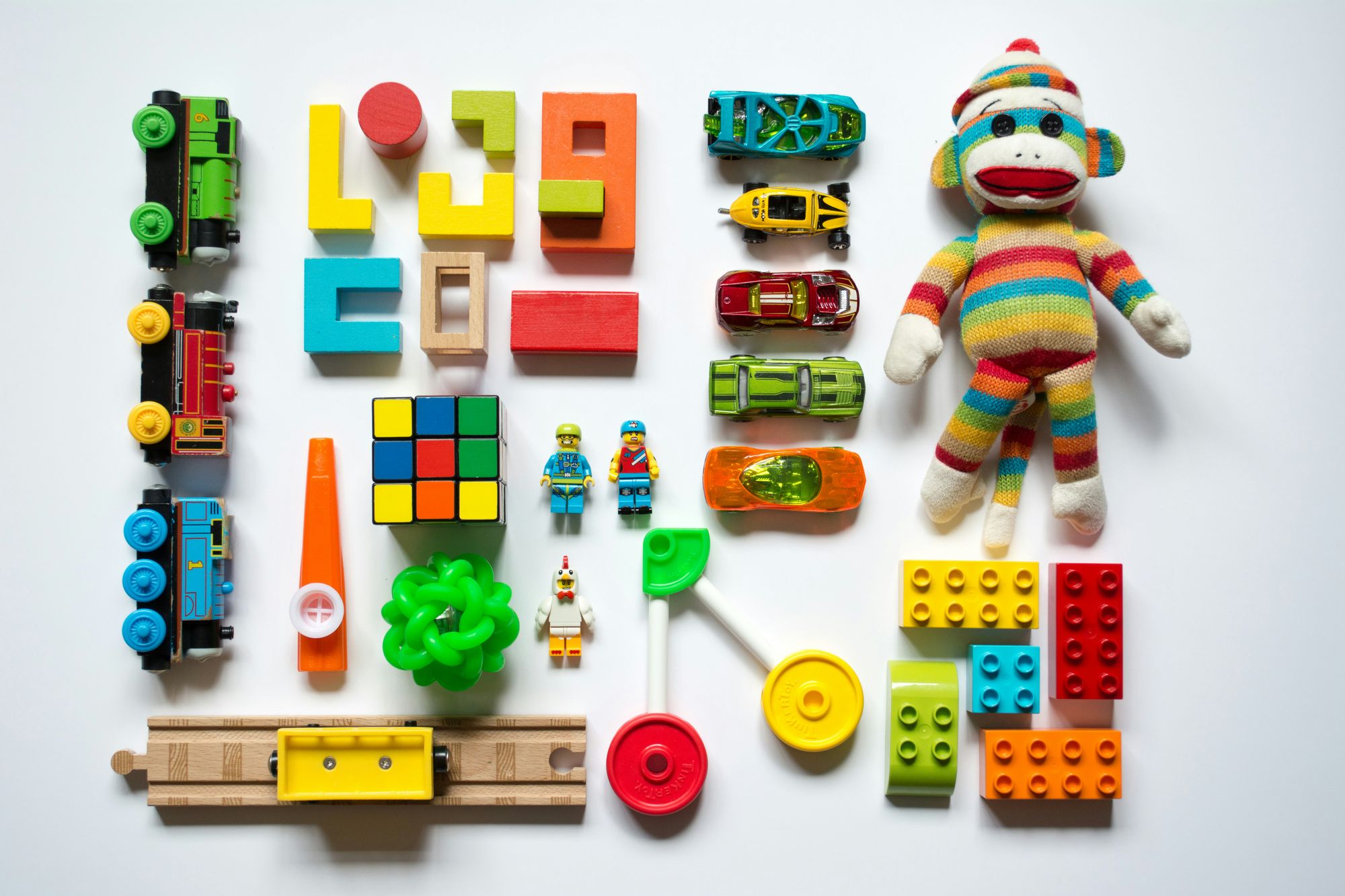
Advertising promises perpetual childhood, our culture celebrates youth, and politicians increasingly behave like children themselves. For criminologist Keith Hayward, adulthood requires autonomy and critical thinking—the very qualities consumer society discourages. A conversation about overprotection, fandom, and why growing up has lost its appeal.
A year ago, one of my former professors told me that our obsession with safety is destroying society. Do you agree?
There’s a lot of talk about health and safety and what we often call the “risk society”. If you overprotect and overcoddle people, they don’t learn to live a fully rounded life, which involves taking risks, embracing new experiences, and sometimes failing.
Part of growing up is going out into the world, facing challenges, overcoming them, and occasionally experiencing setbacks or accidents. That’s part of adult life. If you remove that possibility, you create a false sense of what the world is like and what people must overcome to become fully rounded adults.
This is also related to parents being out in front of their children too much: “snowplough parents”, “helicopter parents”—there are various terms, but the idea is that you clear a path for your child.
There’s now a reaction to that, with people talking about trying to raise so-called “free-range kids”. You don’t let children take absurd risks or do dangerous things, but you allow them to develop a calculated, within limits relationship with risk-taking.
So, you might prefer the old metal playground to its EU-standard replacement?
In some ways, yes. But the key thing is to strike a good balance. I’m certainly not advocating for a full return to the playgrounds of my youth, many of which felt more like military assault courses than children’s play areas.
How would you define an adult?
There are several competing definitions. The old-fashioned approach uses demographic markers: being financially independent, living in your own home, finishing your education, having a life partner, and perhaps having a child.
American researchers aggregate the data and identify those five markers of adulthood. When fewer people achieve them, they conclude that adulthood is being pushed back.
But there are many reasons why you can’t simply compare one generation with another. Marriage isn’t what it was in the 1960s and ’70s, and buying a home is harder than it was 30 years ago. You have to put those things in context.
For me, being an adult means being autonomous and critical. You don’t have to own a house, but you should be confident in your views and position, rather than simply believing everything you read or see on social media. Thease critical faculties can be developed in any context.
Previous generations faced economic hardship, world wars, famines, and depressions, yet they still marched into adulthood. They didn’t retreat and say, “I’m staying here on the island of teenagerdom.”
And they didn’t necessarily live in nuclear families.
Yes, quite. However, in different historical periods, people still reached a point where they said, “I’m an autonomous adult, and I’m not going to be infantilised for the rest of my life.” They often faced far greater hardships than current generations.
You have to embrace adulthood yourself. But our culture has made that deeply unfashionable. Look at film, television, and advertising. Find an advert in which parents possess wisdom. It’s always the child who knows best and the parent who’s an idiot.
Our culture does a terrible job of providing good adult role models. We’ve made adulthood something to reject, when it used to be an aspiration. I think we should bring that back: adulthood as something to aspire to, not ridicule.
Why have we made adulthood so undesirable?
This process has been going on for a long time, with the rise of individualism in the 1960s and the development of lifestyle advertising in the 1970s.
Don’t just take my word for it: in the book, I use advertisers’ own words and materials to show how they actively sought to create what they call an “adult-child conjoined consumer”.
As a child, your relationship with consumer products is, “I want it now!” You’re banging your fists on the table at Christmas. As an adult, that changes. You realise you have bills to pay and other more practical things to buy.
Advertisers want those childhood relationships with products and brands to continue throughout your life. Your association with Nike shouldn’t end at 18 or 20. At 75, you’re still buying Nike, Lego sets, or €600 lightsabres. It extends their ability to sell you often childish things into later life.
I found 30 or 40 examples of car adverts in Britain and America using cartoons, toys, and childhood imagery. Eventually, I stopped looking. They associate cars with fantasies of childhood and youth. It’s a deliberate strategy.
One reason infantilisation has become so prevalent is that it’s a key trope of capital.
So, it’s a symptom of consumer society, but also one of its driving forces?
Yes. My first book, more than 20 years ago, was about crime and consumer culture. I explored parallels between certain forms of criminality and aspects of consumerism: short-termism, for example, and neophilia—the love of the new.
I’ve been studying consumer culture for a long time, and that thinking runs through this book. Infantilisation and consumerism are closely entwined. Later in the book, I even argue that much contemporary political protest resembles consumerism.
Should we resist that?
Well, are you a passive recipient of consumer society? As an adult, you should be able to say, “No, I’m not simply going along with your idea of what a human being or a family should be, or what makes me a meaningful person.”
You should be able to resist lifestyle advertising and say, “I’m not going to be manipulated like that.” You shouldn’t see an image or a viral sensation and immediately think, “I must have it,” or, “I must go along with it.”
Part of adulthood is recognising a fad for what it is. Teenagers have always been especially susceptible to crazes, whether it was the hysteria around Elvis or Beatlemania. But adults should know better. I’ve got into trouble for saying this before, but take Taylor Swift. It’s fine for children to put on the hat and the sequinned skirt and go to the concert. But why is their mother doing it?
The Swifties are very passionate fans, so this got me into trouble. I don’t know much about her music—it’s about boyfriends and things—but why is a 40-year-old mother getting in on the act? Surely she should be able to say, “I’m an adult. I should have my own interests and let the children have theirs.”
A lot of people don’t want to separate themselves from the youthful aspects of consumer culture.
Perhaps the pressure isn’t simply to remain a child, but to stay young for as long as possible—even beyond 40. There’s a Russian film, Moscow Does Not Believe in Tears, whose message is that life begins at 40.
You can go back through history and find stories, fables, and myths about eternal life: Gilgamesh’s Babylonian quest for life-preserving powers, Ponce de León, the Fountain of Youth. Wanting to preserve your youth is as old as humanity.
But what we’re seeing now is people believing in their own omnipotence. Christopher Lasch, whom I discuss a lot in the book, argued that one feature of a narcissistic society is that people don’t really believe they’re going to die.
Obviously, they know it intellectually. But they go through life with the expectation that they’re so profoundly different from everybody else that somehow they’ll cheat these things.
When Lasch was writing in the 1970s, that would have been regarded as a clinical problem. A psychiatrist might have intervened and said, “Look, you need a dose of reality.”
What Lasch explored was how narcissism spread from the psychiatric sphere into the culture. I’ve tried to do something similar with infantilisation. There’s a psychiatric literature on infantile behaviour and people failing to mature, but I don’t think what we’re dealing with today is essentially a psychiatric problem. It’s a cultural one.
It’s powerful and difficult to disengage from, so I’m not simply blaming individuals. When you combine that cultural pressure with the desire to live forever and never act your age, it becomes a powerful way of seeing the world and your place in it.
You’ve said that adulthood requires autonomy and critical thinking. What three pieces of advice would you give readers who want to develop those qualities?
Handily for your readers, there are ten rules for a more grown-up society at the back of the book. That wasn’t my idea, by the way—it was the publisher’s.
Could you give us three more?
Three more? Well, it’s difficult not to lean on what I’ve already written.
First, our culture has debased adulthood. It constantly tells us that youth is good and old age is bad. We now have younger generations turning against older people: “Why are they hoarding all the money?”
“OK, boomer.”
Exactly. That’s dangerous. Those young people will grow old themselves, even if they don’t think they will. Why turn on the generation above you? It’s ultimately a self-defeating strategy.
We need to reverse that. Instead of treating adulthood as something to avoid at all costs, we should make it aspirational again—in our literature, films, and culture more generally.
I think it’s much better to be an adult. I can’t speak for everyone, but I’ve enjoyed adulthood much more than being young. I was more anxious then, with all the stresses and existential worries teenagers have. Adulthood should bring confidence, more resources, and less anxiety.
Second, don’t catastrophise. Don’t live in a world of fear and paranoia. So much of what comes through the media encourages that, which brings us back to your first question about risk.
We’re afraid of AI, pandemics, and so on. The headlines constantly focus on threats.
Exactly. It comes back to what your professor said about our relationship with risk and “safetyism”.
Think about COVID. It was a real-time global experiment in saying, “Your autonomy is gone. You must listen to us as patrician authoritarians, and we’re going to shut down your liberty.”
You couldn’t go out or walk the dog. In England, you couldn’t walk on the beach. It was absurd state overreach.
I wrote much of the book during COVID—there wasn’t much else to do—and I was angry at how the state was treating me.
These issues are bigger than Superman films or people reading Harry Potter in their forties. That’s the thin end of the wedge. Behind it is something about the pacification of society: creating compliant people who can be easily manipulated by a patrician authority.
There was recently a controversy in Britain involving an internet cable near the site fans regard as Dobby’s grave—the character from Harry Potter. Adult protesters reportedly damaged the cable because of it.
You’ll have to fill me in—I’ve never read the books.
They were defending the grave of a character who never existed.
I teach criminology, and when we get to subcultural theory, I discuss gangs and other classic subcultures. Then I talk about how these things have changed, with online phenomena and so forth.
I once criticised the idea of “Potterheads” as a subculture. I said, “These are children’s books.” When the course evaluations came in, there were comments saying, “I didn’t like what Dr Hayward said about Harry Potter. I didn’t come to university to hear that.”
But you’re at university. Accept some criticism of something you like.
That’s part of adulthood: encountering different opinions rather than remaining inside a self-contained infantile bubble. Autonomy matters, but it doesn’t mean shutting out the world. You have to recognise your place within it.
A hundred years ago, several generations often lived together. How has the relationship between generations changed?
Anthropologists talk about a reversal of that traditional structure. The classic model is a pyramid. At the top are the elders: fewer people, because others have died, but they govern and are regarded as sources of wisdom. They guide the larger generations below them.
Some anthropologists now argue that we’ve inverted the pyramid. Youthful opinion is what matters, while older people sit at the bottom. They call this a ‘neontocracy’.
Older people still hold power and resources—Trump, Boomers, and others—but we no longer look to them for wisdom. Instead, they’re ridiculed or accused of hoarding wealth. They’re treated as the problem.
Yet many leaders of the major nuclear powers are older people who grew up during the Cold War. How does that fit into this picture?
I describe many of them in the book as “infantocrats”: rule by infants.
Obviously, people immediately think of Trump. He has a prickly personality, he’s narcissistic, and so on. He’s a great example of an infantocrat. But it’s much broader than Trump.
Politicians used to treat us like children. They were patricians who said, “People may think that, but we know what’s best for them.” Being spoken to like that was bad enough. Now it’s worse: politicians themselves behave like children.
They’re on TikTok doing silly things. I document all sorts of absurd expressions of teenagerdom among the political class. Justin Trudeau loves fancy dress. Ed Davey, the Liberal Democrat leader, has made TikTok videos of himself dancing around like a jackass part of his political shtick.
I know why they do it. They want to appeal to younger voters. But this isn’t statesmanship. It’s completely antithetical to what leaders should represent: charisma, grace, authority.
As I say in the book, this might not be the world we want, but it’s the world we’ve created, and whether you like it or not, you’re living in it.
Keith Hayward
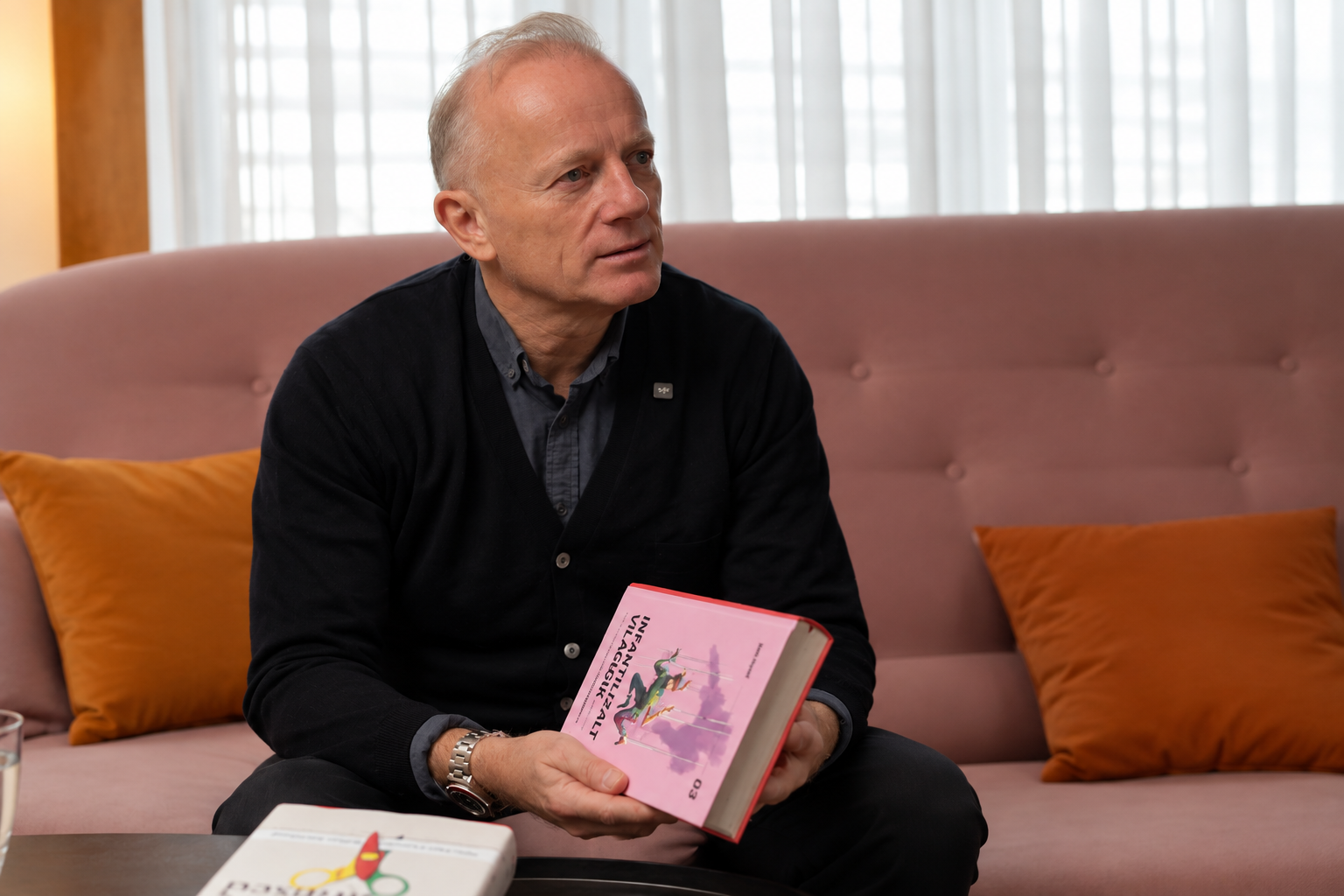
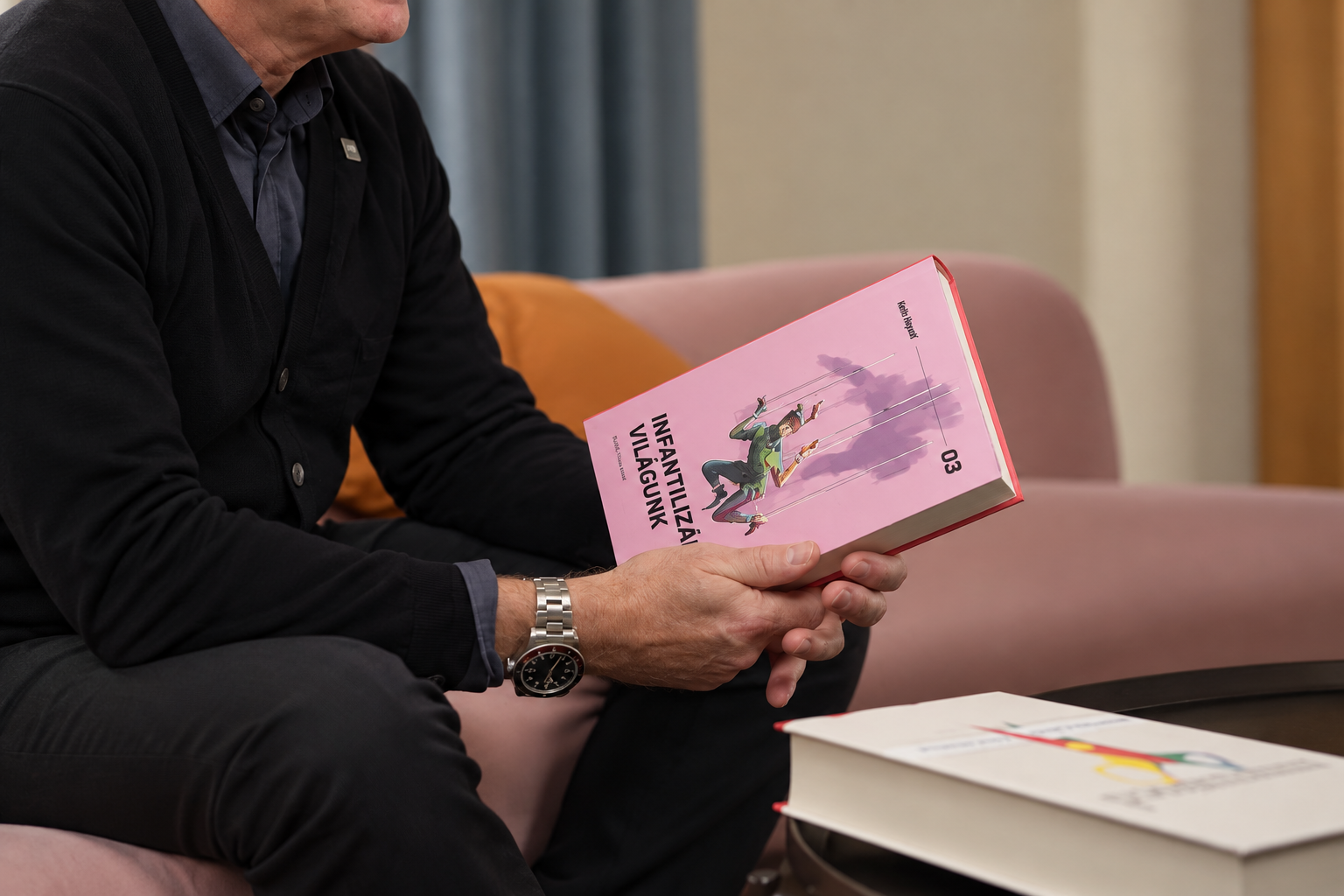
Keith Hayward is a British criminologist and social researcher, and a professor at Lund University in Sweden. As one of the founders of cultural criminology, an innovative field of research, he has long explored how cultural processes intertwine with various practices of crime and social control. His work has covered an exceptionally wide range of subjects, from drug use in Ibiza’s club scene to the subcultural appeal of “Jihadi cool”. His latest book, Infantilised: How Our Culture Killed Adulthood, published in Hungarian as part of Libri’s Brain Bar Books series, examines how and why infantilisation has become a defining feature of contemporary culture.
What happens to our minds in the digital age, what can art teach us, and why is growing up so difficult today? The first three titles in the Brain Bar Books series—Hungarian editions of Martin Jan Stránský’s The Rise and Fall of the Human Mind, Sheehan Quirke’s The Cultural Tutor, and Keith Hayward’s Infantilised—explore these questions, offering fresh perspectives on ourselves and the world. Discover the books and take the ideas from this interview further.