


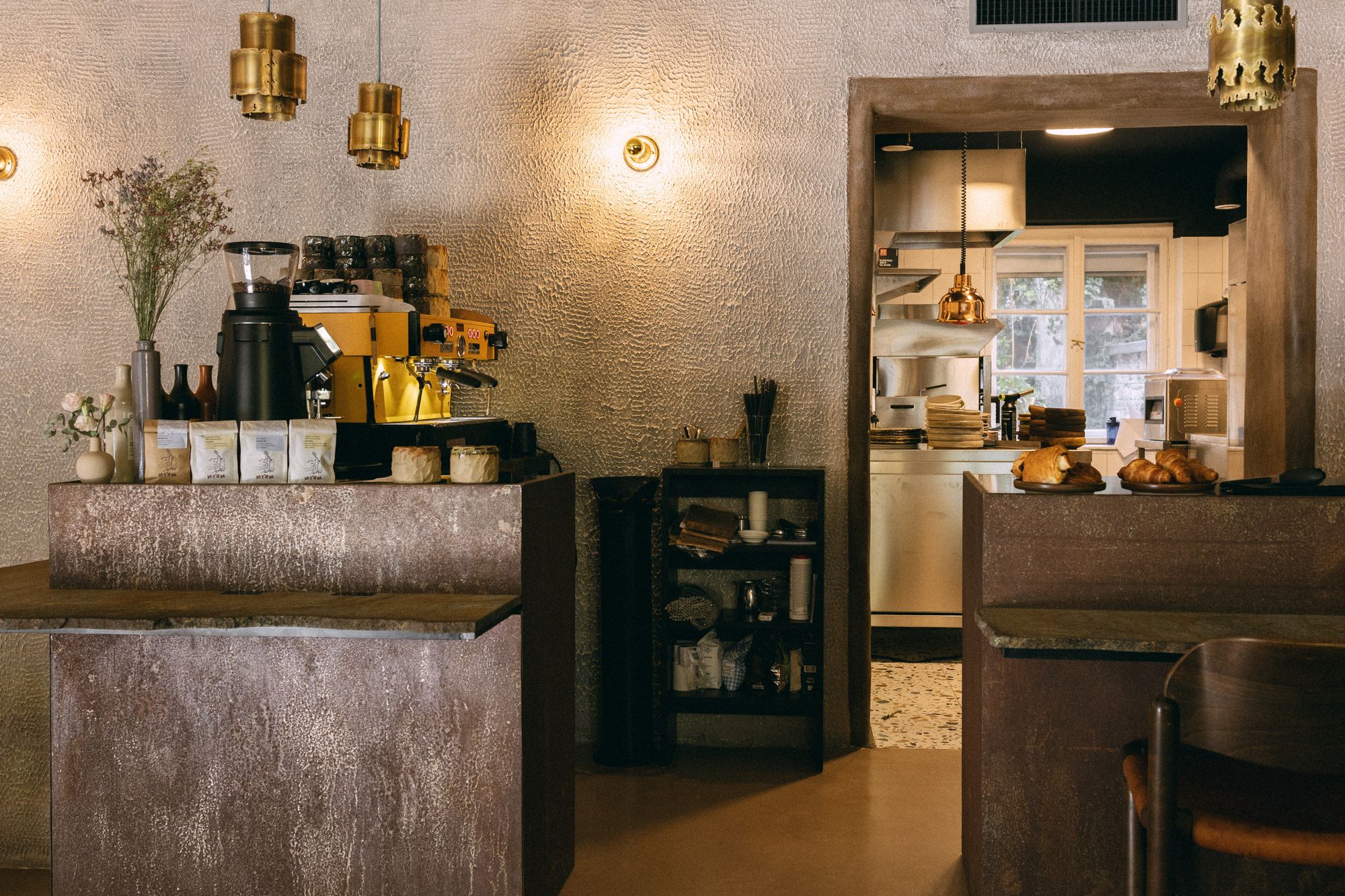
Some restaurants have a way of making everything fall into place the moment you walk through the door. The music, the proportions of the room, the materials, the lighting. The smile that greets you. KOHO Budapest, which opened in September at 14 Horváth Mihály tér, is one of them. We have barely taken our seats, yet it already feels good to be here. Which immediately raises the question: when the first impression is this assured, what can the kitchen bring to the table?
Quite a lot, as it happens, with a cabbage alone. But let us not get ahead of ourselves. KOHO deserves to be discovered properly, mouthful by mouthful.
A Franco-Italian marriage, deep-fried
We opt for the tasting menu. When a place has such a clearly defined character, it seems only fitting.
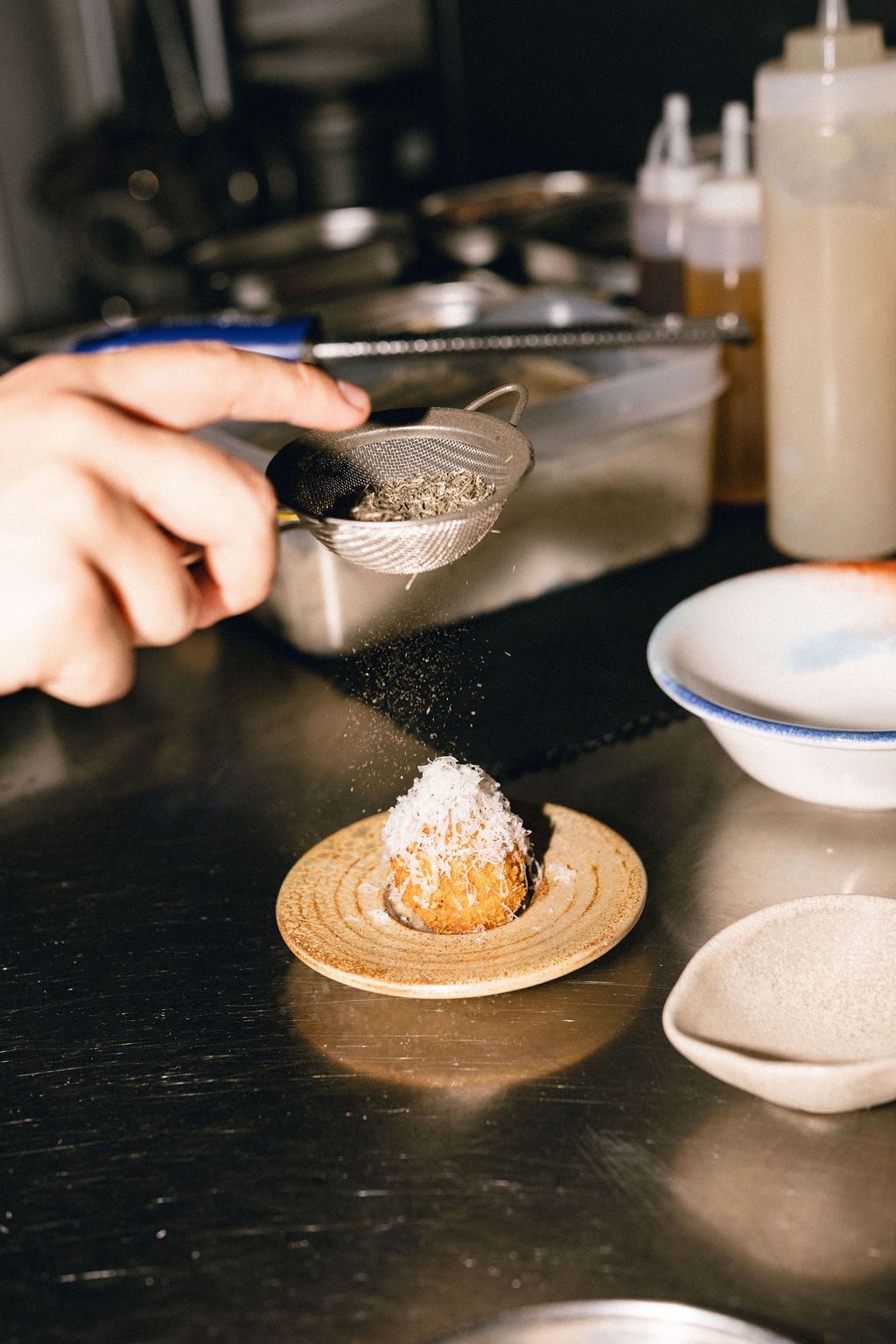
First comes a croquette, with Comté, artichoke and pecorino. A Franco-Italian marriage, with a little Hungarian wink: it all ends up breaded and fried. We have long known that everything tastes better fried, but here there is something to be said beyond the crunch. Cheese, character, the pleasures of flavour tumbling over one another. An absolute belter of a bite. I cannot put it more politely than that.
Then comes the bread course, and a glance around the room swiftly establishes that this particular genre has no shortage of admirers. Tables fill, bread arrives, butter takes its place alongside. I, too, waste no time getting stuck in.
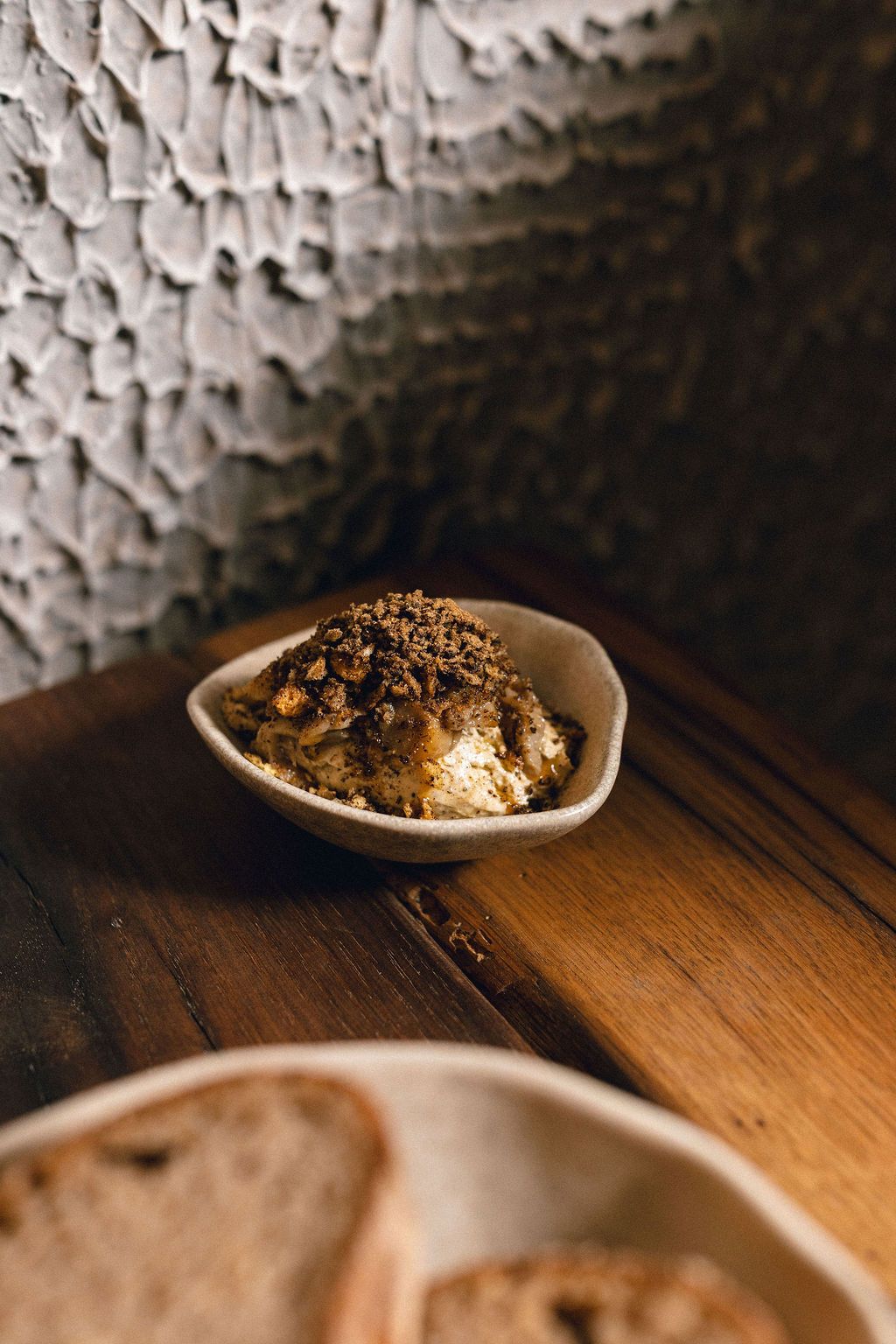
The sourdough comes from the neighbouring bakery; the French butter arrives directly from Paris, every week. Alongside it, miso, oyster mushrooms, truffle and porcini: as though the best of the forest had been gathered into a single course. Deep, intense flavours, contrasting textures and that dangerous quality of making you want another mouthful the instant you finish the last. And this is still only the bread.
The kitchen has serious intentions where butter is concerned. Five kilos arrive each week, and the chef’s position is perfectly clear: if you are going to use butter, use plenty. So far, we are in agreement.
Hungarian ingredients, French expertise, Asian thinking
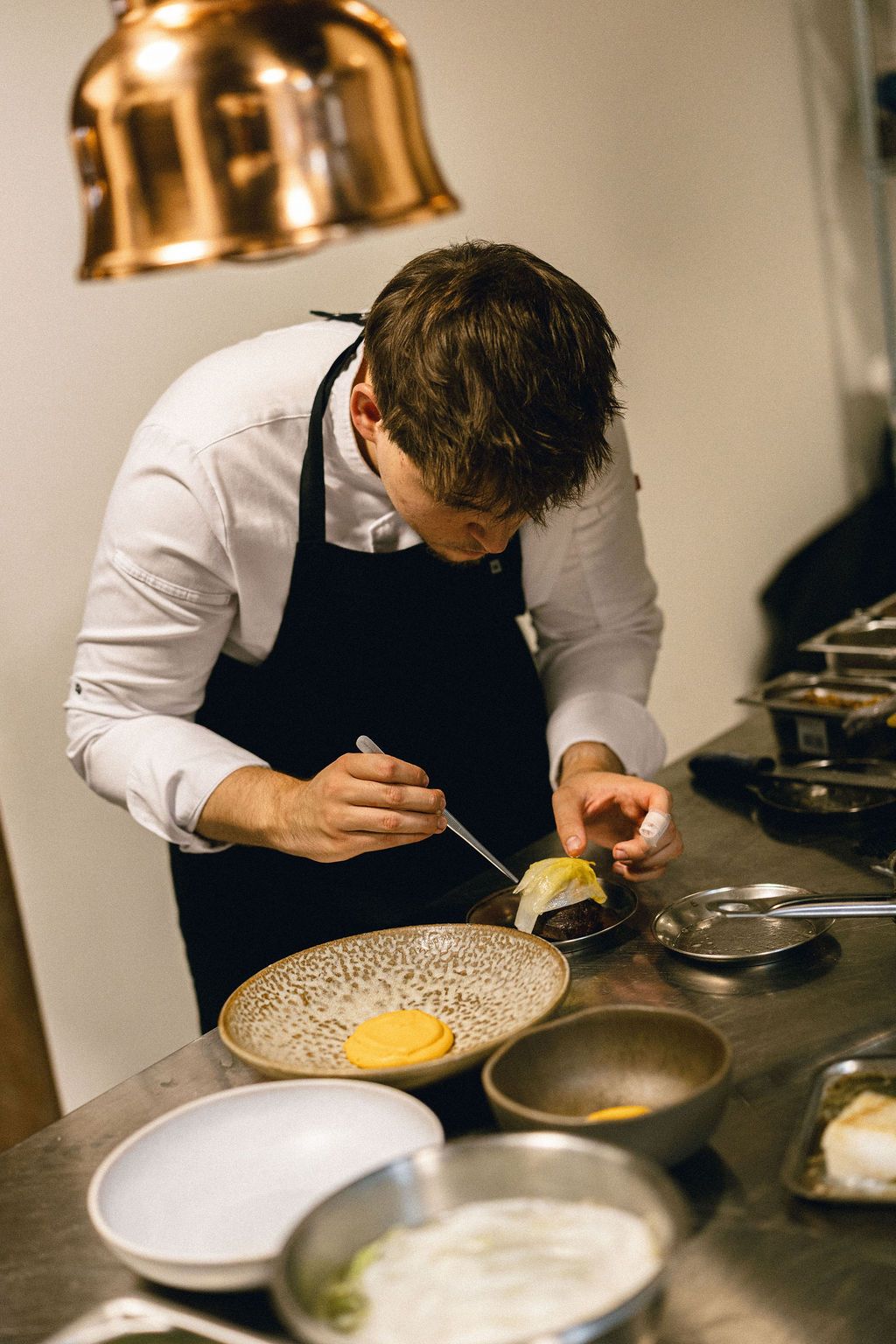
The kitchen is led by József “Azsi” Tóth, founder of the Lestyán project. His experience also takes in Arany Kaviár, Per Se in New York and FZN in Dubai. A career of that pedigree could quite easily translate into a rather formal restaurant, but Azsi currently has other things on his mind.
He believes that fine dining is changing. Ratings and stars still have their place, yet guests are increasingly less interested in the formality that, only a few years ago, seemed almost inseparable from a serious dinner. The quality remains; the atmosphere becomes more natural. Greater attention is paid to the ingredients themselves, while there is a little more breathing room around the table.
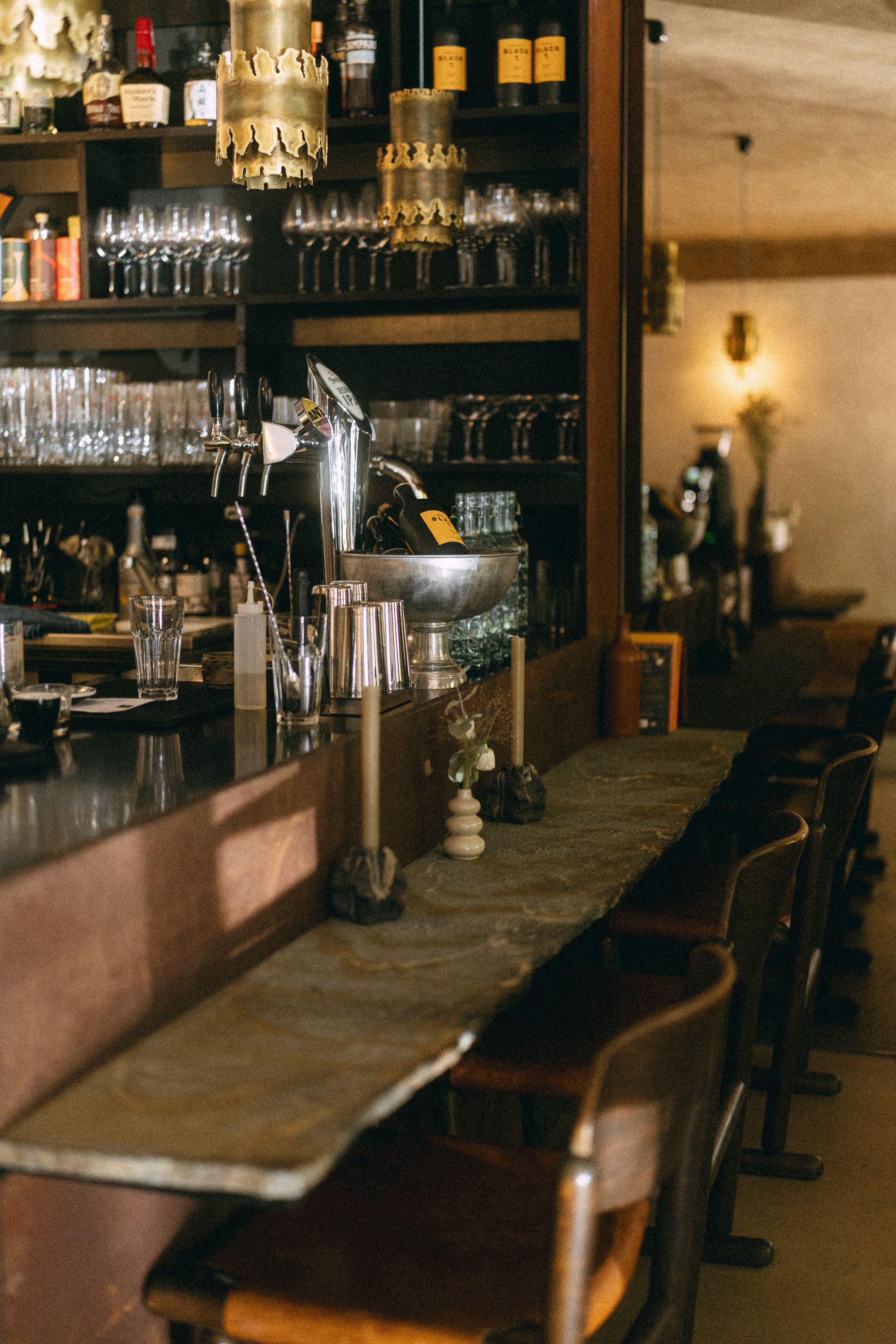
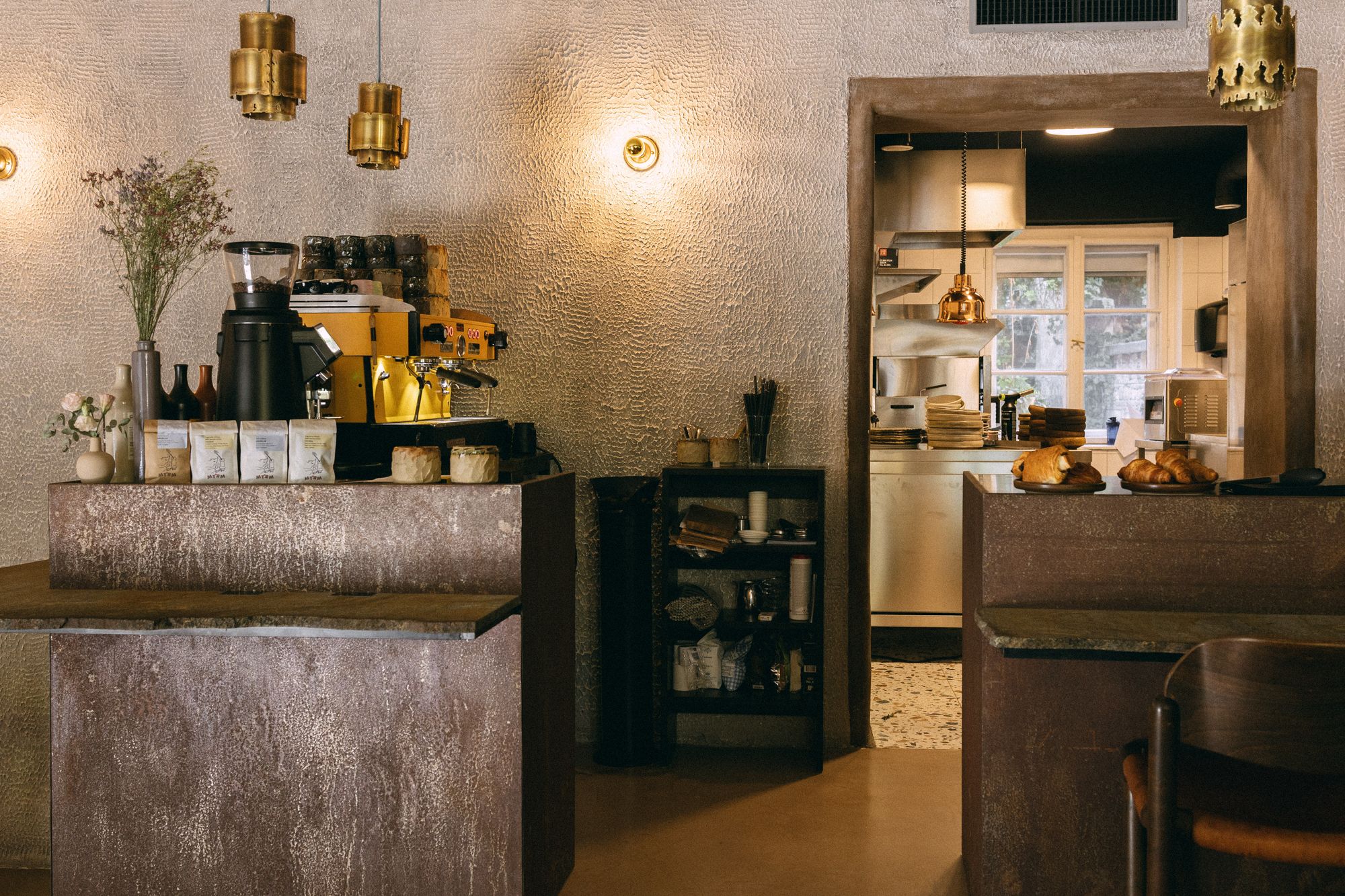
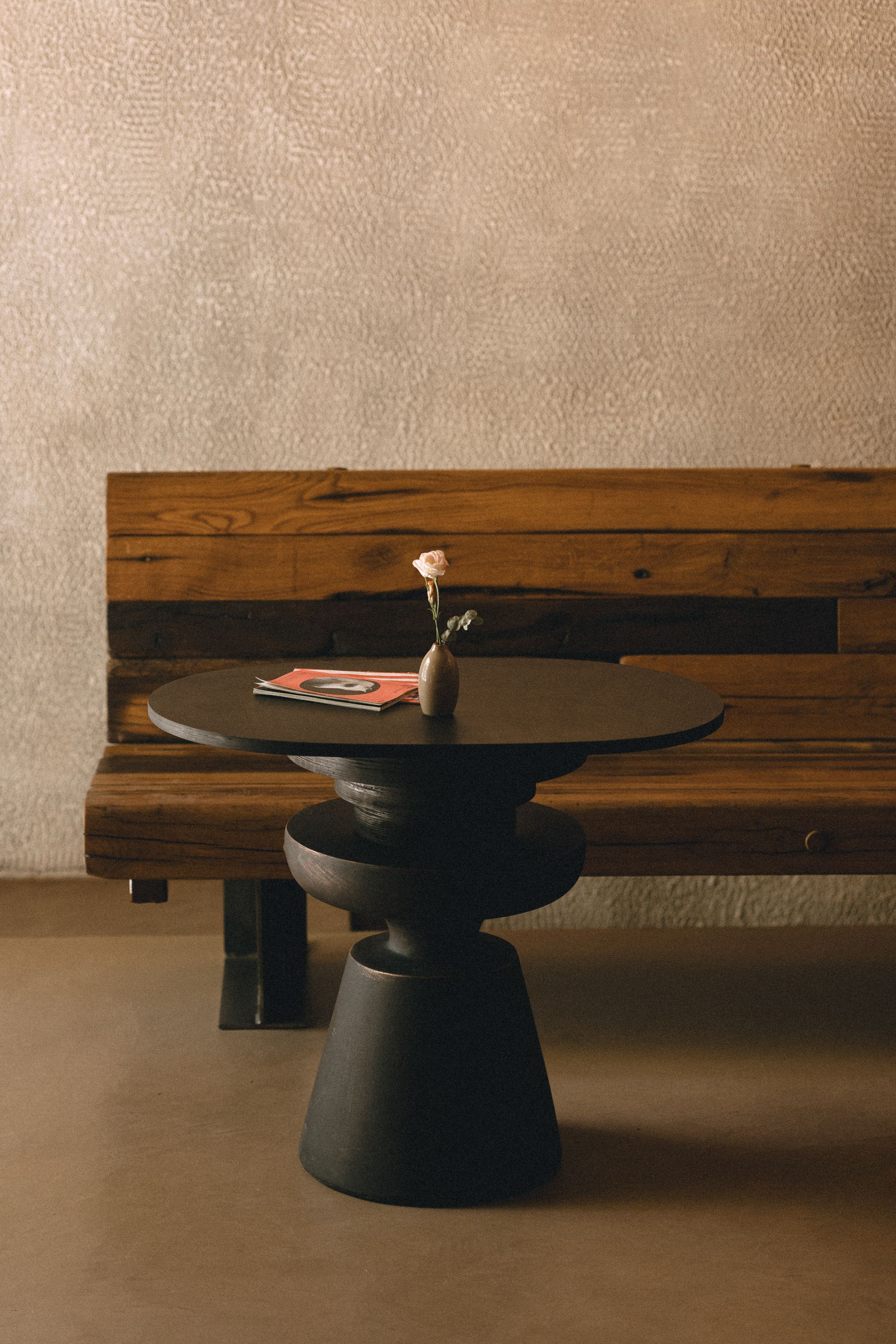
KOHO communicates this through the space itself. Music plays on vinyl, restored Czechoslovak chairs furnish the interior, and there are plans for events and wine tastings at the communal, omakase-style table. Service is professional and attentive, with a well-judged sense of when to take the initiative. It has presence and rhythm; being a guest here feels entirely comfortable.
Behind the dishes lie Azsi’s three guiding principles: Hungarian ingredients, French technique and Asian flavour influences. An admirable undertaking. The next plate reveals what happens when all three truly come together.
Striking to look at, even more compelling to taste
Trout, radish, flowers, ponzu, plum juice, Arabica coffee, almond. The list alone gives us pause. The plate is beautiful.
The acidity, the smokiness of the fish, the plum, the coffee and the almond move in a harmony that deserves more than a single sentence. Each successive mouthful offers something I want to attend to in its own right. It is full of flavour. One of the most interesting dishes I have eaten recently.
Meanwhile, the music plays, the room fills around us, and I am struck by how closely everything is in tune. The plate, the atmosphere, the service. Such equilibrium is rare.
Choose the steak, and you have only yourself to blame
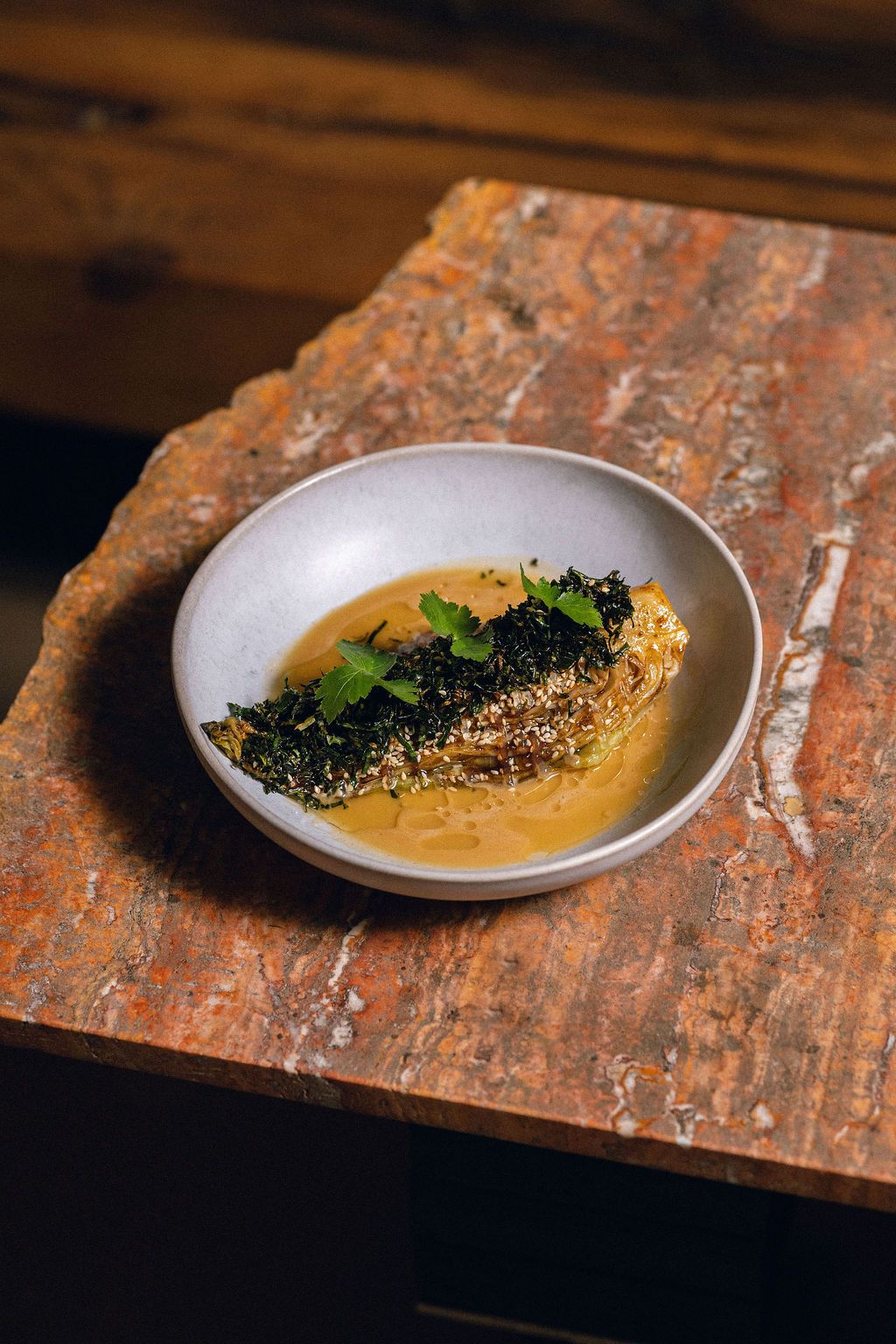
At one point in the tasting menu, a decision must be made: steak or cabbage. I should like to put this with due emphasis: anyone who automatically points to the steak here has only themselves to blame. There are plenty of places to eat a good steak. This cabbage, however, is reason enough in itself to make the journey to Horváth Mihály tér.
All of KOHO’s vegetables are Hungarian, and with cabbage enjoying such a moment in gastronomy – 2026 is, after all, also the year of the cabbage – it is a particular pleasure to see what becomes of it in a kitchen that takes it seriously.
It roasts for five hours at 150°C. Roasted garlic, brown butter, a rice-vinegar butter sauce, caramel and sesame accompany it. Caramel notes draw the plate together, sweetness and acidity entwine beautifully, and at the centre sits the cabbage, its deep flavour brought fully into its own by roasting.
I have never seen a cabbage so beautifully dressed. Best of all, it retains its character completely, even in this company. Everything happens around it; everything contributes to it. The whole is utterly coherent, from beginning to end.
On KOHO’s plates, there is often a single protagonist, perhaps accompanied by a handful of prominent elements. Only as you taste do you discover how many ingredients, how many small decisions, lie behind that apparent simplicity. With the cabbage, every detail makes sense.
There is still butter to come
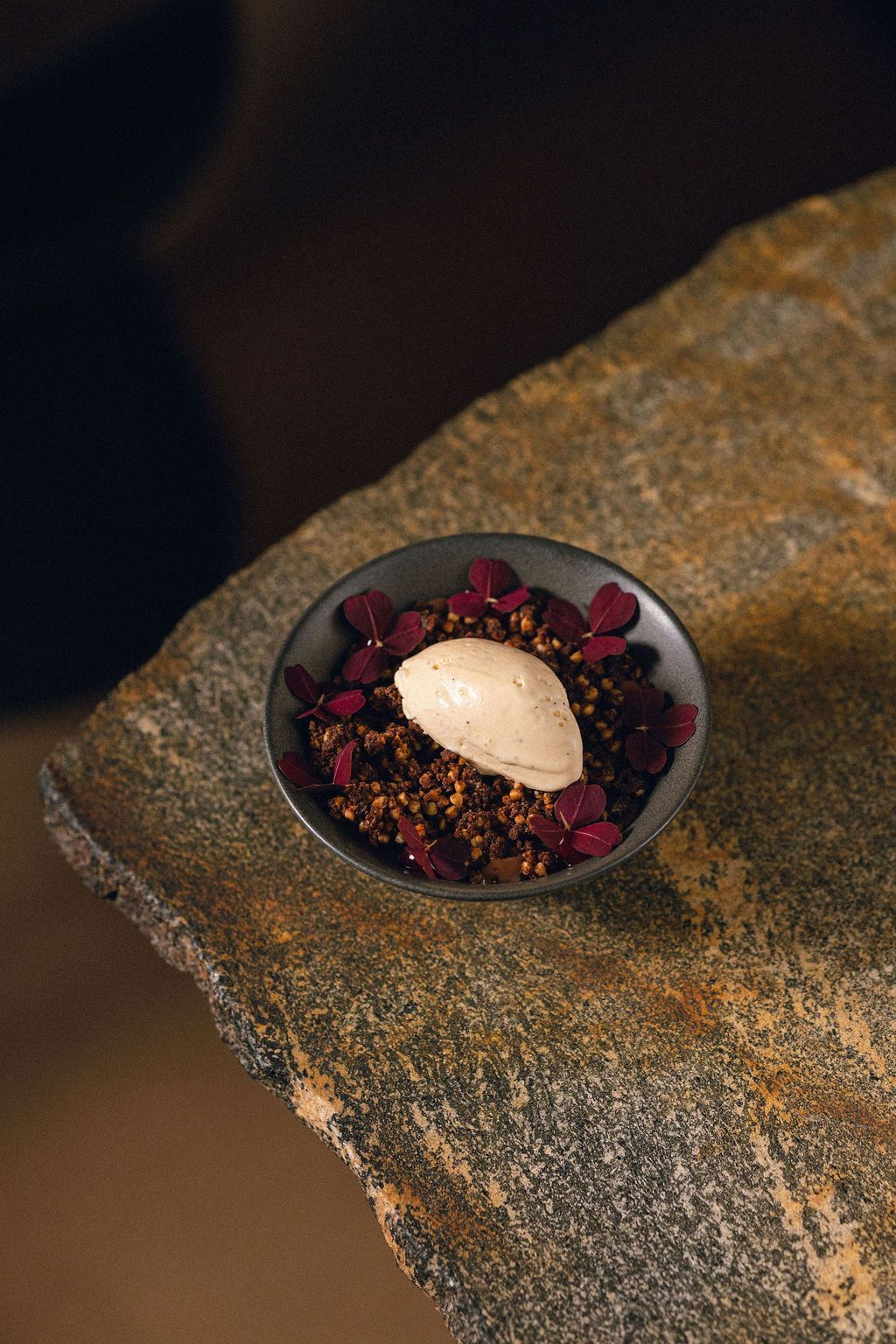
Dessert brings a Black Forest mood, buckwheat and Tahitian vanilla, with a canelé, baked fresh each day, to round things off. I would call it a light conclusion, were I not increasingly aware that the portions here carry some weight of their own. By the end of the tasting menu, an aperitif goes down very nicely.
KOHO is the kind of fresh addition to Budapest that it is a pleasure to discover. Elegant, with a vision of hospitality all its own, its kitchen is already producing dishes you want to talk about the following day. Go and taste, explore, spend some time there. I wish them plenty of guests, and the rest of us many more dinners like this. And if a choice must be made: cabbage. You will understand afterwards.