


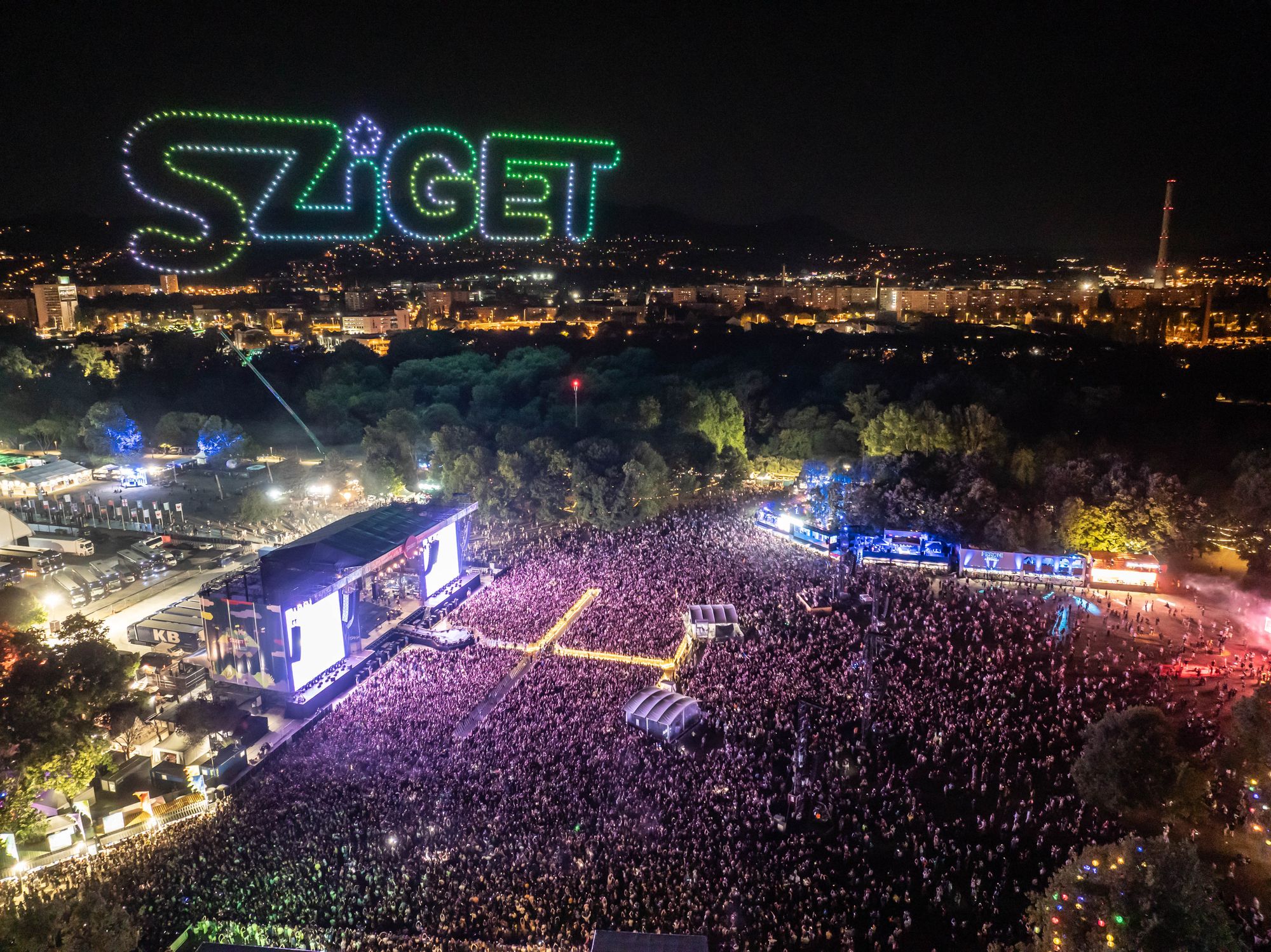
In 2026, Sziget opens a new chapter: the festival is both looking back to its own history and responding to one of the most pressing generational issues of today. On August 10, the iconic Day Zero returns, while the SZociety Movement is also launching, supporting professionals and communities working with young people’s mental health.
Since last October, the Sziget organizing office has been back in Hungarian ownership, and the team is building the 2026 festival along a rethought concept. According to Károly Gerendai, returning owner, the goal is for Sziget not to be just another major international festival, but once again a Budapest-based event that speaks to international audiences while also becoming a defining experience for Hungarian visitors. This includes a stronger integration of the local cultural and music scene, a closer relationship with the city, and a more pronounced focus on the festival’s unique identity.
One of the most visible elements of this shift is the return of Day Zero. On August 10, organizers are preparing a program that revisits some of Sziget’s most memorable moments: Faithless, Morcheeba, and Goran Bregović’s Wedding & Funeral Orchestra will take over the Main Stage. After the concerts, a modernized Táncdalfesztivál afterparty will continue the time-travel experience, hosted by Péter Janklovics and featuring special guests. The aim is clear: to bring together former Sziget-goers and new generations in a shared festival experience.
Beyond nostalgia, however, Sziget is also taking a stand on a highly relevant social issue. Launched under the SZiget SZociety Foundation, the SZociety Movement draws attention to the mental pressure, anxiety, and often invisible work of support professionals affecting the 16–25 age group. Rather than a one-off campaign, the initiative is designed as a year-round ecosystem, aiming to support, amplify, and strengthen those working in the field of mental health.
Closely tied to the movement is the SZuper SZociety Award, which will be presented on the Main Stage during the festival in multiple categories. The award highlights school psychologists, NGOs, digital creators, communities, and professionals who support young people in authentic and innovative ways. In a unique approach, alongside a professional jury, young people themselves will also play a key role in the decision-making process.
Sziget’s spatial structure continues to expand in 2026: the festival will be divided into eleven distinct districts, each functioning as its own self-contained world. Among them are the hip-hop and rap-focused dropYard, the electronic music-driven Delta District, the multidisciplinary Jardin des Arts, Wonderland, Impact Village, and the We Are Family zone designed for younger audiences and families.
The major music stages promise a strong lineup. The Main Stage will host names such as Skrillex, Florence + The Machine, Twenty One Pilots, Bring Me The Horizon, Lewis Capaldi, Skepta, Jorja Smith, Zara Larsson, and Tash Sultana. The Revolut Stage will feature acts including Soulwax, Nia Archives, Parcels, Ashnikko, Dijon, Underworld, and 2manydjs, while the electronic stages will welcome Peggy Gou, Sara Landry, Richie Hawtin, Dixon, Anfisa Letyago, and Joris Voorn.
A key new addition is the Budapest Park Stage by Johnnie Walker, where the Hungarian music scene takes center stage. Performers include Kispál és a Borz, Tankcsapda, Quimby, Bëlga, Péterfy Bori & Love Band, Irie Maffia, Majka, Beton.Hofi, Pogány Induló, Co Lee, Analog Balaton, Platon Karataev, and Manuel. With this, the organizers aim to reinforce Sziget as a festival that once again feels like a home ground event for the local audience.
Comfort and services are also evolving. Dust control will be handled in cooperation with Főkert using water from the Danube, more chill and rest zones will be introduced, and students will be able to purchase half-price passes under certain conditions. In gastronomy, the Budget-Friendly offering continues, the Food Market is introduced, and JótéKonyha—working together with the Hungarian Food Bank—brings food rescue into the festival environment.
All in all, Sziget 2026 arrives with a larger program and a more complex vision: one that builds on its own legacy, Budapest’s cultural energy, the local music scene, and social issues that extend far beyond the few days of the festival.