


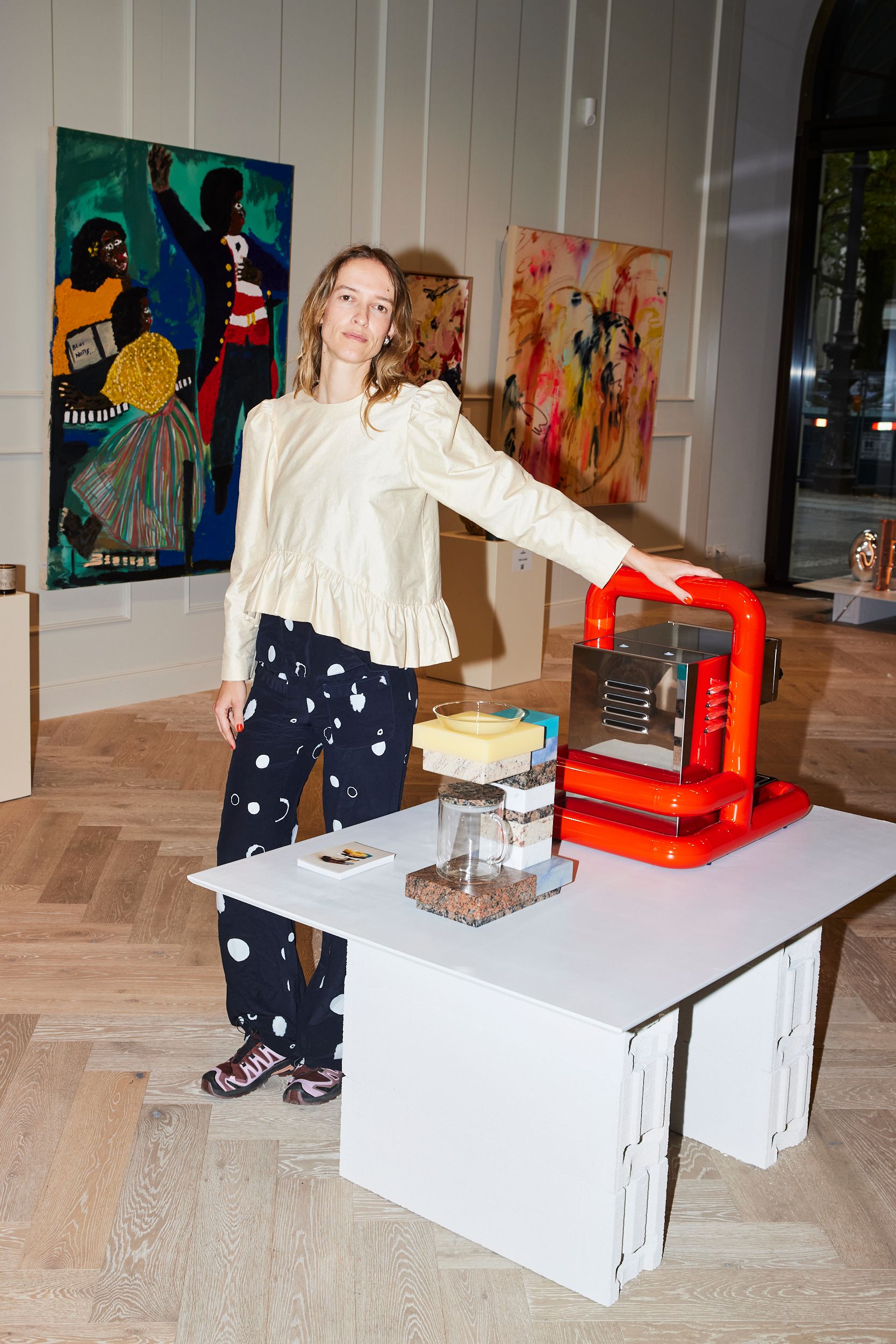
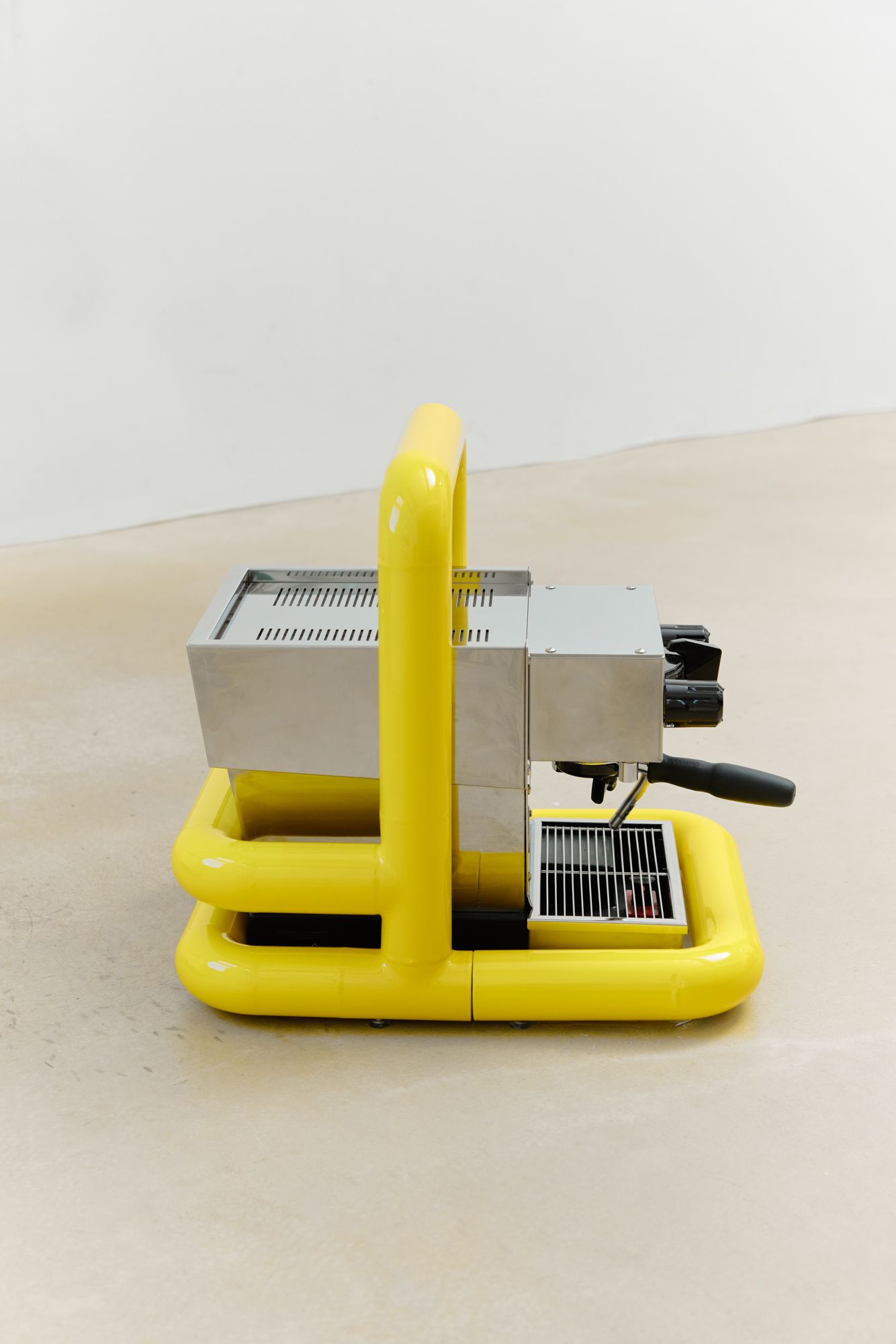
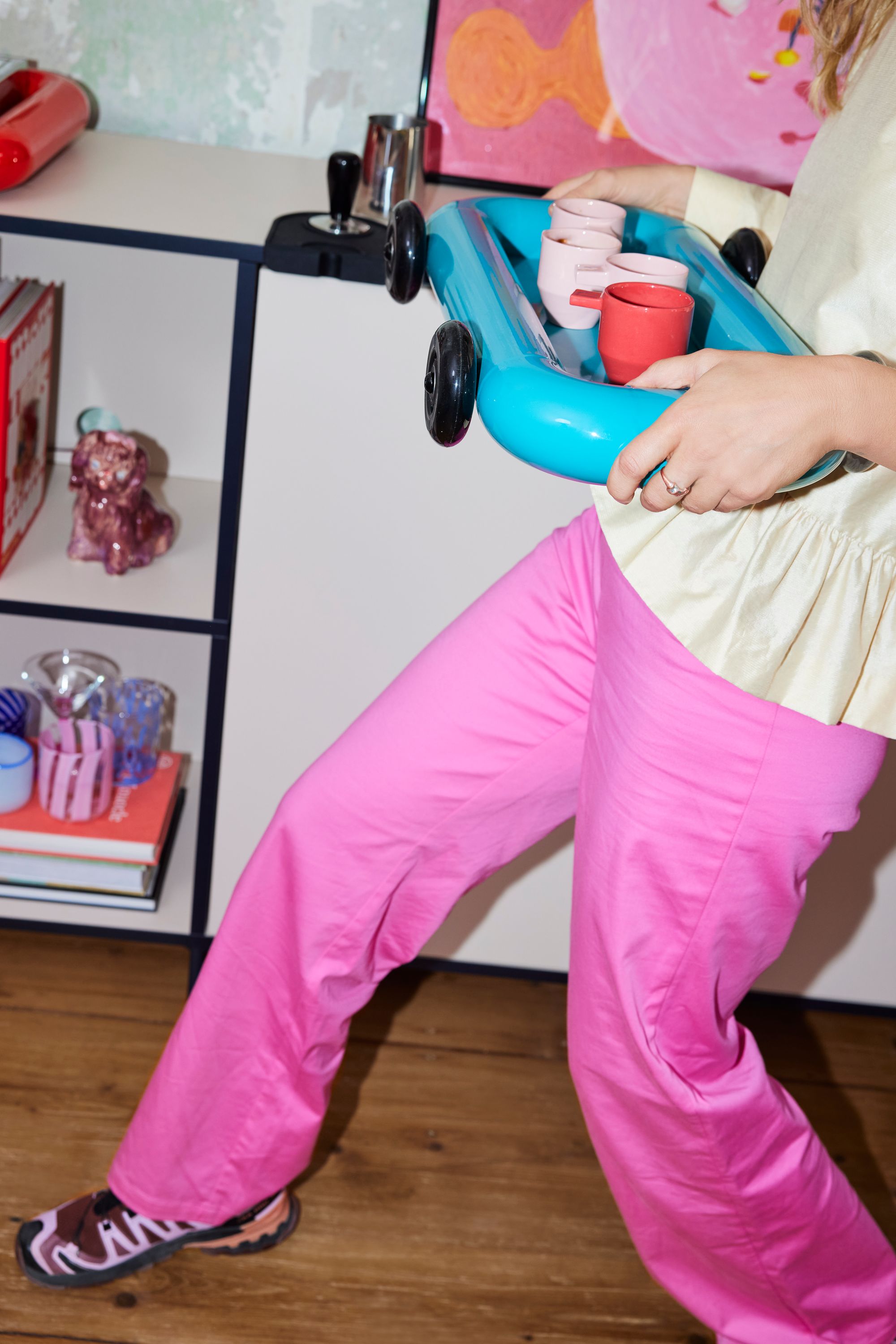
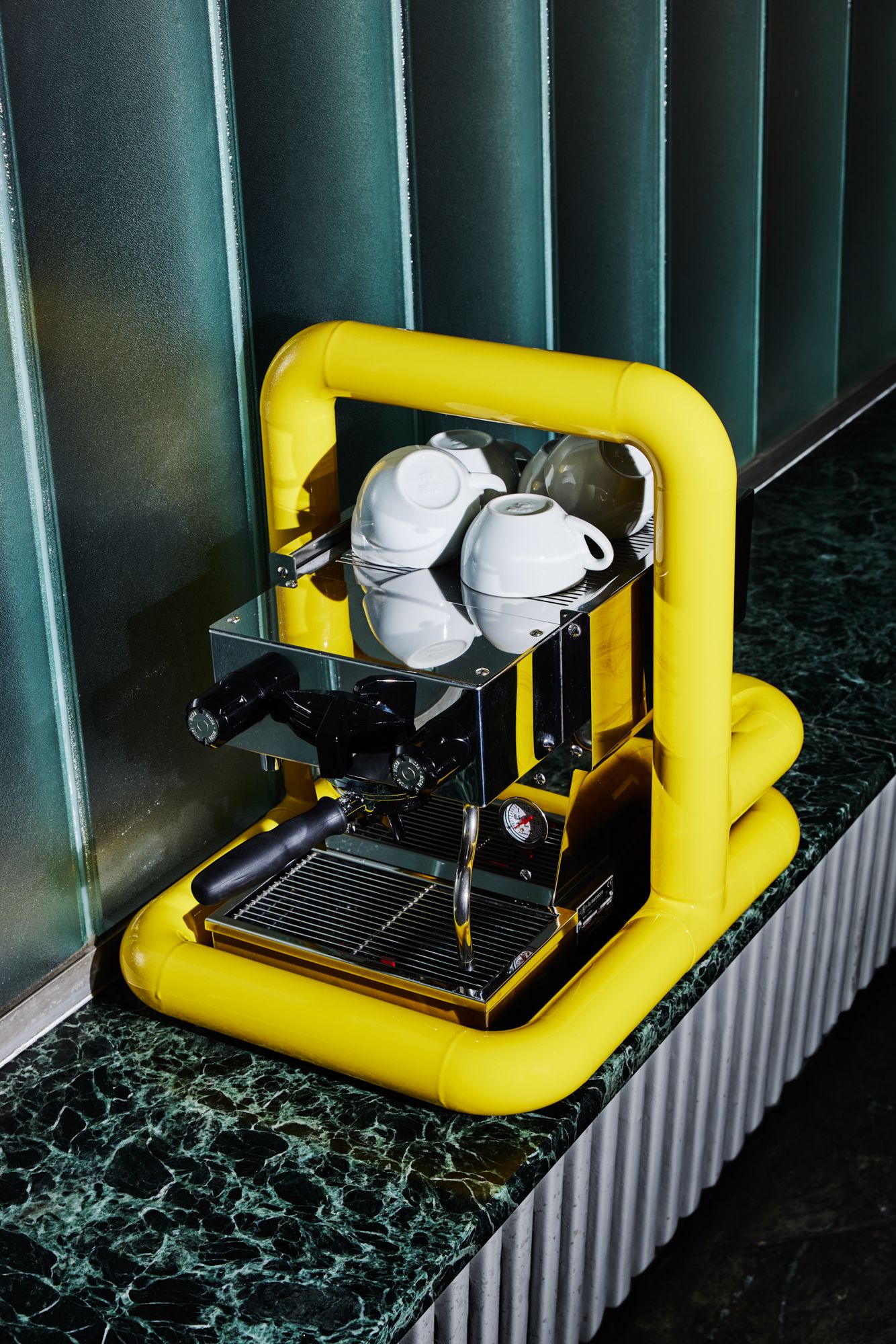
When we stumble upon a lucky design algorithm on Instagram, amid a sea of mid-century treasures and contemporary design masterpieces, Tina Bobbe’s extravagant coffee machines often appear – sometimes with chrome, tubular contours, other times carved from onyx with a structured formal language. Although the sculptural objects initially existed only in the virtual realm as conceptual pieces, the designer gradually peeled them away from the screen and brought them to life in tangible form. A conversation about the role of AI in the design process, the materialization of the coffee ritual, and the playfulness embedded in contemporary design.
Your work often begins with AI-generated imagery. How far do you allow AI to navigate your creative process, and at what point do you take control as a designer?
AI can be a powerful tool in my process for quickly visualizing ideas and testing different conceptual directions. The generated images often serve as a strong visual concept for me, which I then develop further and bring to life eventually. At times, the final outcome stays close to the original concept; in other cases, it evolves into something different. There are also moments when AI plays little to no role in the process at all.
When working with AI, what kinds of modifications or prompts do you use to influence the outcome of the generated images?
In MidJourney, there are several ways to refine an image without starting completely from scratch. One of the most useful is remix mode, which allows me to create variations of an image – ranging from subtle to strong changes – while also adapting the prompt. This gives me a balance between control and experimentation, helping me push a design further without losing its essence.
Which platforms or tools do you rely on for your AI explorations? Do you also experiment with widely accessible tools such as ChatGPT or Midjourney, and if so, how do they fit into your workflow?
My primary tool has always been MidJourney, and it remains central to my process. As the tool landscape evolves, I also turn to ChatGPT or NanoBanana for tasks MidJourney can’t handle. For example, I’ll generate an object and a scene separately in MidJourney for greater control, then seamlessly integrate the object into the scene using ChatGPT or NanoBanana.
Once you have a speculative AI concept, what steps are involved in translating it into a tangible, handcrafted object?
Once I have a concept, bringing it to life follows the familiar, fuzzy-yet-systematic design process. I typically begin with sketches to refine and finalize the shape. Next, I research suitable materials and potential producers. The most time, however, is spent developing detailed, production-ready 3D models.
How do you balance the precision of materials like stainless steel or natural stone with the often playful, surreal qualities of AI-generated forms?
For me, an AI image is like a hand-drawn sketch—rough, imperfect, and full of crooked lines, yet the concept shines through. I don’t aim to recreate the AI image; it’s a starting point. The final design is always precise in theory, though building it often brings new surprises.
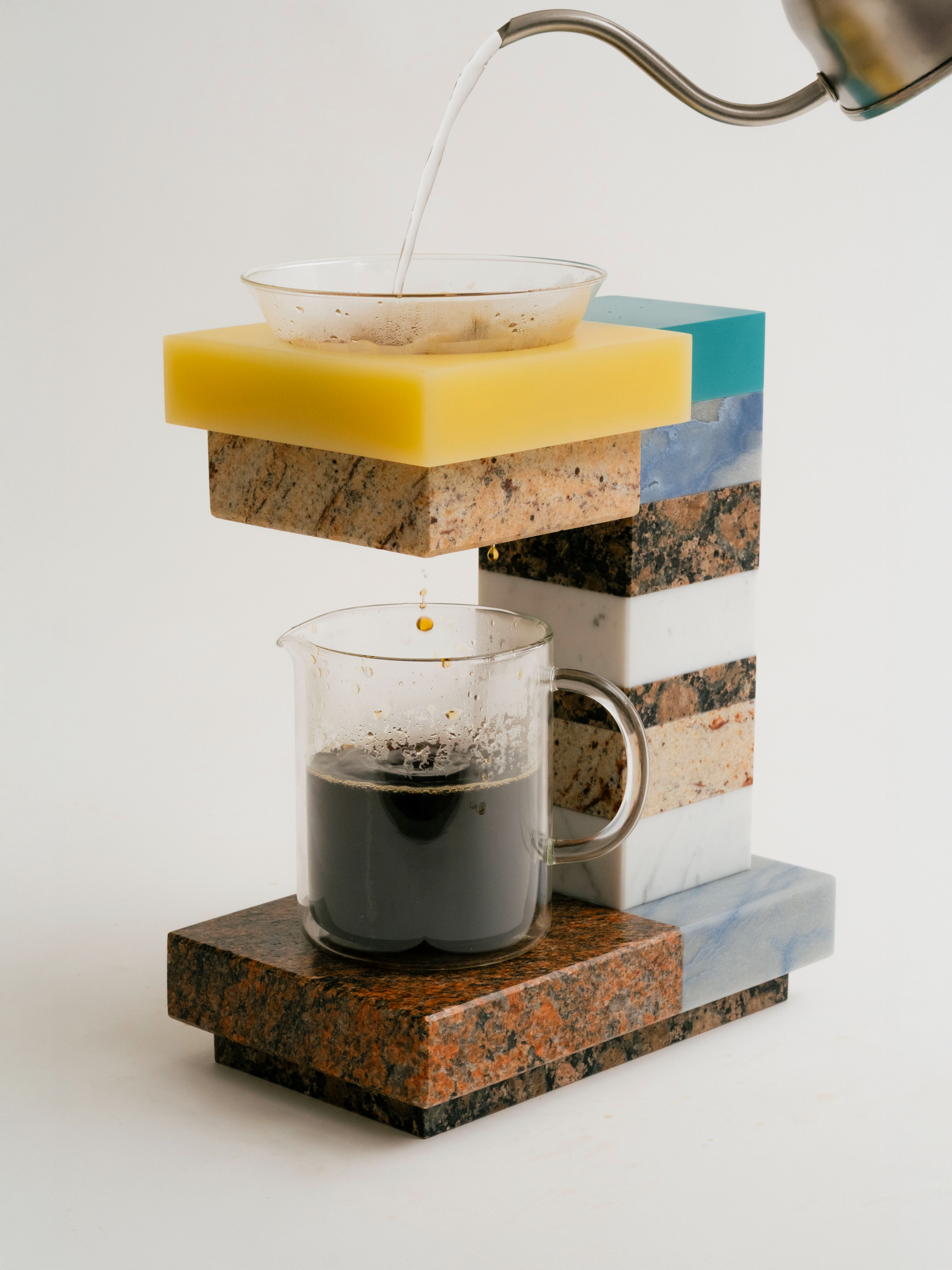
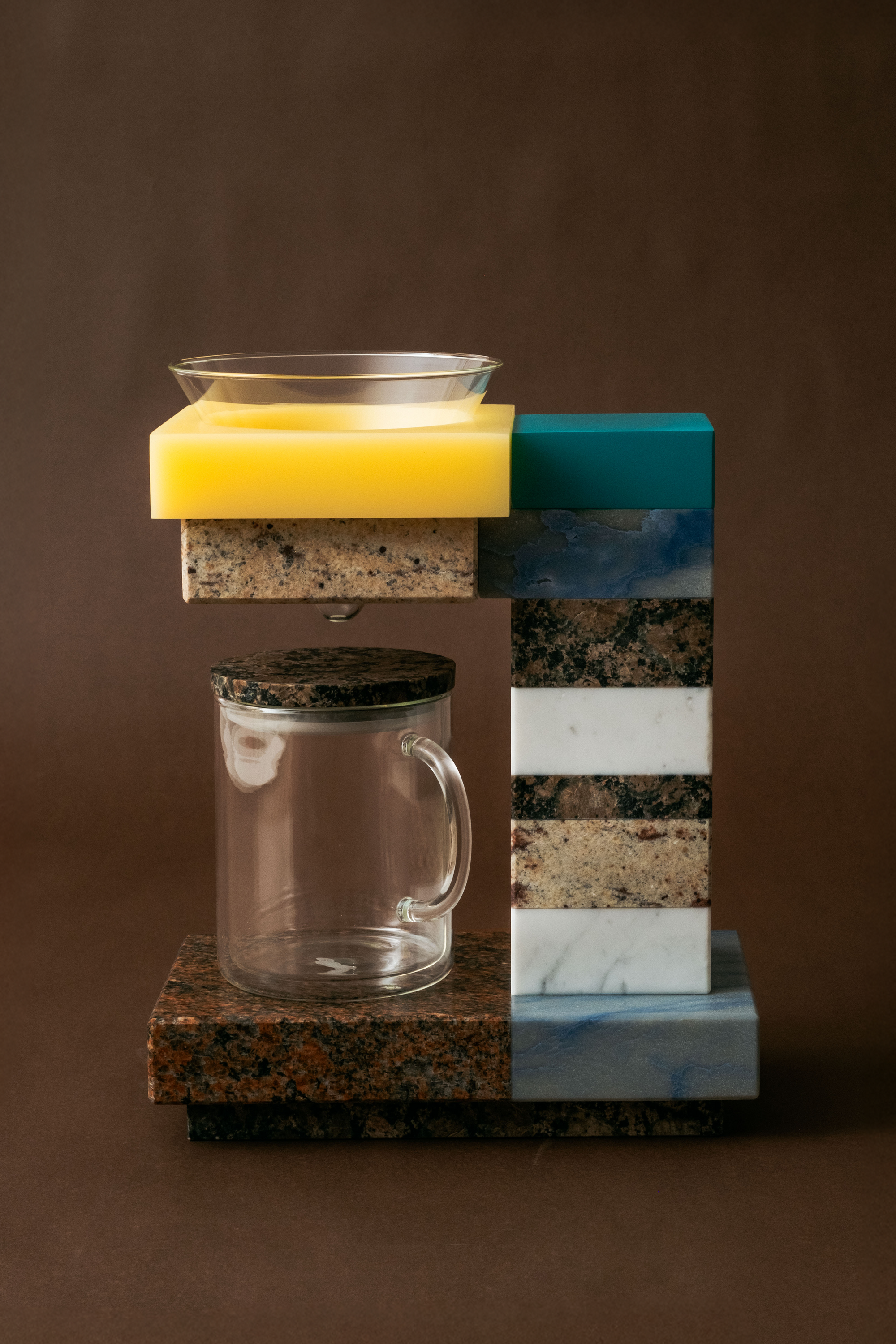
Your new work Stone Drip transforms the ritual of making coffee into a sculptural experience. What role does ritual play in your practice, and why does coffee hold such significance for you?
Ritual doesn’t play a role in my artistic practice, but it plays a big role in my daily life. Coffee, in particular, is at the heart of my mornings. Every step of making it is intentional and I do mindfully – the same each day. I love the moment of holding my first cup of hot coffee of the day. Every morning, I have the sense that I’ve never tasted anything more delicious in my life.
Many people know you for your bold, imaginative coffee machines. Why do you think these objects resonate so strongly with audiences and this particular generation?
Good question. Luckily, there’s a new generation that cares less about cars or watches and more about living well – through good food, meaningful experiences, and quality of life. Coffee machines invite people to explore the craft and taste of coffee, yet they all look the same. I believe they should be beautiful objects that not only reflect their importance in our daily rituals but also respond to individual taste and personality.
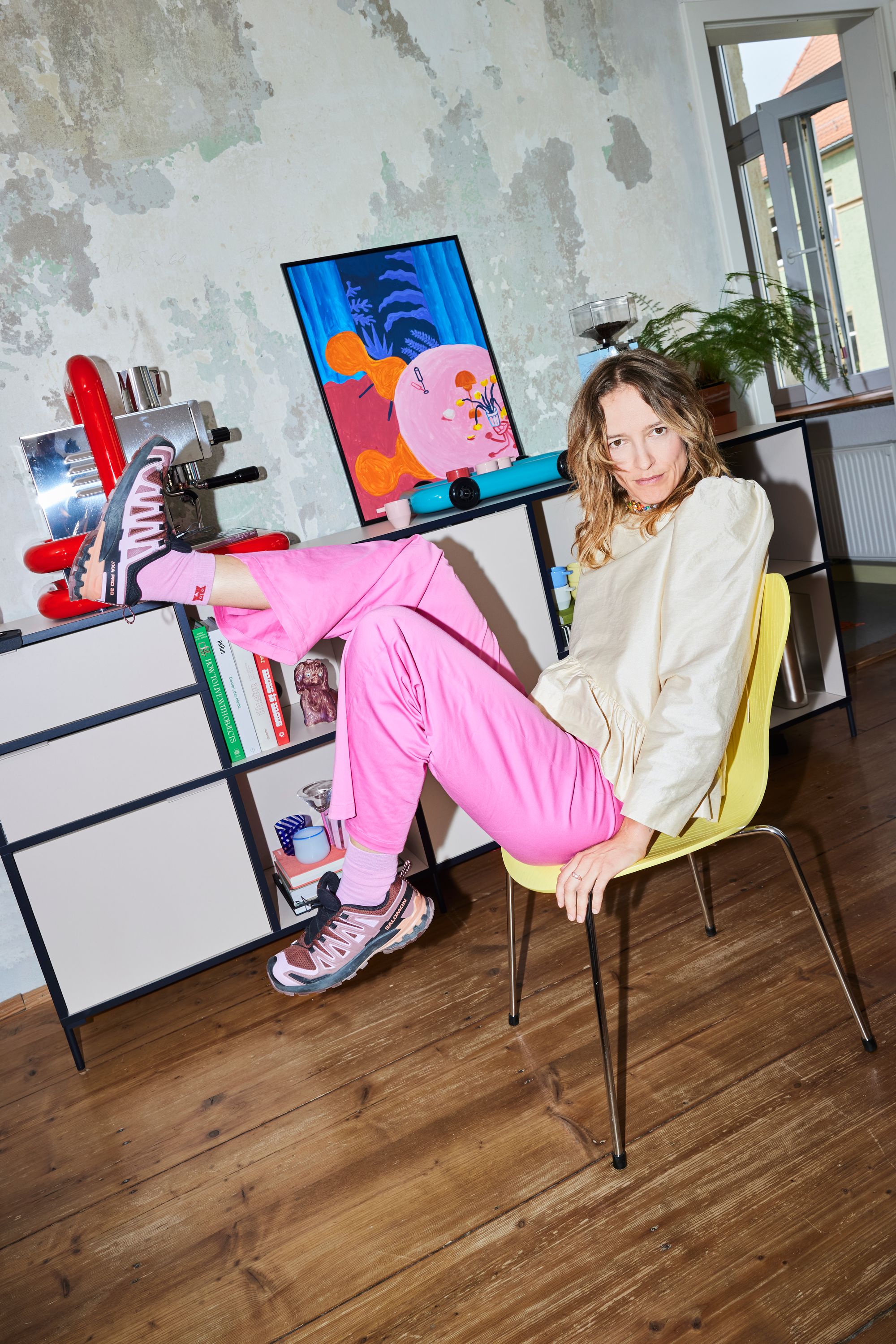
Your designs draw from the radical spirit of 1980s Italian postmodernism. How do you see your work extending or challenging that design lineage in today’s context?
Maximalism, color, and craft are back – the antidote to the minimalistic beige. I love the space this creates for individuality, playfulness, and not taking life too seriously.
Having moved from research in mechanical engineering and industrial design into independent practice, how does your scientific background continue to influence your creative work?
Honestly, it’s hard for me to tell, because I’m too close to myself to notice. I feel that there’s no direct influence from my scientific background – but I’m not entirely sure.
Beyond coffee-related objects, what other everyday rituals or domestic functions would you like to reimagine through your sculptural approach?
I can’t decide – there are so many things I’d love to explore. I’m drawn to anything functional, so the obvious objects like chairs and lighting are already on my list. But I also believe in the hidden potential of the everyday: a beautifully considered trash bin, or even something as humble as a toothbrush, can be reimagined as a work of art.
Do you see AI as a long-term collaborator in your practice, or more as a current experiment that may evolve into something else?
I see AI as a long-term collaborator – I don’t want to miss it. I’m also excited to watch it evolve and to explore the new possibilities it will bring to my practice.
How do you hope audiences will interact with and emotionally respond to your objects?
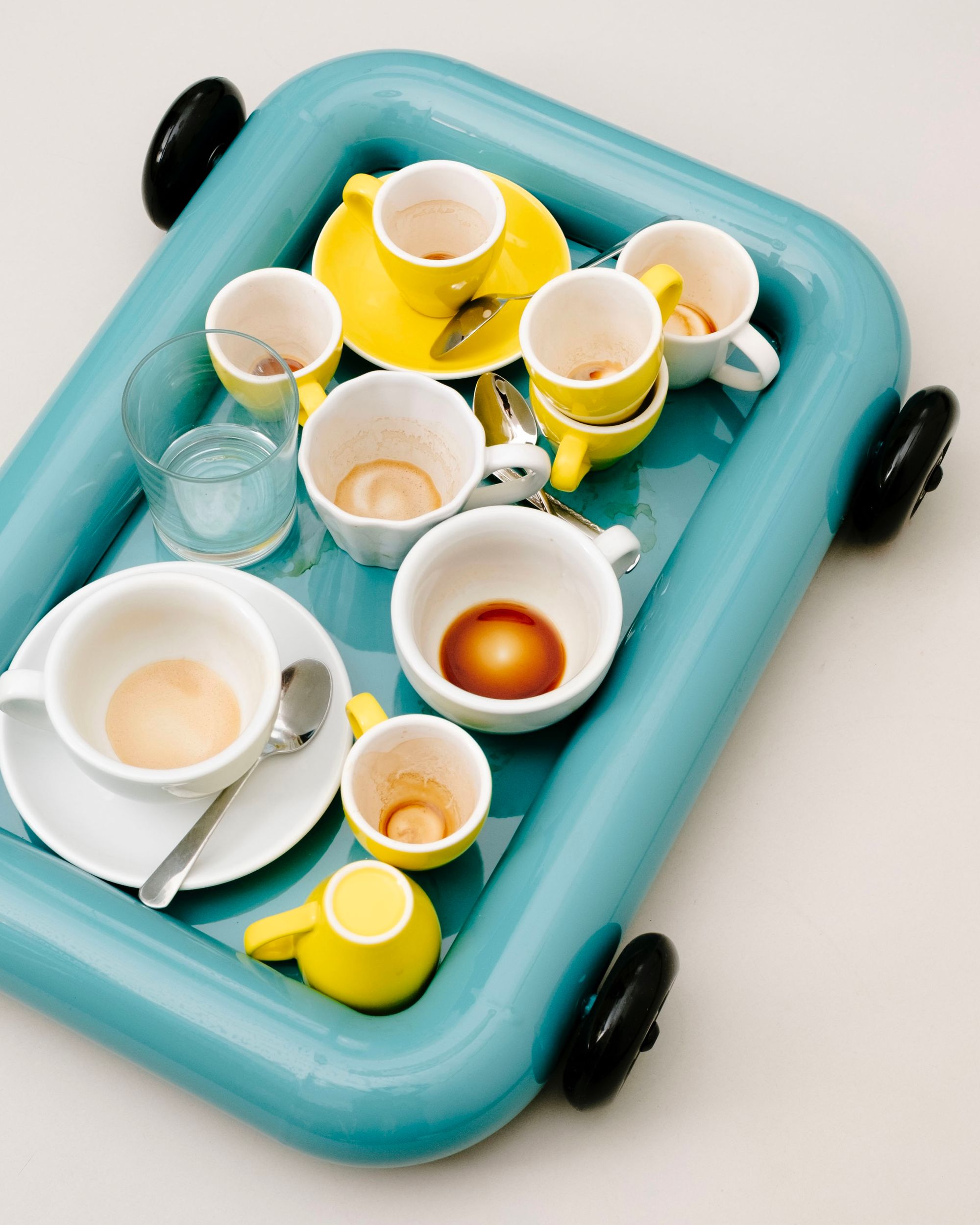
I hope people feel curiosity and joy when they see my objects. They’re meant to surprise, invite play, and turn everyday rituals into moments of delight while also challenging ideas of how functional things “should” look.