


Fashion has always been about reinvention. Yet today the industry faces a reinvention of a different kind – not aesthetic, but ecological. The global fashion sector is widely recognized as one of the most environmentally damaging branches of the economy.
Author: Stanislav Andranovits
Much of the problem stems from the dominance of synthetic materials derived from fossil fuels, known as petrochemicals. Polyester, nylon, and acrylic are essentially plastics; their production emits significant amounts of carbon dioxide and releases microplastics into waterways during washing. At the same time, conventional cotton cultivation demands intensive irrigation and pesticide use, while leather production from cattle contributes to land degradation and high greenhouse gas emissions. Each year, the fashion industry consumes billions of cubic meters of water – enough to fill millions of Olympic-sized swimming pools. Much of it is used for dyeing and finishing processes. Add to this the accelerating culture of fast fashion, in which garments are purchased cheaply, worn only a few times, and quickly discarded, and the environmental burden becomes staggering. In response, designers, material scientists, and biotechnologists are exploring a radical idea: returning to nature not just for inspiration, but for production itself - moving from petrochemicals to Petri dishes. This emerging field is known as biodesign.
Growing Materials Instead of Manufacturing Them
Biodesign integrates living systems such as bacteria, fungi, algae, and yeast into the design and manufacturing process. Instead of extracting resources like oil or animal hides and processing them with energy-intensive chemicals, biodesign works with living organisms that grow materials under controlled conditions. The paradigm shifts from “manufacturing” to “cultivating.” In fashion, microbes have become unlikely collaborators. Bacteria, in particular, are proving remarkably versatile: they can produce pigments, fibers, and even leather-like sheets of material.
Bacterial Cellulose: A New Kind of Leather
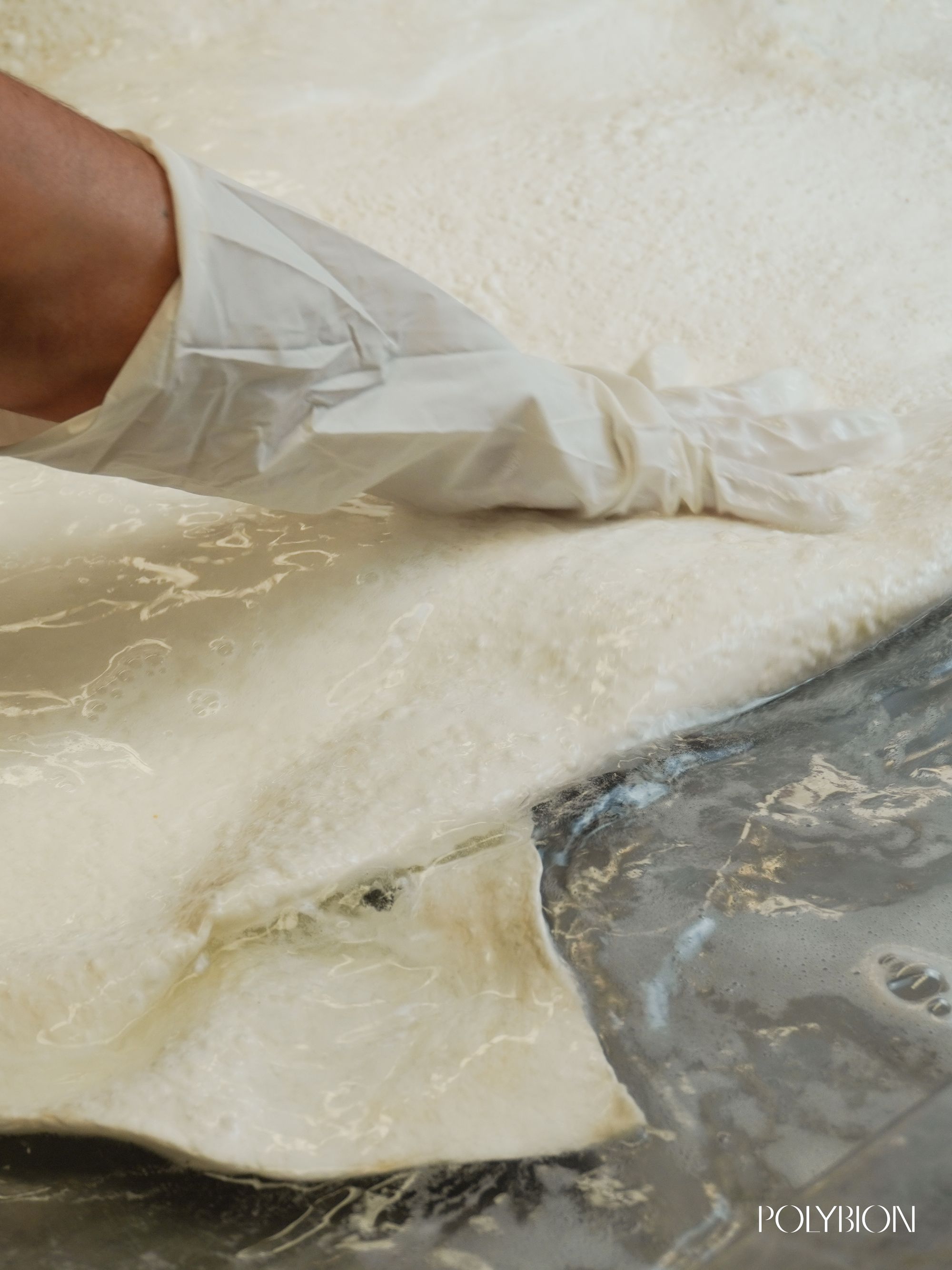
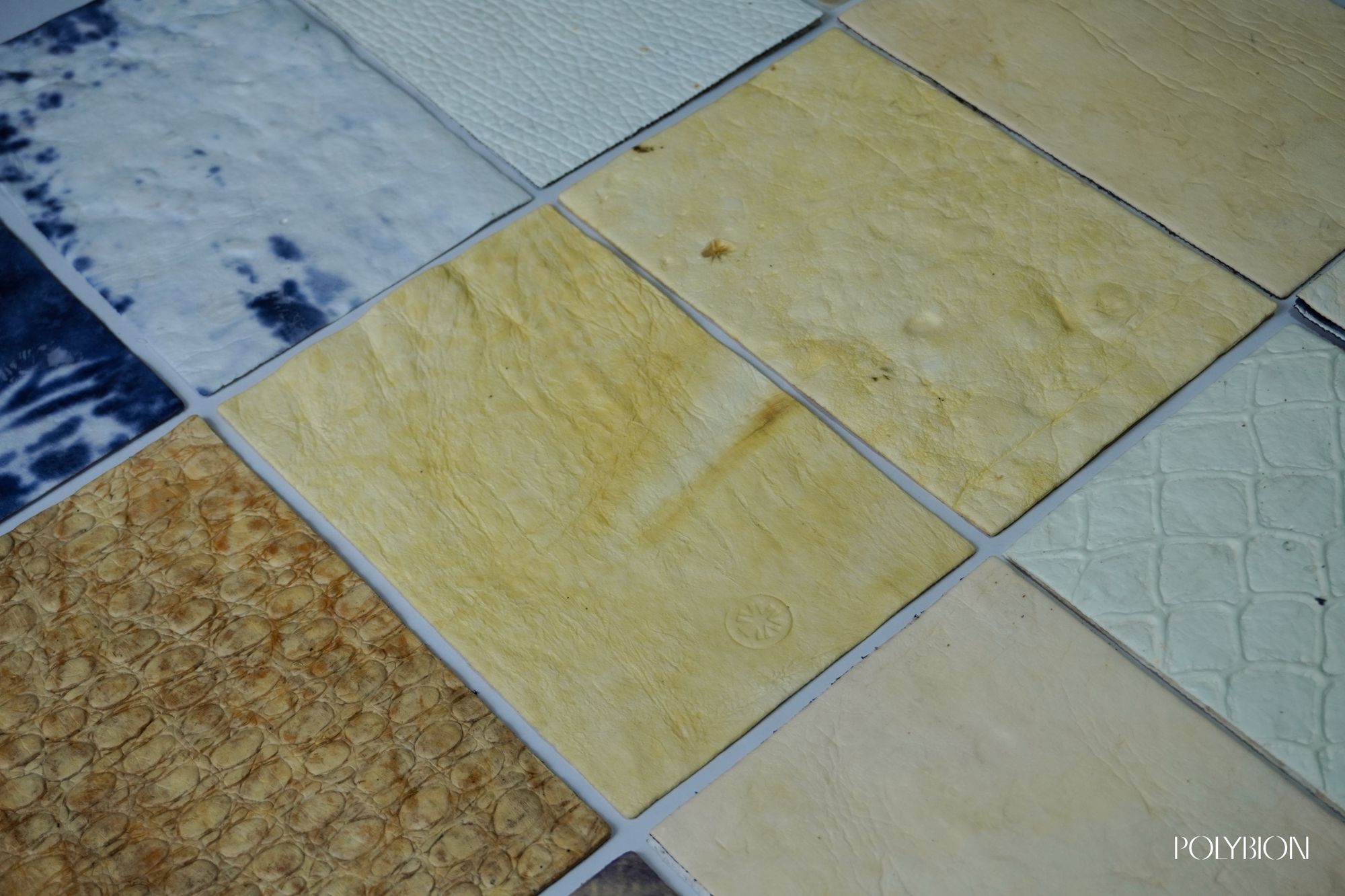
One of the most exciting developments in sustainable materials is the use of bacterial cellulose to create vegan leather alternatives. Certain bacteria, including Komagataeibacter xylinus and related species, naturally synthesize cellulose, forming dense, flexible networks of nanofibers. These networks can be harvested and processed into sheets that closely resemble leather. You may have encountered this process firsthand if you’ve ever grown kombucha at home – the gelatinous “scoby” that forms during fermentation is produced by the same bacteria that can create these leather-like sheets.
Interestingly, K. xylinus is also behind some popular modern vegan foods. For instance, nata de coco is a chewy, jelly-like substance sometimes used as a bubble tea topping. It is made when bacteria ferment coconut water, producing a gelatinous, resilient cellulose with a texture similar to jelly pearls. This highlights the remarkable versatility of these microorganisms, which can be applied not only in foods but also in sustainable materials.
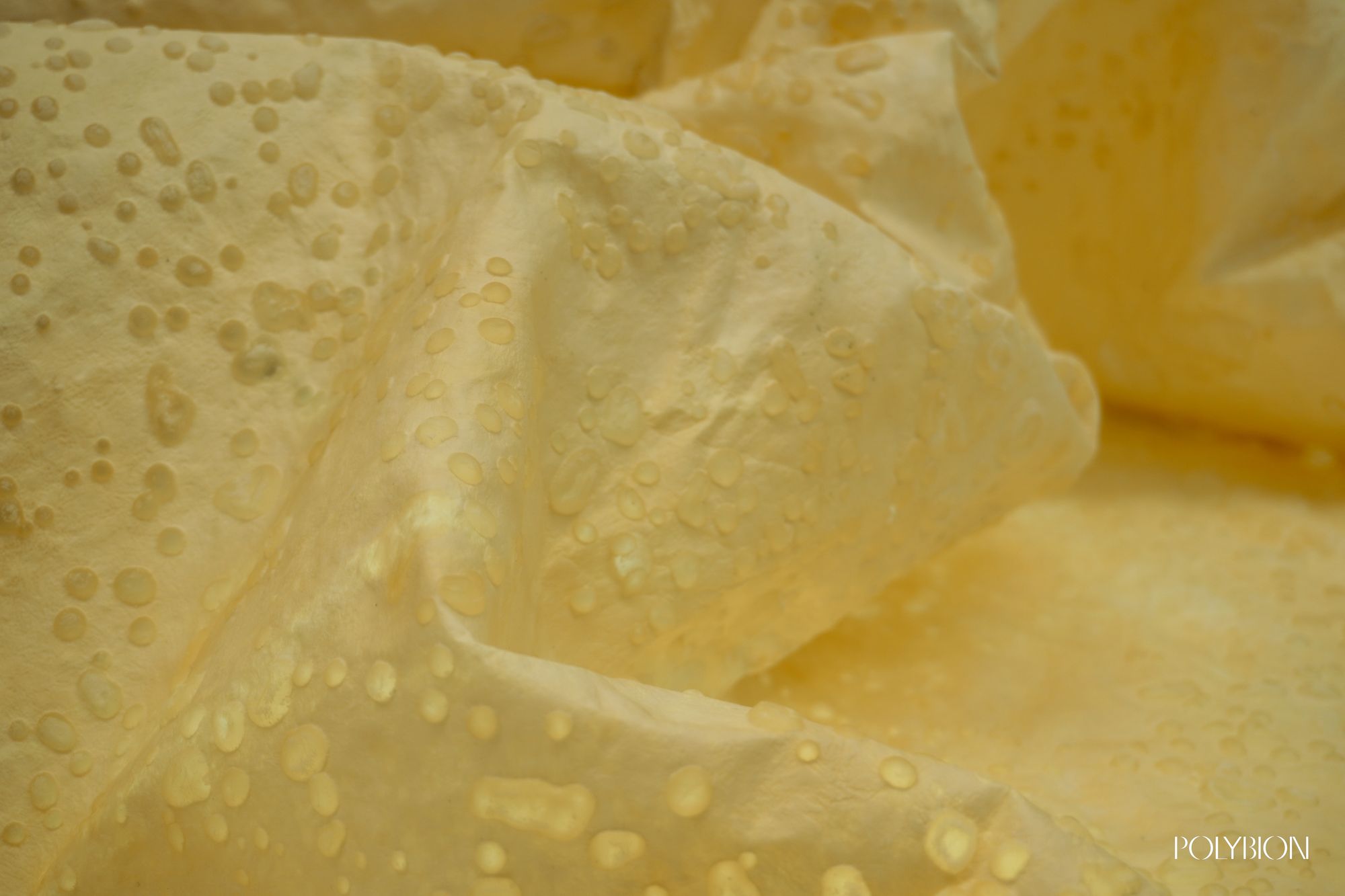
A striking example of bacterial cellulose’s potential in fashion comes from the Danish brand GANNI, which has incorporated Celium™ into several runway looks, a biomaterial developed by the biomaterials startup Polybion. GANNI’s willingness to experiment with emerging material categories reflects its broader commitment to shifting the fashion industry toward more responsible design and consumption models. During Celium production, microorganisms are cultivated on agricultural mango waste, metabolizing its sugars into bacterial cellulose. Within approximately 20 days, they synthesize a dense yet flexible biomaterial that can be finished and processed in ways comparable to conventional leather. Unlike livestock systems, this fermentation-based process does not require deforestation, continuous freshwater inputs, or feed cultivation, nor does it generate methane emissions. Polybion’s stabilization process further mitigates environmental impact by prioritizing water recirculation, reduced energy demand, minimal waste generation, and the elimination of toxic chemical treatments.
Importantly, the use of food waste as a raw material addresses another pressing environmental challenge. By diverting agricultural byproducts from decomposition where they would release methane the process captures carbon in material form. At the end of its life cycle, the material can be composted, helping to prevent additional greenhouse gas emissions. Through this closed-loop logic, Celium represents not only an alternative to animal-derived leather, but also a rethinking of how waste streams can become valuable resources within a regenerative design system.



Researchers at Imperial College London have advanced this concept even further by integrating material growth and pigmentation into a single biological process. Their team engineered Komagataeibacter rhaeticus to produce a plastic-free, vegan leather composed of microbial cellulose while simultaneously biosynthesizing eumelanin, a natural black pigment, during material formation. Rather than dyeing the material after fabrication, the bacteria generate color intrinsically as the cellulose matrix develops. In effect, the system operates like a living 3D printer: the microorganisms assemble the structural network layer by layer while embedding pigmentation directly into the growing material. This eliminates the need for post-production dyeing and reduces reliance on additional chemical treatments. Working in collaboration with material designer Jen Keane, CEO of Modern Synthesis, the researchers produced functional prototypes, including a shoe upper and a wallet. The shoe component was grown directly into shape by cultivating bacterial cellulose inside a bespoke, shoe-shaped vessel, demonstrating how form can be programmed at the growth stage rather than imposed through cutting and stitching. Using optogenetics, the team further demonstrated control over pigmentation. By projecting blue light onto specific areas of the living culture, they were able to activate pigment production selectively, generating custom colors during growth. This approach points toward a future in which material fabrication, coloration, and patterning are biologically encoded from the outset, redefining conventional manufacturing workflows.
Coloring Textiles with Living Pigments
Dyeing remains one of the most polluting stages of garment production. Conventional synthetic dyes often depend on petrochemicals and heavy metals, and the dyeing process can discharge untreated wastewater into rivers. Here, too, bacteria offer an alternative. Many microbial species naturally produce vivid pigments as secondary metabolites. Depending on the species, these pigments either diffuse through the cell wall or remain contained within the cells. Natsai Audrey Chieza has demonstrated the potential of bacterial dyeing using Streptomyces coelicolor, a soil bacterium that produces striking pink, purple, and blue pigments. In nature, these compounds function as biochemical defenses suppressing rival microbes and protecting the bacteria from oxidative stress during growth. Through her studio Faber Futures, Chieza allows bacteria to grow directly on textiles such as silk. As the microorganisms proliferate, color develops organically on the fabric surface. This approach eliminates the need for large dye baths, significantly reduces water consumption, and avoids toxic auxiliaries and mordants. Because pigmentation emerges from biological growth, patterns are not printed or stamped but evolve naturally, making each textile unique.
From Extraction to Cultivation
Biodesign is not a panacea. Scaling microbial production still requires energy, infrastructure, and careful life-cycle planning. Yet it represents a shift in perspective: materials are grown, not mined, and colour develops naturally rather than chemically imposed. In a resource-constrained, climate-unstable world, such approaches show how aesthetics and ecology can coexist, hinting at a fashion industry reimagined through collaboration with living systems.