



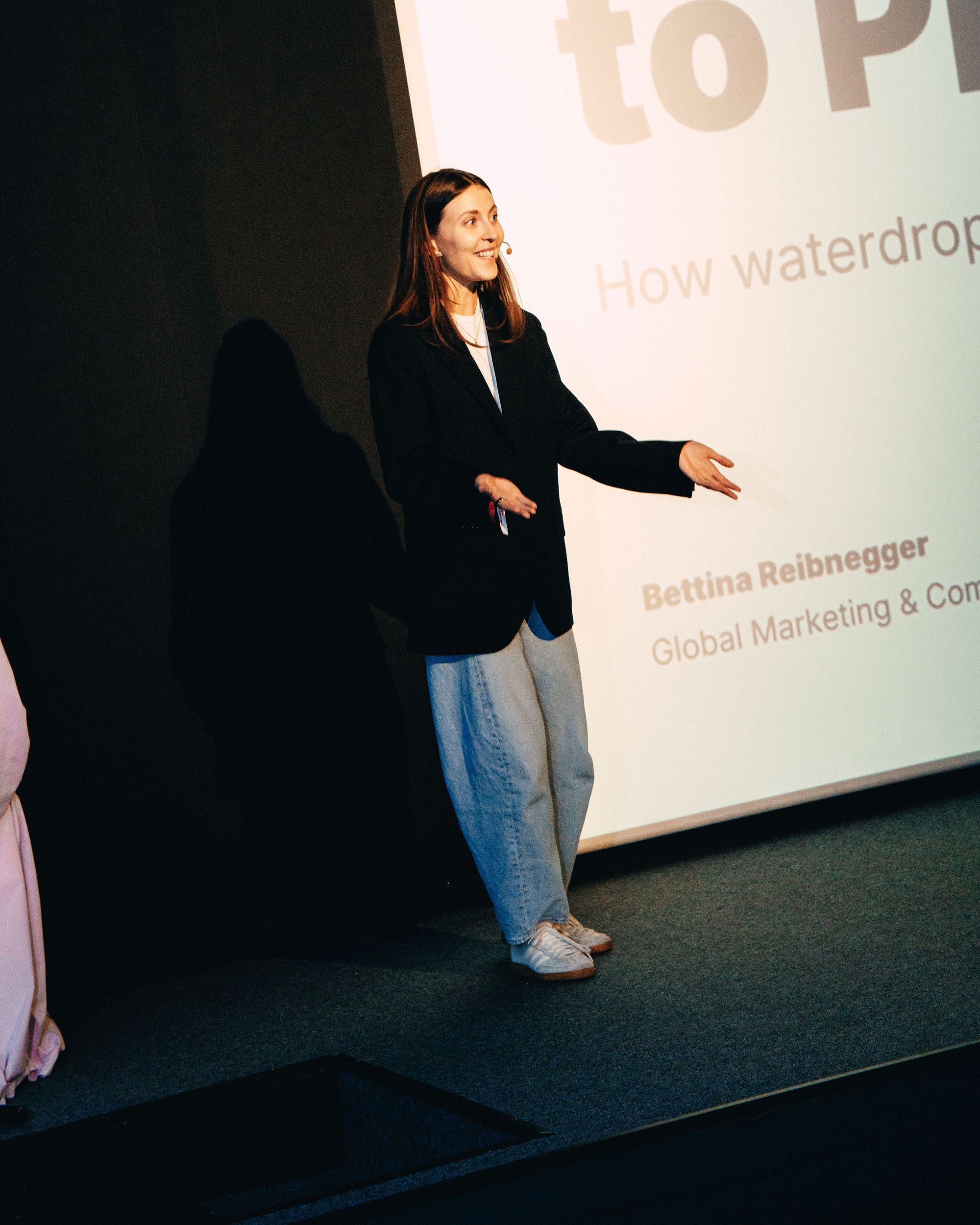
Some waterdrop customers collect every bottle. Others get the logo tattooed or invite the team to their weddings. How does a small cube you dissolve in water inspire that kind of devotion—and how does it translate into business? Bettina Reibnegger, Global Marketing & Communications Director at waterdrop, talks about letting customers shape the community and the decisions behind the company’s first profitable year.
Waterdrop became profitable for the first time last year. How long did it take to get there?
Last year was our ninth year. We’re now celebrating ten years of waterdrop.
But we were on track before that, too—the strategy was different. We wanted, and still want, to become the world’s number-one hydration brand. You don’t get there without investing in growth and entering new markets.
For most of our history, that was the priority. We’re an Austrian brand, and we’re now available across Europe, as well as in the US, Australia and Japan.
Then the war started, the economy weakened and investor sentiment changed. We said: we still want to grow, but we also want to prove we can do it profitably. That’s what happened last year.
What did you change? The war in Ukraine made investors across the region more cautious. How did you adapt?
We kept improving the product, because that’s how we attract customers and give them a reason to stay.
We also built a broader range around the cube, which increased basket sizes. As volumes grew, we were able to bring down the cost of the goods we sell. And we tried to work more efficiently, measuring what we were doing and looking at what actually worked.
We entered the US in 2020 or 2021 and invested heavily in growing there. It’s one country, but in terms of scale, you’re almost dealing with a continent.
Then costs rose enormously—customer acquisition costs, advertising costs on Meta and so on. So, we pulled back and put more focus on Europe and our established markets: places where we knew the business worked and where we still saw room to grow.
You mentioned measurement. How do you measure something like community, and how does it connect to marketing?
It depends on what we’re doing. We have both online and offline communities, and they’ve always been a big part of how waterdrop grew.
Most beverage brands sell through retailers. We sold directly to customers, so we had that direct relationship and could talk to them. We built our customer relationship and community teams, answered comments and tried to understand what people were telling us.
Today, I think we have around 150,000 people in our Facebook groups. They talk about waterdrop, share recipes and collect products. We’ve had customers get tattoos of our logo. Others have visited our stores across Europe as part of their holidays.
One concrete example of how that connects to marketing is Facebook. I know it sounds old-school, but in Hungary it’s our number-one platform. There’s a large, relevant audience for us there.
When we publish something on our Facebook page, we share it in the community group. We might run a challenge that involves commenting on the post, so it gets engagement straight away. Then we promote it as an ad. It performs better because there’s already activity and positive feedback underneath it.
That’s one way we use the community in our marketing. We also organise offline experiences for members.
In places where you can drink water straight from the tap, what does waterdrop actually add?
We don’t see ourselves as competing with water. We’re trying to reach people who currently drink a lot of sugary drinks from plastic bottles.
If you already drink water, you might sometimes want some flavour or a bit of variety. It’s also convenient—I have a cube in my pocket right now. You can take it with you.
Then there are the added ingredients: vitamins, and depending on the product, energy or electrolytes.
If you prefer syrup, use syrup. We’re not telling you what to do. The idea is to help people drink more water.
We’ve had customers tell us they used to drink two litres of Coke a day, and that waterdrop helped them switch to flavoured water. For those people, it made a difference. Something else might not have worked for them.
Before this interview, waterdrop wasn’t really on my radar. Then I mentioned it to a few friends and suddenly found myself talking to a room full of fans. What struck me was that they weren’t just recommending a drink—they seemed to feel part of something. How does a product with such a simple premise inspire that kind of attachment? How much of it can you build deliberately, and when do customers take it in a direction of their own?
I don’t think there’s one thing I can point to. It didn’t happen overnight. There was a lot of work behind it.
We always said we wanted to build a brand people loved. Especially in the beginning, if someone said, “I don’t like this,” or gave us constructive but negative feedback, we would try to help—refund them, for example, or send them a different product to try.
We were generous because we wanted people to have a good experience, come back and tell others about it. Recommendations from friends and family are incredibly powerful. You trust what your friends, relatives or colleagues say in a way you might not trust an influencer or an athlete.
We also tried to keep the brand’s personality witty and funny, stay close to customers and organise events.
When we started the Facebook group, we thought we’d have to entertain everyone. We prepared lots of posts in advance. But then people came in and entertained themselves.
They collected the products. Some wanted every bottle. They built shelves in their apartments to display everything. We loved seeing that, and sometimes we sent gifts to say thank you.
Of course we reached out to the person who got a tattoo. We’ve even been invited to customers’ weddings.
People were showing us a lot of affection, and we tried to give something back. Plenty of brands have customers who love them. The question is whether the brand responds and puts that much effort into the relationship.
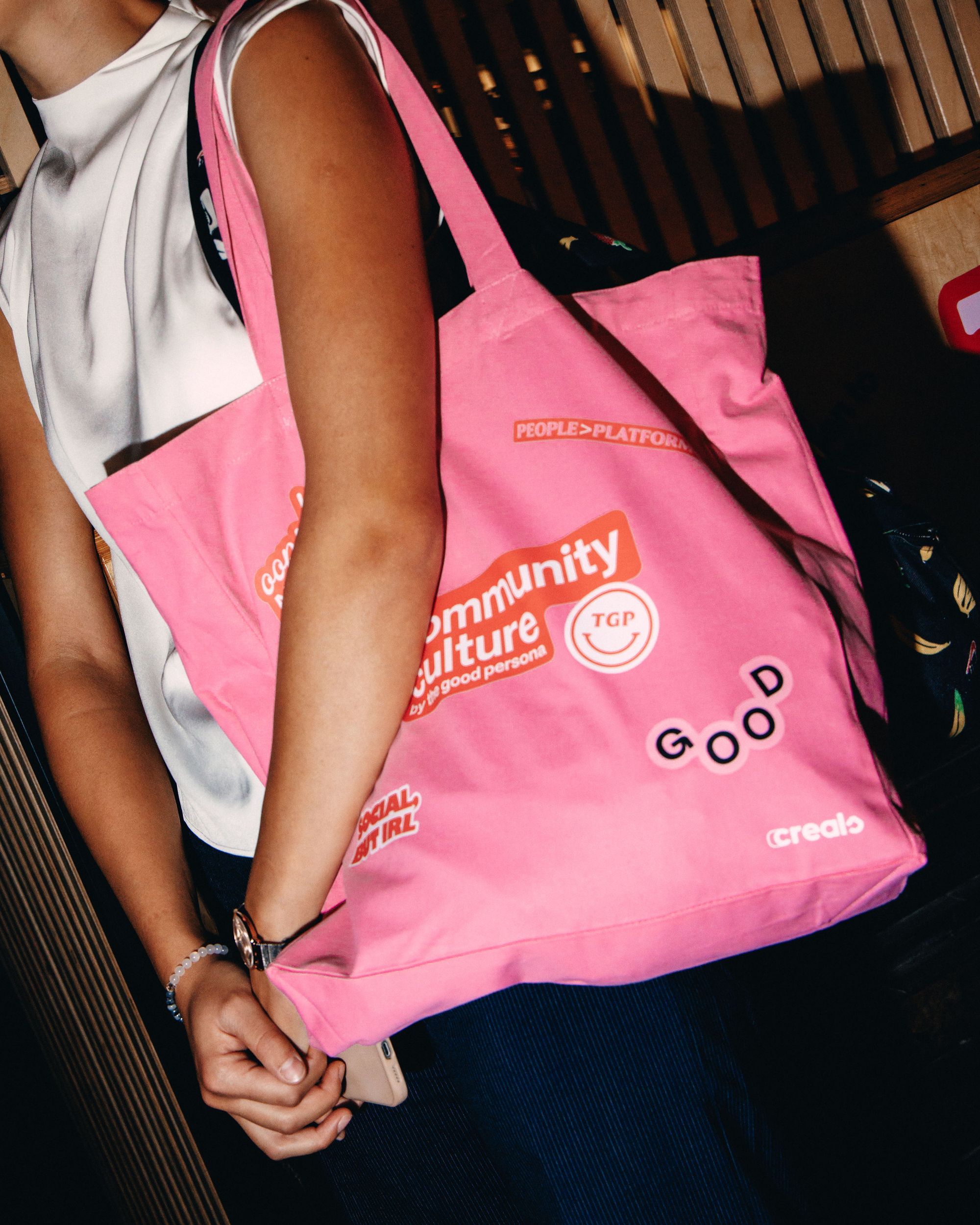
How can brands build lasting relationships with people, and how are communities, creators and artificial intelligence shaping those connections? These questions were at the heart of Community Culture, an event hosted by The Good Persona at Budapest’s Toldi Cinema on 24 September. In this interview series, we continue the conversation with the event’s speakers about the changing rules of brand building.