


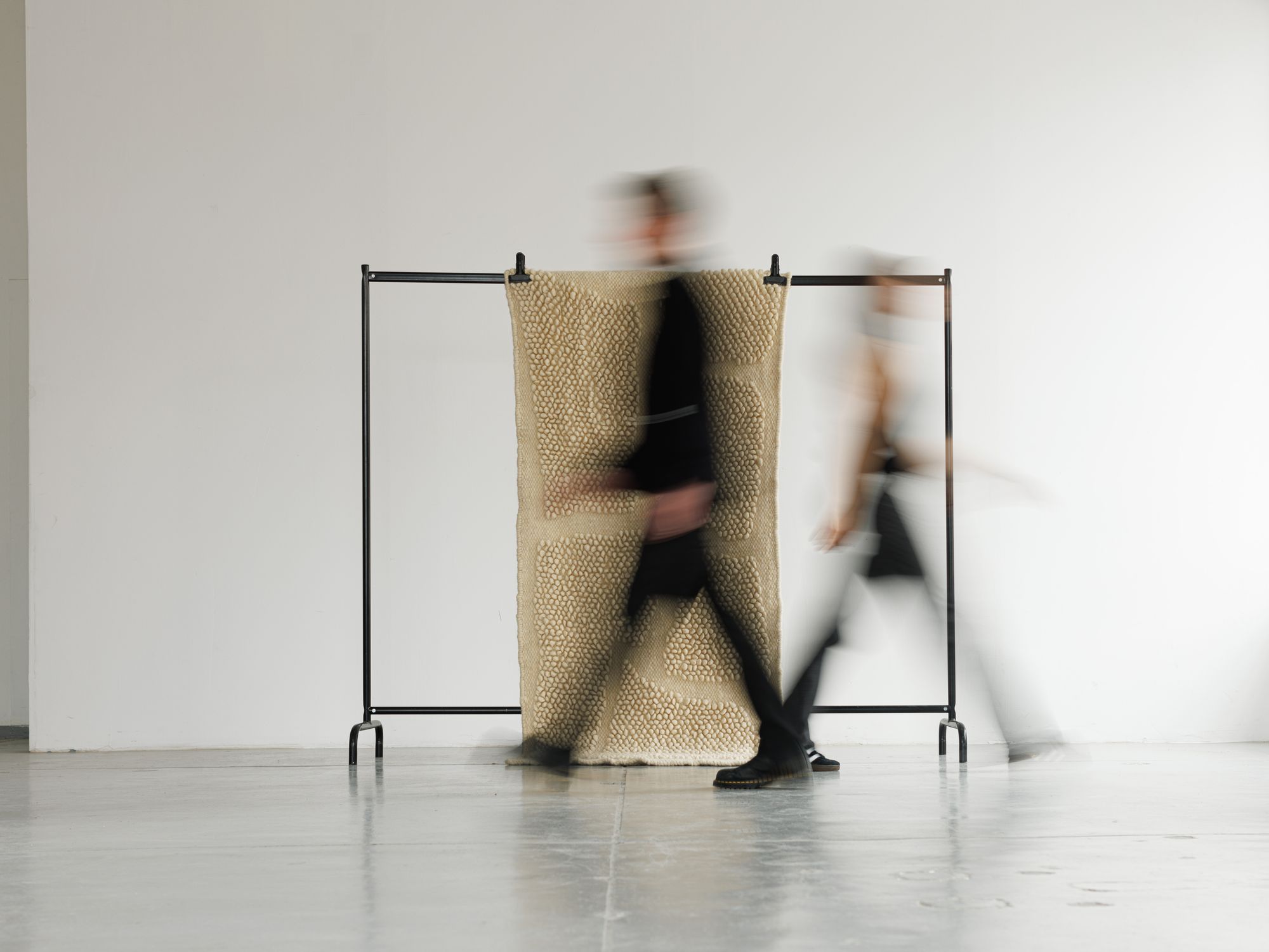
White Wood Studio’s rugs draw on the deep-rooted textile traditions of the Hutsul community in Ukraine’s Carpathian region, while embracing the clarity and restraint of contemporary design. Rather than reinterpreting folklore, the studio seeks to craft a visual language where heritage and minimalism can converse. The starting point for the collection came from a series of intuitive, wave-like sketches by Felix Pöttinger — abstract impressions of movement, wind, and landscape. These forms were translated into tactile rhythms through close collaboration with local artisans, who work with hand-spun wool and natural dyes, relying on knowledge passed down across generations. The result is a timeless piece: the liznyk, a handwoven rug that doesn’t demand attention, yet holds its place with quiet confidence. This is a collection shaped not only by sustainable materials, but by a thoughtful pace — one that values care, precision, and a considered sense of proportion.
What was the first visual or material impulse that sparked the creative process?
The first spark came from a series of sketches Felix made. There was something instinctive in them that immediately felt familiar to me: waveforms, wind, movement across landscapes. That was the starting point—a visual language capable of capturing both nature’s unpredictability and the order of architecture. We then translated those lines into texture, working closely with our artisans to explore ways of interpreting them in wool.
The rugs feel both ancient and contemporary in their language. How did you find the balance between tradition and formal freshness?
That balance lies at the heart of what we do at White Wood Studio. The craft behind these rugs is deeply traditional, handwoven using skills passed down through generations. The design process, however, is contemporary—conceptual and minimalistic.
In our collaboration, Felix’s approach removed all ornamentation, allowing space for form and rhythm. Our role was to bring those clean lines to life without losing the soul of the weave. That’s where the balance emerged—through texture, tension, and a shared respect for slowness. The result is a series of objects that feel timeless, not because they belong to the past, but because they carry it forward.
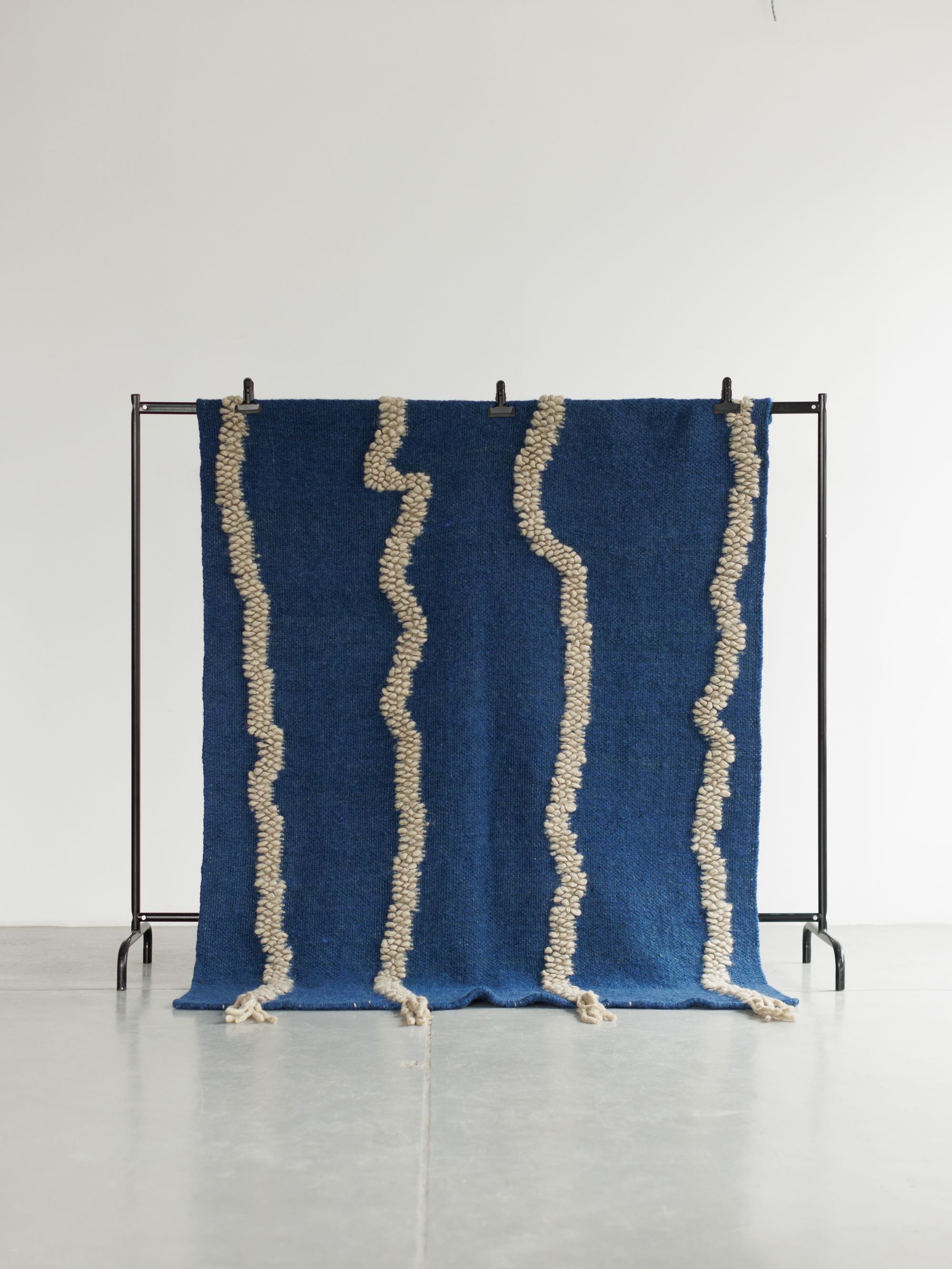
In what kind of spaces do you envision these rugs? Are they meant to be bold statement pieces in contemporary interiors, or rather elements that quietly blend into a room’s atmosphere?
I believe they can be both, depending on the space and the person who inhabits it. These rugs are not loud in colour, but they carry presence through their structure and texture. In minimalist interiors, they can serve as grounding focal points. Even in more layered or decorative spaces, they hold their own—not through boldness, but through form, rhythm, and the natural feel of the material. They draw attention in a quiet, assured way.
White Wood Studio | Web | Instagram