


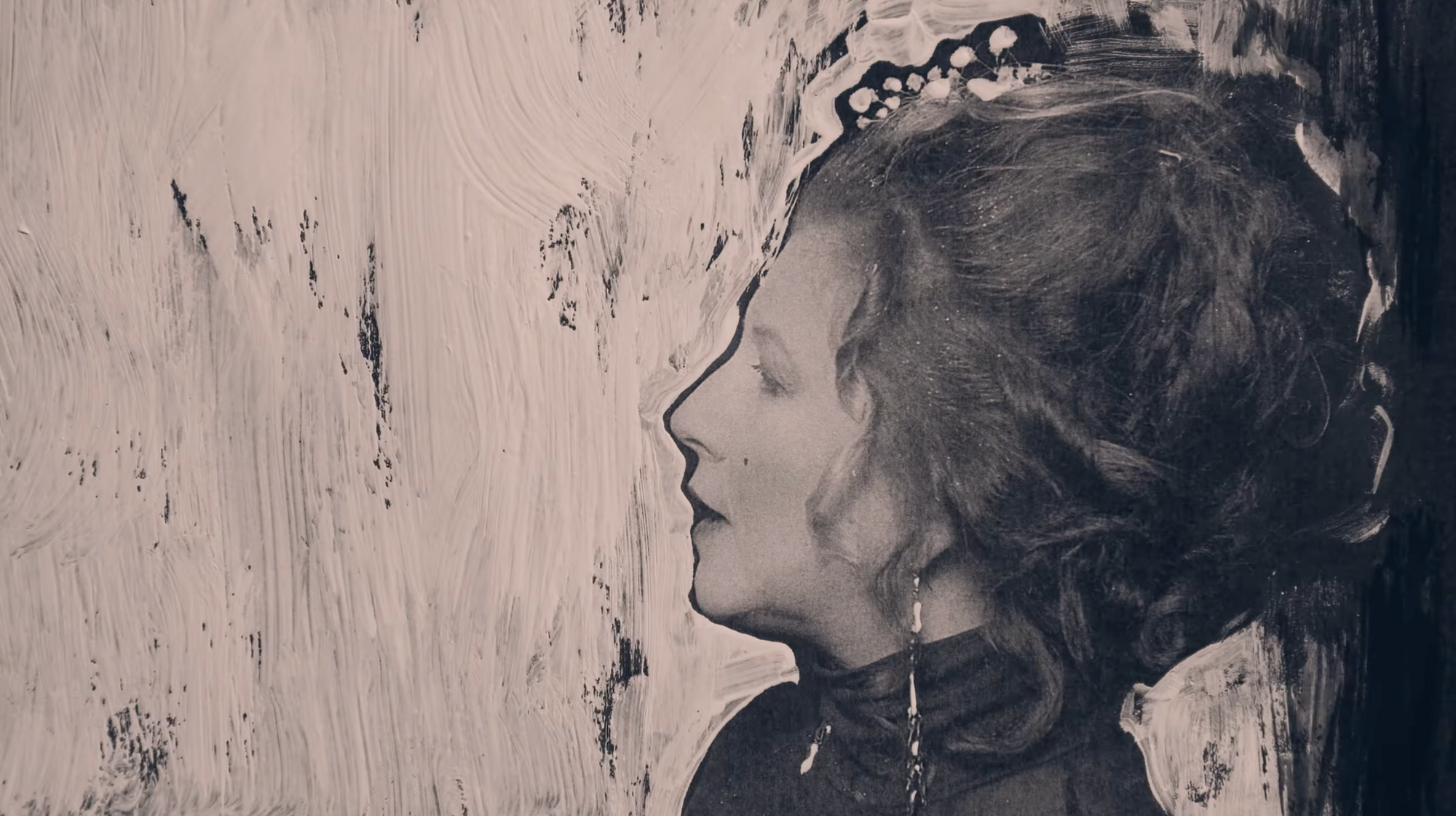
What happens when a 17th-century Baroque aria encounters an industrial photocopier? The video clip created for Che si può fare op. 8 offers a radically contemporary answer to this question: music, the body, and manually distorted imagery merge into a single, continuously evolving visual structure. Director Ábel Regős talks about the process behind the work.
The clip created for Barbara Strozzi’s aria is an analogue-based experimental film made using pixillation, deliberately distancing itself from the familiar aesthetics of classical music videos. The project’s starting point is both minimalist and provocative: it places a dramatic Baroque aria and an office photocopier at the center, then builds a visual language from the tension between the two. During the production process, photographic sequences were printed from moving images and then subjected to manual interventions. The prints received painted layers created by visual artist Judit Borbála Nagy and Ábel Regős, after which they were re-photographed. The finished video is composed of 1,780 individually altered frames. Cinematographer Gábor Szűcs played an integral role in the technical process, facilitating the transition between the visual world generated by the photocopier and the cinematic structure.
The voice of an abandoned lover
The musical foundation of the project is a work by Barbara Strozzi, an exceptional figure in 17th-century Italian music history. Strozzi was active not only as a composer but also as a performer: she sang her own works and played several instruments. A prolific creator, she initially wrote song texts through her father, later writing them herself, consistently foregrounding personal emotions and human vulnerability in her compositions. Che si può fare articulates the helplessness of an abandoned lover who, in emotional crisis, turns to the heavens for help; their tears fall like raindrops born from clouds. This poetic symbolism is present not only in the dramatic vocal performance but is further developed through the clip’s visual language. Distorted, layered images, the fragmented presence of the body, and continuously shifting surfaces render a wide spectrum of emotions visible.
Body, voice, and image thinking together
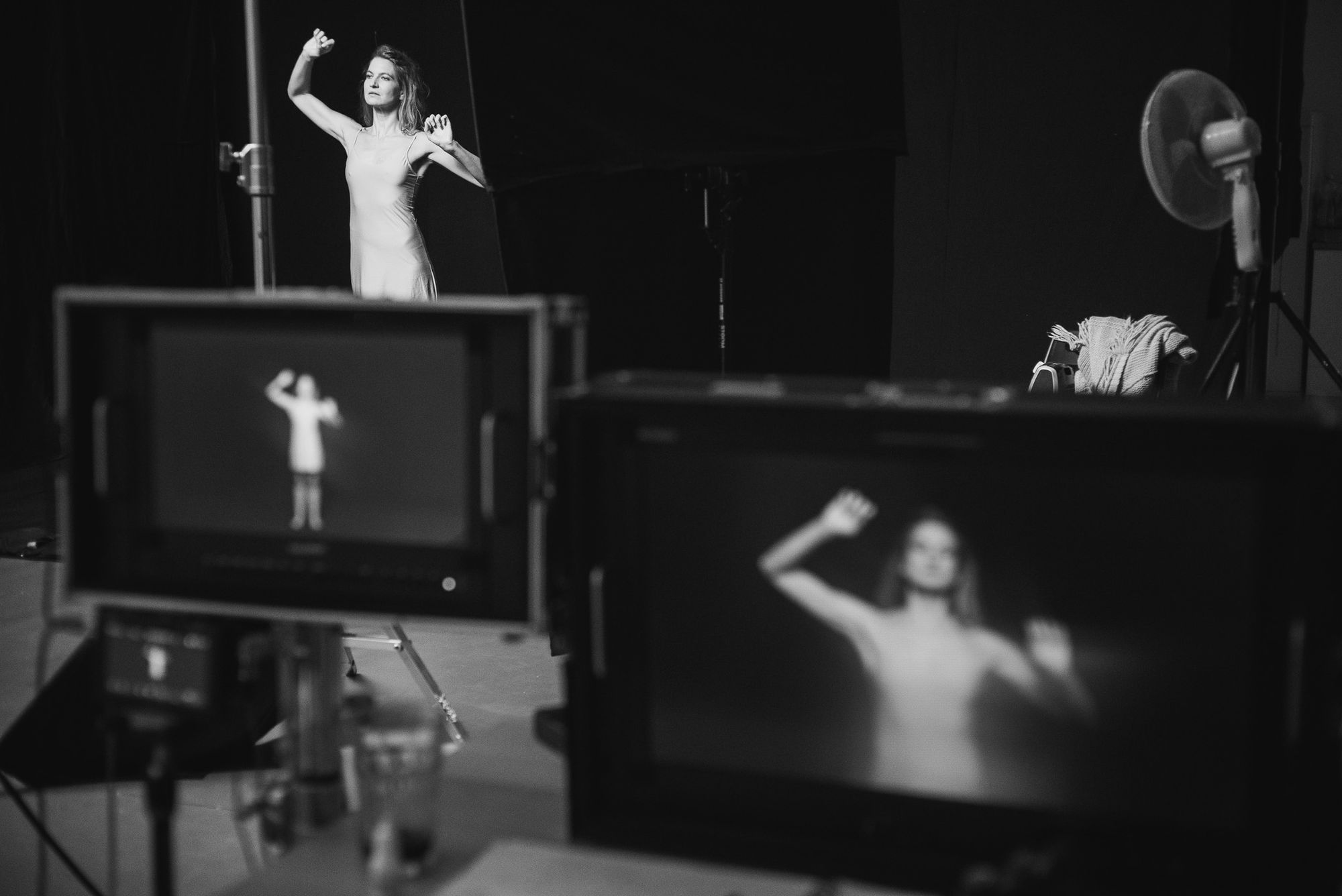
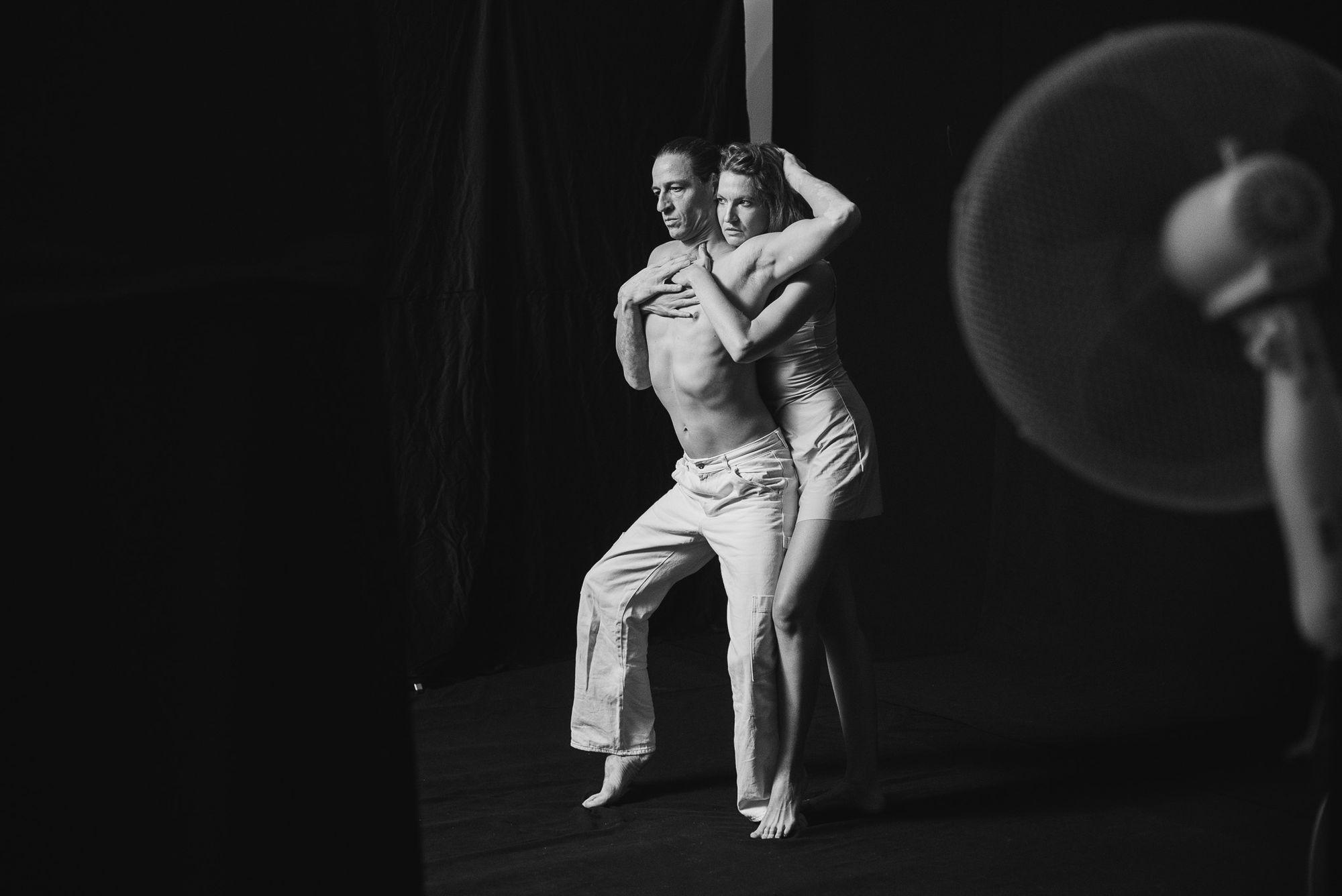
The central figure of the project is singer Éva Bodrogi, a specialist who graduated from the early music department of the Royal Academy of Music in London. For years, she has worked to bring classical musical material closer to audiences by connecting it with other art forms, making it more tangible and accessible. In this endeavor, she found a creative partner in Réka Takácsy, a performance artist trained at the Manchester School of Theatre, whose classical music background has also played a role in several fusion projects. The team was joined by physical theatre actor-dancer and acrobat Gáspár Téri, as well as film director Ábel Regős and his collaborators. In the clip, movement functions as an autonomous carrier of meaning: the body appears as a powerful channel of communication that, together with sound and image, serves the emotional message of the aria. The finished work also reflects on how marginal classical music remains within contemporary video clip culture, while pointing toward alternative visual pathways that may open up within this field.
Thinking behind the technique – Interview with Ábel Regős
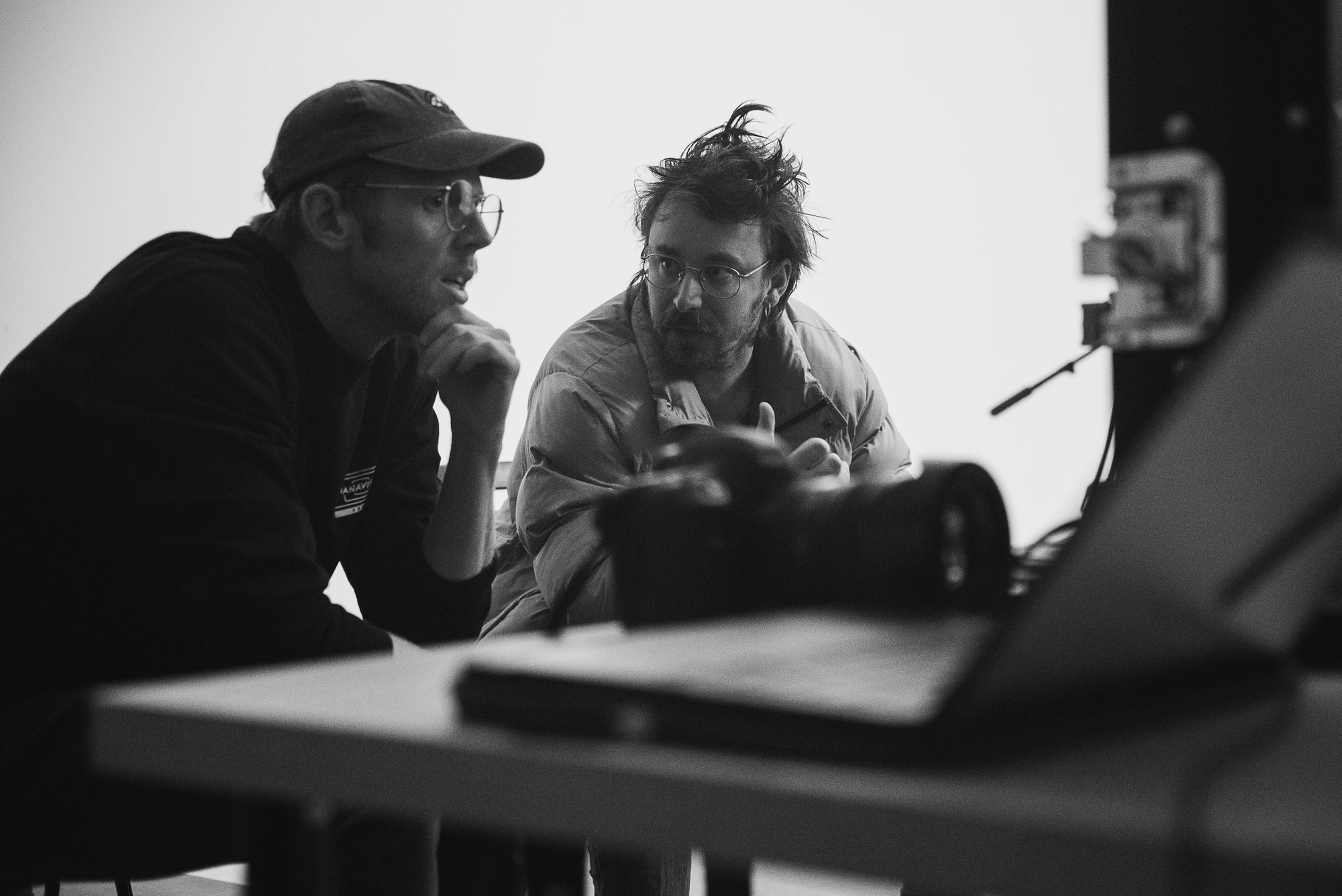
The clip’s visual concept and experimental technical solutions are closely tied to director Ábel Regős’s creative approach. Throughout his career, he has directed music videos for numerous bands, as well as short fiction and documentary films. A multiple-time Klipszemle award winner, he has collaborated with artists including Co Lee, Anima Sound System, Slow Village, and Noémi Barkóczi. His work is characterized by the use of mixed techniques and an experimental visual mindset; his films have been screened and awarded at several national and international festivals. In the second half of the article, we spoke with Ábel Regős about how an industrial photocopier became one of the film’s central protagonists, what analogue intervention means to him in a digital age, and how the emotional intensity of a Baroque aria can be translated into a contemporary visual language without becoming merely illustrative.
Where did the idea come from to make a video clip for a Baroque aria using a photocopier? What was the first image that appeared in your mind?
I was looking for a counterpoint, a visual contrast to the Baroque aria. The photocopier represents just one phase within a more complex technical process. The starting point was digital video material: from this we created image sequences, printed them using an industrial photocopier, painted over them with acrylic, then photocopied and re-photographed everything again. In this way, the digital raw material was transformed through many layers into a distinctive visual character. Judit Borbála Nagy played a key role in the process, as we painted the gestures together, as did Gábor Szűcs, who was not only present as cinematographer but also contributed significantly to shaping the entire technical workflow, including testing and selecting the photocopiers.
Baroque music is strongly associated with monumentality and theatricality. How does such an everyday office device work alongside this?
I was deliberately looking for a counterpoint—something we definitely do not associate with Baroque visuality. From this perspective, the photocopier is ideal: profane, everyday, alienating, yet still intimate and material.
To what extent did you want to “illustrate” the music, and how much space did you leave for the images to create their own narrative?
This was fundamentally a formal concept, not a narrative one. Literal illustration of the text would have been uninteresting to me, so instead I highlighted motifs and built the scenes around them. Réka Takácsy and Gáspár Téri played a major role in shaping the final content by contributing movement to the project. They drew inspiration from butoh dance.
What does it actually mean to “shoot” with a photocopier? Was the process more performative or more precisely planned?
It was much more precisely planned. We rehearsed, wrote the scenes in advance, and knew exactly what gestures and rhythms we needed. Although the final result appears spontaneous, it is actually underpinned by a very controlled process.
Can you imagine working with this kind of tool in other musical or genre contexts?
Absolutely. I’ve done this before: I’ve created collage animation music videos for several artists. For example, I also made a printer-based clip for Sena:
Photos: Péter Tamás