


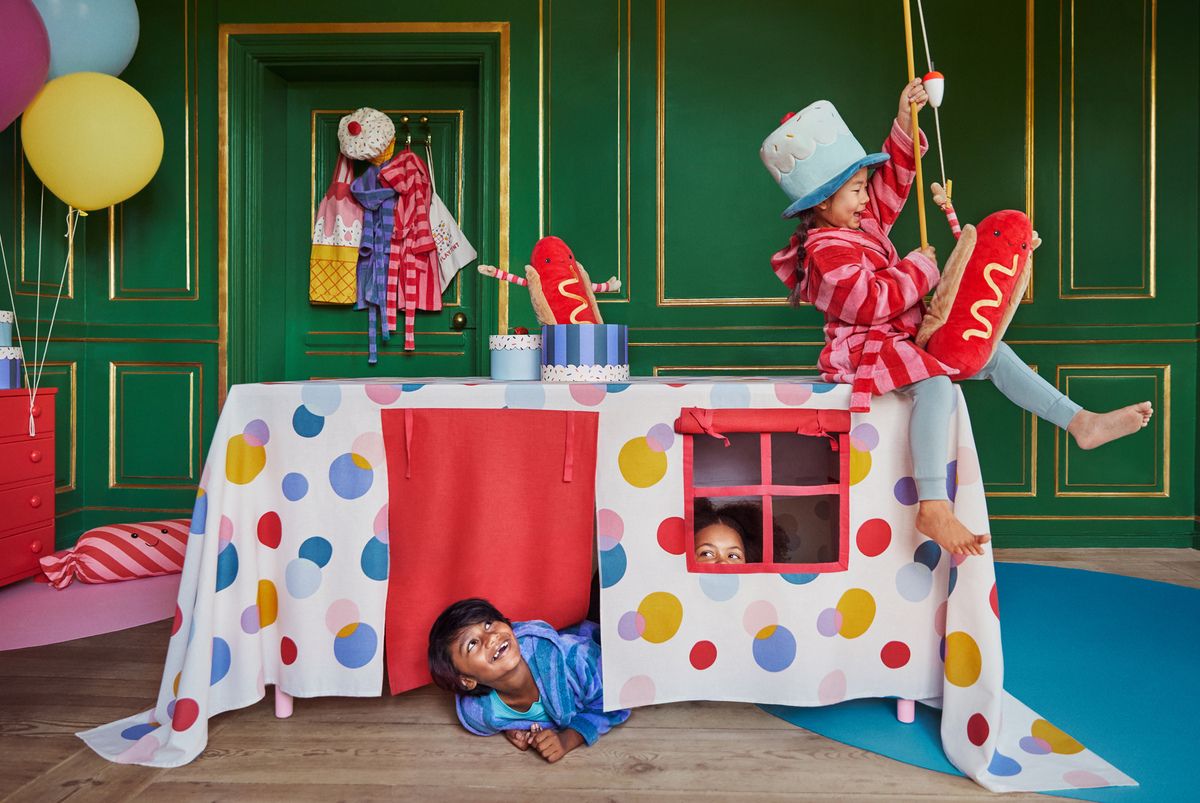
Designing a child’s room is a curious undertaking: it has to accommodate play, sleep, learning and whatever world-changing plans happen to occupy its young resident at the time. Meanwhile, the rules of interior design still apply, and the furniture has to keep pace with someone who can grow into an entirely different person in just a few years. How did we get from miniature Thonet chairs to today’s adaptable furniture systems, and what does the history of the children’s room reveal about the way we think about childhood?
The history of children’s furniture began long before a separate bedroom for children became a familiar feature of the modern home. As ideas about childhood and family life evolved during the nineteenth century, objects designed specifically for children also began to receive more attention. Furniture makers soon recognised a demand for scaled-down versions of adult furniture: chairs, tables and storage units all had an audience in child-sized form.
Known for its bentwood technology, Thonet had been making children’s furniture since the 1860s, and by 1885 its catalogues offered entire collections for younger users. The world of adult furniture was translated into a smaller scale, with chairs, tables and other everyday objects adapted to children’s bodies. Yet there was more to this downsizing than simply making everything smaller: a seat at the right height, a tabletop within reach and easily accessible storage could also help children take their first steps towards independence.
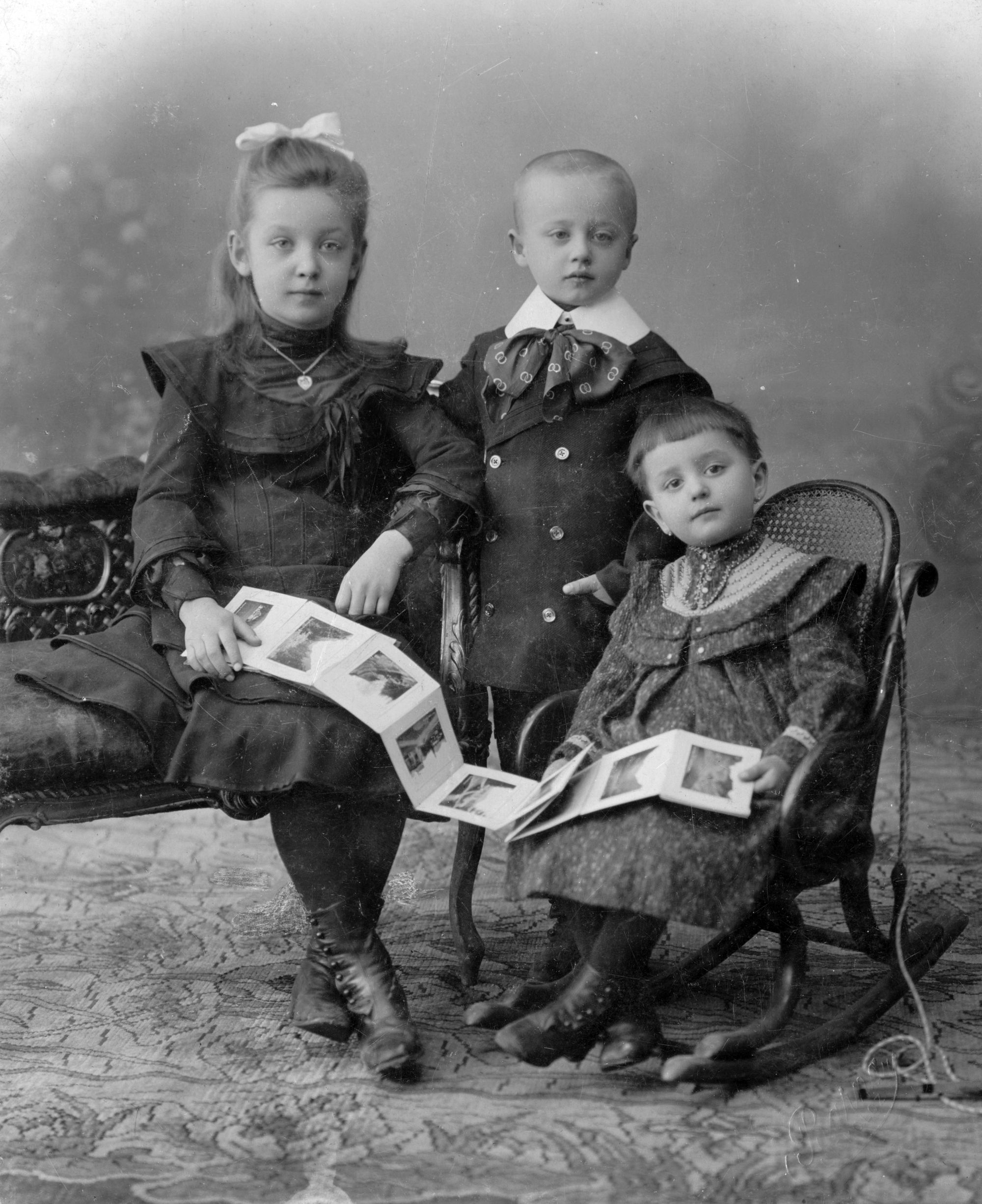
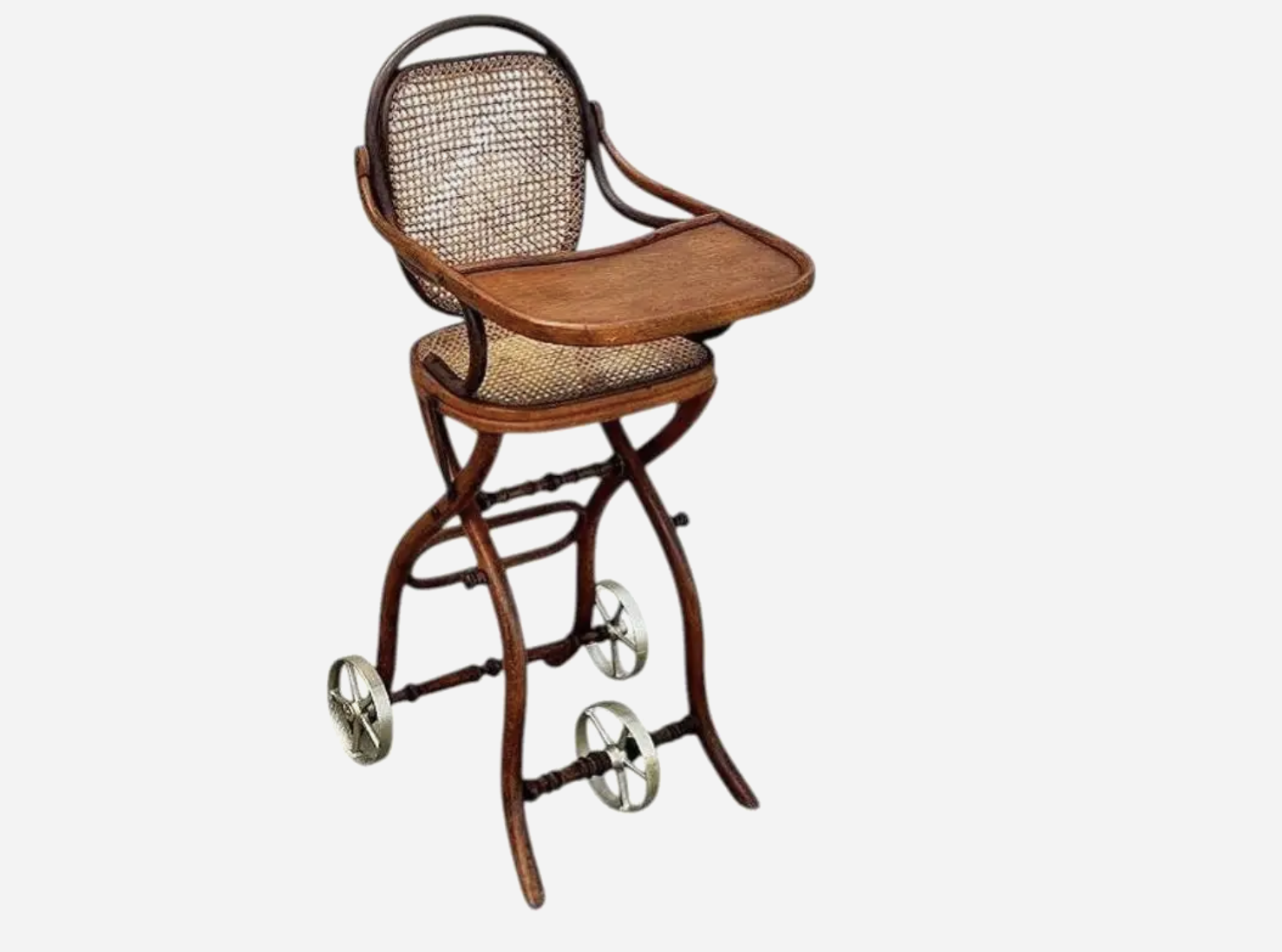
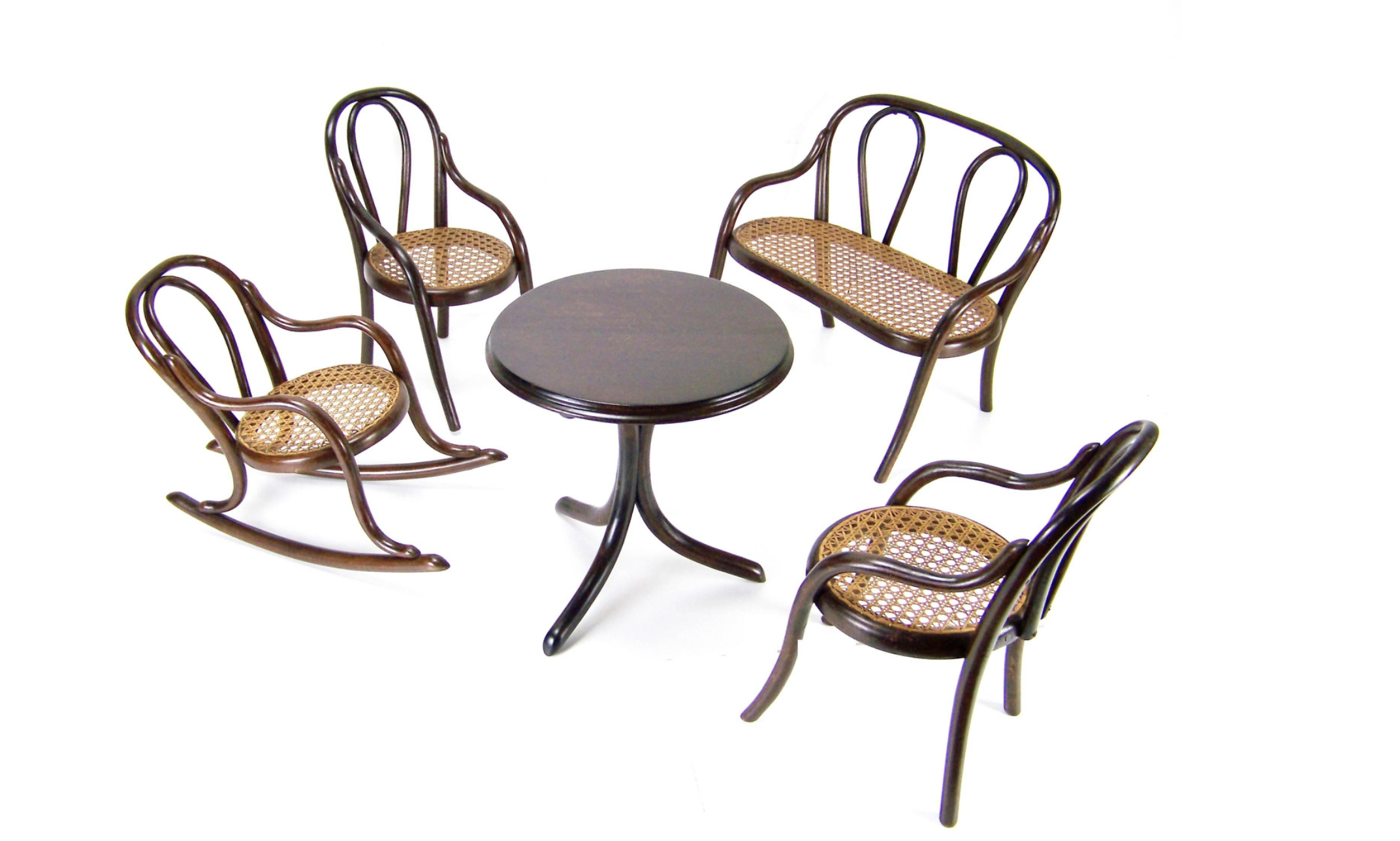
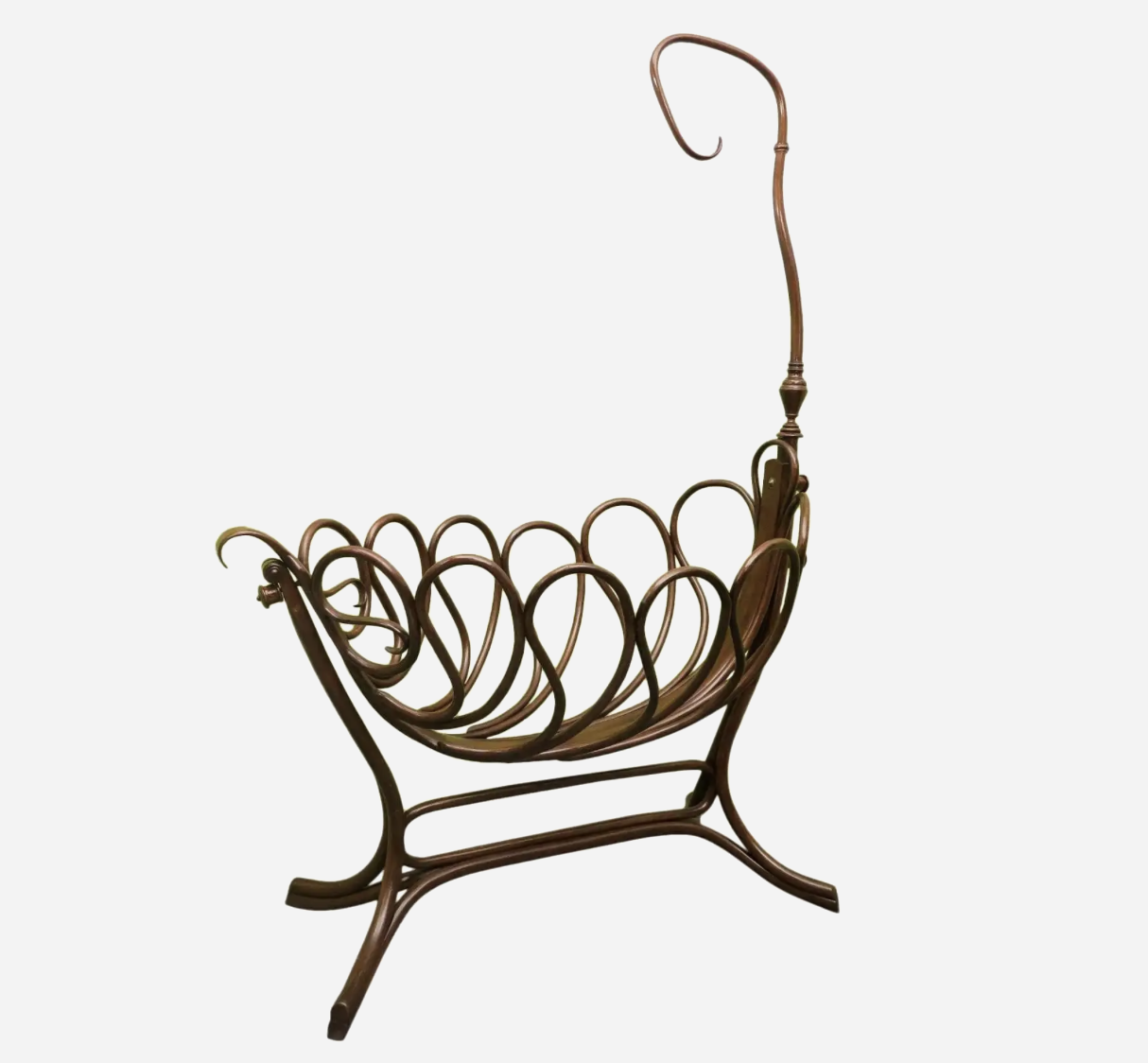
Children’s furniture soon became a matter of aesthetics, too. Alongside practicality came form, decoration and the particular atmosphere associated with a child’s room. Miniature furniture served both the child’s comfort and the parents’ idea of what a well-appointed children’s room should look like. The space thus became a setting for both upbringing and family taste: while the size of the chair was tailored to the child, the adults still had the final say in choosing it.
Undi’s Designs Are Anything but Boring
By the beginning of the twentieth century, furnishing a child’s room had become part of the broader conversation about domestic culture and applied arts. In Hungary, a particularly beautiful example is Mariska Undi’s 1903 design for a children’s room, presented at the spring interior design exhibition organised by the Society of Applied Arts. The design featured cupboards, toy chests, benches and tables, while curtains lent the small beds a more homely feel. Undi envisioned the children’s room as an interior in its own right, complete with its own furniture and carefully coordinated details. The simply lined pieces, stained greyish in tone, were decorated with green leaves and sculptural orange flowers, and the textiles were also designed by her. The room won a bronze medal at the 1904 World’s Fair in St. Louis and was exhibited in Milan in 1906.
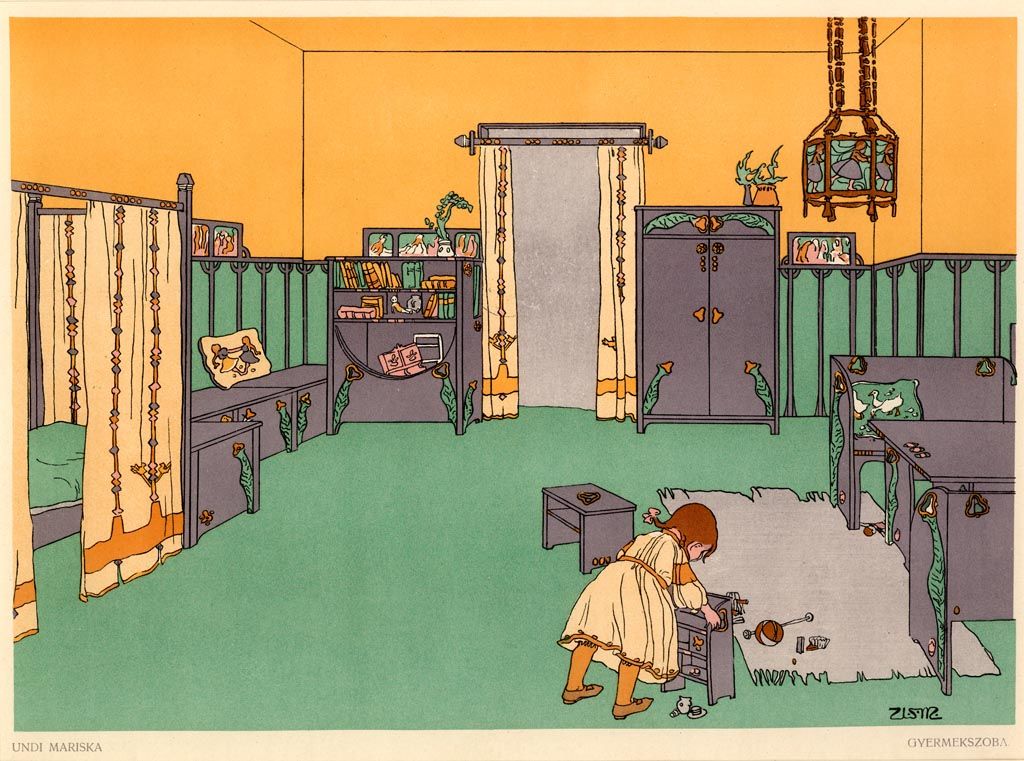
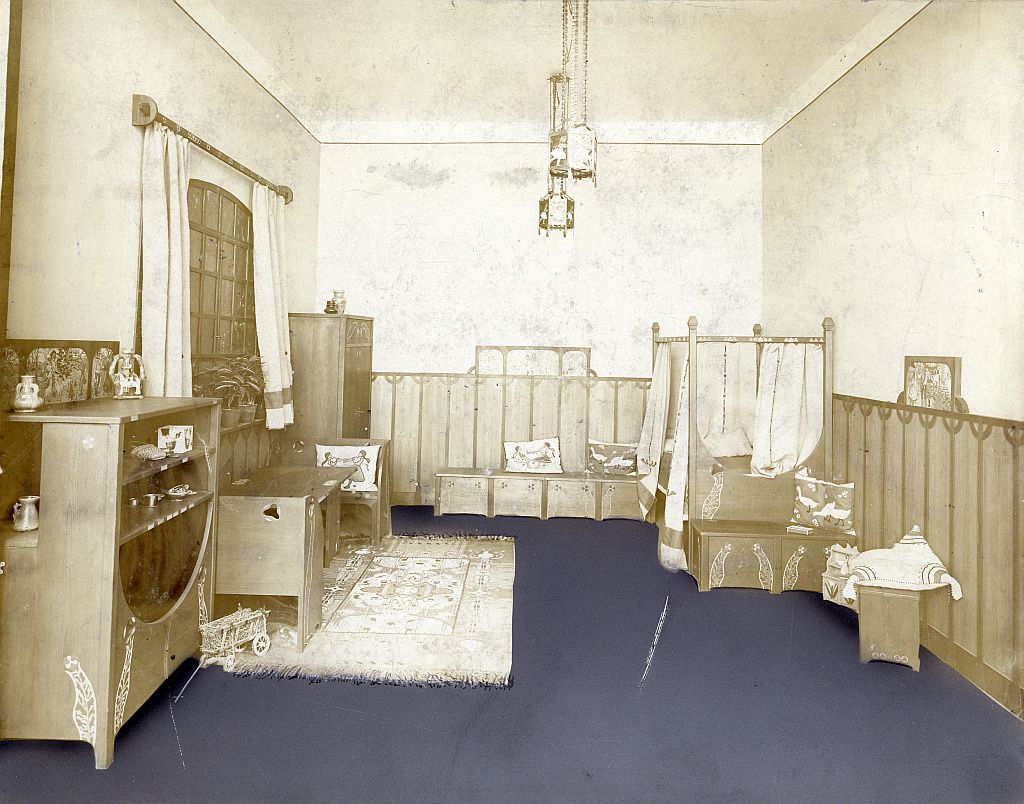
The children’s room had now moved beyond a simple inventory of necessary furniture and everyday objects. Furniture, textiles and decoration came together as a unified composition, bringing children’s spaces into the discussion of modern interior design. Designers had to consider usability and aesthetics at the same time, a challenge that remains familiar today. The main difference is that toy chests now have to accommodate a considerably wider variety of contents.
A Socialist-Era Kingdom in Just a Few Square Feet
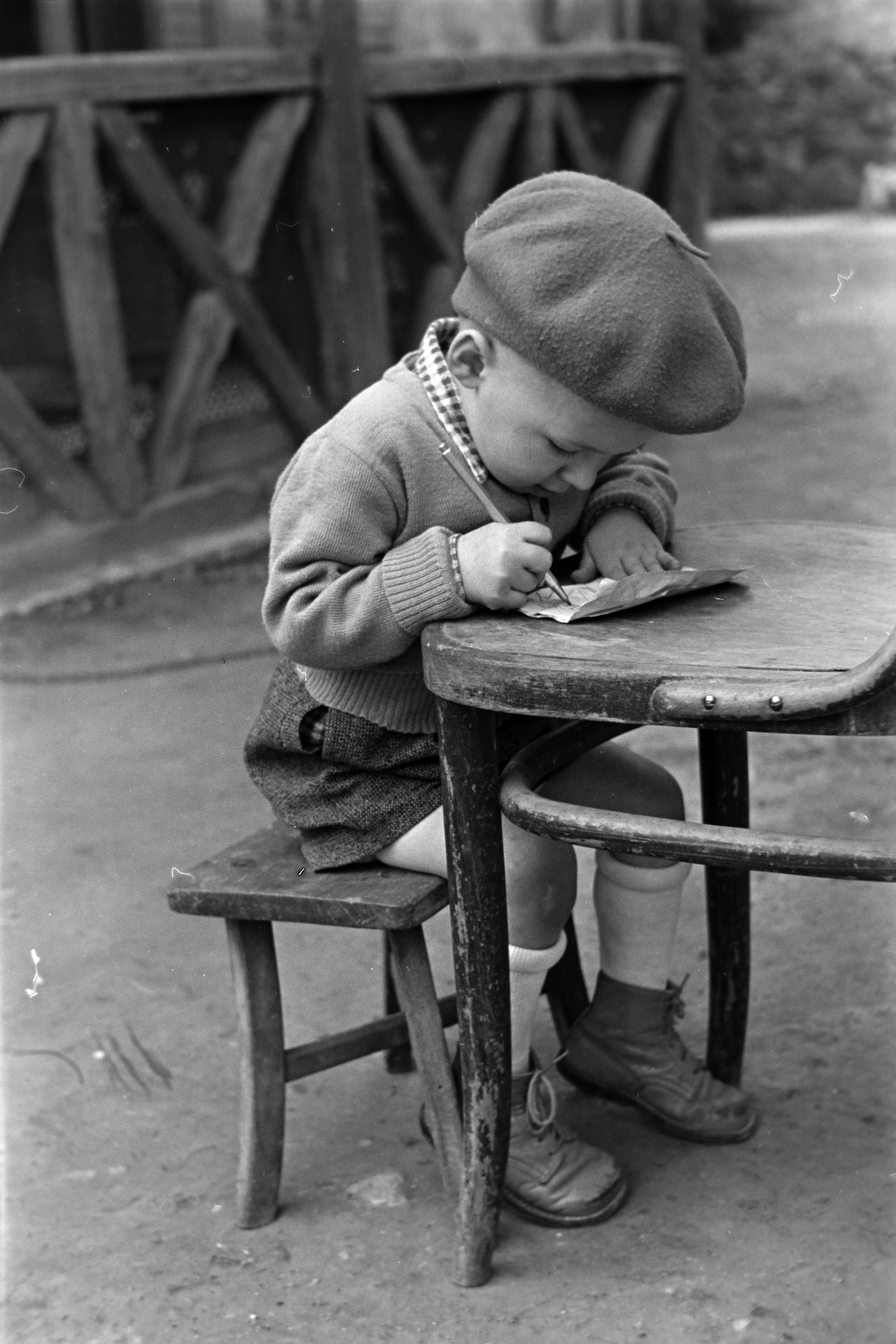
Children need a space of their own even when the size of the home makes a separate bedroom impossible. In the mid-twentieth century, particularly during the socialist period, a room of their own remained out of reach for many families. Housing shortages and smaller homes meant that toys, children’s belongings and study areas often had to be accommodated in shared spaces. This gave rise to the idea of the children’s corner, which also appeared in the interior design advice of the period. In 1961, the Hungarian magazine Élet és Tudomány described it as the child’s “own intimate, familiar little kingdom”, a space for which the child was responsible. The idea still holds up today: a shelf, a desk or a designated corner can be enough to give a child a place they feel belongs to them.
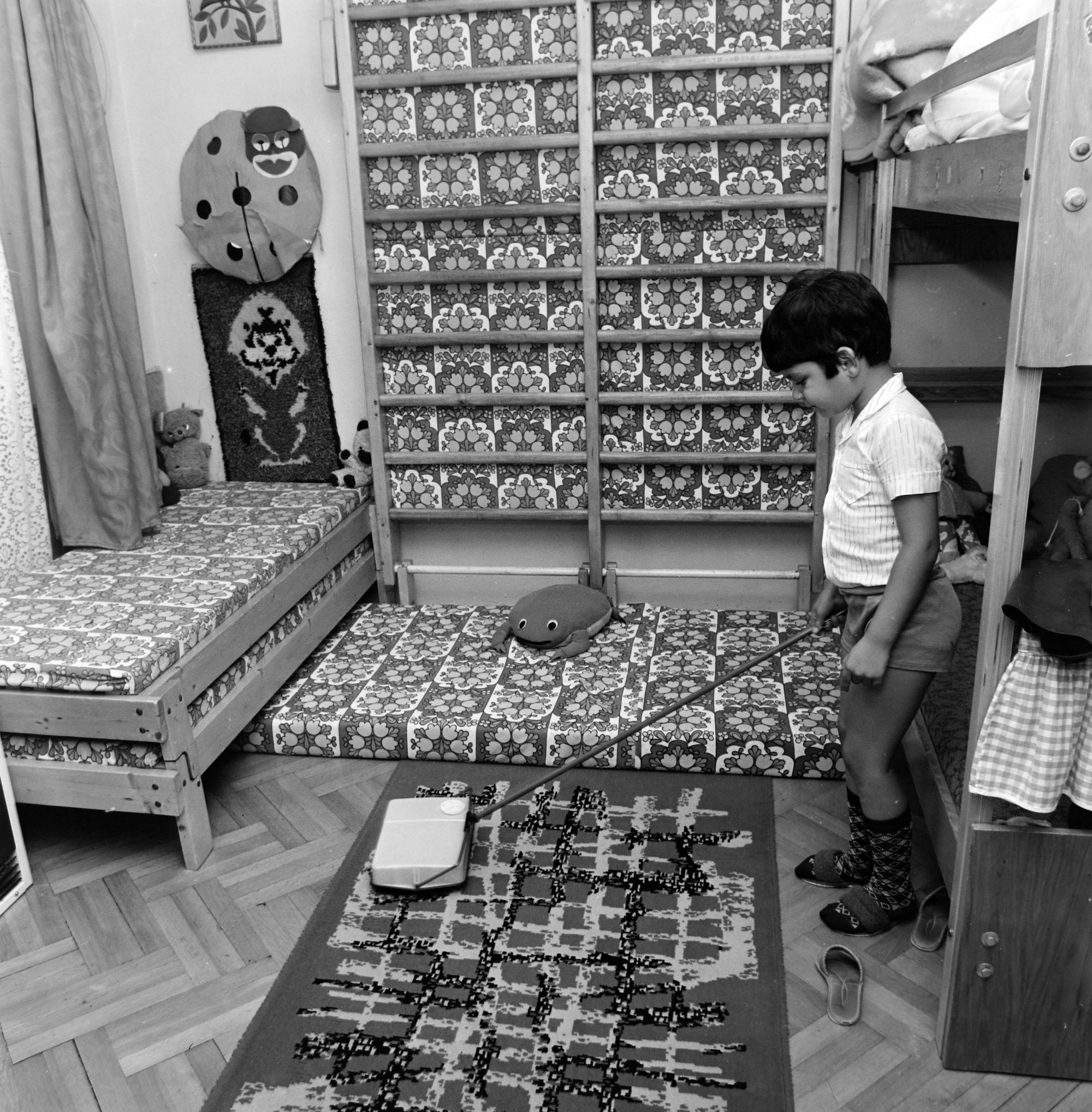
Furnishing a children’s corner was all about making clever use of space. Low shelves, accessible storage, smaller tables and room dividers helped define the child’s territory within the shared living room. By the 1970s, greater emphasis was also being placed on developing children’s taste and creating a personal space for them. Children increasingly came to be seen as participants in shaping their surroundings, with their own needs and ideas.
Today, the children’s furniture of this era has become a favourite of retro interiors. Colourful plastics, simple wooden forms and playful details evoke a time when practicality and affordability were especially important. The legacy of the children’s corner remains relevant, too: a child does not necessarily need a separate room, a complete furniture collection and carefully coordinated wallpaper to have a space of their own. Sometimes, a well-placed table and an accessible shelf are enough to get things started.
A Room That Grows with Its Occupant
Time is one of the hardest things to plan for when furnishing a child’s room. Before long, a cot becomes a bed, a toy box turns into a bookshelf, and a favourite colour becomes one the room’s occupant might have chosen enthusiastically just a few years earlier. Children change, while the floor area stays the same, so it is worth leaving some room for manoeuvre in both the furniture and the layout.
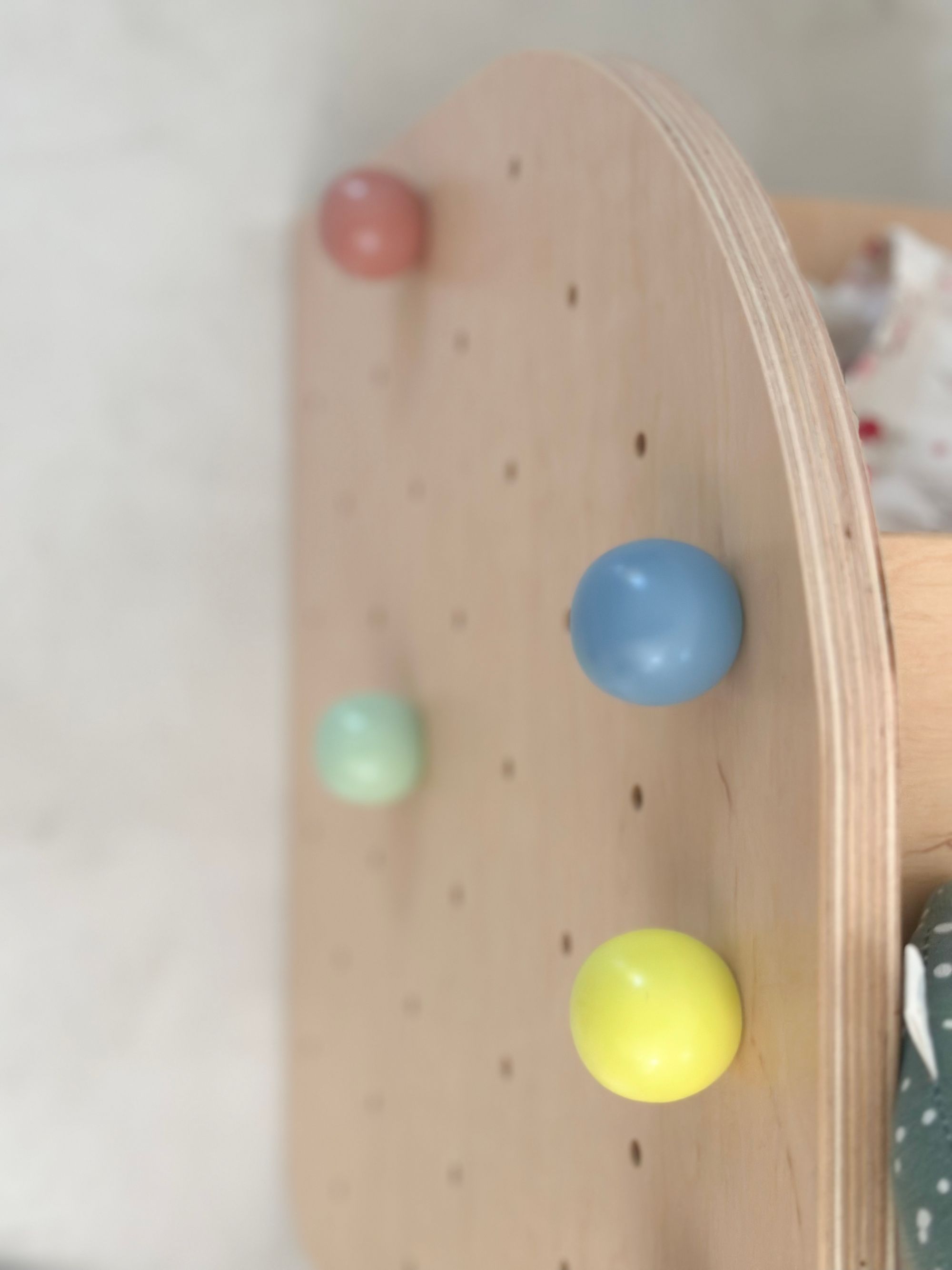
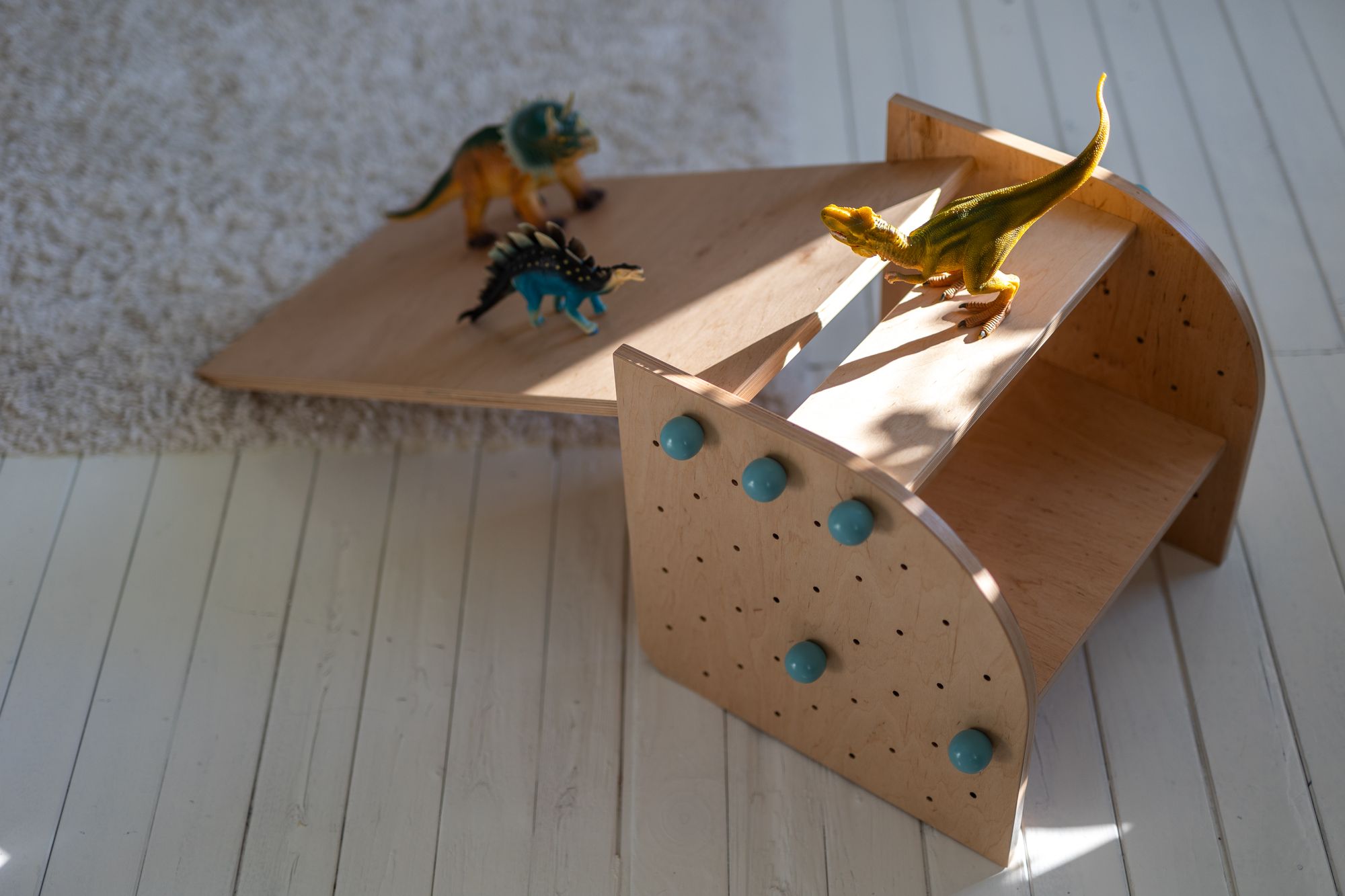
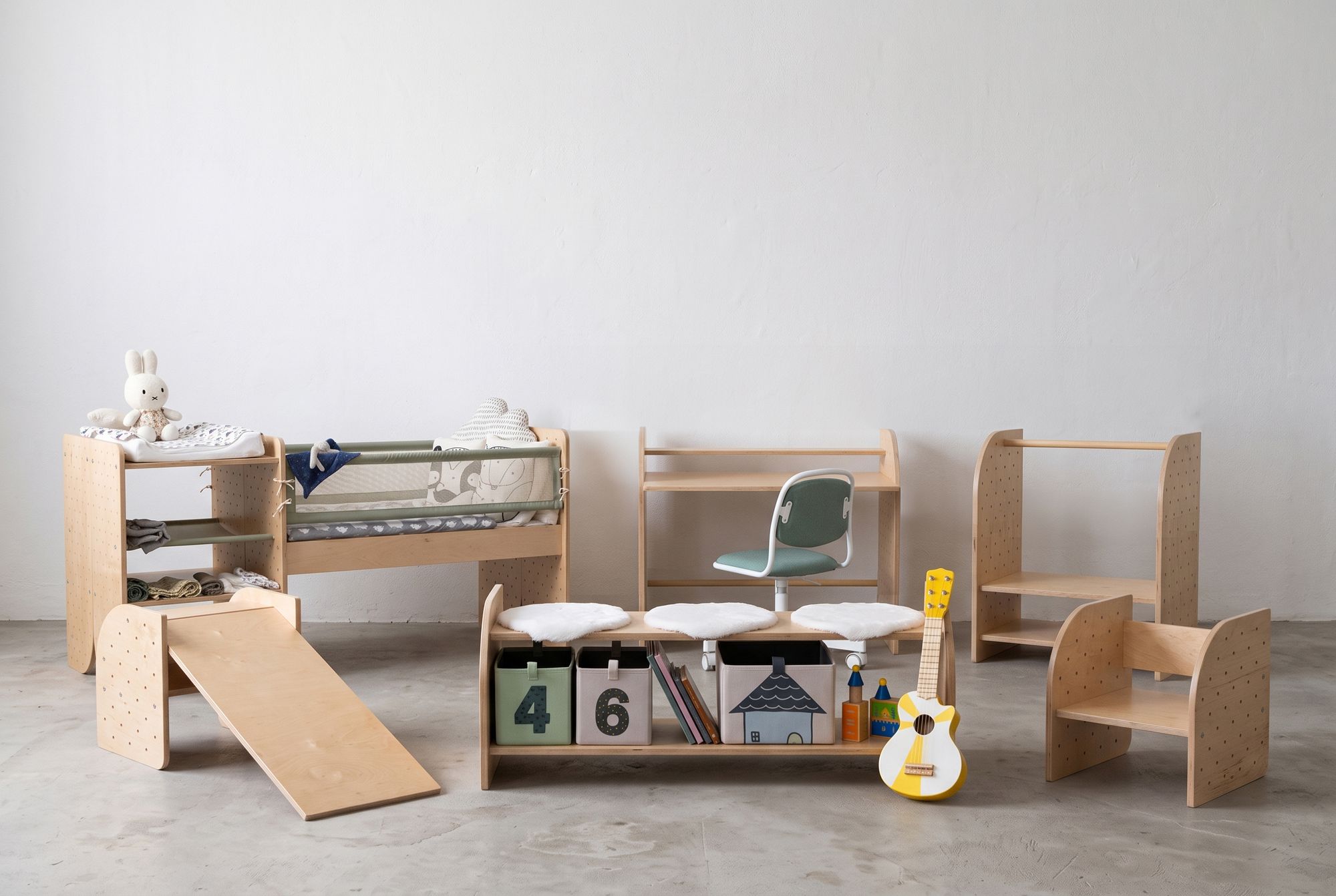
Flexibility is one of the keys to long-term planning: height-adjustable desks, convertible beds and storage units that can be used in different ways can help a room adapt to new circumstances. Architect Mihályfi-Biró Emese, designer of Modifiq Play’s modular children’s furniture, puts this approach into words: “Perhaps the truly timeless children’s room is one that doesn’t have to remain unchanged.” This idea also casts the role of furniture in a different light. The way an object is used may change over the years, while the piece itself can remain part of the room. As Emese puts it: “A well-designed children’s room is therefore not simply an adult space furnished with smaller pieces of furniture. It has its own scale – and that scale is constantly changing.”
Alongside flexibility, safety, durability and ease of use are essential considerations. A low shelf, for example, supports independence when a child can reach their toys and put them back without help. That is a promising design goal for family life, too, even if parents and children do not always agree on what counts as tidy. Involving children in shaping the room can also help them feel that it is truly their own. They do not have to make every decision, but choosing colours, organising storage or creating a reading nook can be a shared task. A thoughtfully designed children’s room is therefore not made for just one stage of childhood: it provides a stable foundation while leaving space for change.
Modifiq Play – Furniture That Changes Alongside the Child
The starting point for Modifiq Play’s modular children’s furniture is the changing needs of its users. When furnishing a child’s room for the long term, it is important that the pieces remain useful at different ages and in different circumstances, and that the space can evolve as new functions emerge. Architect and designer Mihályfi-Biró Emese considers children’s independence, usability and durability equally important. A modular approach allows furniture to remain relevant beyond a single age or predetermined layout. The children’s room can thus become an environment that adapts to changing needs, without its furniture having to abandon its former role at the beginning of every new stage.
The End of the Sad Beige Era
During the previous decade, children’s rooms adopted the uniform of adult interiors: beige, off-white, sand and pale taupe were joined by natural wood, linen, bouclé, knitted blankets and soft rugs. Toys were swept up in the transformation, too. Bright plastic building blocks gave way to natural wooden animals, pastel rainbows and cream-coloured plush toys. The results were undeniably photogenic, particularly in Instagram’s carefully composed frames, where even abandoned building blocks somehow matched the woollen throw. Neutral palettes certainly have their advantages, and natural materials and restrained colours do not automatically make an interior boring. The problem with the trend was that a perfectly coordinated overall look often seemed more important than the child’s own taste. Colours, patterns and playful details disappeared from the picture, as though childhood itself looked better through a warm-toned filter. Yet what makes a child’s room interesting is precisely the space it gives to personality: a slightly odd drawing can go on the wall, the wardrobe can be cherry red, and stripes and dinosaurs can coexist peacefully on the same bed linen.
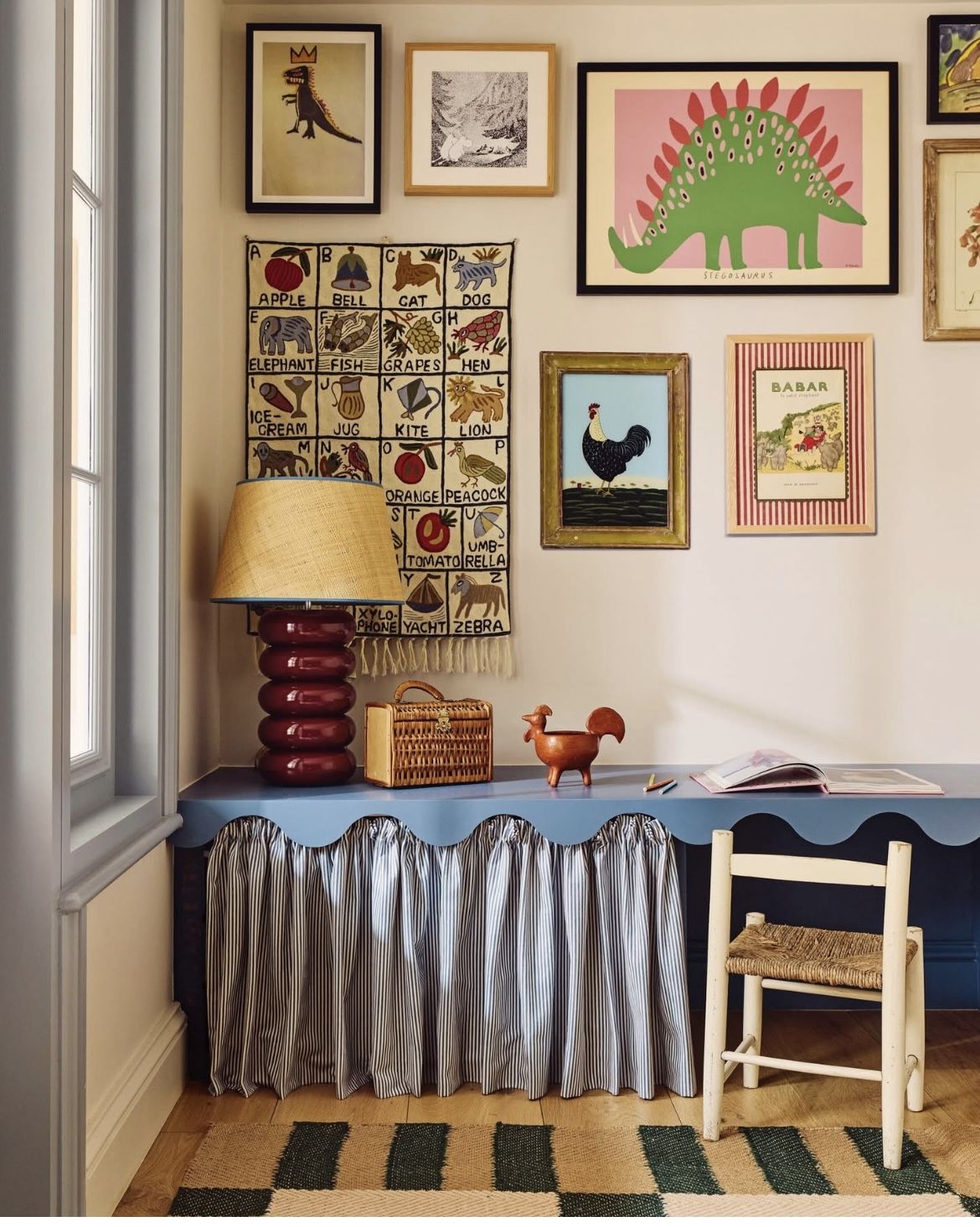
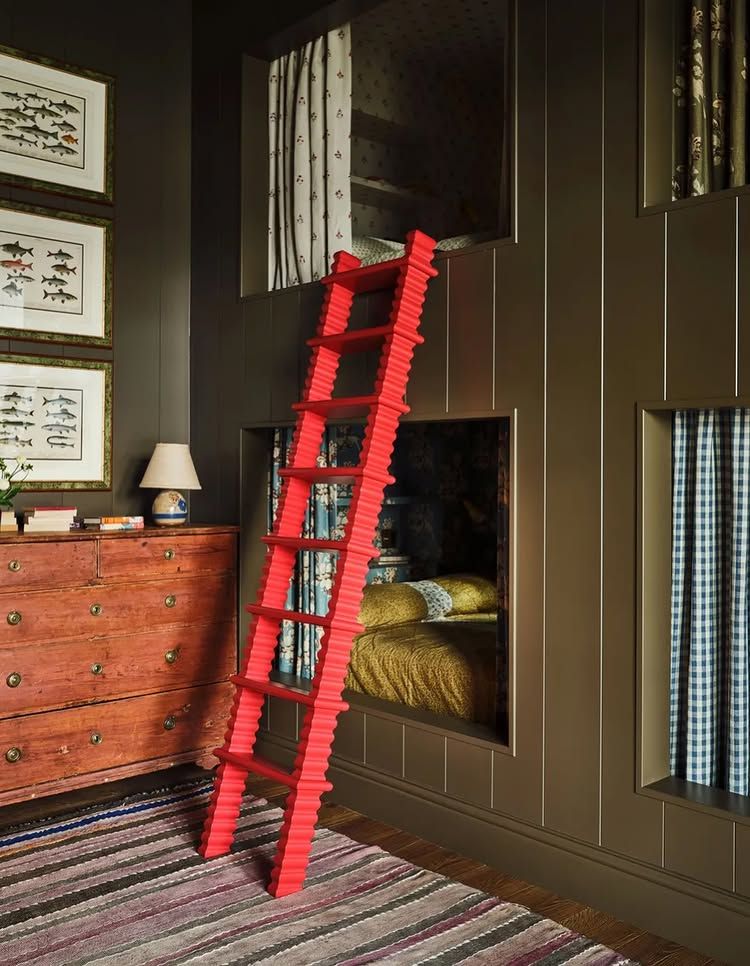
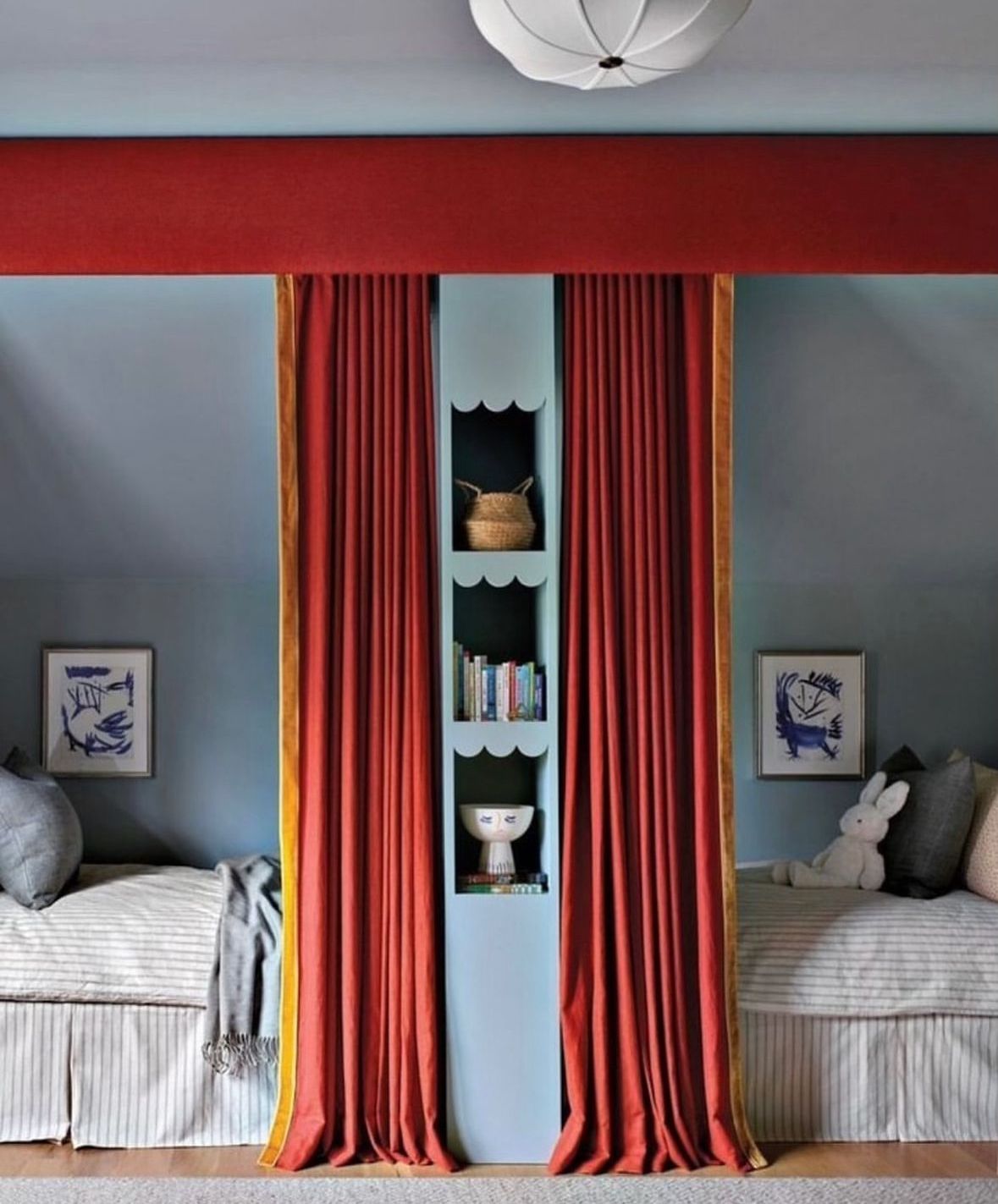
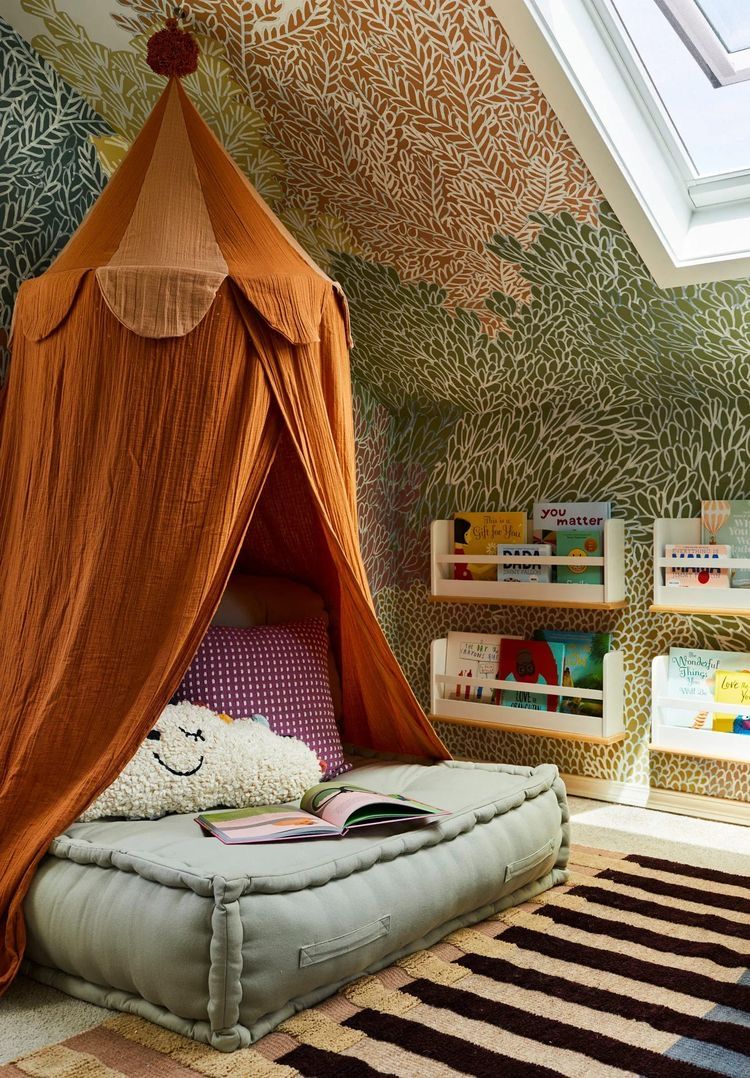
Recently, more interiors have been turning towards stronger colours and more playful forms. Alongside pastels, pure primary colours are making a comeback. Colour often appears on a single feature surface: a brighter wall, a colourful chest of drawers, a contrasting door or a patterned ceiling. The latter is particularly rewarding territory: clouds, geometric shapes or tiny stars painted on the ceiling can add character even when the walls and furniture remain more restrained.
Strict minimalism is also loosening its grip on shapes. Rounded corners, curved backrests, wavy edges, mushroom and cloud shapes, playful handles, sculptural lamps and antique or vintage pieces are bringing children’s rooms closer to the world of contemporary design. Striped and checked textiles sit alongside floral, animal or circus-inspired patterns, while framed illustrations share the walls with murals, hand-painted motifs and the child’s own creations. The effect works best when colours and patterns are not all dictated by a ready-made theme, but instead enter into a dialogue with one another.
Today’s children’s room trends are not necessarily about banishing beige altogether. Rather, they make room for contrast, unexpected colour combinations, bold graphics and a kind of playfulness that does not have to match the living-room sofa at all costs. A well-chosen colour combination or an unusually shaped piece of furniture can often say more about the room’s occupant than an entire interior assembled from a catalogue. And if the result is less photogenic than a perfectly coordinated beige children’s room, that is not necessarily a flaw.
Opening picture: H&M Home