


The early 20th-century Wiedeńska tenement house on Podgórna Street in the centre of Poznań spent decades quietly witnessing the city’s transformations. Once an elegant Art Nouveau residence, the building gradually lost almost all traces of its original character due to post-war reconstructions and decades of neglect: little remained of the interiors beyond a few tiles, scattered objects, and faint historical traces. The recent revitalisation, however, has opened a new chapter in the building’s story.
Designers from Biuro Kreacja and M19 Architekci created Kulinarna Kamienica, a food hall-style gastronomic space spanning more than 1,500 square metres across two connected buildings. The venue brings together ten different cuisines and three bars, but the concept of the interior goes far beyond simply designing a striking dining destination. Instead, the designers set out to create a narrative spatial experience that simultaneously reflects the building’s history, Poznań’s industrial past, and the culinary cultures represented within it. The key to the project became a strong metaphor: the interior unfolds as an imaginary journey inspired by the Orient Express. As guests move through the building, they travel through different eras and aesthetic worlds, as if passing through the stations of a long railway route.
From Art Nouveau to industrial
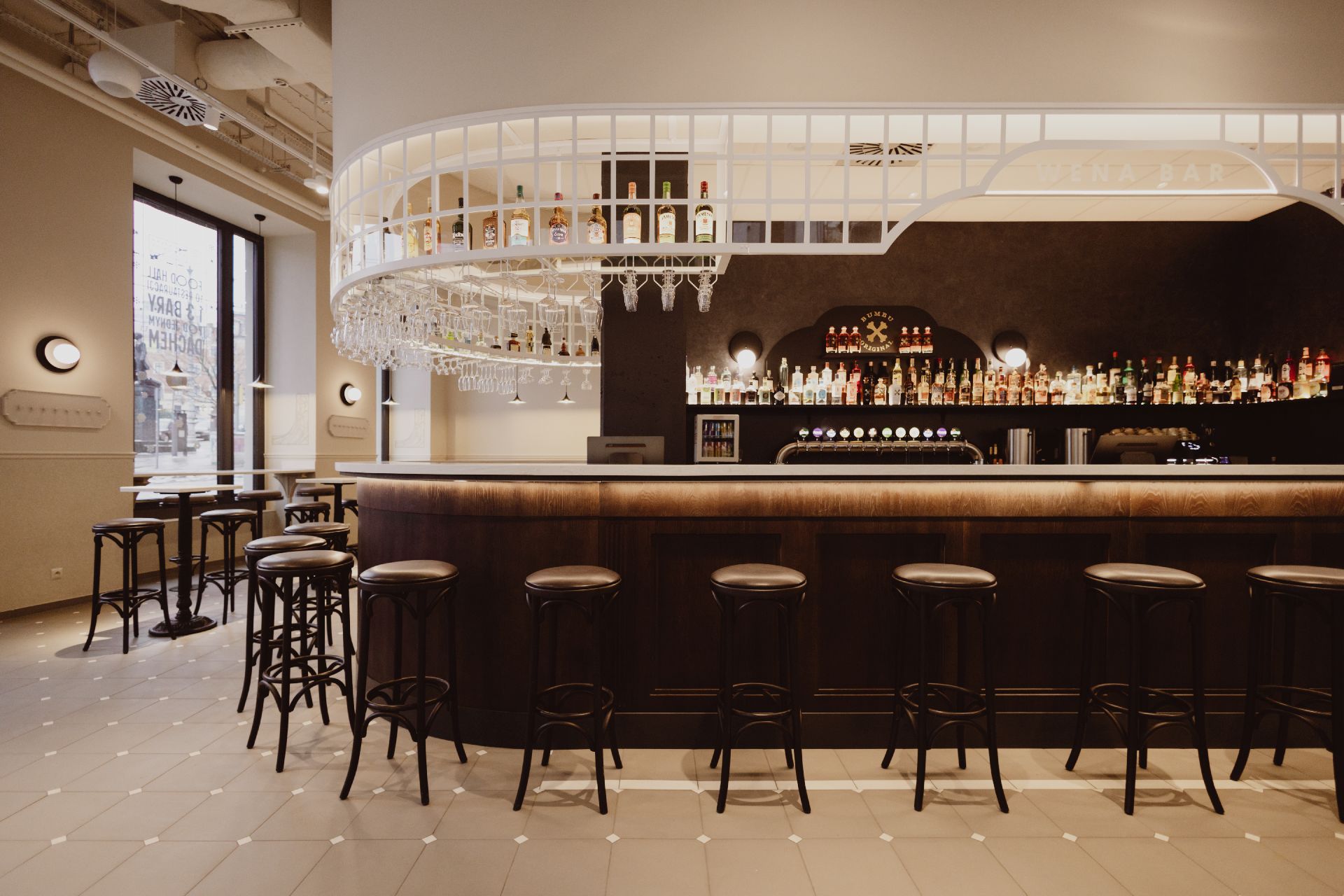
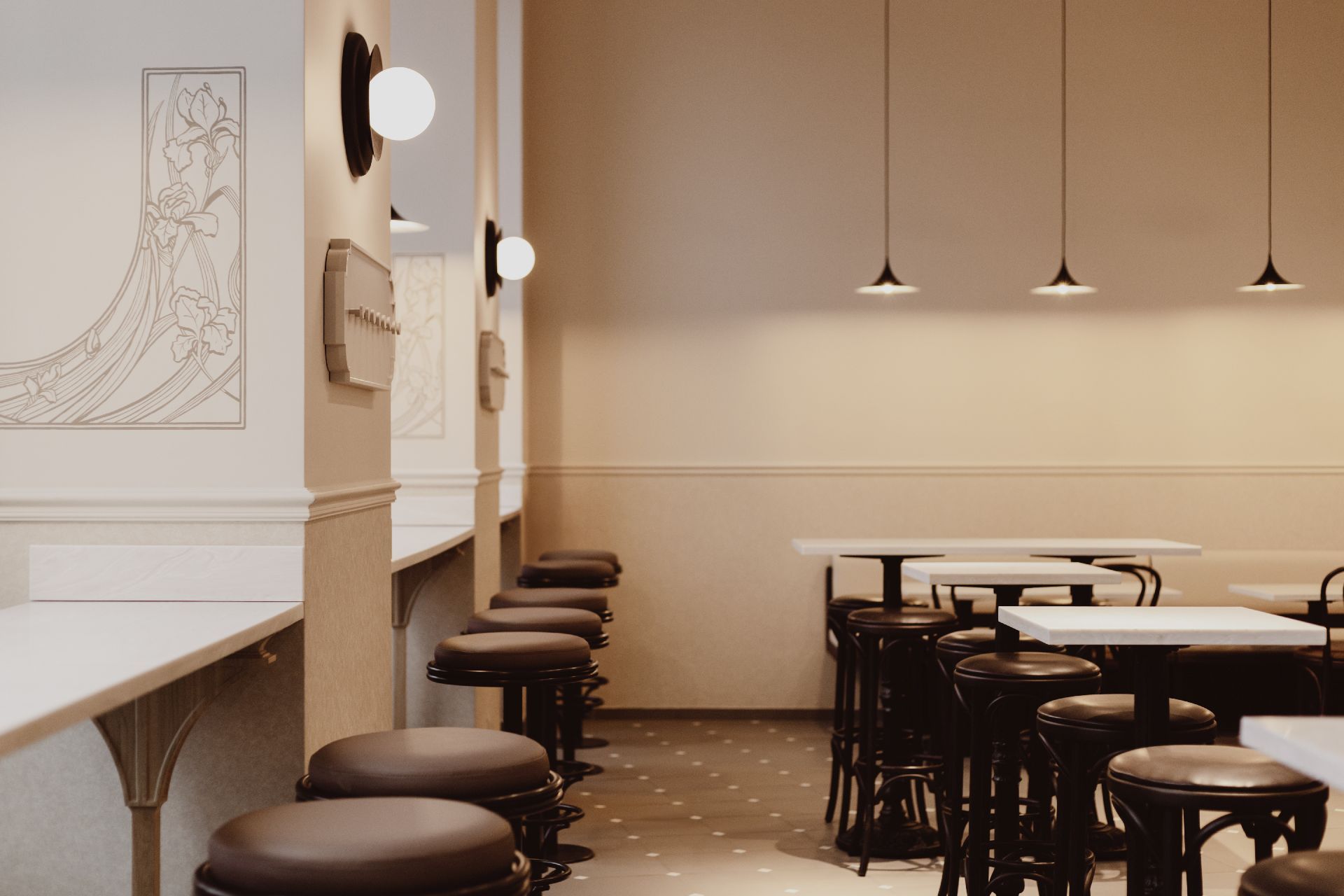
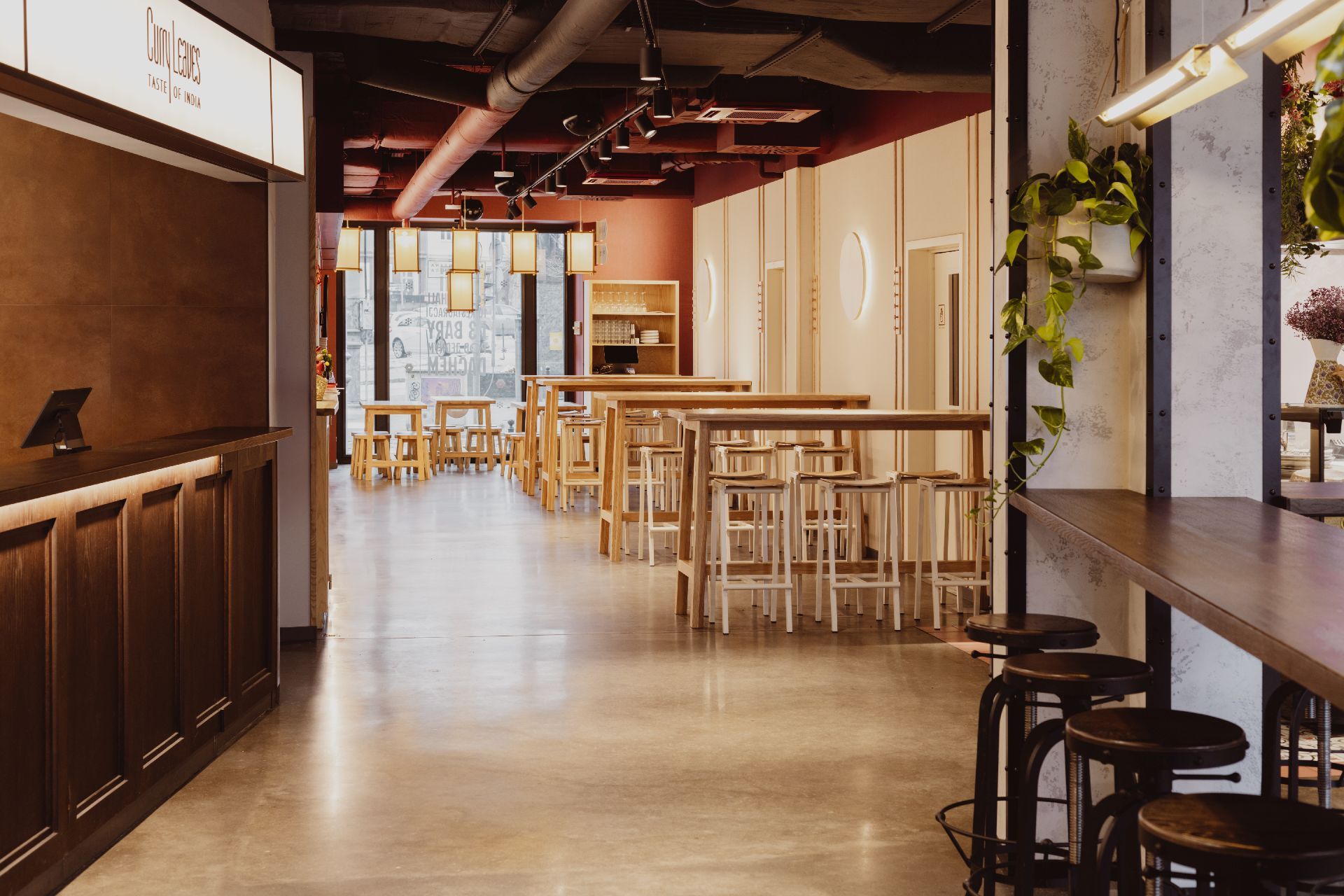
At the entrance, the space directly references the building’s Art Nouveau origins. High vaults, the rhythm of shopfronts, and hand-painted ornamentation evoke the elegance of the turn of the century, while the central organising element is a curved bar finished in walnut veneer, which anchors the space as a representative focal point. Upholstered seating and refined material choices recall the atmosphere of historic railway waiting rooms and carriage interiors, establishing the travel motif that guides the entire project.
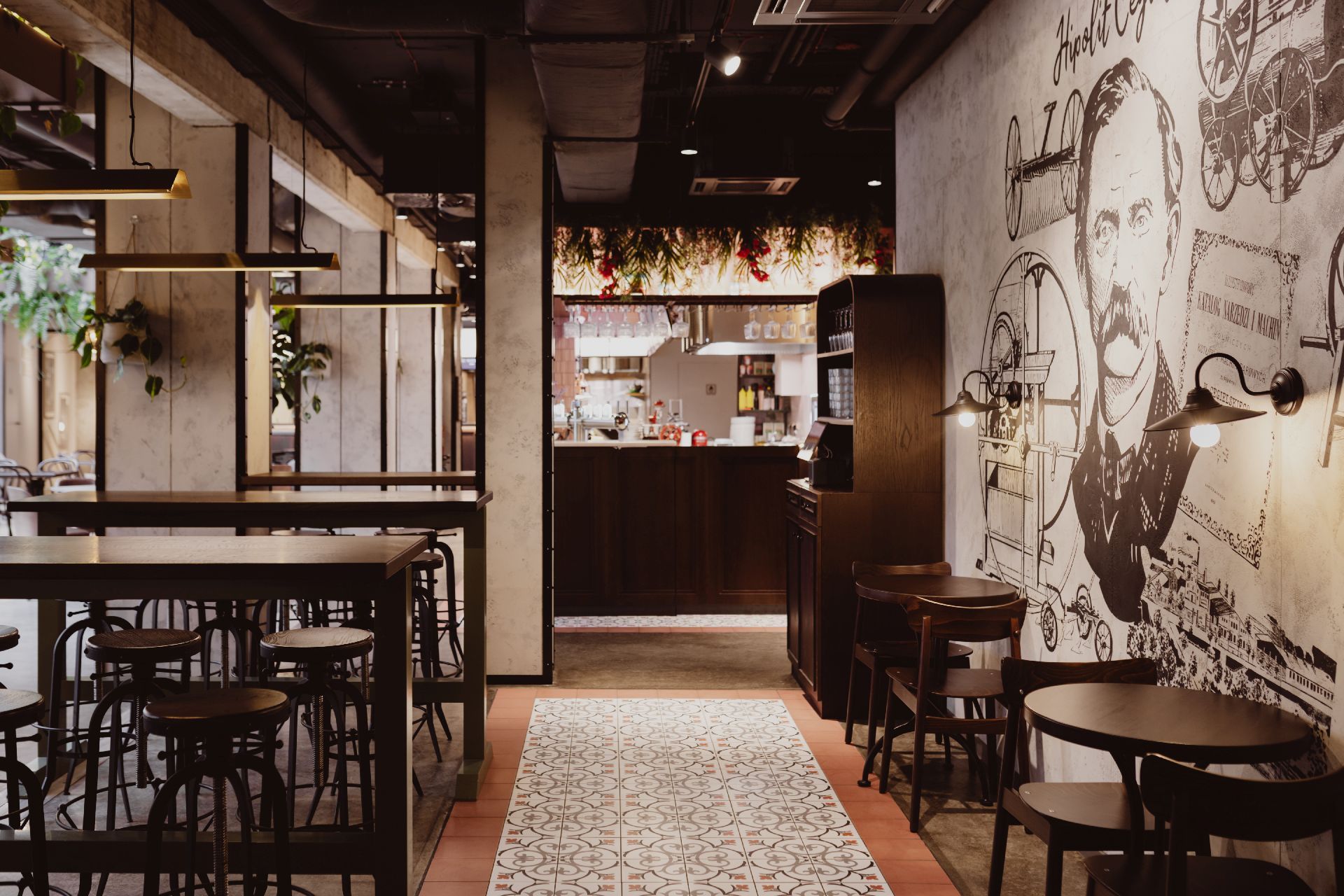
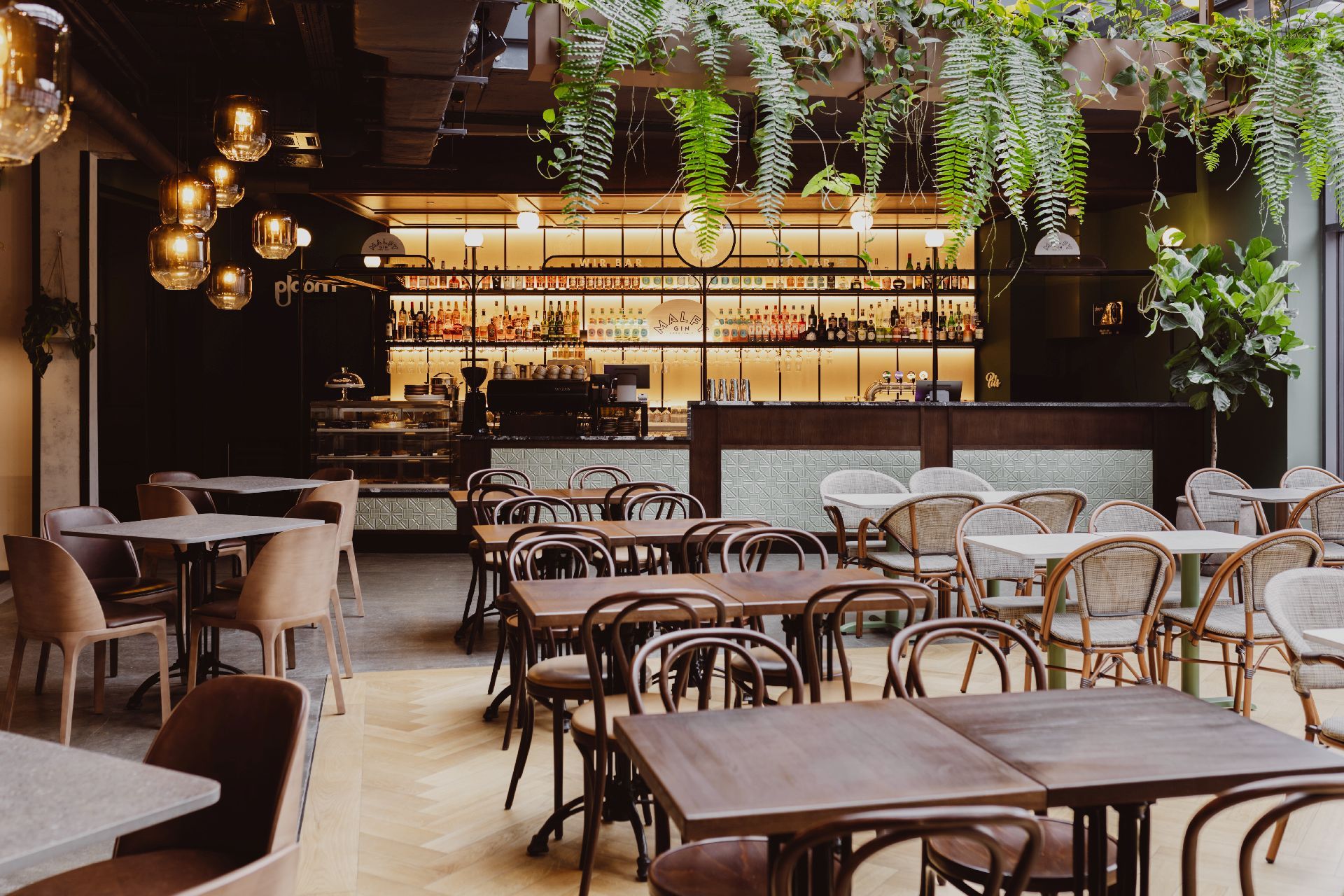
As the space moves toward the courtyard, the atmosphere gradually changes. The elegance of Art Nouveau gives way to a more industrial character, referencing one of Poznań’s most important historical institutions, the H. Cegielski factory. At the beginning of the 20th century, the factory was the country’s largest centre for steam locomotive production, giving the railway theme a clear historical context here. Steel fittings, industrial lamps, and technically inspired furniture appear throughout the space, while murals depicting steam locomotives recall the city’s industrial heritage. At the heart of this zone lies a covered terrace, which was not part of the original design. During the course of the project, however, it became possible to roof the courtyard space, creating a semi-outdoor, semi-indoor meeting place. Although it initially seemed less attractive to restaurateurs, the terrace eventually turned into one of the most vibrant areas of the food hall.
Asian express
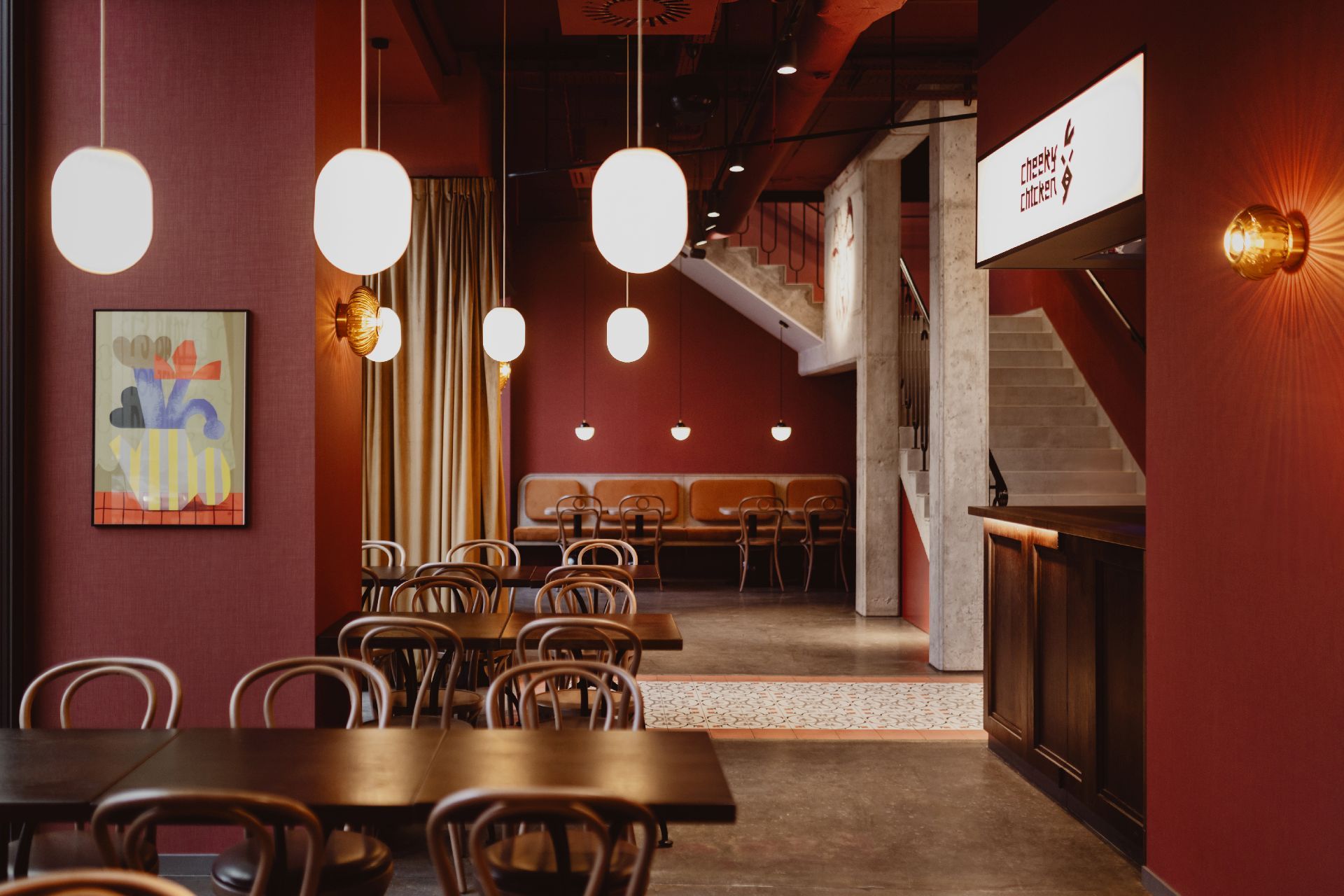
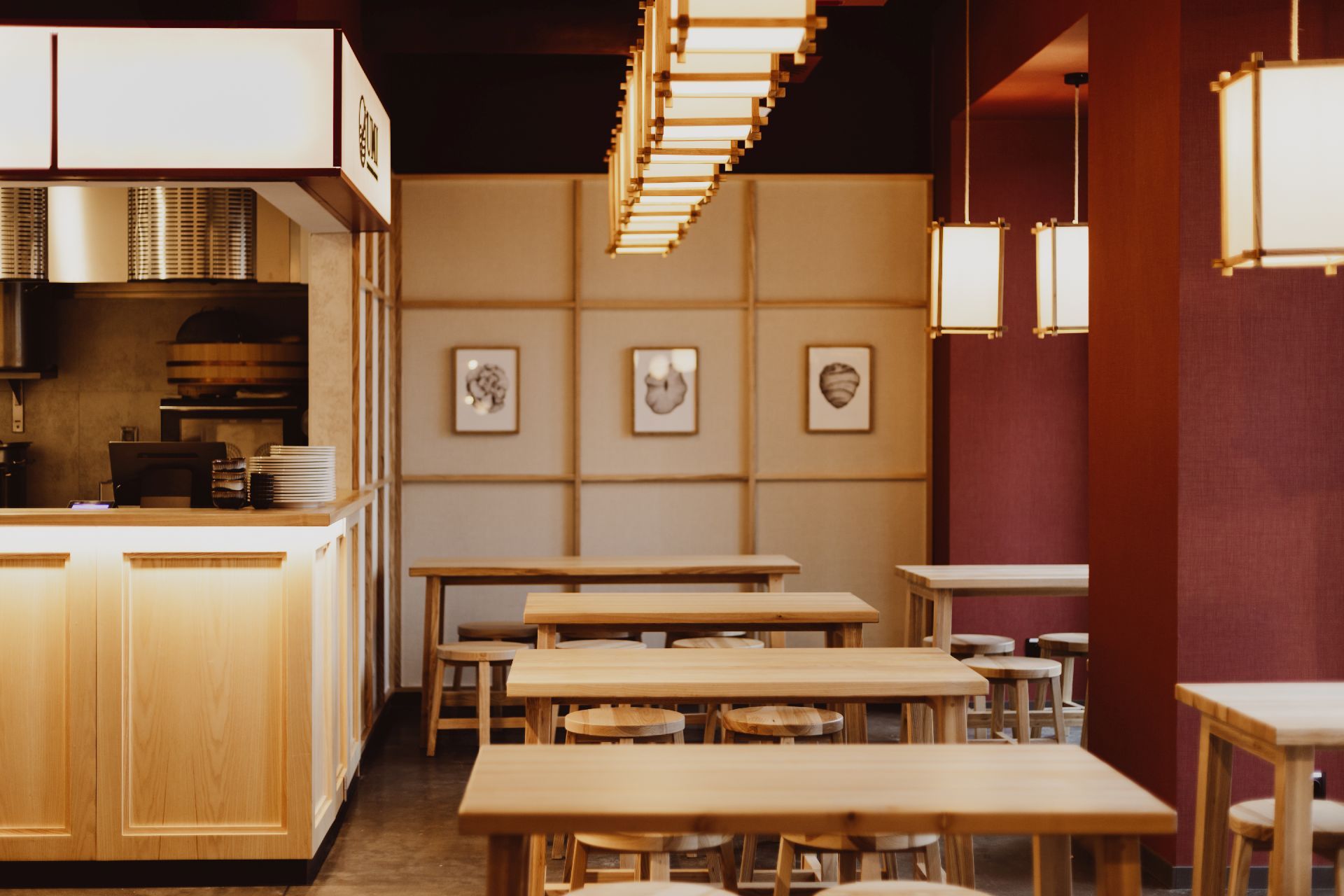
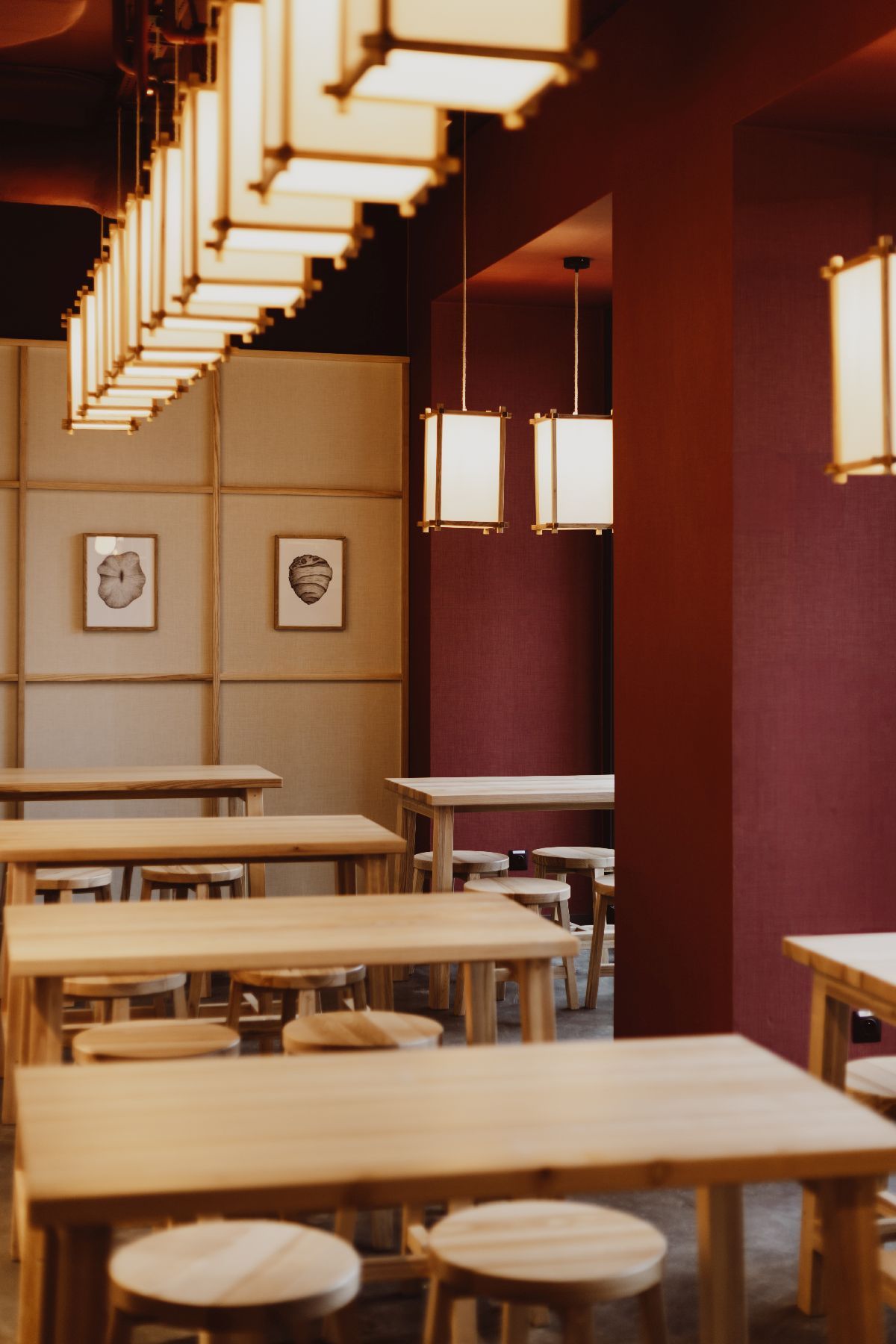
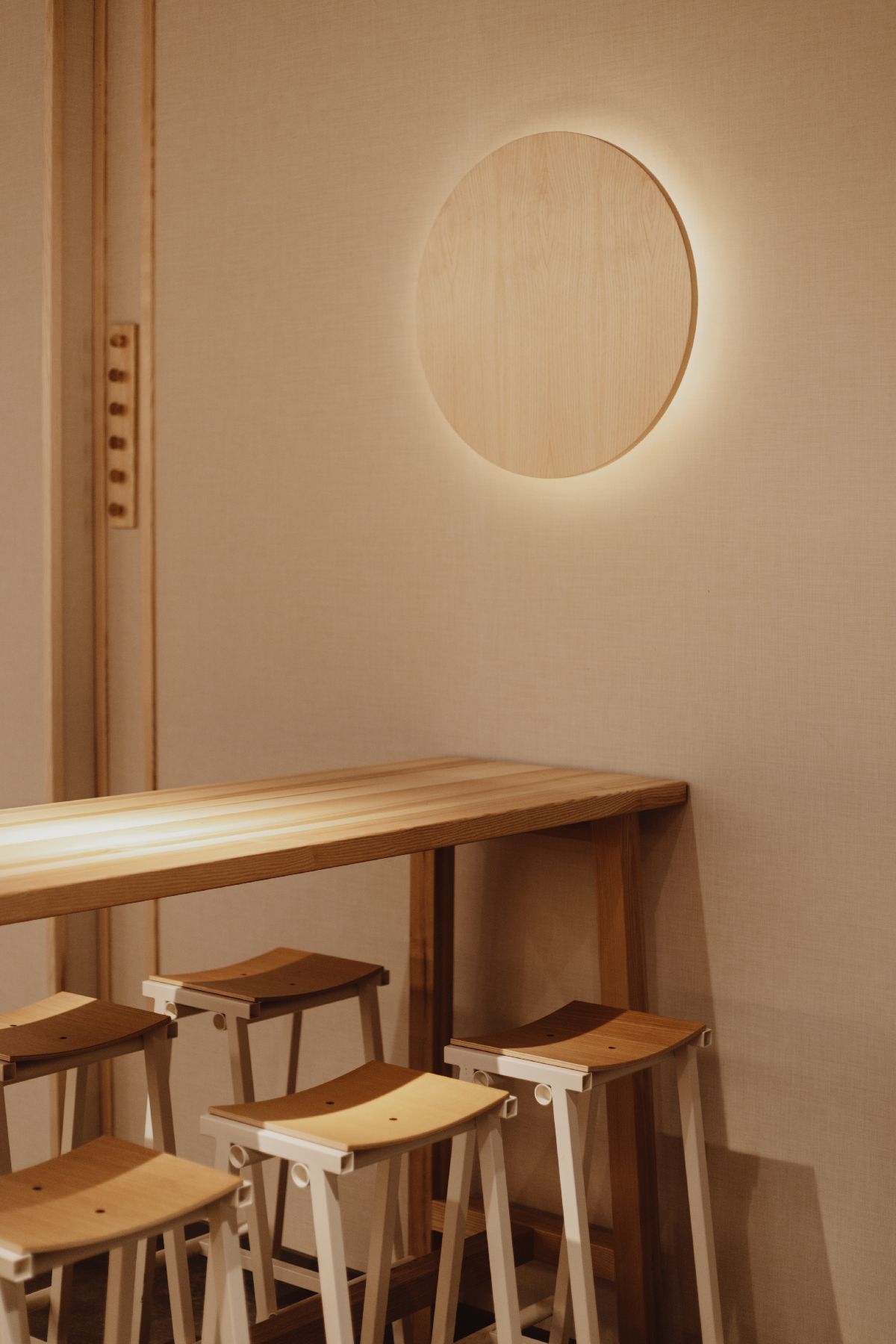
The next section of the interior introduces a completely different atmosphere. The Asia-inspired zone draws on japandi aesthetics, characterised by light woods, clean lines, and natural textures. Simple tables, textile wall coverings, and the diffused glow of paper lanterns create a calm and balanced atmosphere, offering a deliberate counterpoint to the dynamism of the industrial area. This restrained rhythm transforms again at the end of the spatial sequence. In the Eastern-inspired zone, saturated colours and rich materials appear: shades of burgundy and orange, dark wood, and lanterns made from Indian textiles define the space. The atmosphere becomes warmer and more sensual, reflecting the bold flavours and aromas of the cuisines served here. Although the styles of the individual zones differ dramatically, the designers maintained coherence through a consistent palette of colours and materials: burgundy, green, and beige appear throughout the building in varying forms.
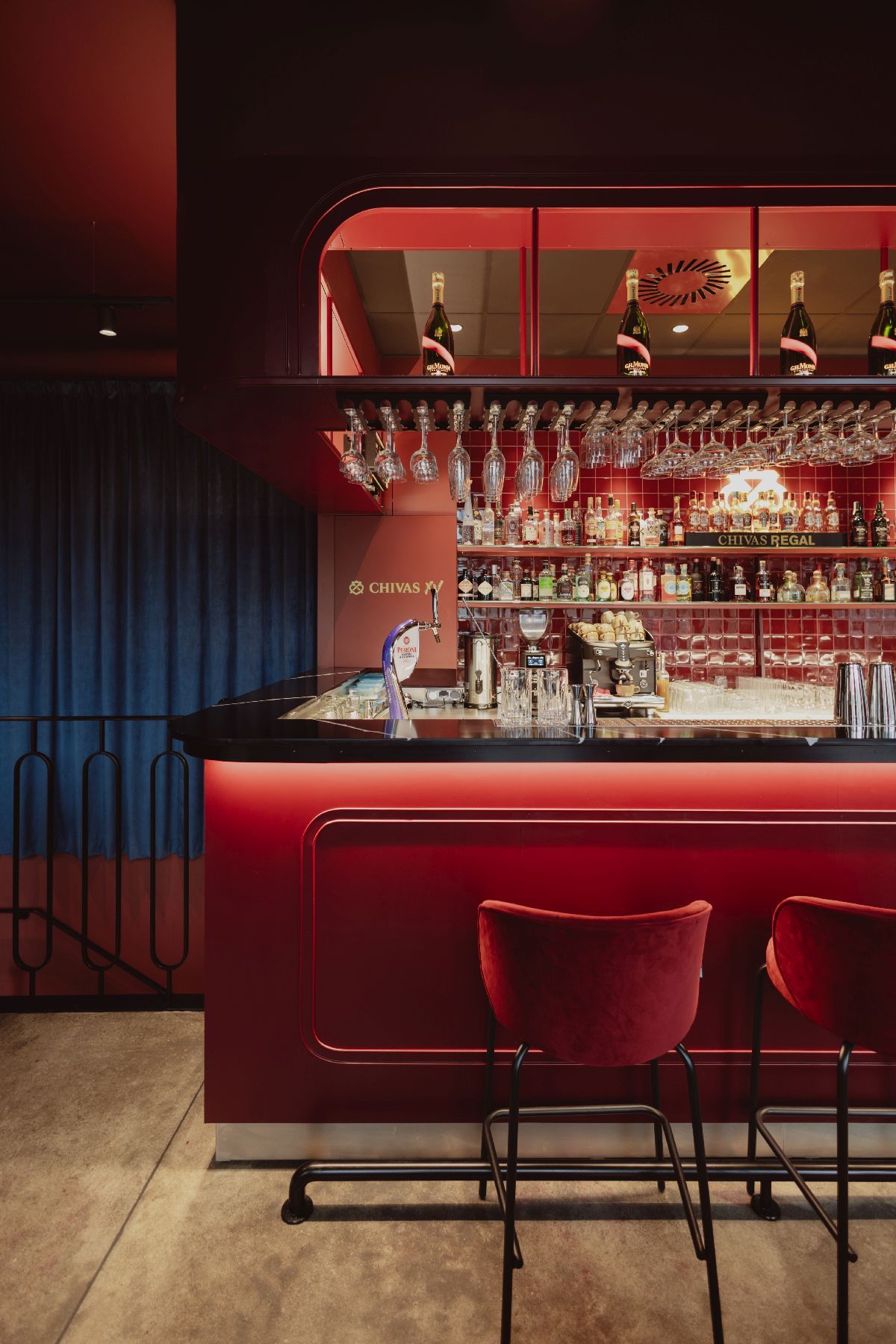
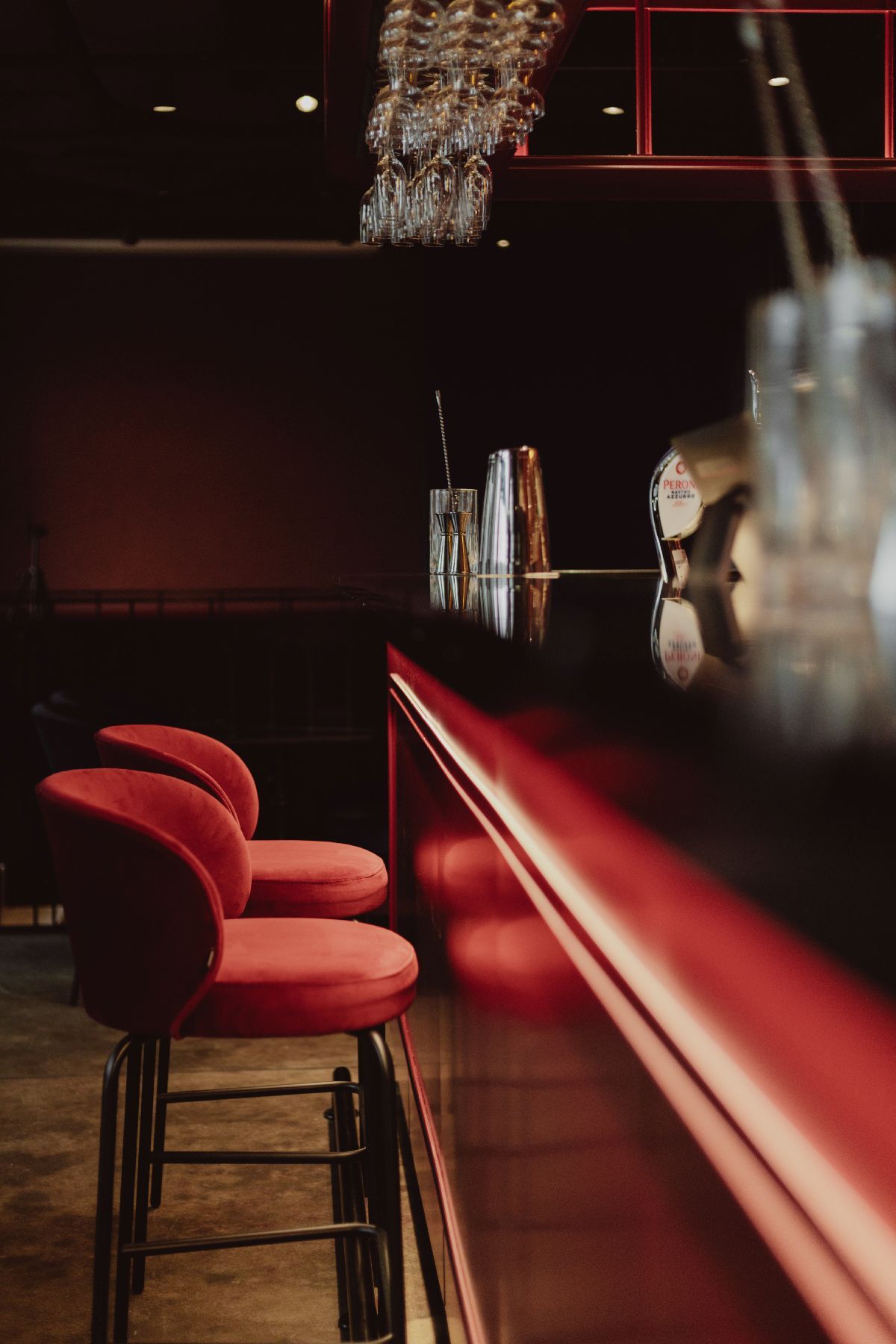
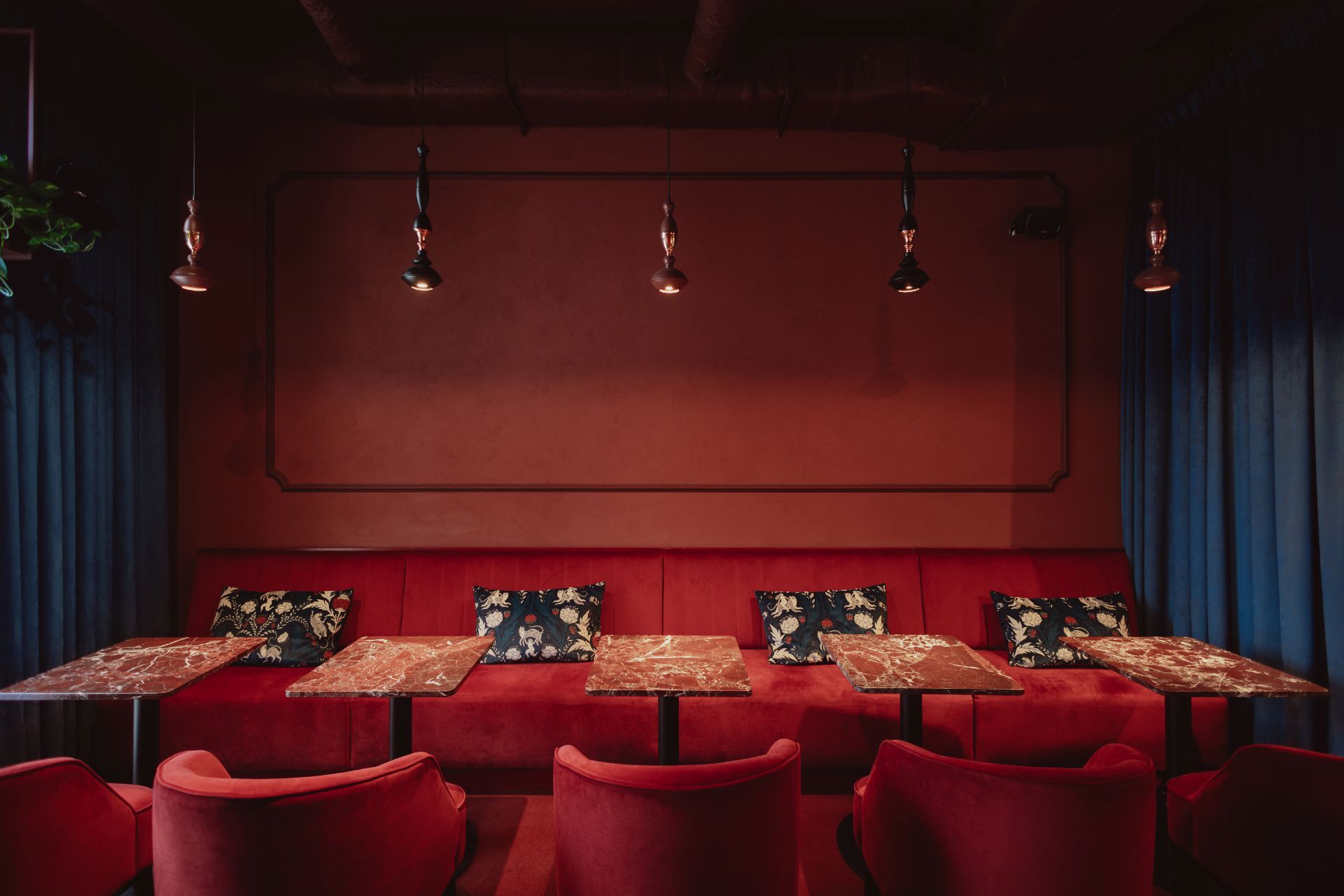
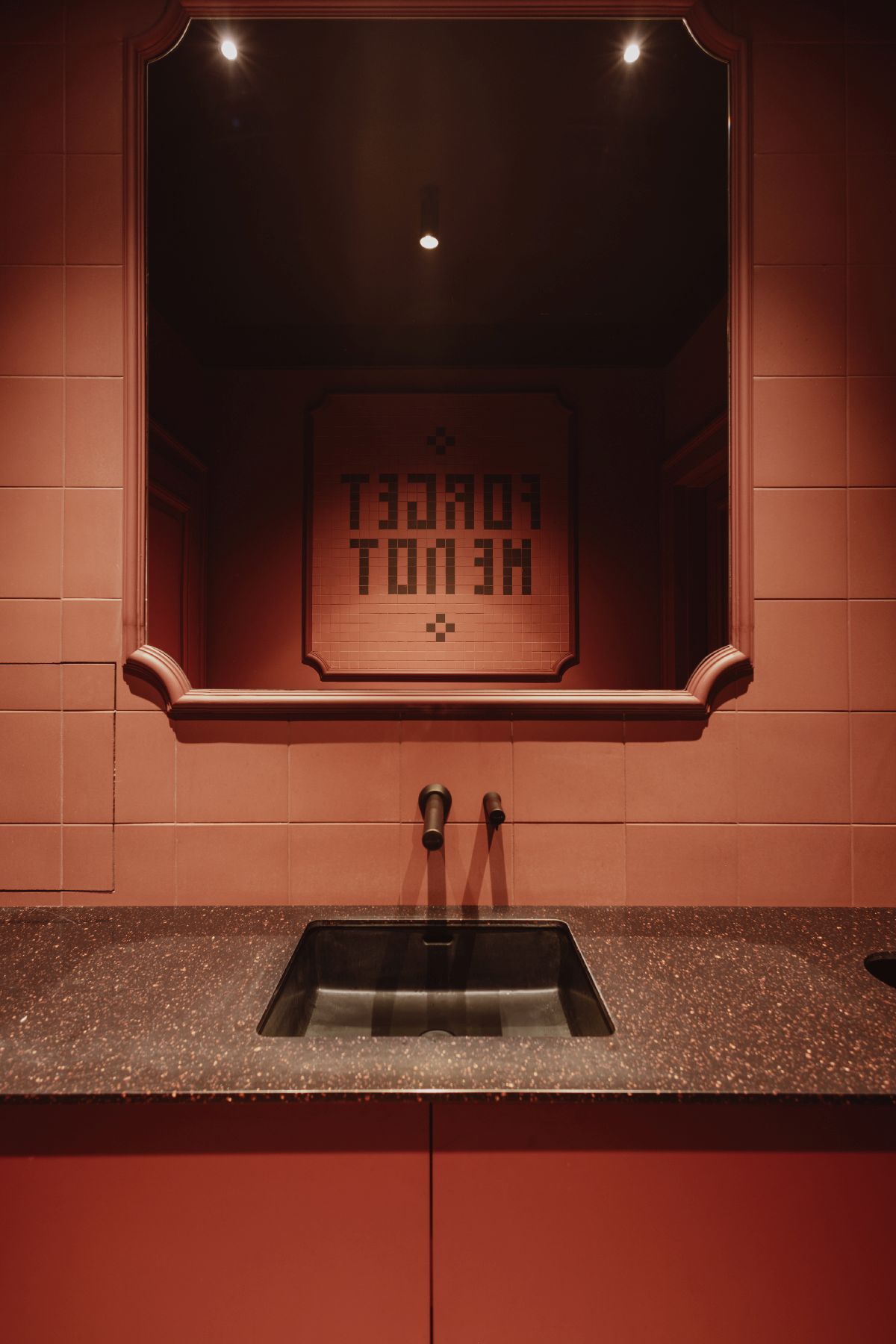
The “journey” concludes on the upper floor, where a more intimate lounge space awaits visitors. Large historic shopfront windows open the room toward the city, allowing the space to function as a café during the day and a cocktail bar in the evening. Soft sofas, burgundy and deep navy tones, and warm atmospheric lighting shape the mood. At the centre of the space stands a bar finished in burgundy-toned steel, subtly reflecting light while adding a contemporary accent to the interior. Surfaces finished with wabi-sabi plaster techniques and contemporary artworks further strengthen the character of the space. Even the restrooms appear as a separate episode within the spatial narrative: bold colours and theatrical lighting effects transform them into one of the interior’s most memorable details.
Kulinarna Kamienica is therefore not simply a new gastronomic destination in Poznań, but the rebirth of a building that stood in near ruin in the city centre for decades. The revitalisation restored not only its architectural dignity but also its social role, turning it into a lively urban meeting place where historical layers and contemporary city life naturally intersect.
Kulinarna Kamienica: web | Instagram
Photos: Alka Murat