


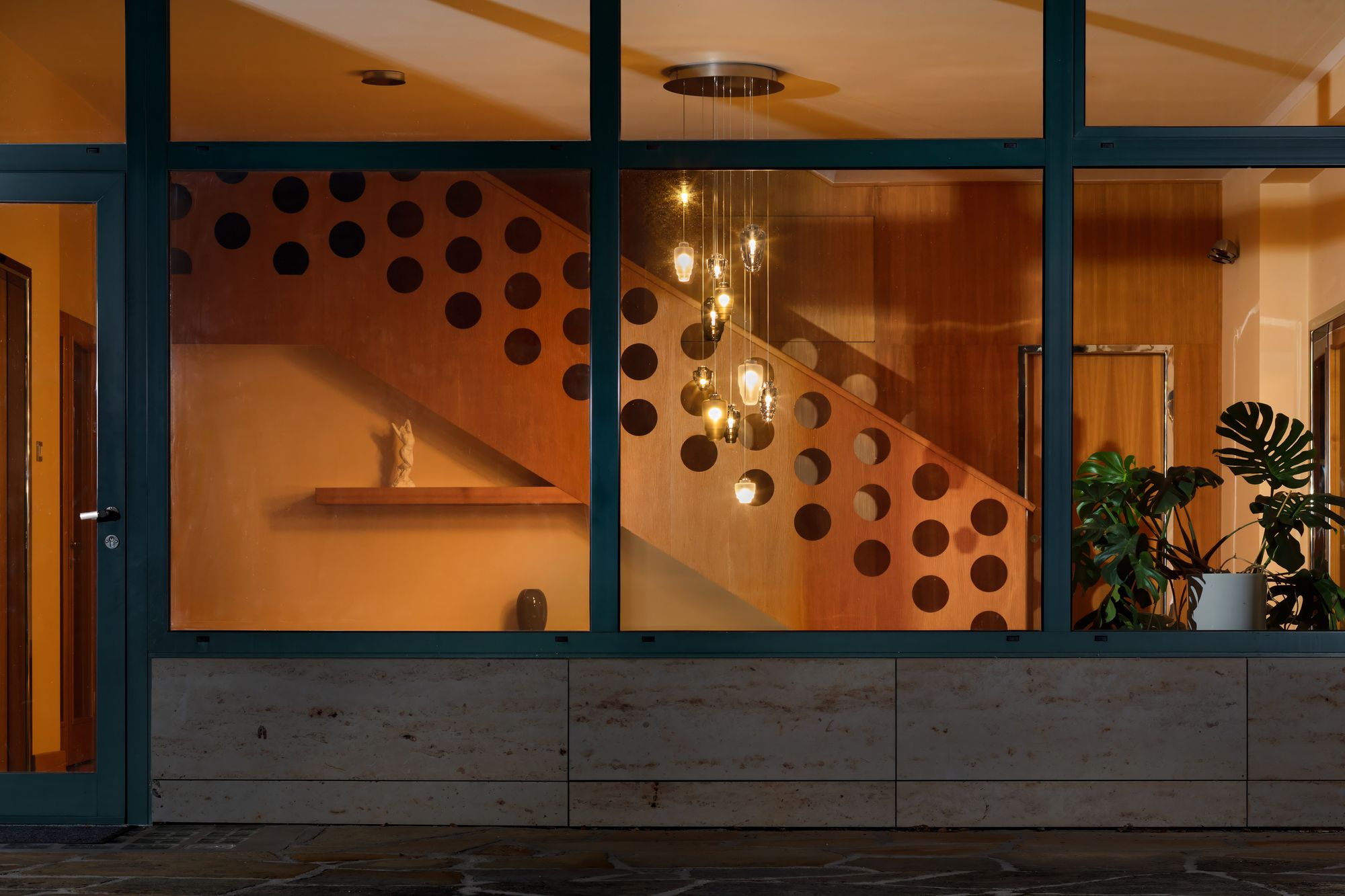
The Czech glass artist reimagines his signature vase collections as light objects, bringing new dimensions of colour, craftsmanship and atmosphere to a landmark of interwar Functionalism.
Glass has a particular ability to change character depending on how light passes through it, reflects off its surface or brings out the depth of its colour. In František Jungvirt’s latest project, this quality becomes the starting point for a new chapter in his work, as familiar glass forms move beyond their original function and take on a more active role in shaping an interior.
A Contemporary Take on Czech Glassmaking
František Jungvirt belongs to a new generation of Czech glass artists bringing the country's long-established glassmaking tradition into contemporary design. A graduate of the Glass Studio at UMPRUM in Prague, where he studied under Rony Plesl, Jungvirt has developed a recognisable visual language built around clean silhouettes, vivid colours and hand-shaped motifs. Working across glass art and product design, he draws on historical references while giving familiar forms a contemporary sensibility, with collections that explore subjects ranging from the relationship between humans and nature to the transience of life. His practice has also extended well beyond the traditional boundaries of glass design. Jungvirt has collaborated with architects on projects in which his objects become part of a larger spatial composition, with his vases appearing in interiors such as Villa Volman and the Four Seasons Hotel. These collaborations reflect his interest in the way glass interacts with its surroundings, responding to architecture, materials and light.
Lighting is a natural next step in this exploration. For his latest collection, Jungvirt has revisited three established series, Garden Basic, Toy and Bloom, translating their characteristic forms into objects that illuminate the spaces they inhabit.
From Vases to Sculptural Light
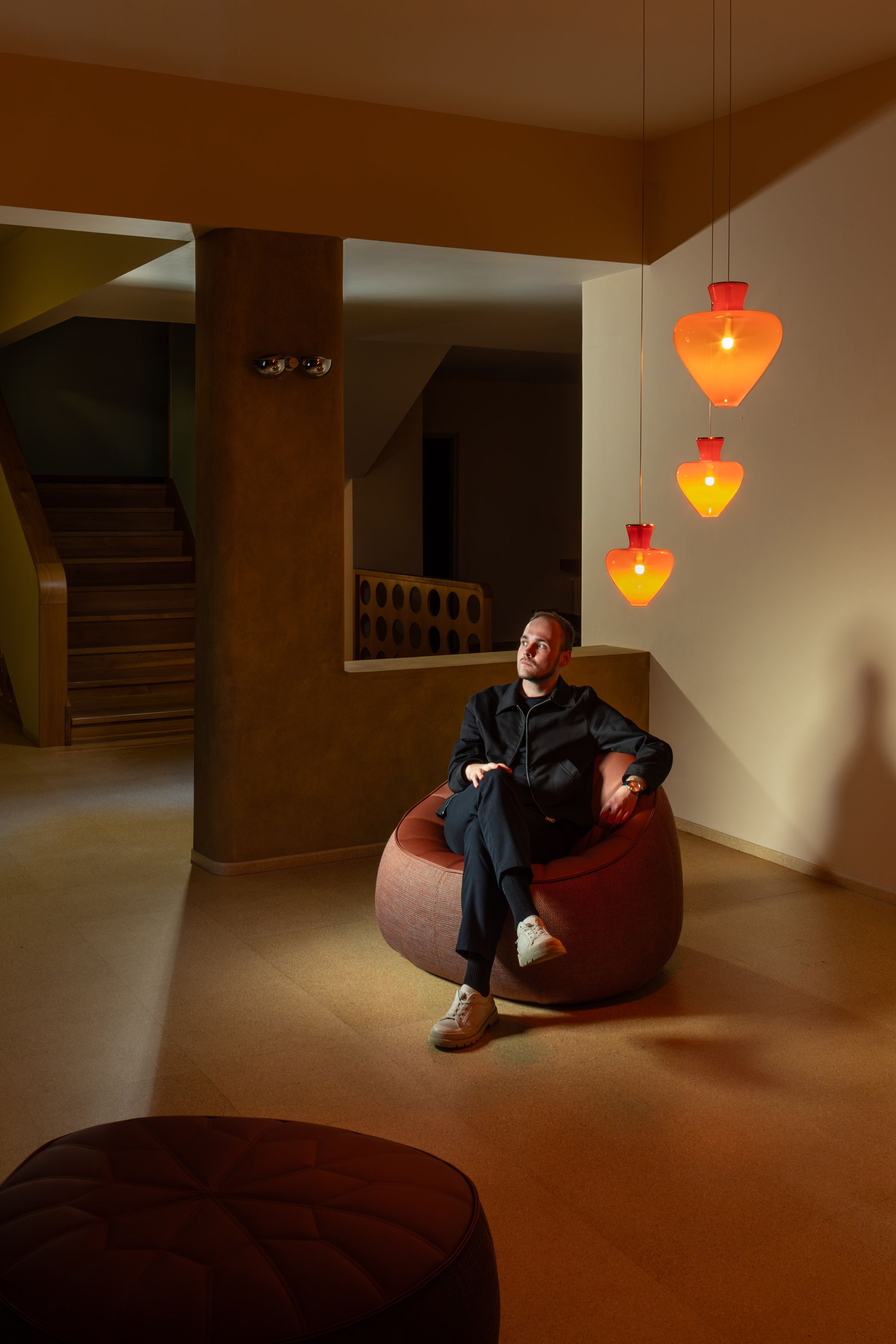
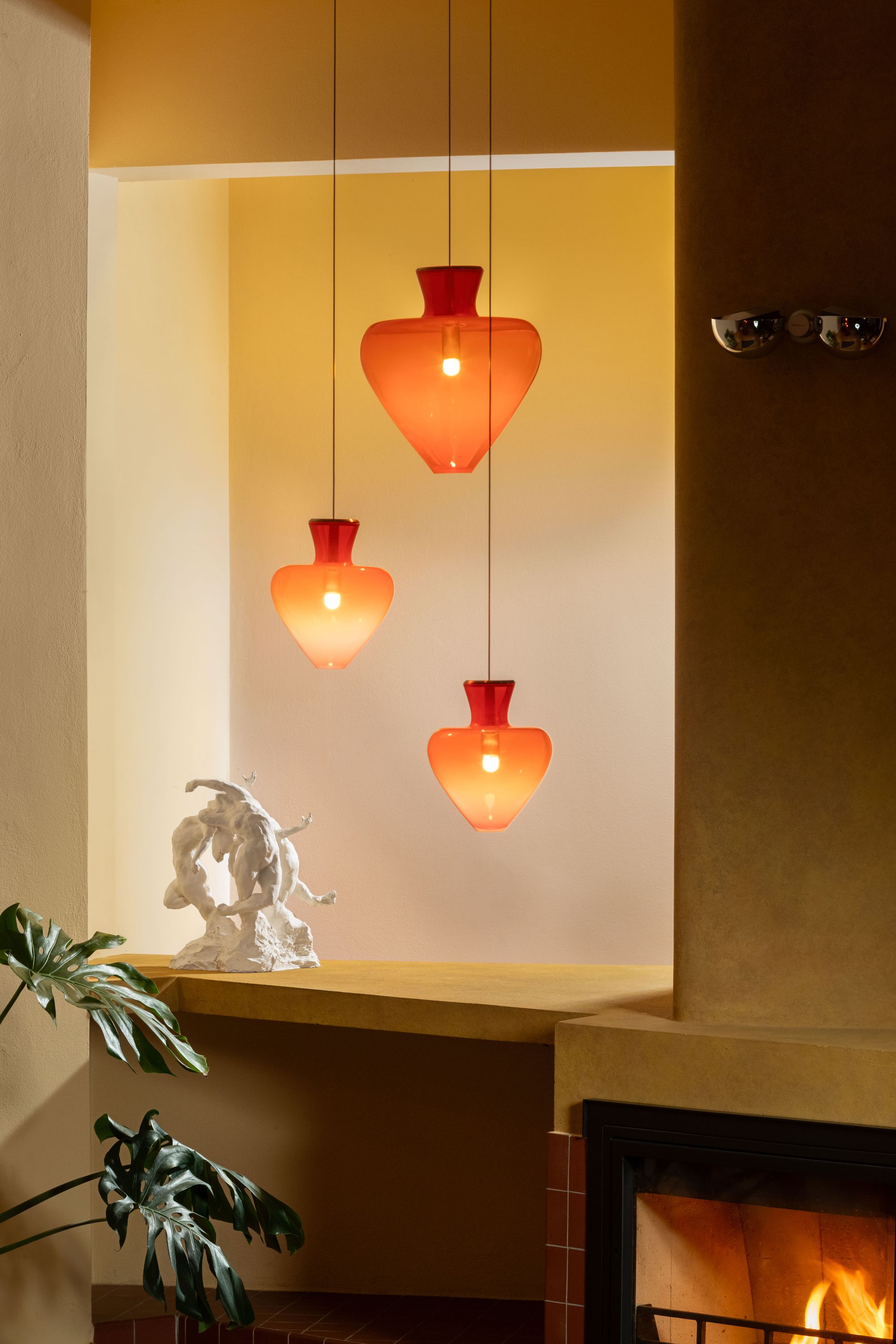
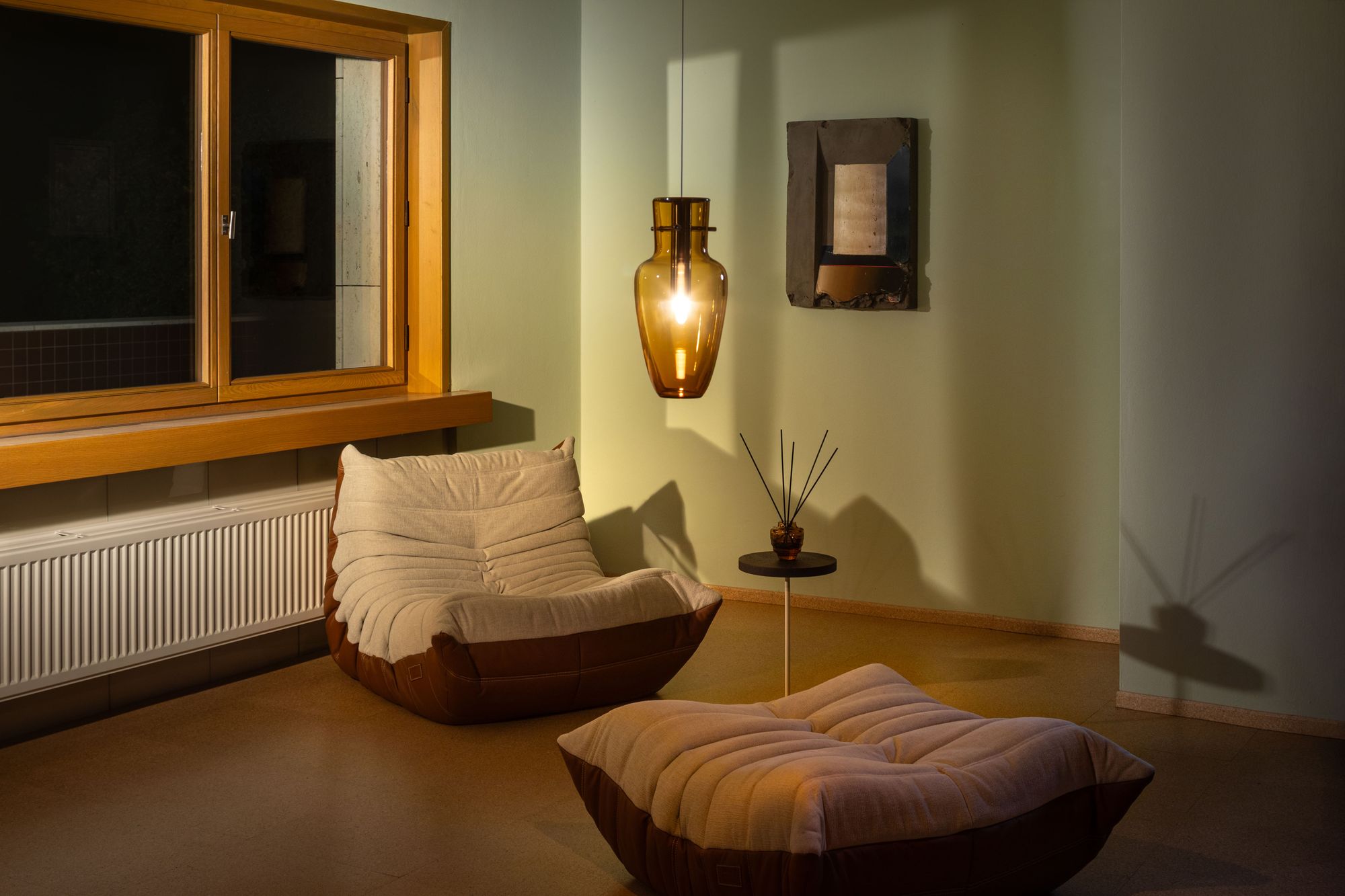
Each of the three series brings a distinct character to the collection. Garden Basic strips the vase back to its essential form, using subtle earthy tones to emphasise the clarity of its silhouette. Toy takes a more playful approach, with undulating contours that evoke the fluidity of molten glass and the carefree quality of childhood. Bloom, recognisable by its heart-shaped forms and ruby-red glass, introduces a warmer, more intimate note.
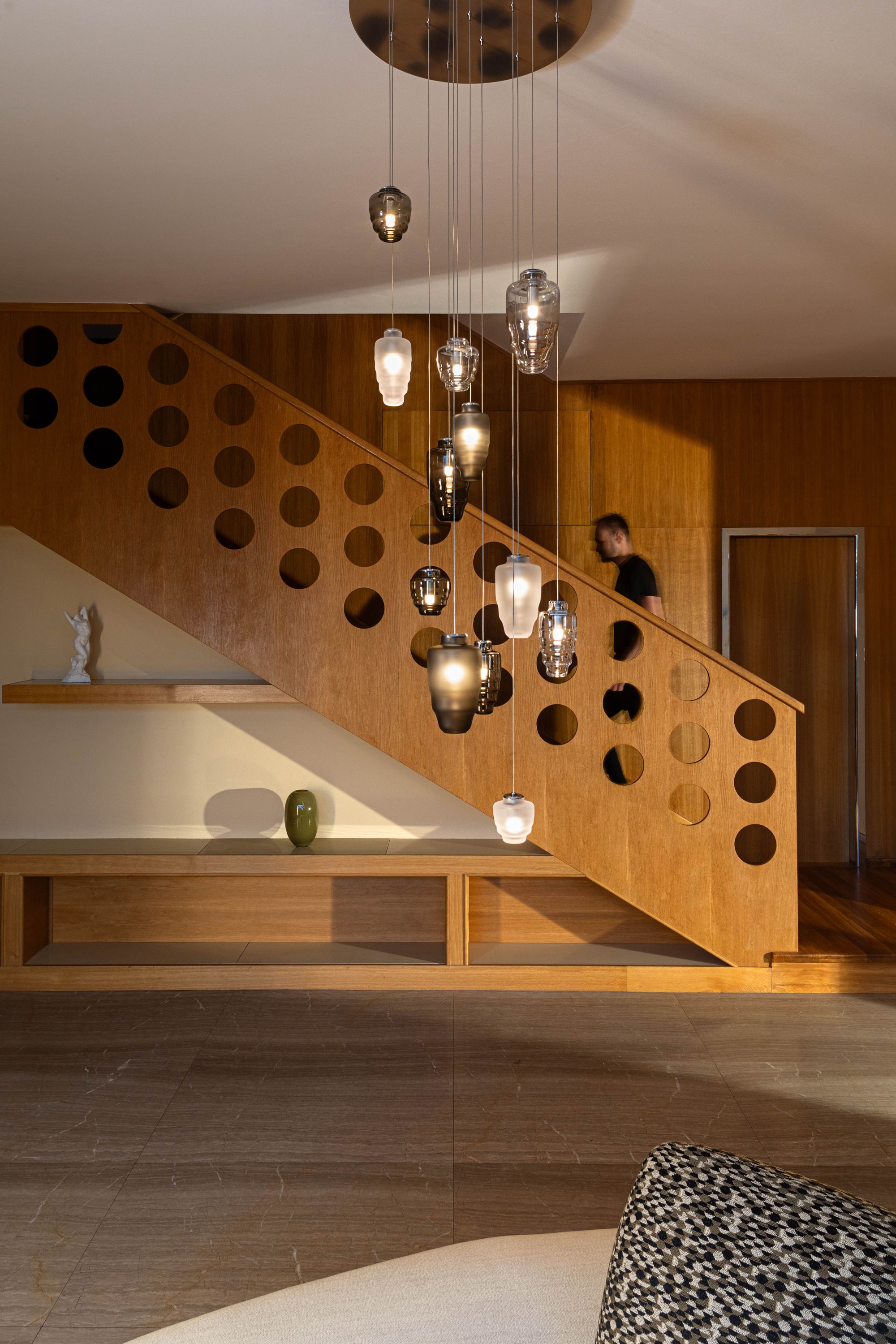
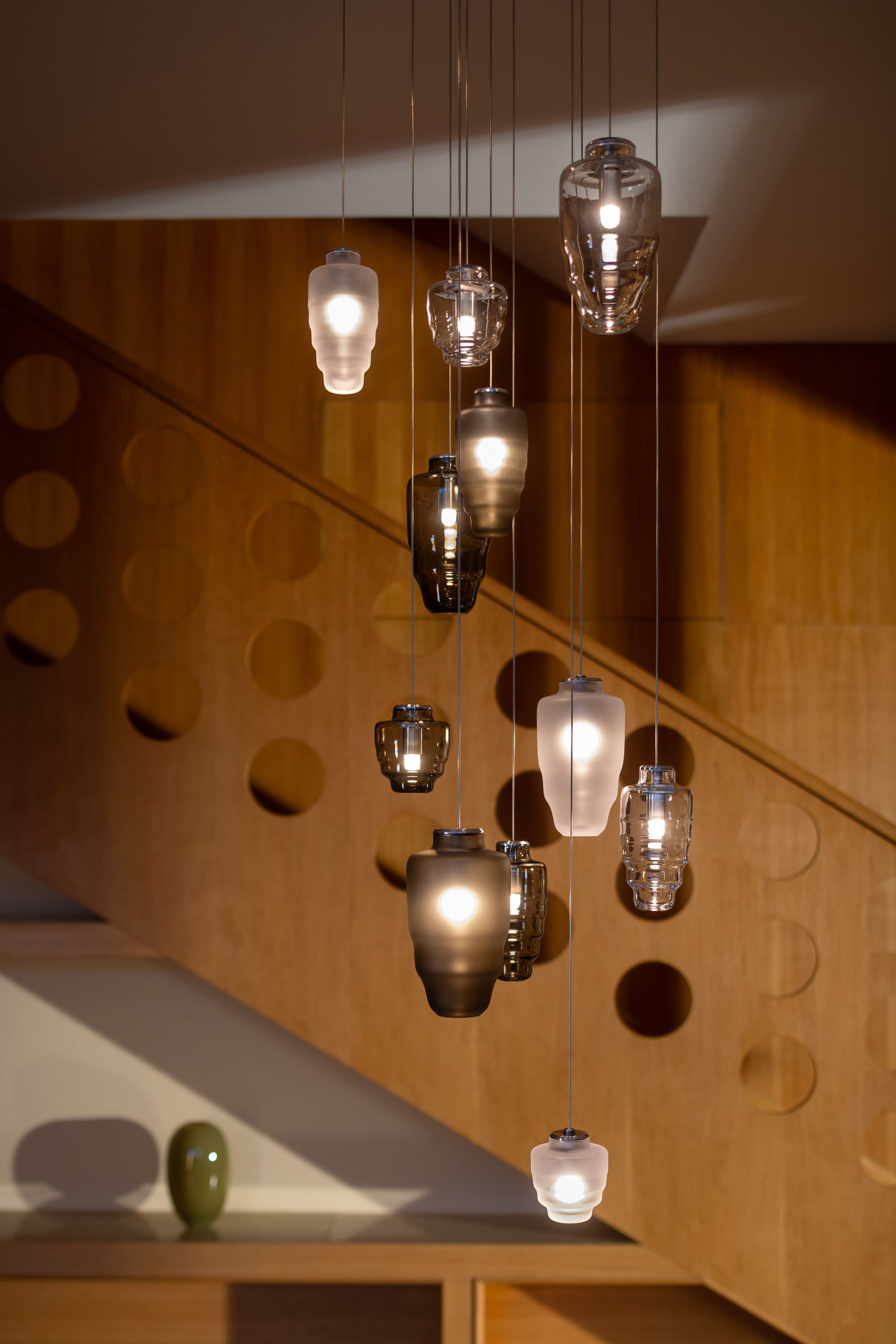
Reimagined as light objects, these familiar designs take on a different relationship with their surroundings. The restrained forms of Garden Basic offer a quieter presence, while Toy's curves bring movement into an interior. Bloom, meanwhile, casts a warm glow that softens the atmosphere around it. Across the collection, glass becomes both a sculptural object and a source of illumination, allowing colour, transparency and surface finish to play a more active role in the perception of space.
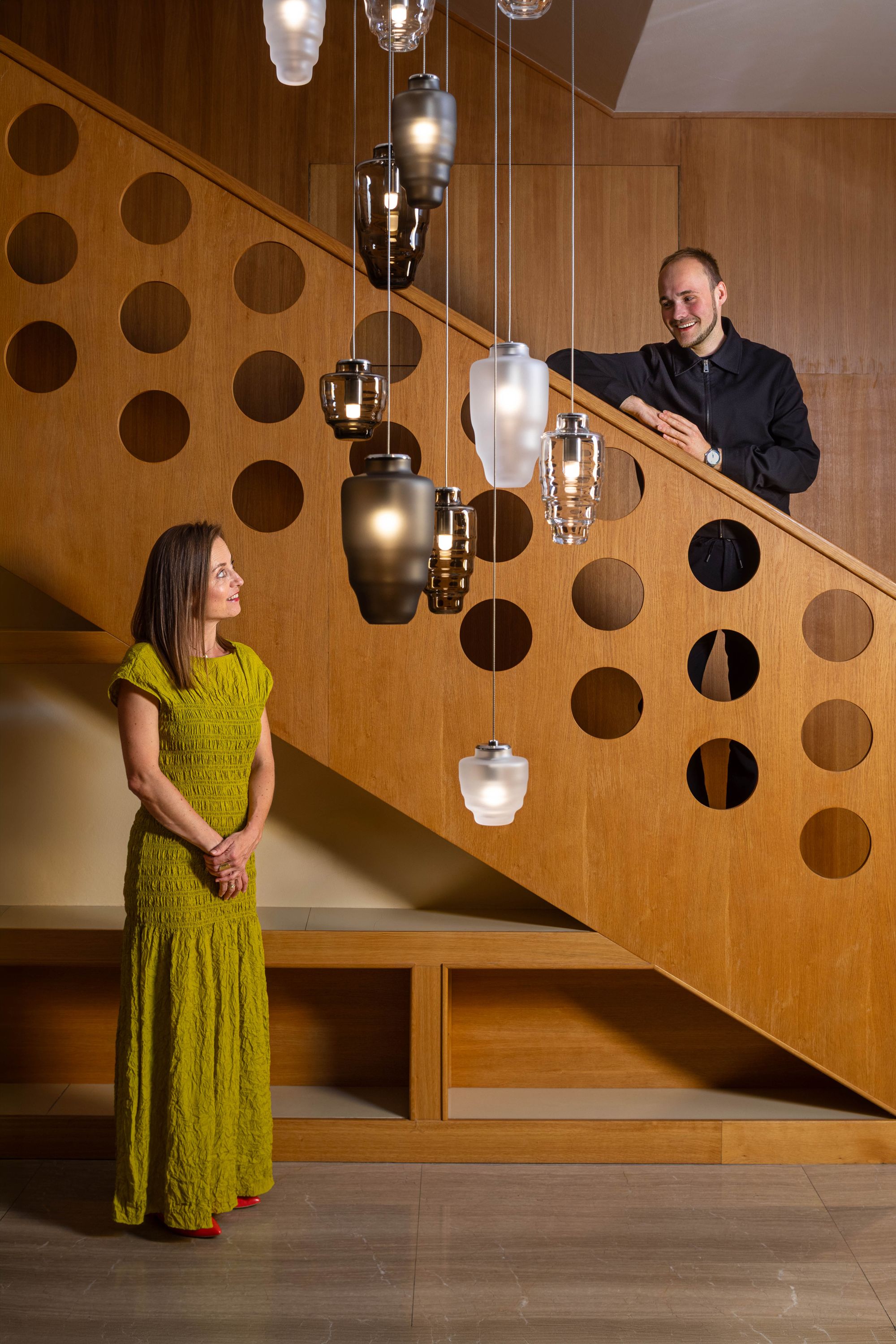
Jungvirt's existing relationship with Villa Volman provided the setting for this new direction. His vases have been part of the residence's interiors since it reopened to the public in 2022, and the lighting installation develops that dialogue between contemporary glass design and historic architecture. “My works have been part of the interior for several years, but the current lighting installation takes the relationship between the architecture and my work to an entirely new level. The glass objects are no longer simply interior accessories; they become direct sources of light that redefine the way the Functionalist architecture is perceived,” says Jungvirt.
Handcrafted Glass, Custom-Made Structures
Despite their sculptural appearance, the light objects remain rooted in traditional glassmaking. Each piece is blown by hand into a wooden mould, then hand-ground and finished with either a matte surface or a high-gloss polish. A custom-designed metal structure, developed specifically for each object, completes the construction. The process combines the unpredictability and material richness of hand-worked glass with the precision required for functional lighting. Rather than concealing the craft behind a purely decorative exterior, the collection allows the glass itself to remain the defining element, with its colour, contours and finish shaping the way the light is experienced.
Jungvirt now plans to develop this direction further through larger-scale lighting installations, monumental glass sculptures conceived for specific architectural projects and more comprehensive interior commissions, ranging from smaller objects to one-of-a-kind artworks. His growing portfolio also includes visualisations and 3D models that allow architects and clients to understand how his pieces will look within a proposed space.
The collection is on view at Villa Volman as part of Designblok 2026, Prague's international design festival, which runs from October 7 to 11 under the theme Light. The installation will remain in place until October 31, 2026, and can be seen during the villa's regular guided tours. Advance reservations are required.
Villa Volman: A Funcionalist Landmark
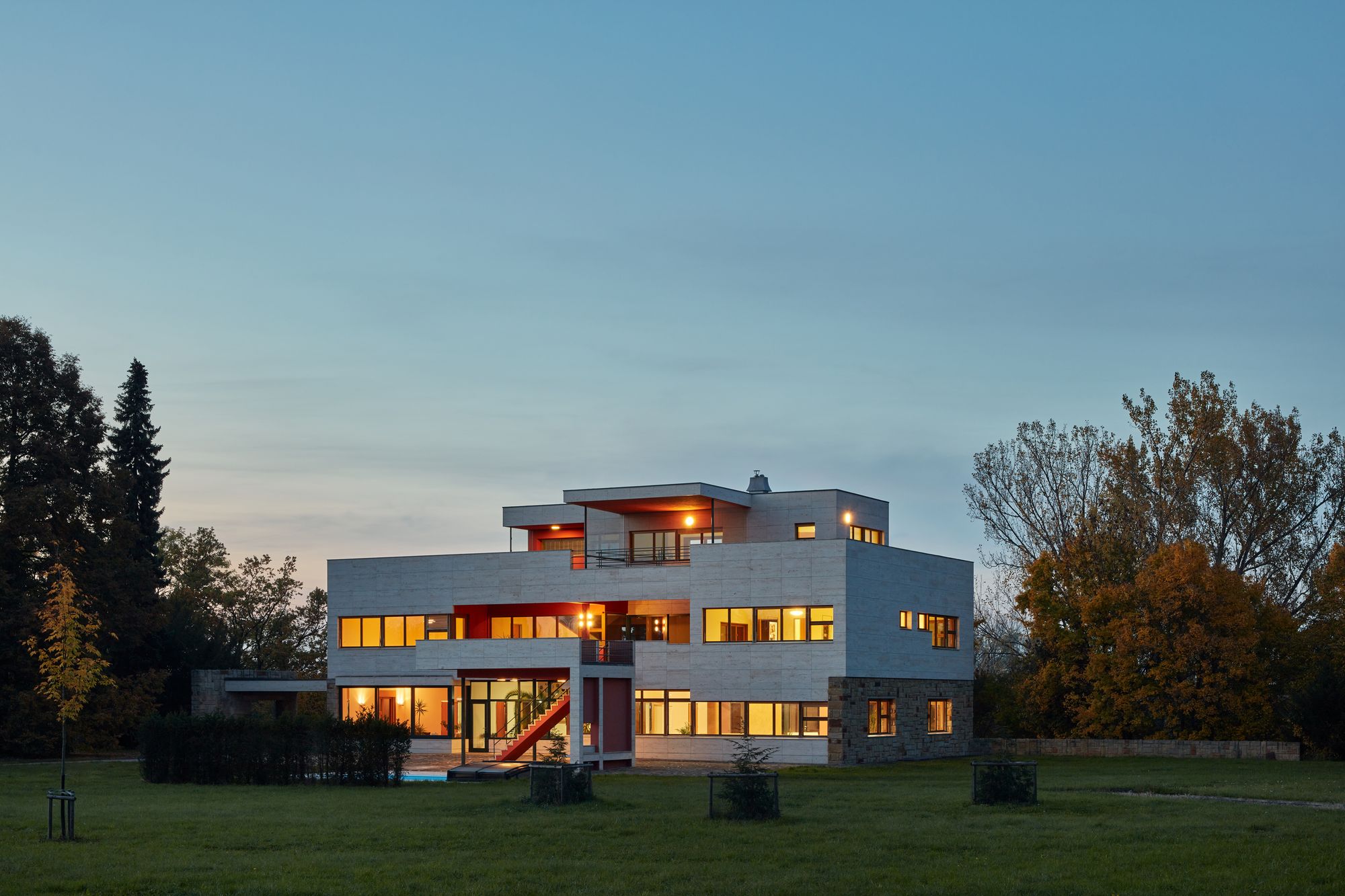
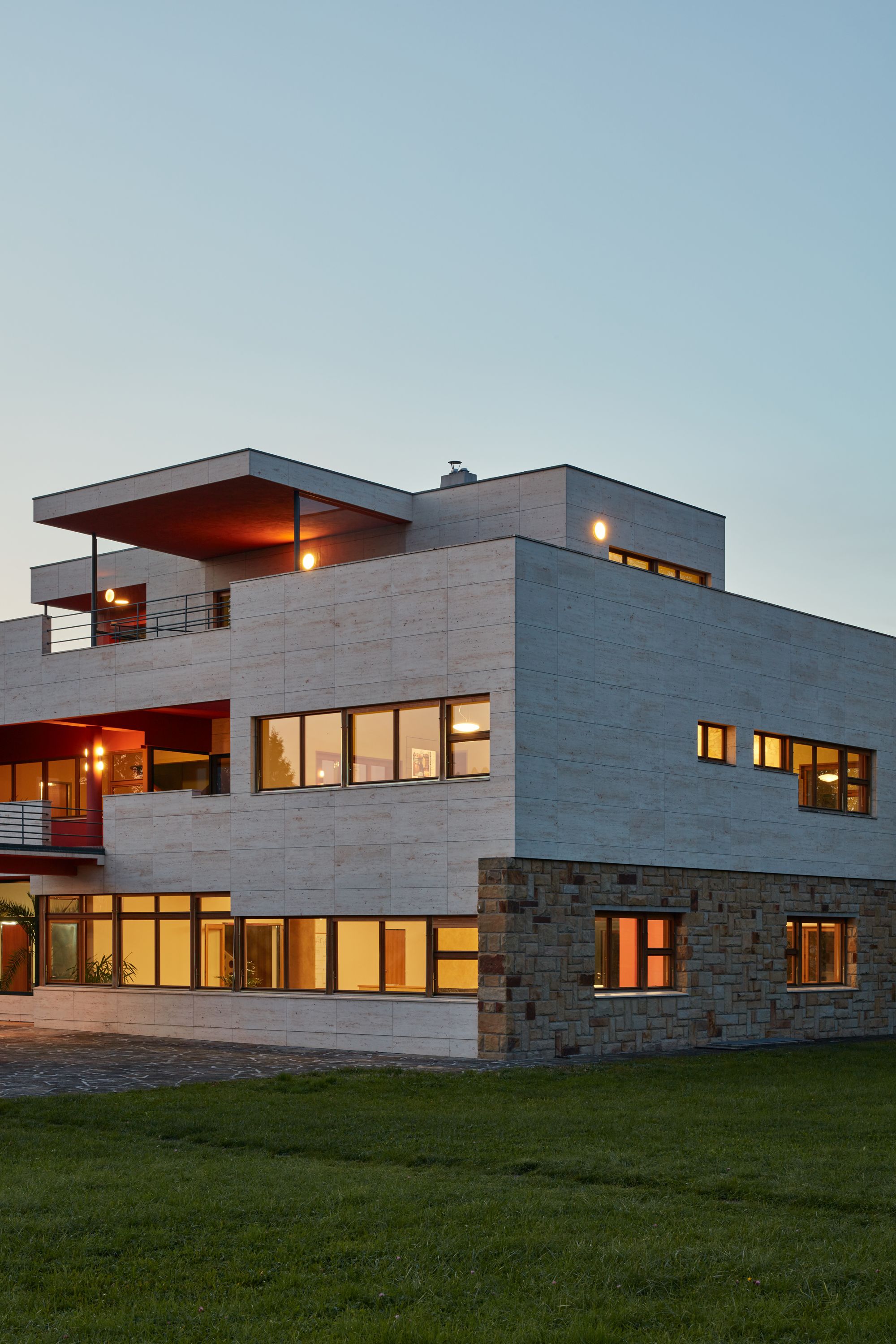
Built in 1938–1939 for industrialist and philanthropist Josef Volman, Villa Volman was designed by avant-garde architects Jiří Štursa and Karel Janů, who drew inspiration from Le Corbusier while developing a distinctive architectural language of their own. The residence combines the rational principles of Czech interwar Functionalism with expressive curves, organic details and an unusually rich palette of materials and colours, earning its reputation as one of the period's outstanding architectural works.
After the communist takeover in 1948, Volman's family was forced to leave the property, and the building entered a long period of decline. By the 1990s, its condition had deteriorated so severely that parts of it were at risk of demolition. A group of local entrepreneurs eventually acquired the protected cultural monument and initiated an extensive restoration led by TaK Architects, under architect Marek Tichý. The project received a jury prize in the 2016 Stavba roku competition for the sensitive restoration of a severely deteriorated historic building. Villa Volman reopened to the public in 2022 and joined the international Iconic Houses network that same year.
Today, the privately owned residence welcomes visitors to experience its restored architecture and interiors alongside contemporary Czech art and design, continuing its life as both a historical landmark and an active cultural space.
Interior photos: Anna Pleslová
Exterior photos: Radek Štrettr Úlehla