



Today, a cult following at least as strong as that surrounding a fine natural wine or a rare design classic is building around steak: marbling, aging techniques, legendary origins, and cuts whose names we are still learning. At NEXT Bistro in Debrecen, we looked into what lies beyond the striking red-and-white pattern, and what turns a slice of beef into a true steak experience.
In recent years, an increasingly sophisticated gastronomic discourse has emerged around steak: alongside tenderloin and sirloin, lesser-known cuts have come to the forefront, marbling has become an independent benchmark of quality, and Wagyu has become one of the best-known symbols of premium beef. Choosing a steak today therefore raises far more questions than simply how well-done we want the meat cooked. At NEXT Bistro in Debrecen, we explored what defines the character of a steak, how to navigate different cuts and origins, and why two slices of beef that look similar at first glance can offer a completely different experience.
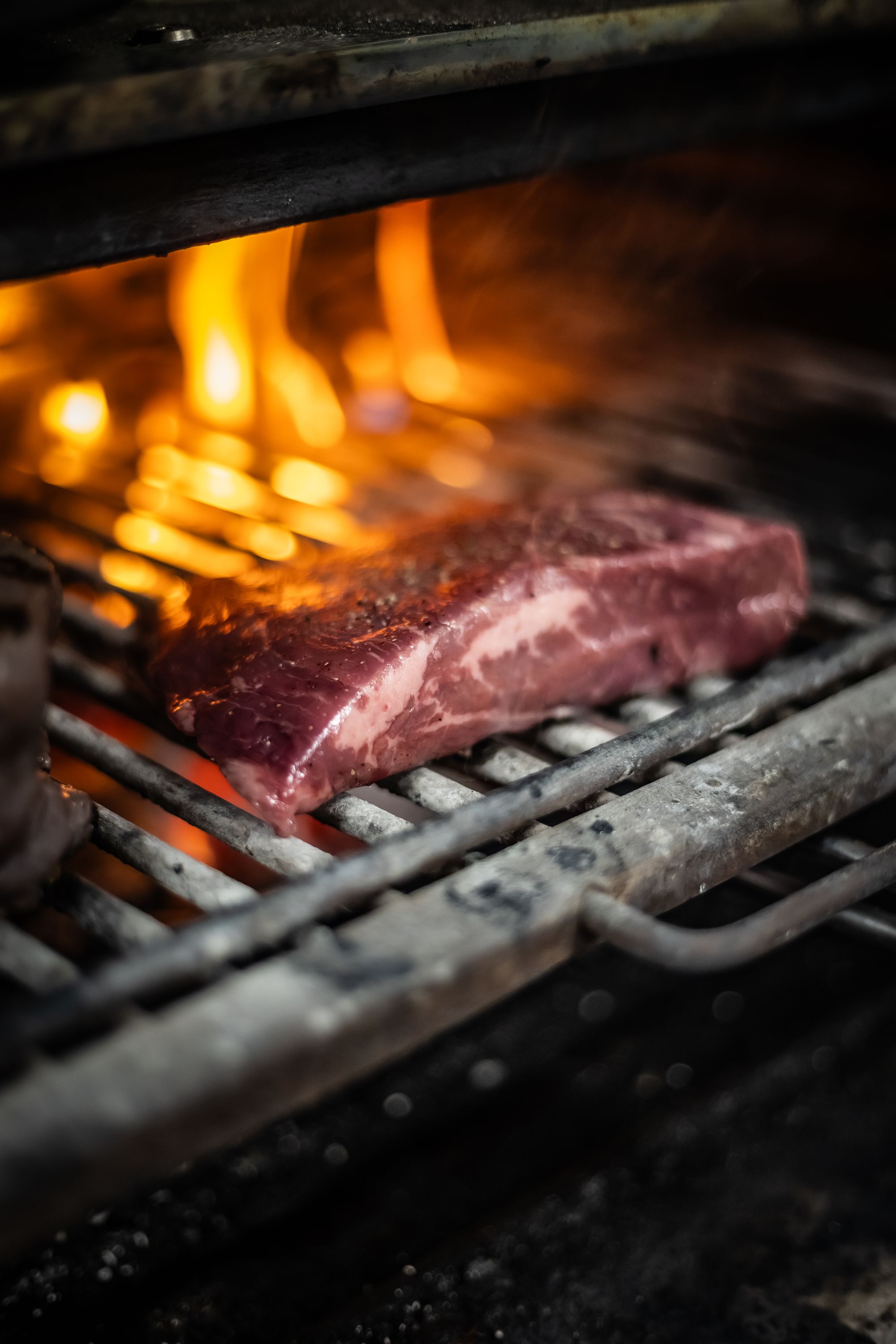
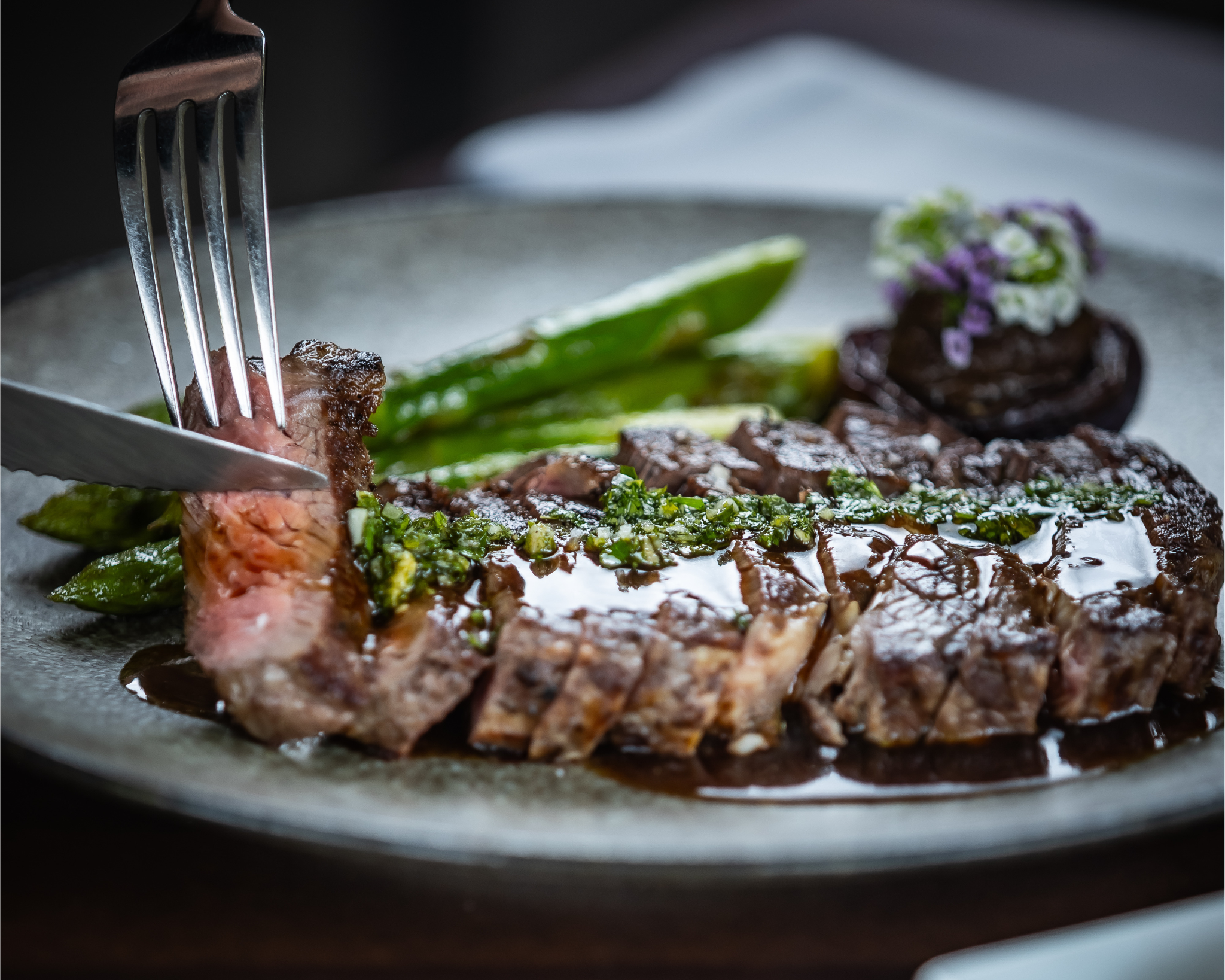
Beyond tenderloin: the character of the cut
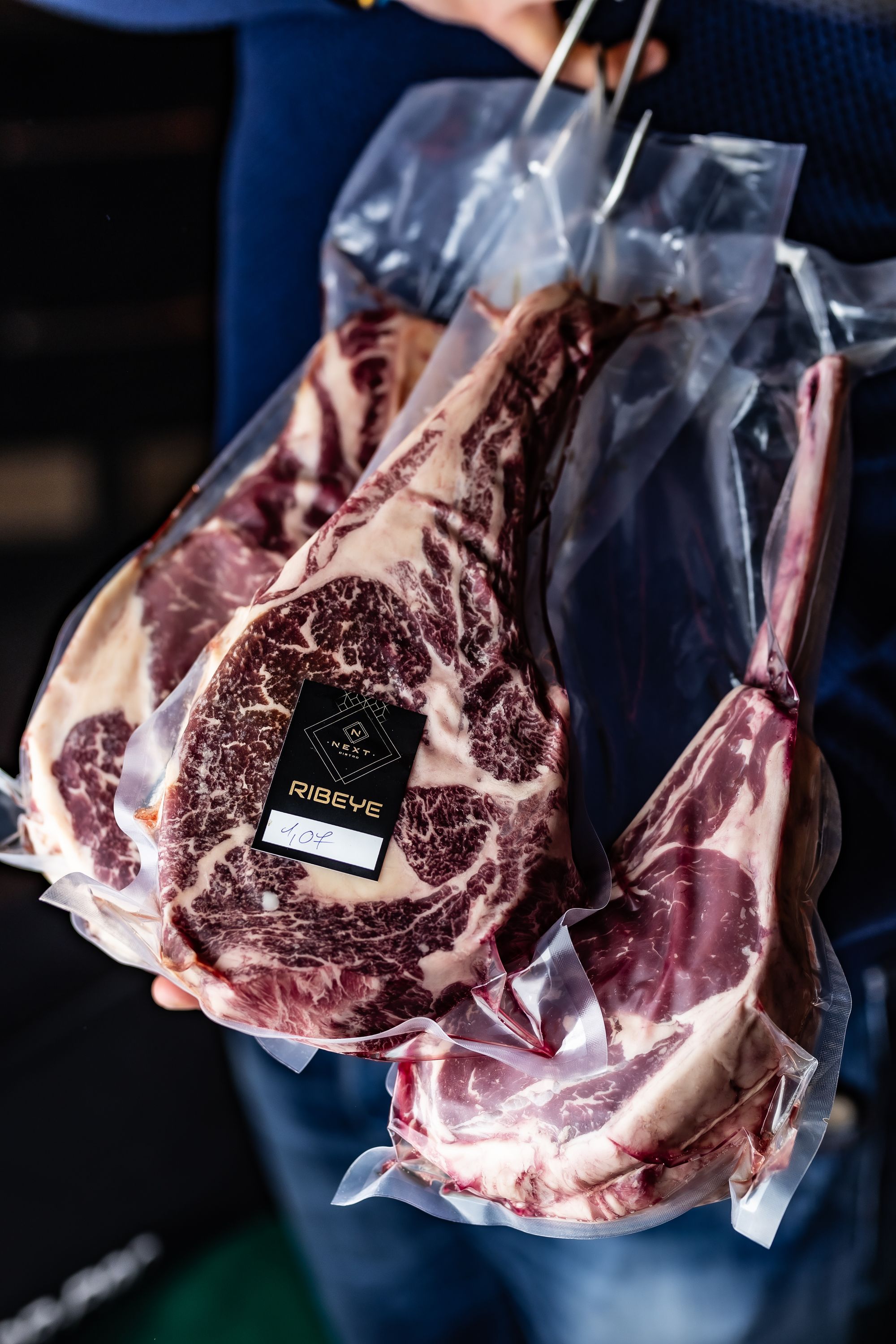
When talking about steak, tenderloin is the first thing that comes to mind for many. It is one of the most tender, least fibrous cuts of beef, which has become a classic thanks to its milder flavor and delicate texture. However, the world of steak is far more diverse than that: different cuts come from different muscle groups, so their grain, fat content, and flavor also vary. When making a choice, it is therefore worth looking beyond the most familiar names and also considering what texture and flavor intensity we are looking for. Ribeye, for example, is known for its marbling. The intramuscular fat in the meat partially melts during cooking, contributing to its juiciness and providing a richer flavor profile. Compared to tenderloin, it is a more characterful, fattier cut, and this exact quality is what makes it appealing. Sirloin has a somewhat firmer texture with a more pronounced beefy flavor, while flank is a cut with elongated muscle fibers and an intense flavor, which is typically best sliced against the grain. Flat iron comes from the shoulder area, and with proper preparation, it can be made into a surprisingly tender, well-marbled steak.
Understanding the differences between cuts is also interesting because steak consumption was long organized around a few well-known, more expensive cuts. With the expansion of gastronomic offerings, however, increasing attention is being paid to parts that are at least as exciting in flavor and texture, while offering a different kind of preparation or dining experience. The tenderness of tenderloin, for instance, does not necessarily mean the ideal steak experience for everyone: those who prefer meatier, more intense flavors and a fattier texture are better off opting for something like a ribeye.
What does marbling reveal?
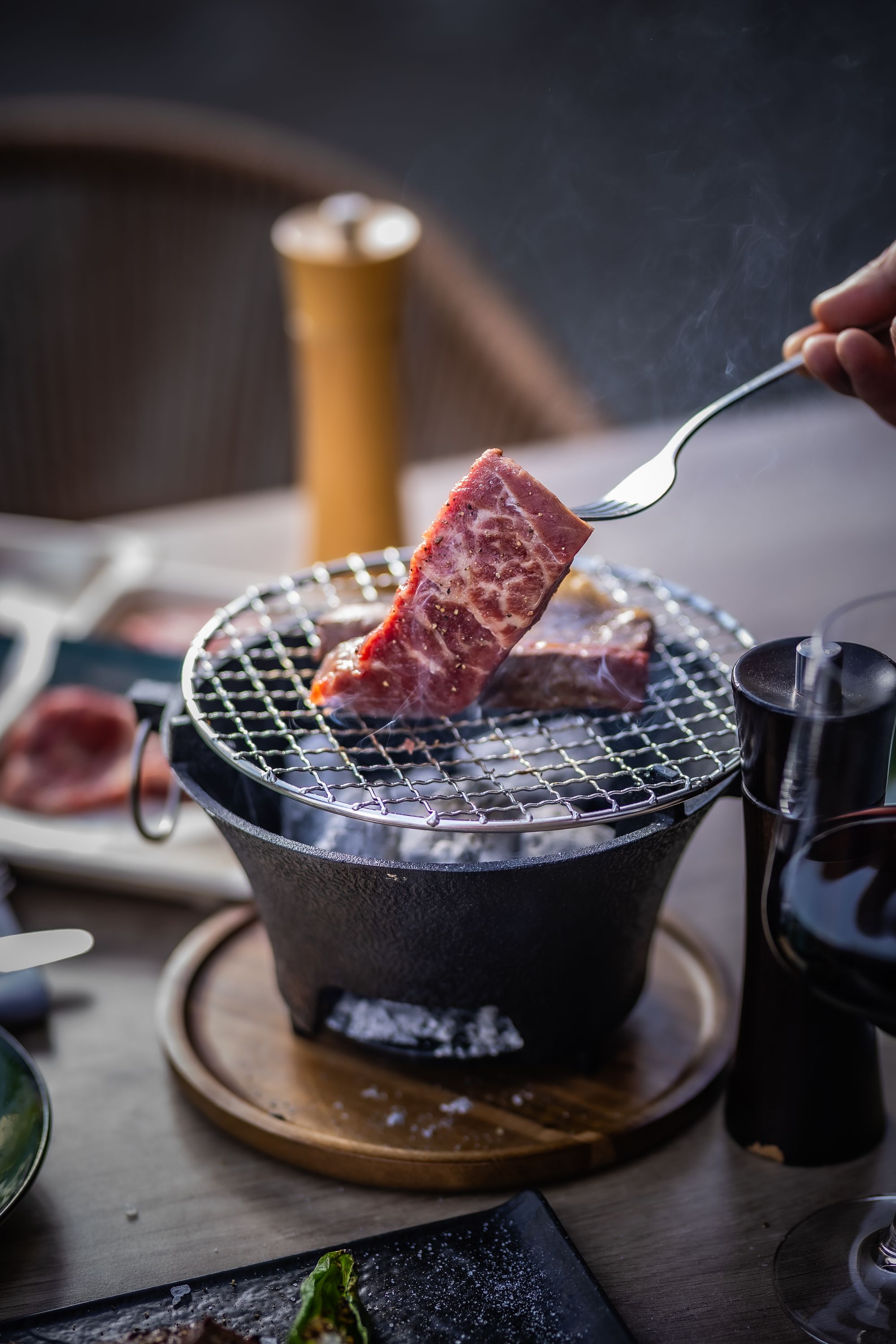
One frequently mentioned determinant of a steak’s character is marbling—that is, the amount and pattern of fat distributed between the muscle fibers. This has entered the public consciousness particularly in connection with Wagyu beef: photographs of the characteristic, fine, web-like fat tissue of Japanese meats have practically created a visual genre of their own. High marbling can indeed result in an extraordinary texture and a rich sensation of flavor, yet what counts as ideal depends heavily on personal taste. Moreover, Wagyu does not denote a single specific grade of quality, but rather an umbrella term associated with Japanese cattle breeds, within which origin, breeding, and quality grading all matter. Alongside the best-known Japanese varieties, Wagyu cattle are now bred in other countries as well, and meat from crossbred herds also appears on the market. Marbling is thus an important point of reference, though on its own it does not fully describe the quality of the meat.
The breed of the cattle, their living conditions, and their feed also shape the final result. When it comes to Argentine and Uruguayan beef, pasture grazing is often mentioned, while American steak is associated in many people’s minds with richer marbling. Australia and New Zealand are likewise major players in the international beef market, and Japan has become a category of its own through Wagyu. Of course, these country-specific associations are only a starting point: how a given animal is raised, what it is fed, and the producer's practices are at least as important.
The role of aging
The character of a steak is also significantly influenced by aging. During this process, natural enzymes work within the meat, altering its structure over time so that, under the right conditions, it can become more tender and more complex in flavor. The two best-known methods are wet aging and dry aging.
In wet aging, the meat is stored in vacuum-sealed packaging at a controlled temperature. This method helps retain moisture and typically results in a clean, meaty flavor profile. In dry aging, by contrast, the meat rests exposed to air in a space with controlled temperature and humidity. Moisture loss concentrates the flavors, and characteristic, more intense aromas can develop during the process. Dry aging requires more time and specialized conditions, which is why the end result generally appears at a higher price point on restaurant menus.
Aging is therefore another factor to consider when selecting a steak, though here too there is no one-size-fits-all formula. For those who prefer a classic, pure beef flavor, wet-aged meat can be a great fit, whereas the bolder, more concentrated aromas of dry aging may appeal to those specifically seeking that profile. Together, the cut, the marbling, and the aging provide the complete picture on which to base your choice.
A fine bistro in Debrecen centered around steak
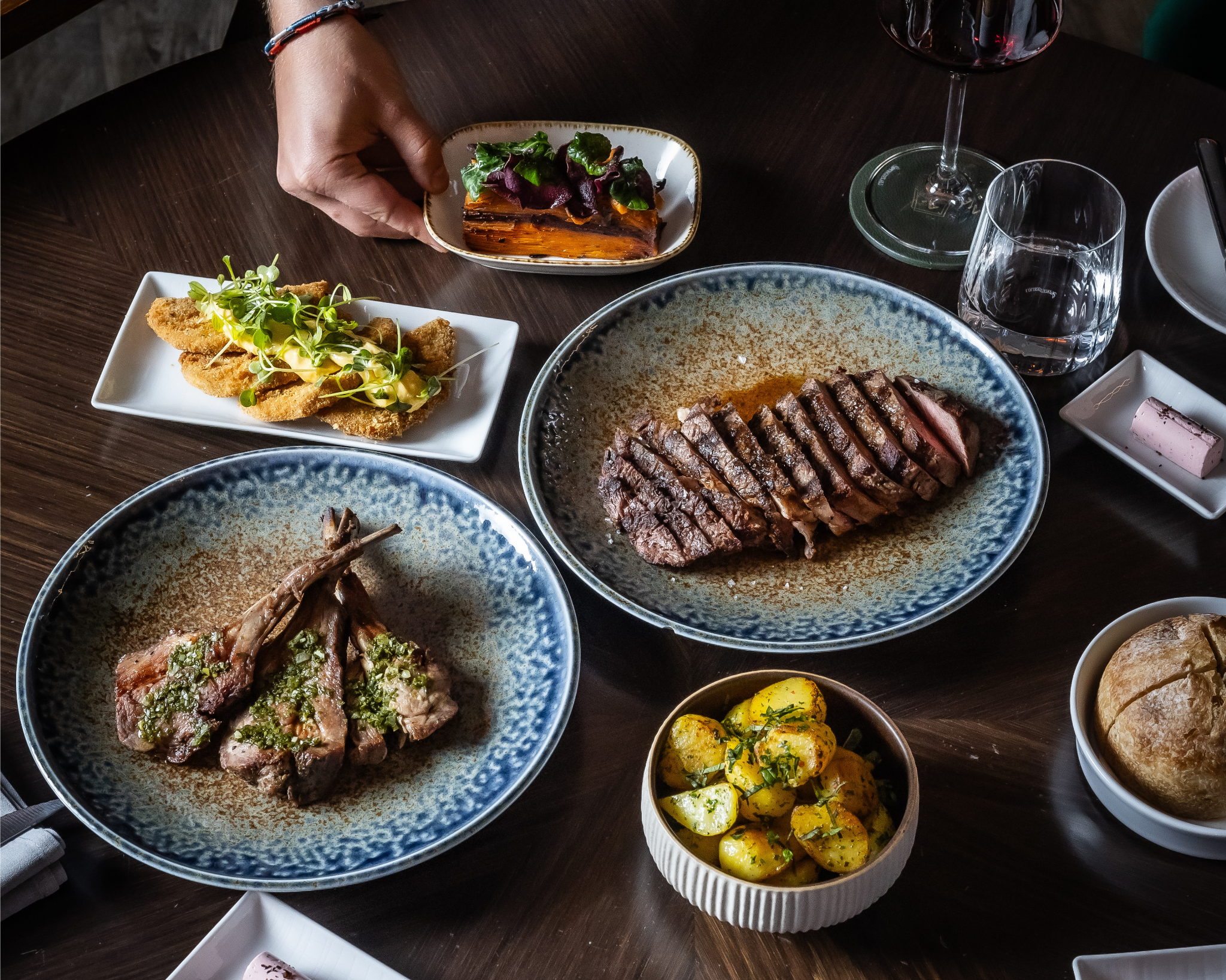
Questions of selecting and preparing steak also came up at a workshop held at NEXT Bistro in Debrecen. The restaurant opened in August 2020 with the intention of representing a new standard of quality in the city's hospitality scene. Owner István Albert defined the concept as a "fine bistro": they wanted to create an ambitious kitchen drawing from a fine dining mindset, while remaining accessible and approachable for the local audience.
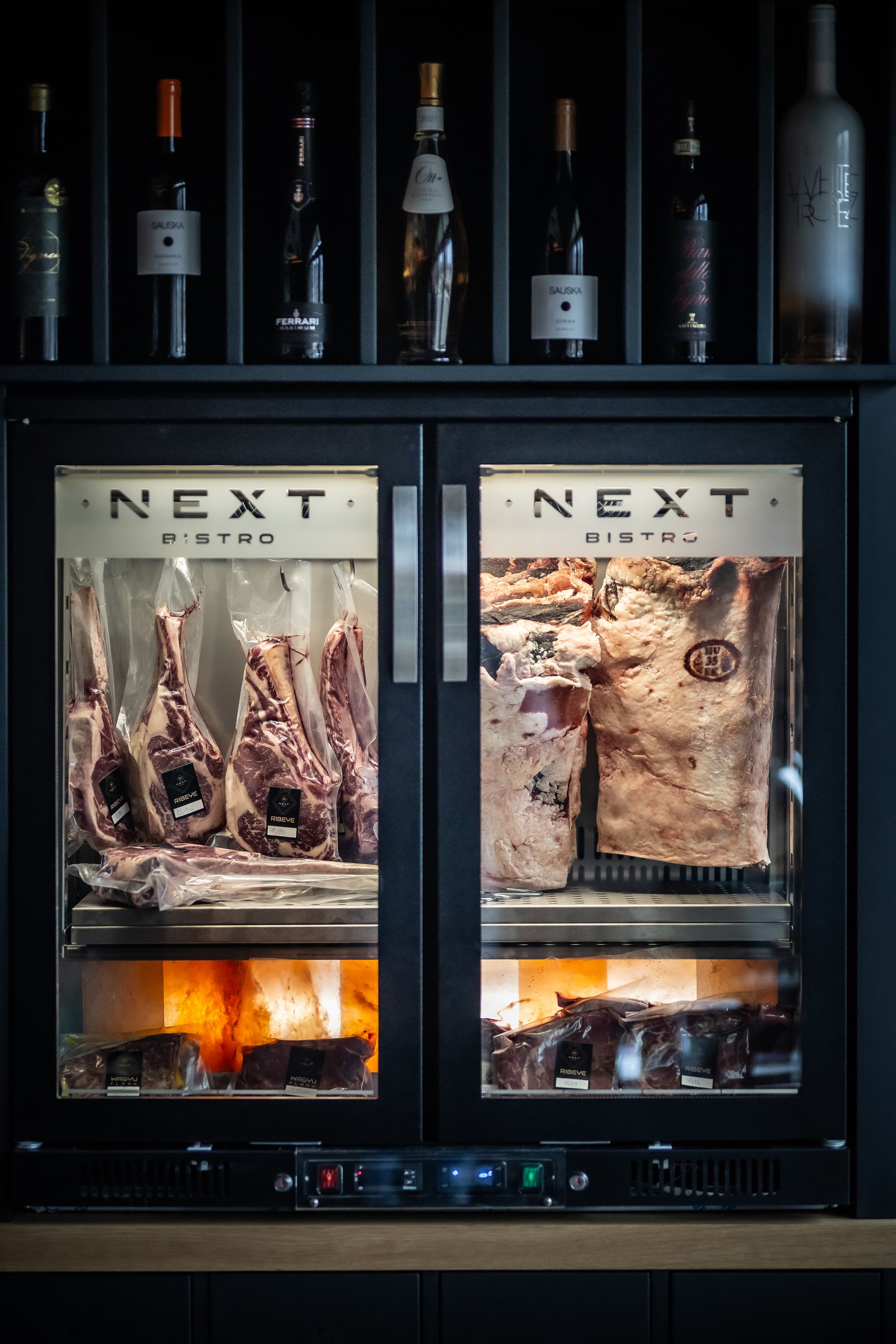
In NEXT’s operations, a bistro feel meets an elevated dining experience, with Hungarian and international inspirations, seasonal dishes, and special ingredients all featuring on the menu. Steak is one of the restaurant’s focal points, and to bring the ingredient closer to diners, guests can personally pick out the cut that appeals to them most from the display fridge—and during the summer season, they can even try their hand at grilling it themselves on the terrace. We spoke with NEXT’s owner, István Albert, about the criteria for choosing a steak.
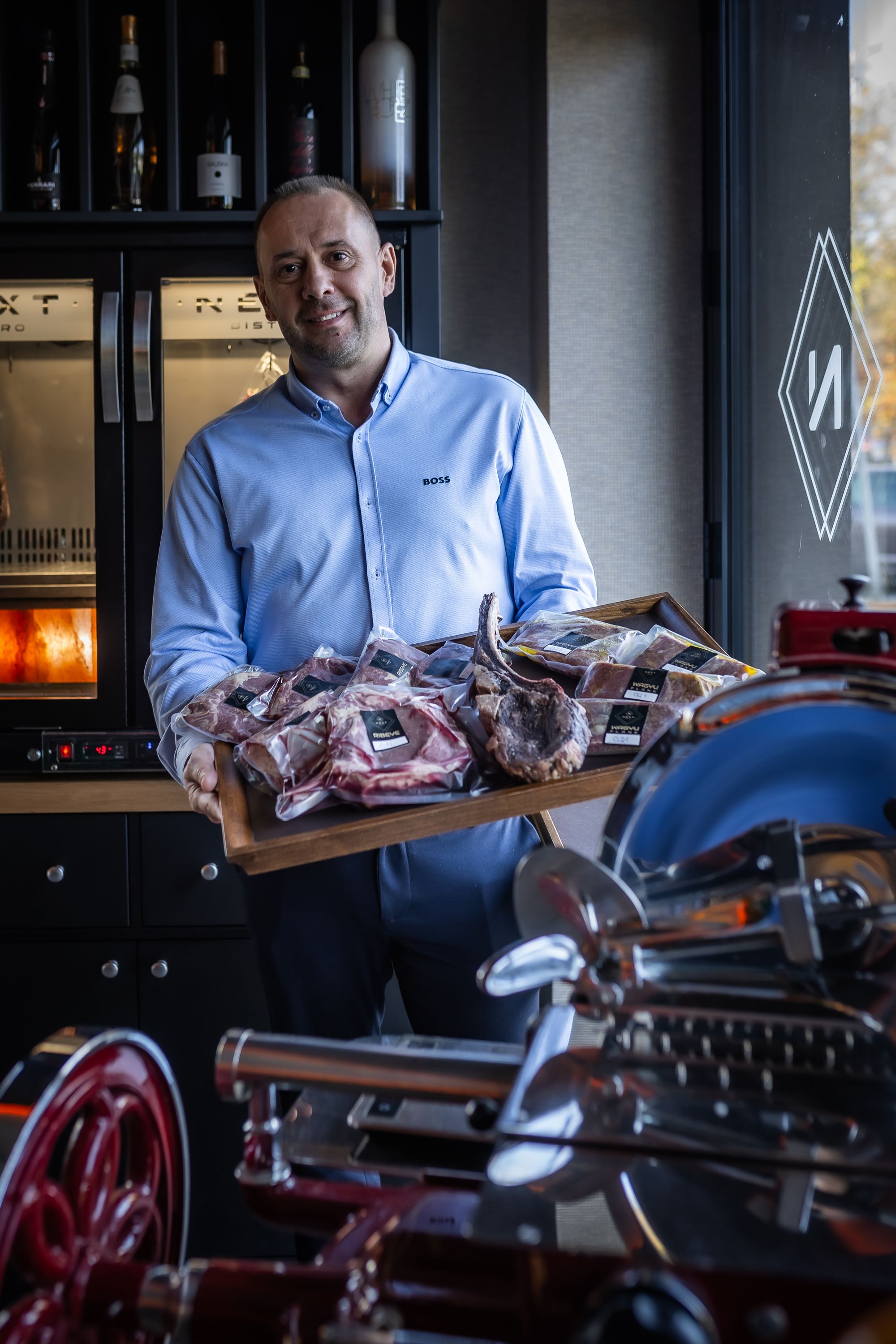
"With steak, you first have to choose the ingredient well"
Why has such a big cult following developed around steak?
Steak was considered a luxury product for a long time, and that continues to shape the image surrounding it today. High-quality beef is a more expensive ingredient, preparing it requires care and attention, and in restaurants it often appears as a special dish. Added to this are the different cattle breeds, marbling, and aging, which people are hearing more and more about. Steak carries a certain prestige, while at the same time guests are getting to know an ever-wider variety of cuts and preparation methods.
How developed is steak culture in Hungary?
The circle of people who truly feel at home in this world is still relatively narrow. Many are familiar with tenderloin and sirloin, whereas marbling or the differences between various cattle breeds are less commonly known. The name Wagyu, for example, rings a bell for more and more people, yet even fewer truly know what makes it special or what flavor differences it brings.
When someone is choosing a steak, what should they pay attention to?
You have to look at many things: how the animal was raised, what it was fed, how it was processed, and what the meat's appearance and marbling look like. Price is also important, though it doesn't tell the whole story on its own. It is also worth considering what kind of flavor profile one likes. Some prefer fattier, more marbled meat, while others lean toward leaner, less intense options. We also coordinate closely with our suppliers and strive to find ingredients that deliver in both quality and value for money.
Is there really a noticeable difference between beef coming from different countries?
Yes, though you can't decide based solely on the country. There are differences among American, Australian, New Zealand, Japanese, and South American meats, and a great deal depends on how the animal was kept and fed. Personally, I prefer Uruguayan beef over Argentine, for example, though that is also a matter of taste. Increasingly better ingredients are appearing in Hungary as well; around the Hortobágy region, for instance, there are producers worth paying attention to. Of course, living conditions and climate also influence the raw ingredient. In South America or Australia, animals in many places can be out on pasture year-round, whereas here we need different feeding solutions during the winter months. Even so, high-quality Hungarian beef can be produced, and it is important that domestic producers receive growing attention—we offer Hortobágy beef ourselves.
What is the most common mistake people make when cooking steak at home?
Often, the outcome is already decided when selecting the ingredient. If the meat is not of proper quality, is too thin, or lacks sufficient marbling, it is hard to achieve a good result. When cooking, it is important that the pan is hot enough and that you don't use too much oil. It is worth letting the meat come to room temperature before cooking, and letting it rest afterward. A meat thermometer can also be a big help, as it allows you to dial in the exact level of doneness you want.
What aging process do you work with?
We primarily use wet-aged meats, though dry-aged ingredients also feature on occasion. Different processes give the meat different characters, so this is also part of how we select the ingredient for a given dish.
Alongside tenderloin and sirloin, we are encountering more and more cuts. Why is it worth branching out toward these?
Because each one offers a different experience. Previously, guests mostly looked for tenderloin and sirloin, but today more and more people are curious about Angus, Wagyu, different origins, and lesser-known cuts as well. It is a great opportunity when someone gets to taste several types and compare the flavors and textures.
Which one is your personal favorite?
Ribeye, and specifically American Angus. I like it when the meat has character and the marbling is just right. For me, Wagyu is already too fatty and too soft, though that truly comes down to individual taste.
Next Bistro: web | Facebook | Instagram
Photos: Next Bistro