


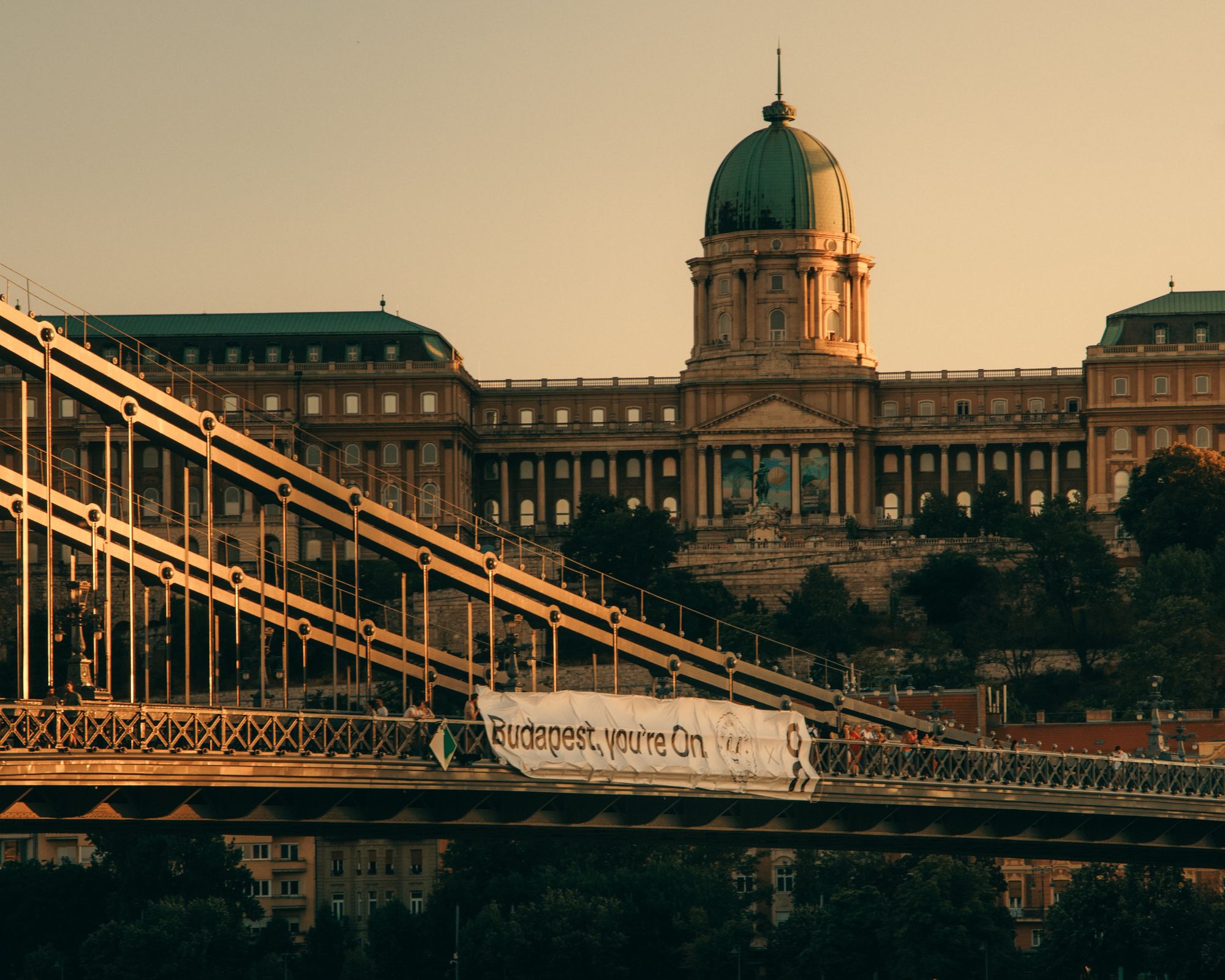
Running Latte Club began with a simple idea: go for a run together, then grab a coffee. Since then, thousands of people have become part of the community, but according to founders Viki Környei and Attila Nyári, the essence has never changed. The most important moments often don't happen during the run—they happen afterwards.
Viki: That would definitely be me. I've been running since I was about 17, mainly thanks to my mum. For me, running has never been just about sport—it has always been a mental anchor. It has contributed enormously to my personal development and has remained part of my life ever since. There were periods when I stopped for months, but I always came back to it. I've run a half marathon, but that was always a personal goal. I never did it to prove anything to anyone else. I always knew I'd run a marathon one day.
The other defining thread in my life has been community building. While I was at university, a friend and I founded a non-profit organisation for children with special educational needs, where we organised programmes and built communities. That was when I really began to understand the power of belonging. We read extensively about it, researching what makes a community truly work, and I think that's where I learned the basics of bringing people together over the long term.
The idea for Running Latte Club came completely unexpectedly. During a trip to Amsterdam, I came across a running club. I didn't even join them—I simply saw them. What fascinated me was that it wasn't organised by a sports brand or a traditional running association. It was something completely different. It was a community. I had a very strong feeling that this could work in Budapest too. You know that feeling when you simply can't let go of an idea? That's exactly what it was like. I knew there was something in it.
The first person I told was Attila.
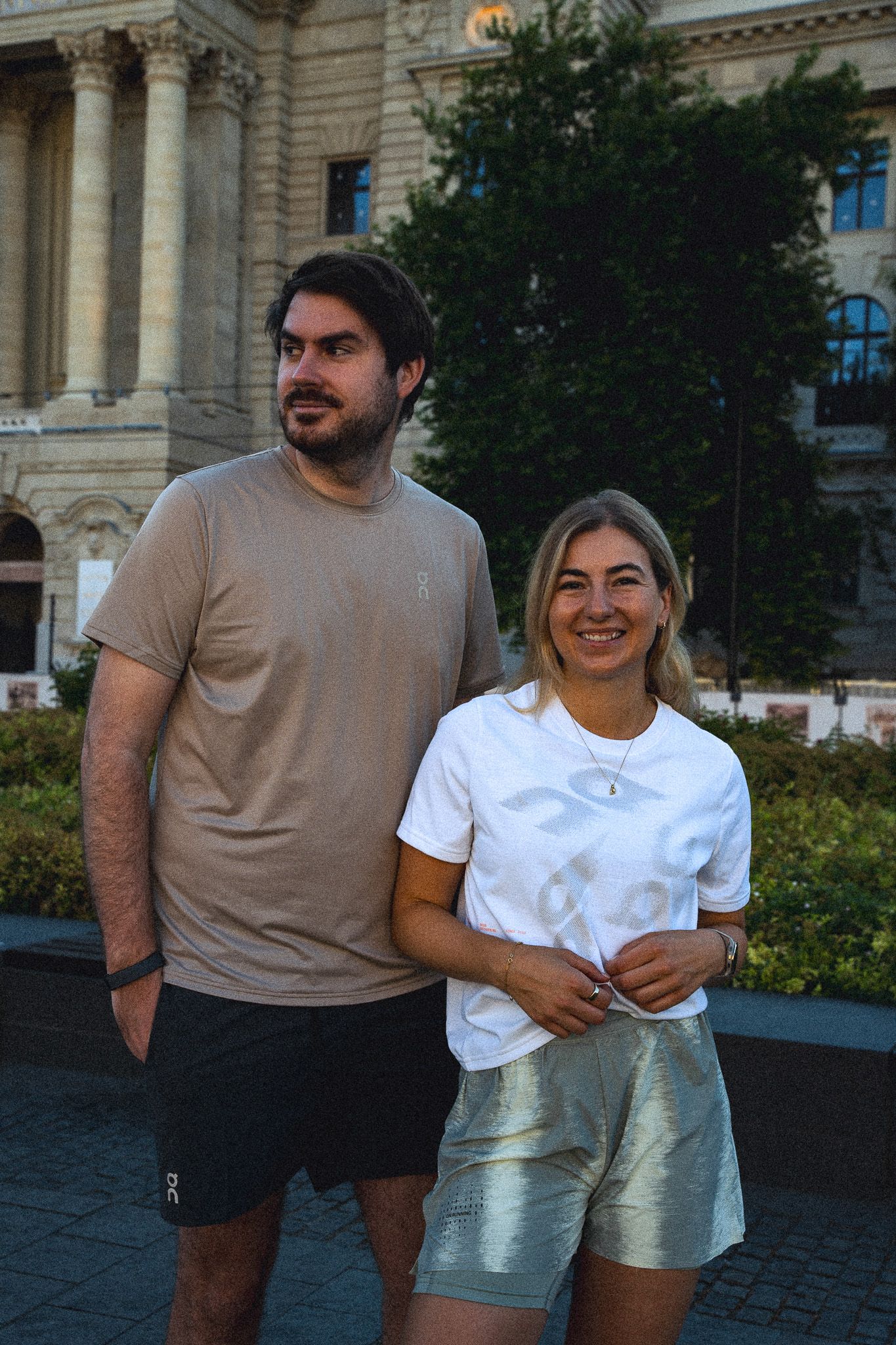
Attila, did you immediately see the potential?
Attila: I'd put it differently—I first saw Viki's enthusiasm. (Laughs.) Then, little by little, I got pulled into it as well. I'm a graphic designer, and back then I was working eight to ten hours a day as a designer. Viki came to me with a very clear vision from the start. She knew the kind of atmosphere she wanted to create, what she wanted the Instagram page to look like, and the visual world she had in mind. She came up with the name Running Latte Club, and I started building the visual identity around it. I designed the first logo, and that's also when our mascot was born, which was a big part of the brand in the early days. Then came the first run. Literally two people showed up. And a dog. We still have the photo.
Back then we organised one run every weekend. The concept was very simple: instead of running laps around a track, we'd run somewhere—to a café. We'd have a coffee together, chat for a while, and then everyone would head off with the rest of their day. Today that probably sounds completely natural, but at the time nobody in Hungary was doing it that way.
When did you first realise this could become something much bigger?
Attila: Fairly early on. By the third month, around a hundred people were showing up for a run. After that very first event, it felt completely unbelievable. That was also when brands started reaching out to us. Oatly was the first. We didn't contact them—they found us. They had seen what we were doing and said they'd love to join us. That was a huge confirmation for us because it meant someone from the outside recognised that there was potential in what we were building.
At the same time, we were constantly learning. At first, all we needed was an Instagram event. Then suddenly we needed a registration system, a WhatsApp group, a website, an online shop. Every few weeks a new challenge came along—something we'd never had to deal with before.
Viki: I think one of the reasons it worked is that we never really felt like we'd "made it". There was always another step ahead of us. As the community grew, we had to grow with it. We learned everything on the go: how technical running apparel is manufactured, how to find suppliers, how to build an online shop, how to organise larger events. Neither of us had done any of those things before. But somehow we always felt we'd figure it out.
What do people actually come for? The running—or something else?
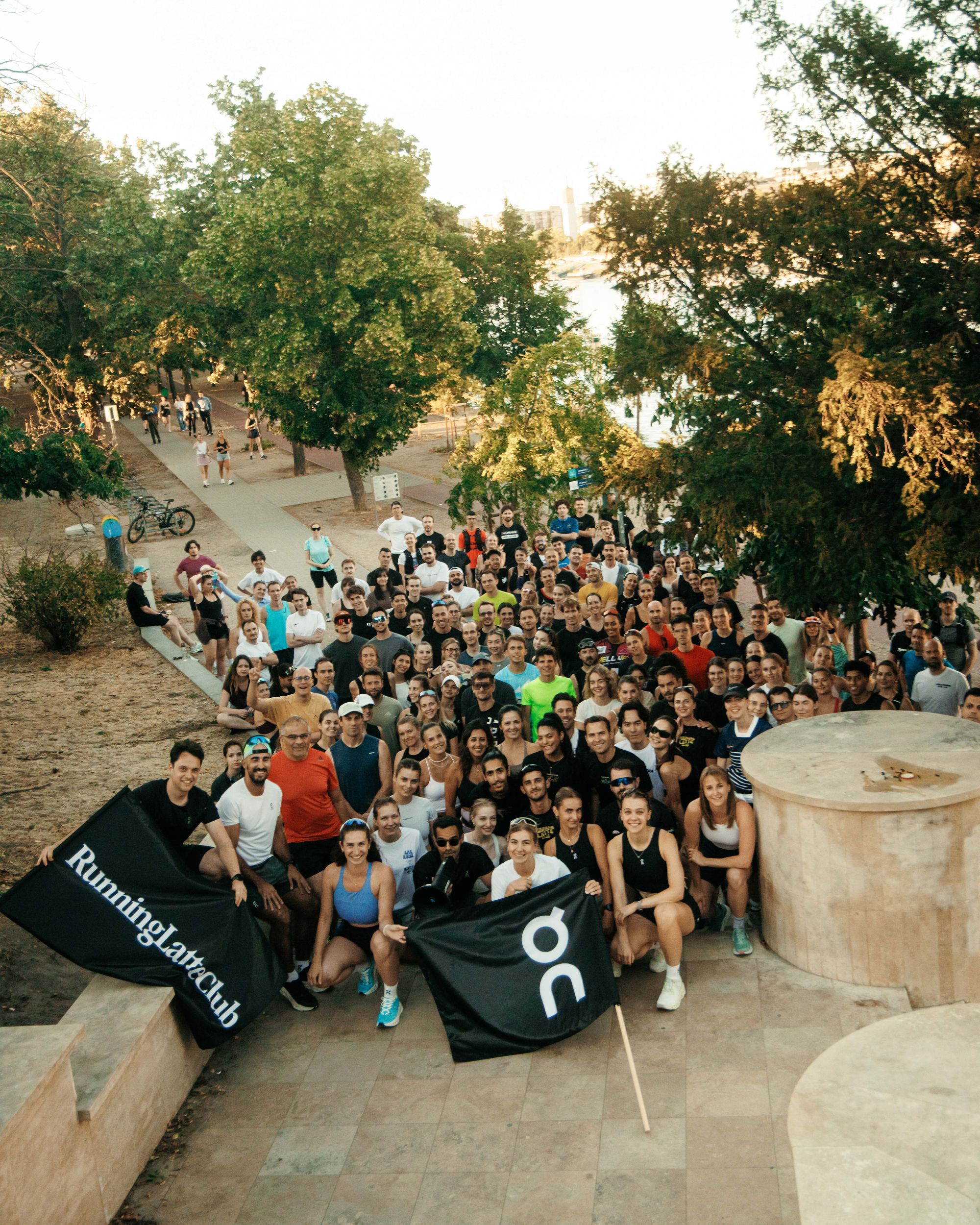
Viki: I think everyone comes for a different reason. Some people want to start running but struggle to motivate themselves on their own. Others begin because of health reasons. Some simply want to spend time with other people after work. It's even more noticeable among internationals. So many people move to Budapest without knowing anyone. For them, a community like this isn't just about running—it's an opportunity to build a social circle. We've heard so many stories over the past year. People who came to their first run on their own and now say their closest friends are people they met through Running Latte Club. There have even been couples who met here. But there are also people who simply stay after the run for an hour or two, chatting over coffee. I think that says everything about what this is really about.
Why do you think there's such a strong demand for communities like this today?
Viki: I think Covid changed a lot. We got used to working from home, meeting online and communicating through screens. At the same time, many people lost the routine of meeting new people and forming connections in real life. I felt it myself. When I started socialising again, I realised that social interaction is almost like a muscle. If you don't use it for a long time, you become a little out of practice. I think that's one of the reasons we're seeing so many different kinds of communities today—not just running clubs, but book clubs, cooking clubs, creative workshops. People are looking for places where they can connect with others again. Of course, these days everyone talks about "building a community". But I don't think you can simply announce that you're building one. You have to earn it.
Attila: A community doesn't come into existence just because you choose a route and run five kilometres together. We're there at every single run. We run with everyone else, we wait for the last runner to finish, and afterwards we stay for hours talking to people. I think that's what people feel. They're not coming for an event. They're coming because of the people.
Viki: I always say that running is just the excuse. What really matters is that someone goes home after a run wanting to come back—not because next Tuesday we're running another six kilometres, but because they're looking forward to seeing the people they met. That's when a real community begins.
Your visual identity feels very intentional—from your running routes to your social media presence. How important are aesthetics and storytelling to you?
Viki: I work in a branding team, so to me it's only natural that if we're creating something, we build it from the very beginning in a way that could stand its ground internationally. People often tell us they assumed Running Latte Club was some kind of international franchise or licensed concept. That always makes us smile, because in reality it was started by two people from Budapest. At the same time, we take it as a compliment—it means we've managed to create a level of quality that goes beyond the local scene. The visual identity wasn't something we added later. It was part of the concept from day one. We spent a lot of time thinking about what kind of feeling we wanted to create and how that should come across visually.
Attila: We still do almost everything ourselves. I design the graphics, edit the videos and work on the visual side of the brand. Neither of us had ever designed technical running apparel before, for example, but that's what's exciting about building something like this—you constantly get to try things you've never done before. Even today, we edit almost all of our reels ourselves. We've developed a visual consistency over time, but the content is still created by us. One thing we realised quite early on was that people weren't interested in graphic elements—they wanted to see themselves. Since then, we've used almost exclusively photos taken during our runs: real people, real moments.
As the community has grown, weren't you afraid of losing the close-knit atmosphere that attracted people in the first place?
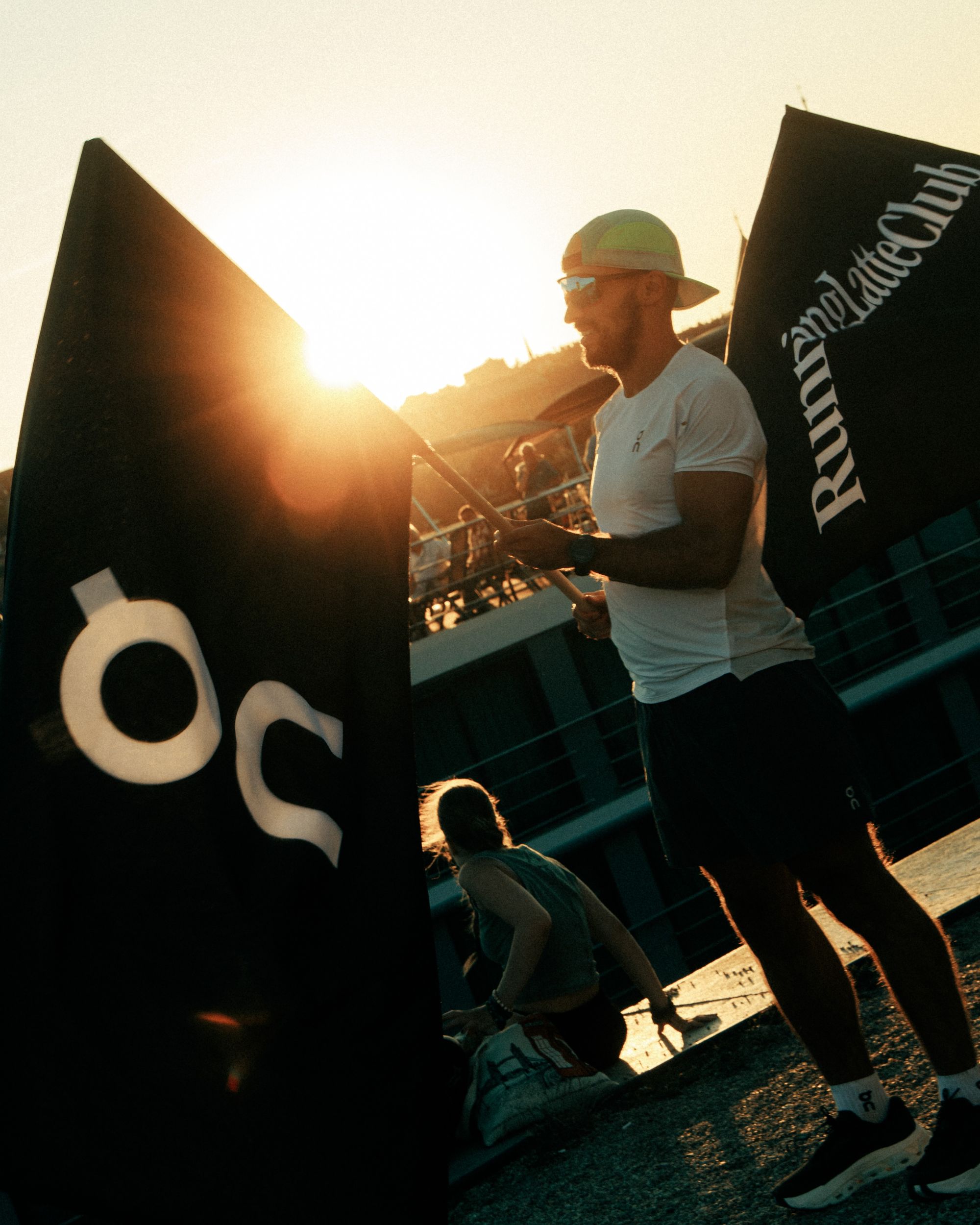
Viki: We absolutely were. In fact, when the community started growing more rapidly, we asked our members what they felt we absolutely had to preserve. Almost everyone gave the same answer: the friendliness and openness. That has been our compass ever since. In the beginning, I personally introduced myself to every new participant. I'd give them a high five and chat with them for a few minutes. That's no longer physically possible every time, but we're trying to pass on the same mindset to the rest of the team.
I believe the culture of a community is always shaped by the people leading it. If you're open and genuinely interested in others, sooner or later you'll attract people who are similar.
I'm really proud that such an inclusive atmosphere developed almost naturally. If someone joins us for the first time, someone will usually walk over and start talking to them within minutes. If someone falls during a run, several people immediately stop to help. You can't write those things into a rulebook. That's the community itself.
It seems, though, that you're dreaming much bigger than that.
Viki: Yes. Running Latte Club isn't the end goal—it's the starting point. For quite some time now, we've no longer been thinking of it as just a running club. In our minds, it's becoming an entire ecosystem.
Beyond community building and running, is your goal to turn Running Latte Club into a lifestyle brand? If so, what would you like to add to the running club?
Viki: Absolutely. From the very beginning, we had a vision that Running Latte Club could become more than just two group runs a week. Today, we're thinking in terms of an ecosystem where the running club remains at the heart of everything, but is complemented by other areas. One of our biggest dreams is to organise our own running race. We'd like to create an event that sets a new standard in Budapest—not only for local runners, but one that also attracts participants from abroad. I genuinely believe that a well-organised running event has enormous tourism potential. A marathon isn't just a sporting event; it's also city marketing. In many major cities around the world, tens of thousands of people travel specifically to take part in a race. Why couldn't Budapest become one of those destinations one day?
We're also thinking about recovery and wellness services, community spaces, and, in the longer term, perhaps even places where sport, recovery and social interaction naturally come together. It's not just running that interests us—it's active lifestyles and community sports in a broader sense.
With a community of this size, more and more brands want to be associated with you. How do you preserve your organic approach while welcoming sponsors?
Viki: Probably by saying no very often. From the beginning, we decided we didn't want to become an advertising platform. We don't want every run to be about which company's logo is in the background.
For me, the key question is always whether a brand can genuinely add value to the community. I approach it in much the same way I do in my professional work with brands. It's not enough for a company to be well known or successful—it also has to share our values. In the long run, that also shapes how people perceive us. There have been opportunities that many people would probably have accepted immediately, but we turned them down. Not because they weren't good business opportunities, but simply because they didn't fit the world of Running Latte Club.
Attila: I think one very important difference is that we're not selling runs.
This isn't about having a different sponsor fund the event every week. We're much more interested in building long-term relationships with partners who think about community the same way we do. For example, when we started working with Samsung, the goal wasn't simply to put a few phones on a table. We were thinking about how to turn the partnership into an experience. That's how the idea of the bike-mounted sound system and the DJ at our runs came about. Today, it's become almost part of the club's identity. To me, that's much more exciting than simply showcasing a product.
On recently became one of your partners. Does that feel like a milestone?
Attila: Yes, absolutely. We were in discussions with them for months before the partnership came together. It's particularly important to us because it's not a one-off campaign—it's a long-term collaboration. Viki is the only On brand ambassador in Hungary, and Running Latte Club is the only organisation they sponsor here.
Viki: I've always been drawn to brands that don't simply follow the market—they help shape it. I think On is one of those brands. Oatly is another; they've done something very similar in the plant-based drinks category. What's interesting isn't just the products themselves, but the mindset behind them. And I think it works both ways. A brand says a lot about itself through the people and communities it chooses to support. That's exactly the kind of community we want to build—one that brands like these genuinely want to be part of.