


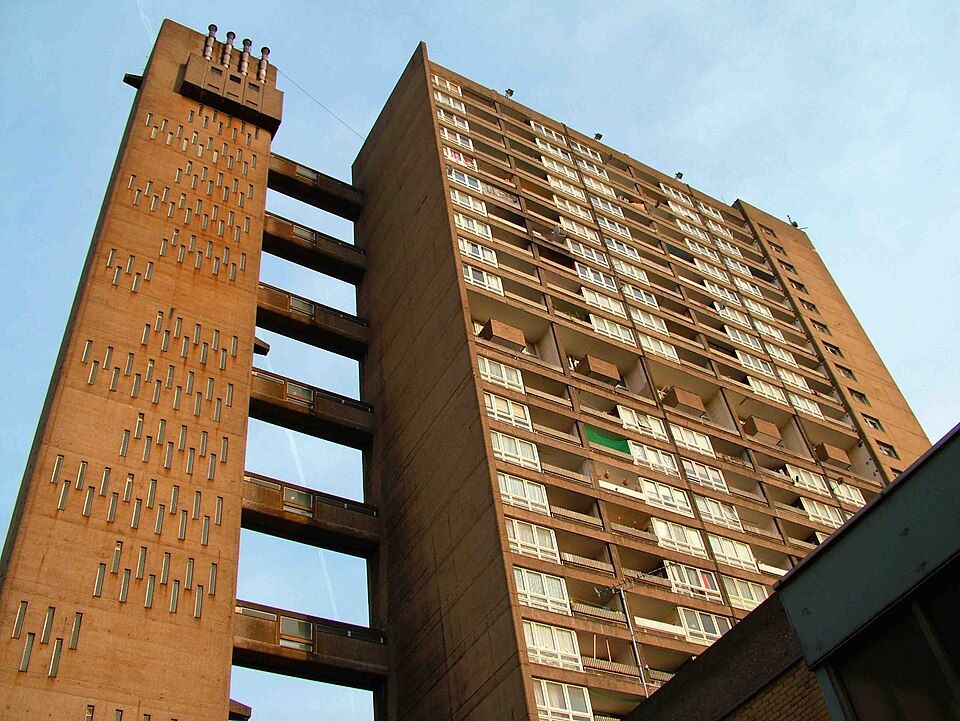
Few architects can say that their name lives on as a James Bond supervillain. In the case of Ernő Goldfinger, pop culture and architectural history overlap in a strange, almost ironic way. While most people associate the name with Auric Goldfinger, the gold-obsessed antagonist, the outlines of the real man who bore that name still define London’s skyline today — a man who was not striving for world domination, but for housing reform.
Soon, an exhibition in Hungary will open dedicated to Goldfinger and his contemporaries — we recently covered the show on Hungarian brutalist architecture — offering a timely opportunity to reassess a body of work that has become etched into London’s cityscape. Goldfinger never quite fit into English taste. Nor did he intend to. He was shaped by the radical modernism of the interwar period, with its emphasis on social responsibility: in Paris he absorbed Le Corbusier’s functionalism, and after moving to England he entered the intellectual circle of Bauhaus émigrés such as László Moholy-Nagy, Marcel Breuer, and Walter Gropius. For him, industrial materials, structural clarity, and the democratization of housing were not stylistic exercises but moral positions.
Modernism Versus Victorian Nostalgia
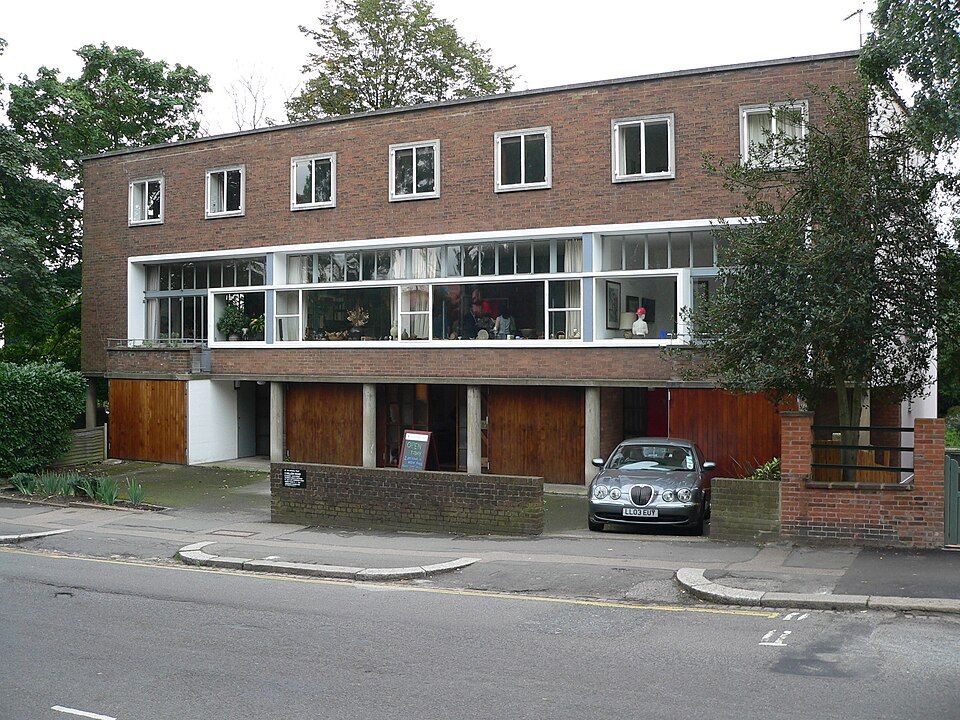
When he built his own house on Willow Road in Hampstead, local residents were outraged. The flat-roofed, reinforced concrete structure, rigorously composed and unapologetically modern, cut sharply through the surrounding Victorian and Edwardian streetscape. Goldfinger did not soften his plans to calm tempers. After the Second World War, however, history unexpectedly worked in his favor. Bomb damage and severe housing shortages created a crisis of such magnitude that the British government sought fast, rational, high-density solutions. In this context, Goldfinger found his true terrain. The question was no longer whether modernism was aesthetically pleasing, but how many people could be provided with dignified housing using the fewest possible resources.

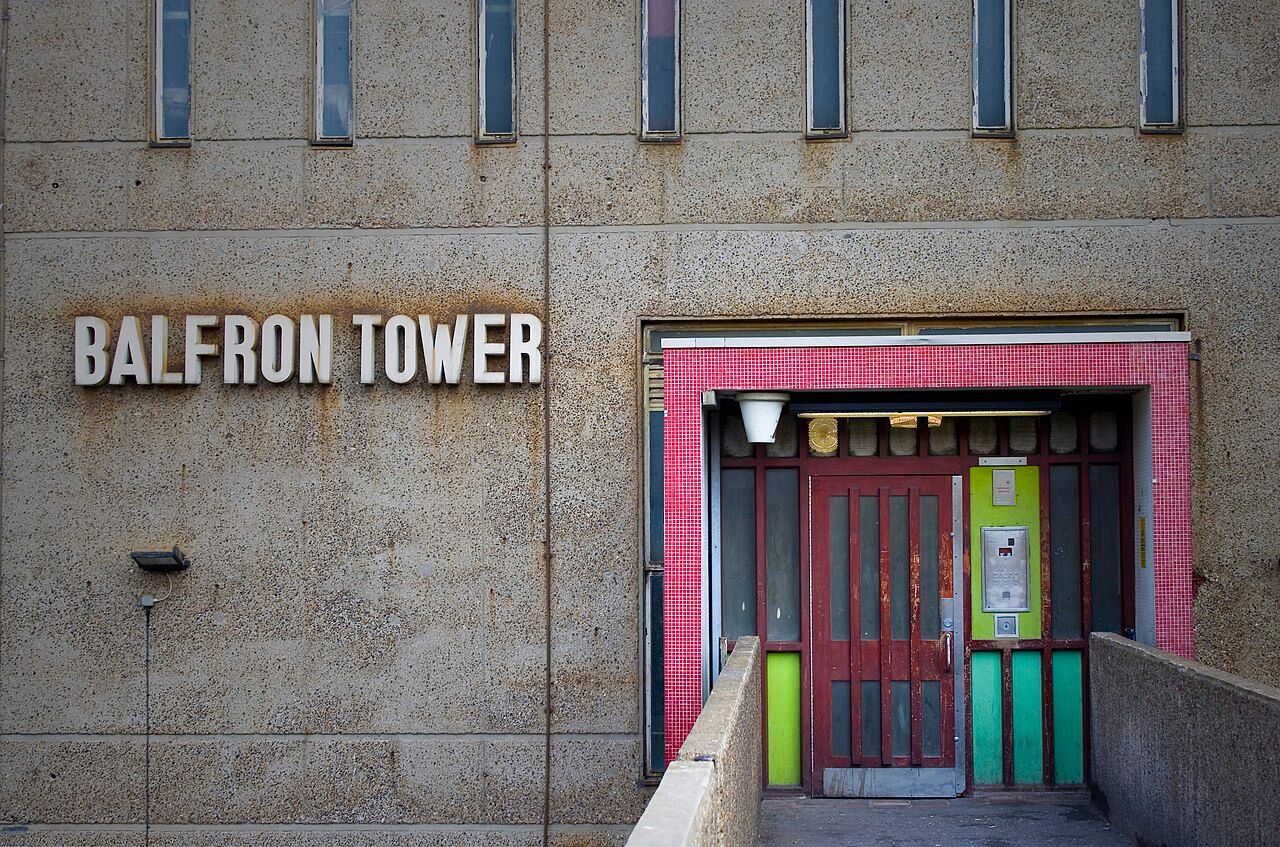

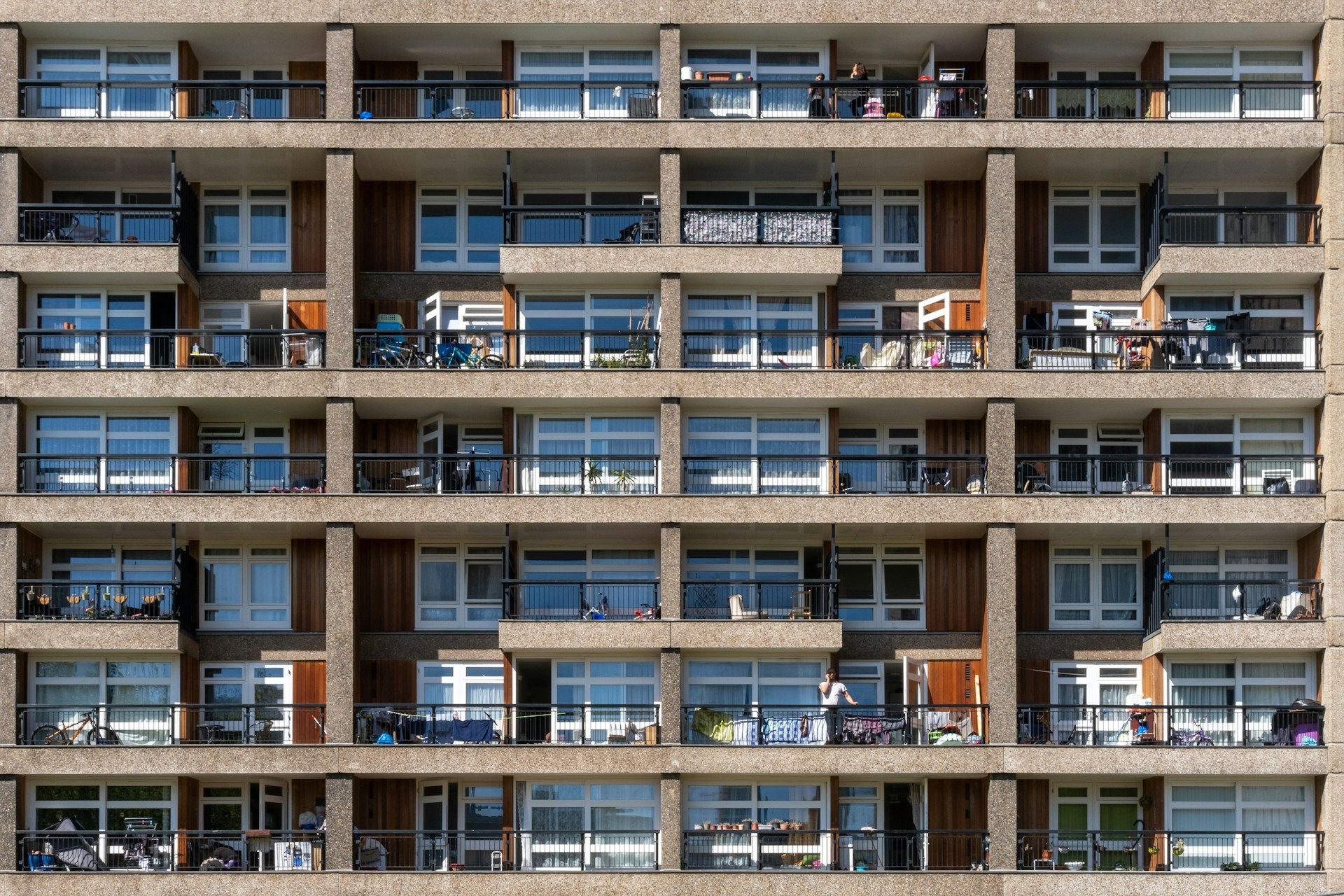
Balfron Tower and later Trellick Tower stand as concrete manifestos of this thinking. Raw surfaces, separate service and circulation towers, structures clearly legible on the exterior — brutalism in its original sense: honest, unadorned, material-driven. Goldfinger was not a detached designer, either. Upon the completion of Balfron Tower, he temporarily moved into one of the flats to experience the building firsthand. He observed circulation patterns, spoke with residents, and took notes. For him, the tower block was not a formal gesture but a social experiment. Yet this did not prevent him from being branded the father of “concrete monsters.” The British press described his buildings as cold and inhuman, and brutalism became a target of urban criticism for decades. Only with the late-20th-century reassessment of modernist heritage did it become clear that these buildings were not merely stylistic statements, but imprints of a period’s social ambitions.
A Name That Outgrew Architecture
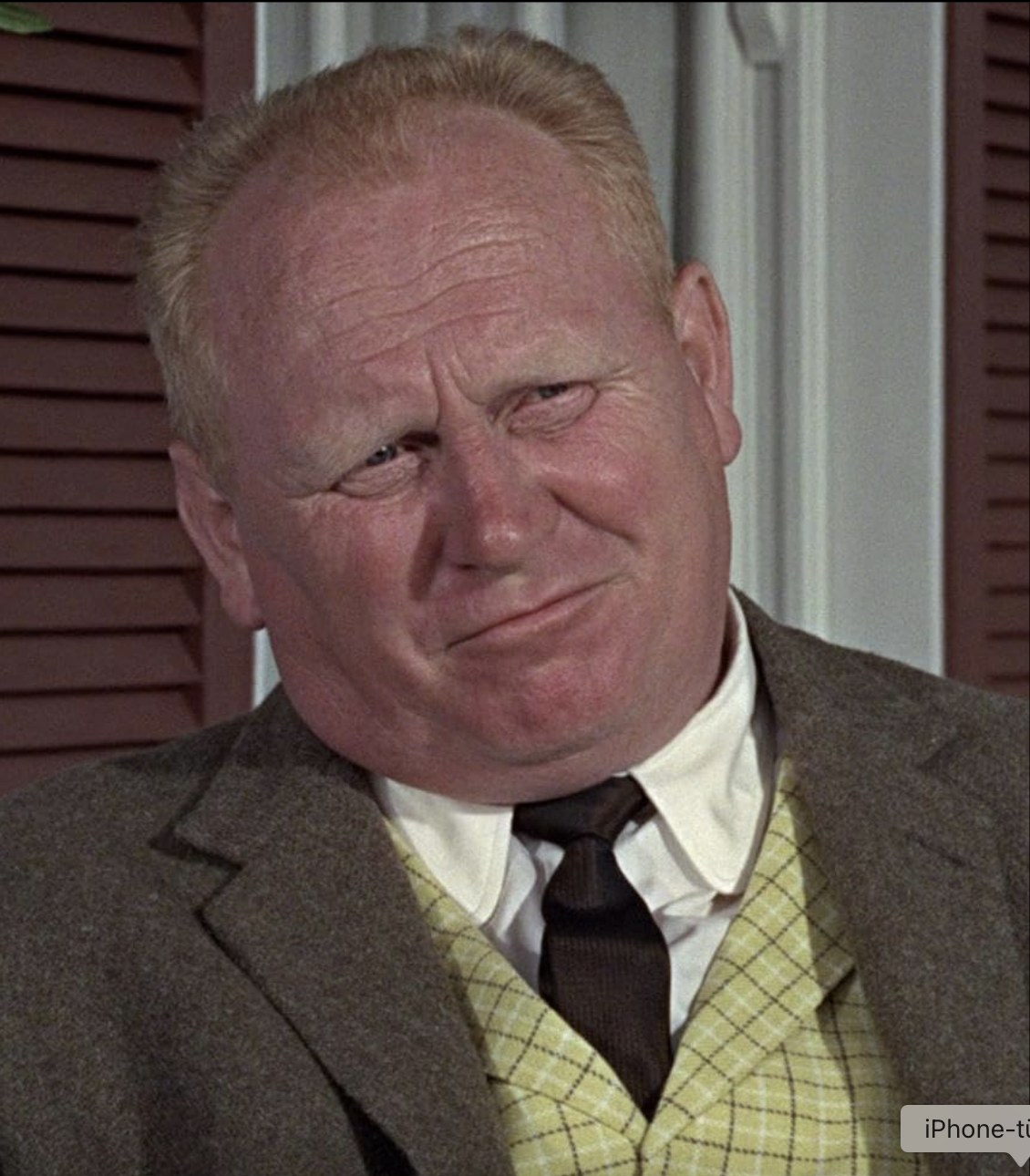
And then there was Ian Fleming. Living in Hampstead not far from one of Goldfinger’s projects, he struggled to accept that a modernist block had replaced his familiar view. The conflict was partly aesthetic, partly personal — a clash between two strong characters with fundamentally different visions of the world, and of how it should look. Fleming took literary revenge by naming the next Bond villain Goldfinger. The architect threatened legal action; the matter was eventually settled, but the name became permanently tied to fiction. Pop culture spread faster and wider than architectural discourse, and to this day the name Goldfinger evokes, for many, a laser-wielding villain more readily than the radical rethinking of London’s social housing.
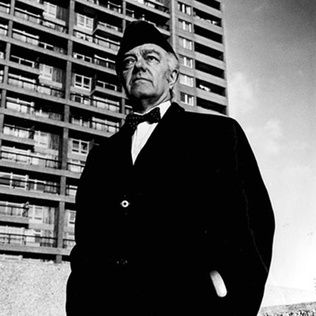

And yet his legacy is undeniably real. Trellick Tower is now listed, its flats highly sought after, and it has become a symbol of renewed interest in brutalism. The once-despised concrete façades are today regarded as powerful urban icons, carrying both the optimism and the naïveté of their era. Goldfinger’s story is not merely an anecdote about a humorless man or an unfortunate coincidence of names. It is about architecture as something larger than aesthetics: a social vision, a political decision, a cultural conflict. And it is also about how a city’s identity is often shaped most forcefully by those who refuse to blend into the existing skyline.
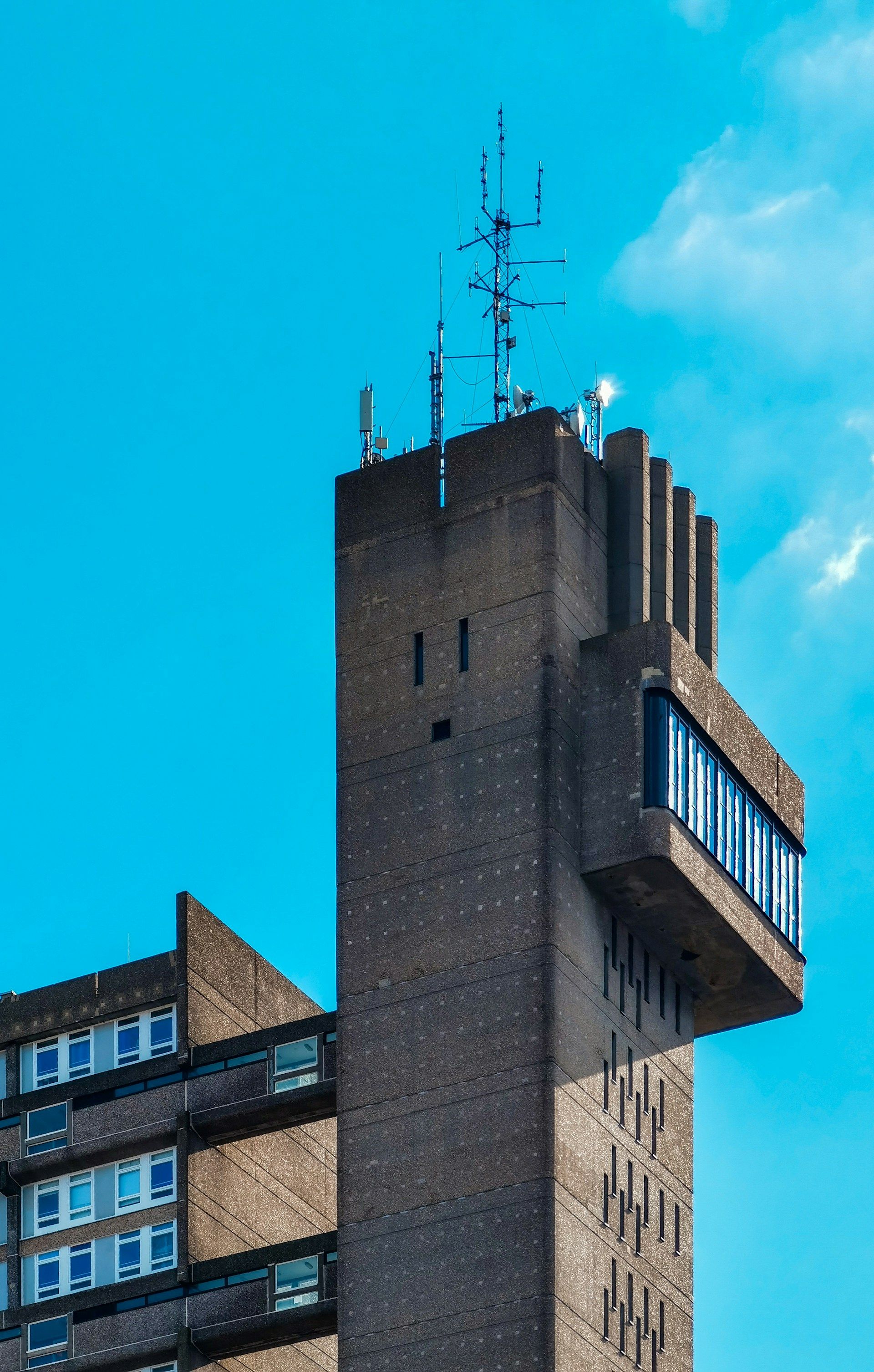
Here is a selection — far from exhaustive — of Ernő Goldfinger’s most significant and best-known buildings:
2 Willow Road, Hampstead (1939) – His self-designed modernist residence, now managed by the National Trust; an early icon of British modernism.
Balfron Tower, Poplar (1967) – A 26-story brutalist residential tower in East London, a precursor to Trellick Tower. Goldfinger temporarily moved in to test the building’s performance.
Carradale House, Brownfield Estate (1960–62) – A residential building on the edge of the City of London that anticipates the spatial principles later applied in his tower blocks.
Trellick Tower, North Kensington (1972) – A 31-story residential building with a separate service and circulation tower; now Grade II* listed and one of London’s best-known brutalist icons.
Glenkerry House, Poplar (1977) – A residential building adjacent to Balfron Tower, reflecting on the earlier tower’s lessons at a smaller scale.
Elephant & Castle Shopping Centre (partially, 1960s) – Part of the modernist redevelopment of the South London district, embodying the era’s large-scale urban planning ambitions (the original complex has since been demolished).
Haggerston School, Hackney (1964–67) – A secondary school with a striking concrete façade, combining brutalist formal language with an educational function.
Claremont Court, Glasgow (1959–62) – A residential complex in Scotland that situates modernist housing principles within a regional context.
Opening photo: Wikipedia/Cianboy
