


Few pieces of furniture have as bad a reputation as the white plastic garden chair. It is too cheap to be taken seriously, too practical to get rid of, and too well designed to simply disappear. While the design world has spent decades celebrating Pantons, Eameses and Magistrettis, the Monobloc has quietly taken over the world’s terraces: stackable, injection-moulded, lightweight, white, and with very little in the way of a distinctive personality. Yet one of the world’s most ubiquitous chairs is one of the most consistent success stories in the history of design – which is why we can now find it in museums, too.
The Museum of Ethnography chose a piece like this for its contemporary collection a few years ago for precisely this reason: according to the museum, the white plastic garden chair is so much a part of our everyday surroundings that it no longer even registers on our radar. In Hungary, its use became widespread in the 1990s, and domestic production also began around the same time. The museum’s example was manufactured in 2005 at Miskolci Műanyagfeldolgozó Rt., based on a German design and distributed by Flair Hungary; in Hungary, it simply became known as the flair chair. Of course, we are hardly the only ones sitting on white plastic chairs in such numbers, as this is one of the world’s most ubiquitous pieces of furniture, with the history of twentieth-century design, the triumph of plastic, the logic of mass production, the rise of consumer society and globalization all sitting behind its form – quite literally.
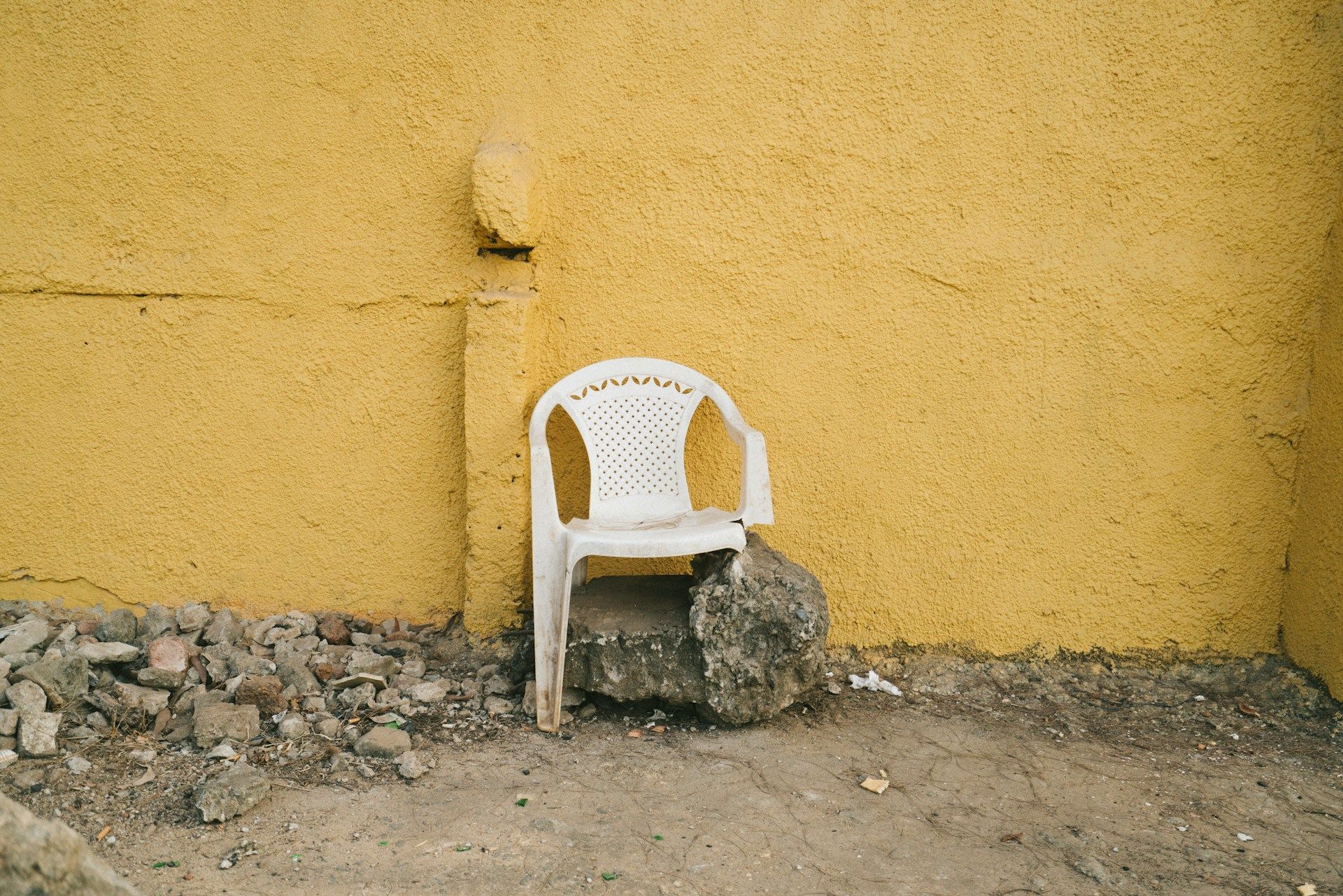
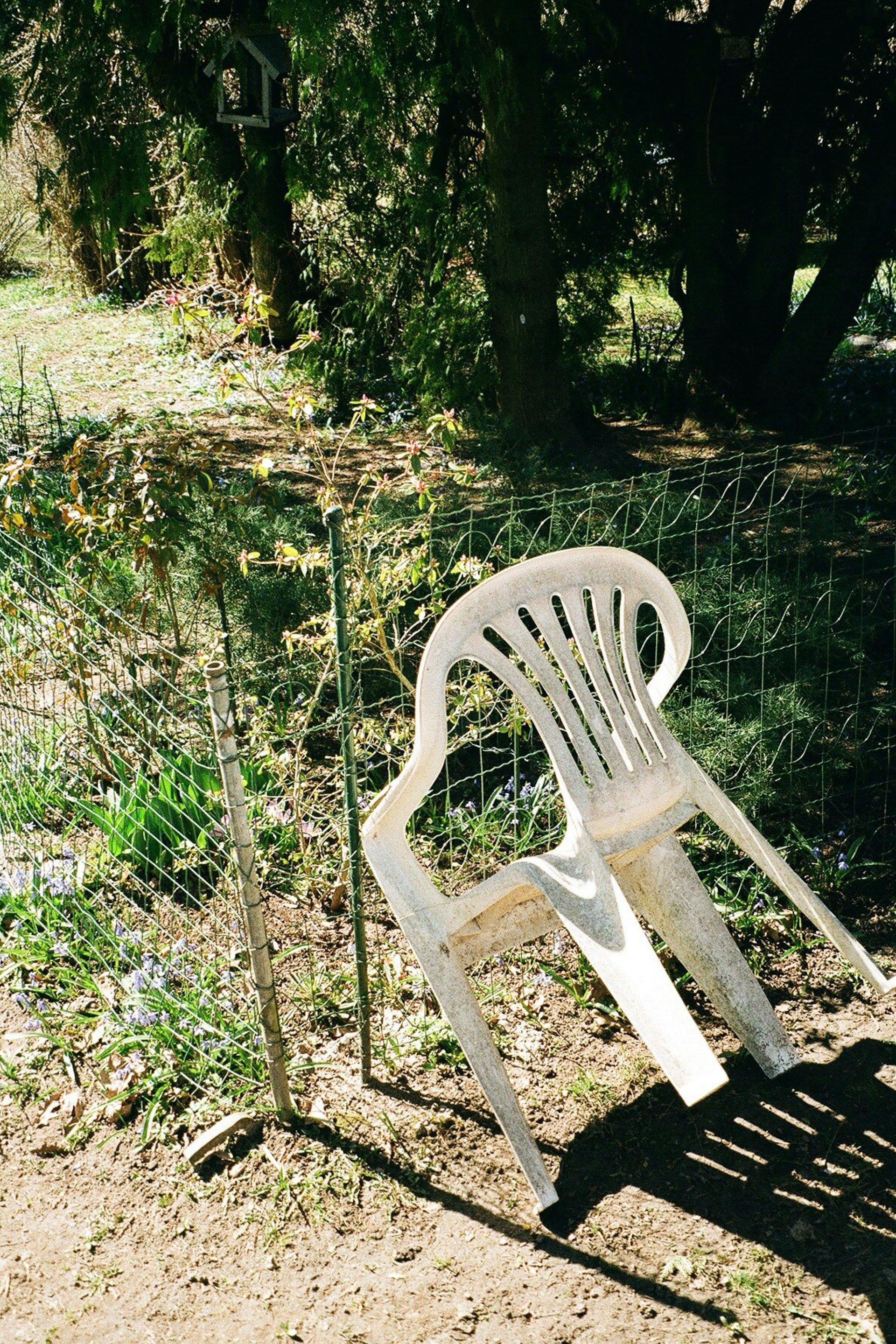

Invisible Design Icon
There are few objects in the history of design that have broken so radically with the conventional path of product design. A classic piece of furniture usually has a designer, a manufacturer, a model name, a story, a material, and a character associated with a particular era or style. The white plastic chair, by contrast, seems to have made it its very purpose to have no particular story, even though it does.
The chair known in international design literature as the Monobloc was already presented by the Vitra Design Museum at its 2017 exhibition as the world’s most widely used piece of furniture. The name Monobloc simply refers to the fact that the chair is formed from a single piece of material in a single manufacturing process. The technological idea is much older: as early as the 1920s, designers were experimenting with furniture made from a single piece of material, while from the 1950s onward, advances in plastics and molding technologies made it possible for this idea to truly become a mass-produced product. Names appear along the way that will sound familiar even to design enthusiasts: Verner Panton, Vico Magistretti, Helmut Bätzner. The Panton Chair, the Selene and the Bofinger Chair were all important milestones on the road that eventually led to the plastic chair that nobody had previously regarded as a design object in the classical sense.

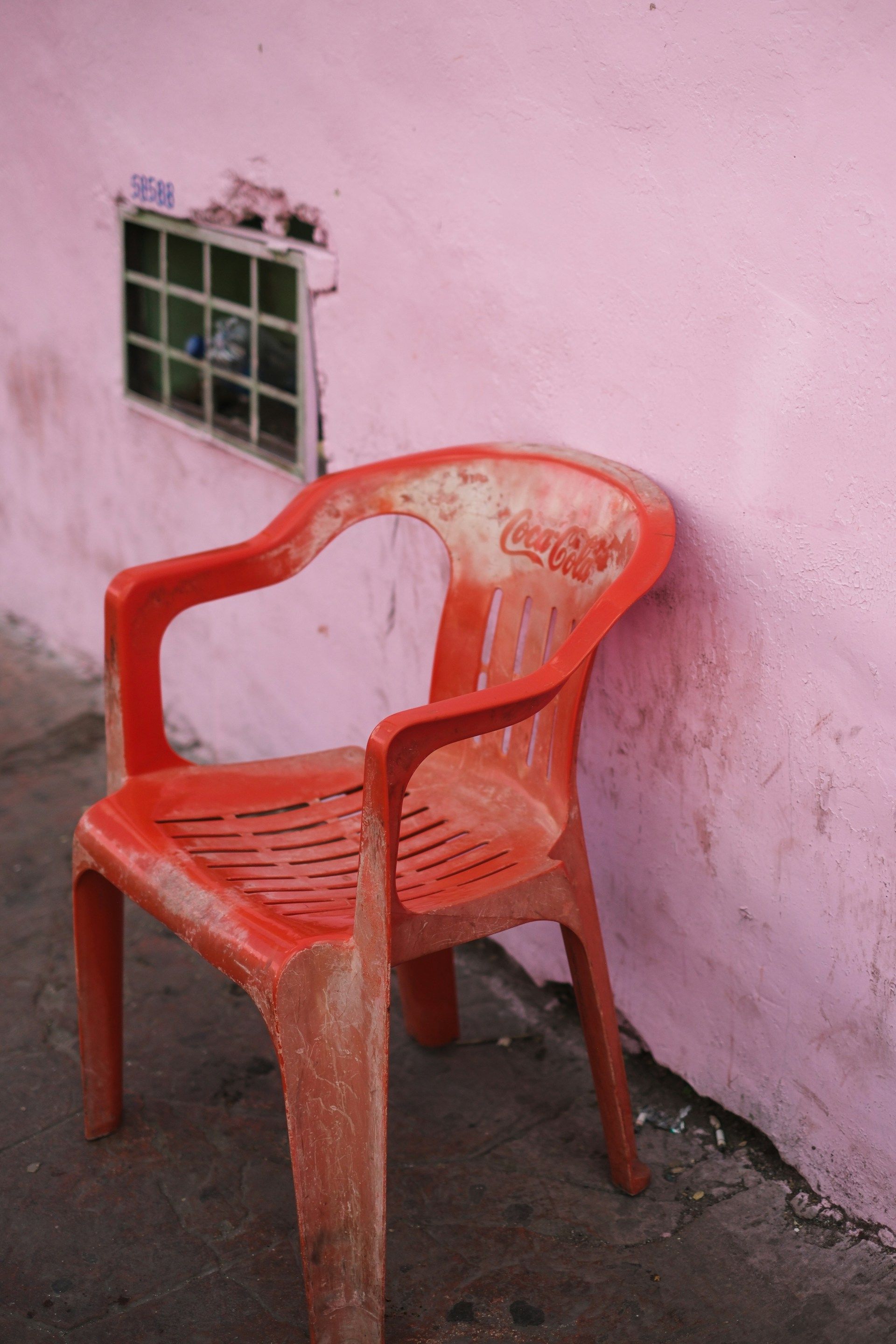
From a Single Piece
In 1972 French engineer Henry Massonnet introduced the Fauteuil 300, whose production time he managed to reduce to under two minutes using the new injection-molding technology. From that point on, the history of the plastic chair became increasingly less about form and more about manufacturing efficiency. From the 1980s onward, inexpensive, stackable models suitable for outdoor use began appearing one after another, and the Monobloc slowly took over terraces, beaches, cafés, wedding tents and gardens around the world. The Vitra exhibition spoke of more than one billion chairs, typically white, while emphasizing that the Monobloc’s cultural significance extends beyond the fact that it provides an inexpensive place to sit. The object became a symbol of mass consumption, globalization and democratic design all at once. In other words, the chair that many people in a Hungarian pub might look at as if it had escaped from the reject corner of a garden furniture store is actually a descendant of a rather serious design family.
The Democratization of Sitting
The secret to the Monobloc’s success is surprisingly simple: it is lightweight, inexpensive, durable, easy to clean, stackable, weather-resistant and easy to replace. This last quality is particularly important, since furniture has traditionally represented value, and we therefore take care of it. Wear is visible on an old wooden table, years leave their mark on an armchair’s upholstery, and we can often tell exactly who made a carved chair. The white plastic chair, by contrast, already accounts for replaceability at the moment of its design. In terms of form, the plastic garden chair is also close to the old peasant armchairs: it has armrests, is comfortable, and supports the body. Yet while armchairs and other comfortable chairs were highly valued in peasant households, the plastic version democratized that same comfort while completely stripping the object of prestige. This paradox is one of the chair’s most intriguing qualities. In this sense, the white plastic chair really is a democratic object: it erases the distinction between a “guest chair,” a “garden chair,” a “pub chair” and a “chair pulled out of necessity.”

When Plastic Itself Meant Modernity
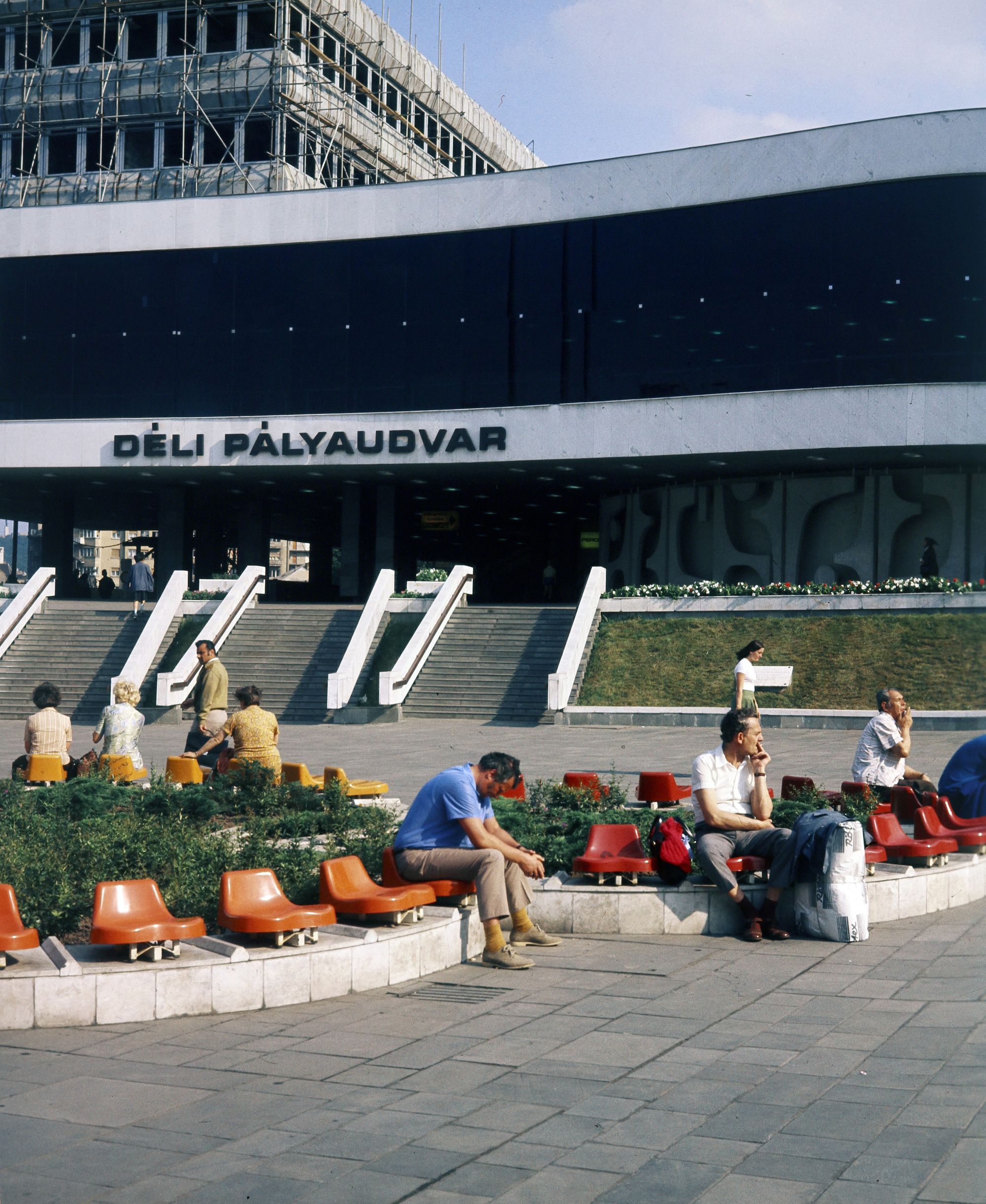
If we want to understand why the white plastic chair spread so quickly in Hungary, it is worth taking a step back and looking at what plastic itself meant here. The Museum of Ethnography’s 2006 exhibition műanyag was built around precisely this question. The exhibition started from the idea that modern life and plastic had, for a long time, meant almost the same thing: the plastic bottle, the milk bag and the garden chair may now be everyday clichés, while just a few decades ago plastic carried the promise of modernity, technological progress and a new way of life. There was something futuristic about plastic. It was lightweight, colorful, hygienic, moldable, suitable for serial production, and different from everything previous generations had known as a natural material. This became particularly visible in the material culture of the 1960s and 1970s: plastic slowly moved into every corner of people's lives. It is therefore clear that, in the history of Hungarian plastic culture, this white chair arrived in an environment where the use of plastic had already been part of the everyday experience of modernization for decades.
The Throne of the Nineties
One of the most important chapters in the Hungarian history of the white plastic chair began after the fall of state socialism. According to the Museum of Ethnography, its everyday use became widespread at this time, and domestic production also began then. The Flair Plaisire model that later entered the museum collection was manufactured by Miskolci Műanyagfeldolgozó Rt., distributed by Flair Hungary, and became known in Hungary as the Flair chair; it is still sold under this name in many places today.
Today, the white plastic chair often belongs to the aesthetic of “this’ll do,” and although we use it, we probably would not put one in the middle of the living room. In the early 1990s, however, a plastic garden furniture set was one of the material signs of having arrived. A new era had begun, with new shops, goods, materials and lifestyle patterns. Garden furniture simultaneously became an object of freedom and leisure: the terrace, the garden, the weekend house, barbecuing, sunbathing and that post-regime-change feeling of life were all associated with it, at a time when consumer goods that had previously been difficult to access suddenly came much closer. So for a while it was still cool, and then there was simply too much of it. The status of objects works in a peculiar way: the harder something is to acquire, the more valuable it appears, and the more accessible it becomes to everyone, the faster it loses its distinctiveness. In the case of the white plastic chair, this process is almost textbook.
László Kollár-Klemencz’s prose piece A műanyag kerti székek élete (The Life of Plastic Garden Chairs) captures precisely this strange multifunctional existence: the chair appears in social life, in relaxation and work, while painting walls, at pig slaughtering, sitting around on the terrace, over a beer – and perhaps this is where it truly becomes an ethnographic object. The cultural significance of an object is often revealed precisely by how deeply it has become embedded in everyday use. One of the important findings of the Museum of Ethnography’s 2006 plastic exhibition was also that mass-produced objects had long appeared only sporadically in museum collections, even though they form a defining layer of everyday culture. The museum therefore launched a dedicated collecting campaign, during which more than 1,200 everyday plastic objects entered a temporary background collection, together with personal stories and contexts of use.
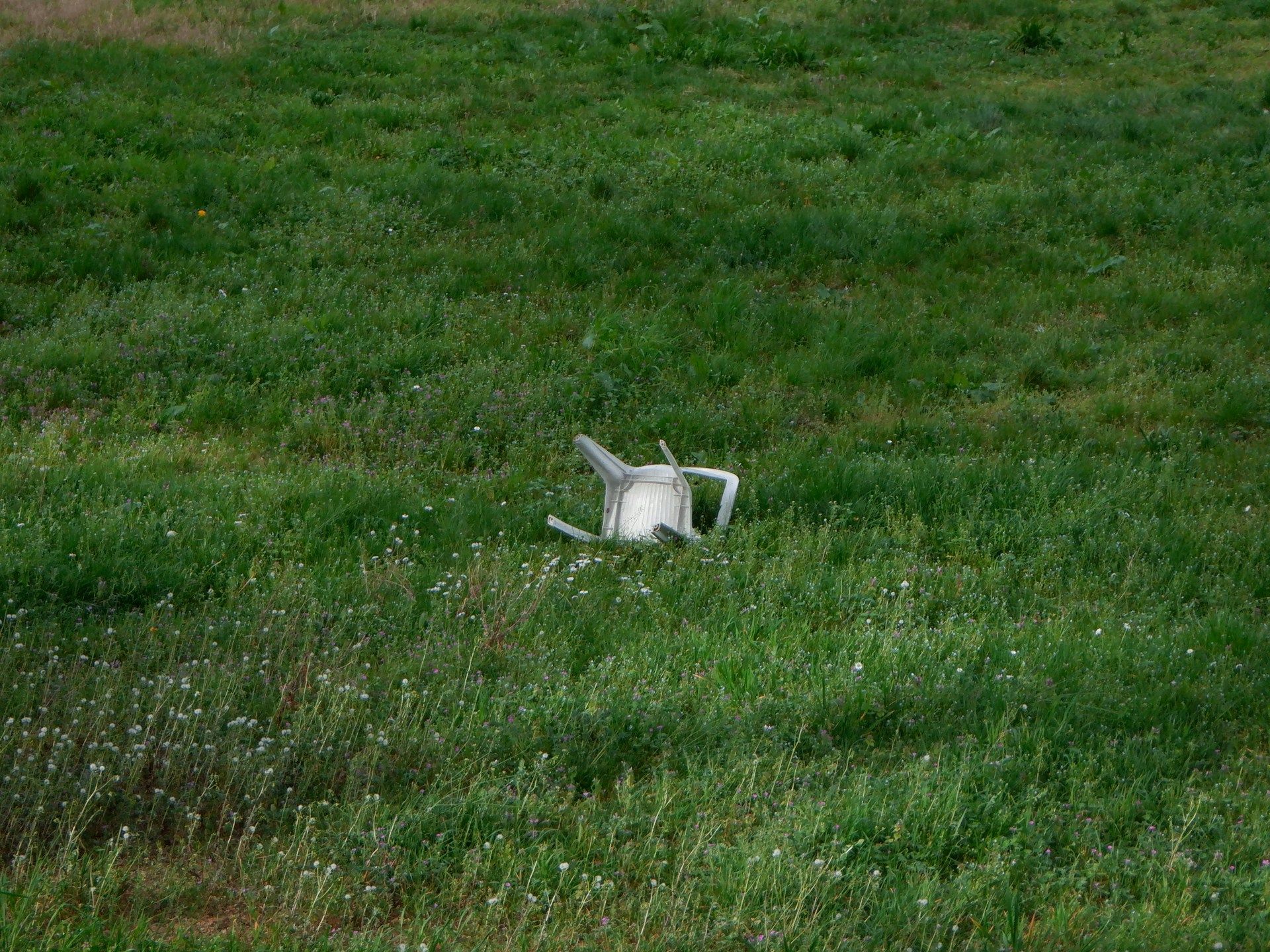
This essentially means that, at a certain point, a museum has to start collecting what we still consider too banal to have any value, and the white plastic chair is exactly that.
The Design Snake Bites Its Own Tail
While it increasingly became a symbol of cheap, impersonal mass production for everyday people, the design world was rediscovering it for itself. In 2017, the Vitra Design Museum already presented it as an exhibition object, together with its history, precedents and cultural meanings. Then, in 2024, MoMA also acquired one for its collection, with the museum’s object description simply reading: Unidentified Designer, Monobloc Chair. For contemporary design, the Monobloc is interesting precisely because behind all its apparent lack of refinement lies an astonishing degree of manufacturing rationality. Yet despite all this rationality, it is now difficult to separate the chair from the environmental problems associated with the material. The durability of plastic is both a blessing and a curse: the chair makes a good piece of outdoor furniture because it is difficult to destroy, while that same quality is what makes its mass production and disposal problematic. The history of the Monobloc thus perfectly encapsulates one of the fundamental contradictions of consumer society: we want an object to be cheap, lightweight, durable, accessible to everyone and easy to replace, while at the same time we are increasingly unwilling to accept its environmental cost. The next chapter of its history is therefore less about how to produce the same object even more cheaply and quickly, and much more about how to design such a mass-produced product for a longer life cycle, recyclability or recycled raw materials. The Monobloc’s original promise was accessibility; the next design challenge must be to make that promise more sustainable.
Opening picture: Jürgen Lindemann: 40 Monoblocs / Vitra Museum