


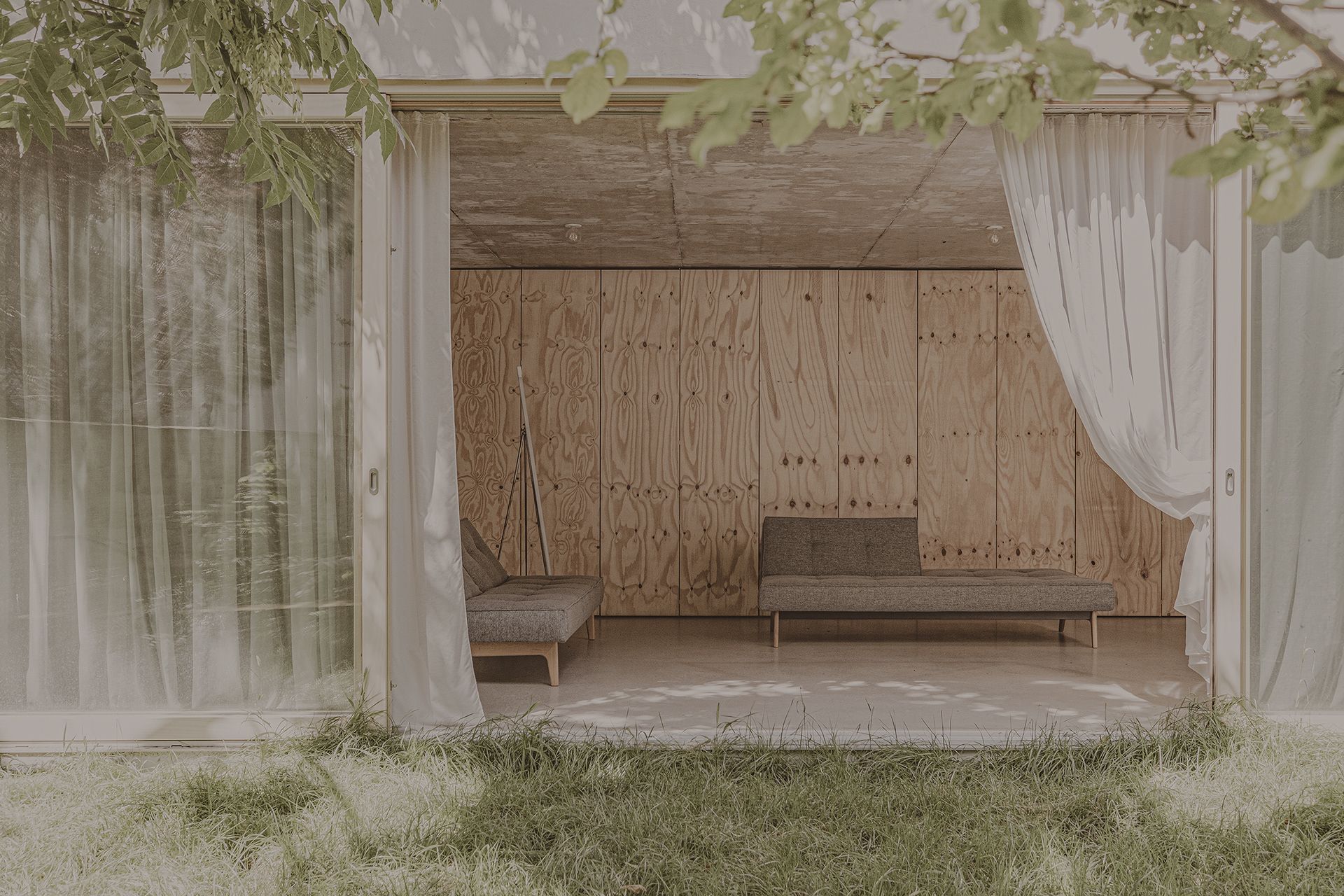
A family house in search of good answers. The Hempcrete House in Szentendre rethinks sustainable architecture through material choices, spatial proportions, and long-term performance. Designed by the architects of projectroom, the house treats hempcrete as a source of everyday comfort, the garden as a climatic tool, and the idea of “enough” as a conscious design principle. It is a building that becomes truly legible through use—and one that has also attracted international professional attention.
Sustainable architecture is often accompanied by over-explanation, spectacular gestures, or a demonstrative “green” aesthetic. The Hempcrete House in Szentendre works with more restrained means. It focuses on a very concrete question: what does a genuinely sufficient family home look like today, in Central Europe? Designed by the projectroom studio, the building is a carefully considered living environment in which material use, spatial organization, and the relationship between house and garden all stem from the same line of thinking. The emphasis lies on performance—on how the house behaves over time, in everyday use.
But what is hempcrete?
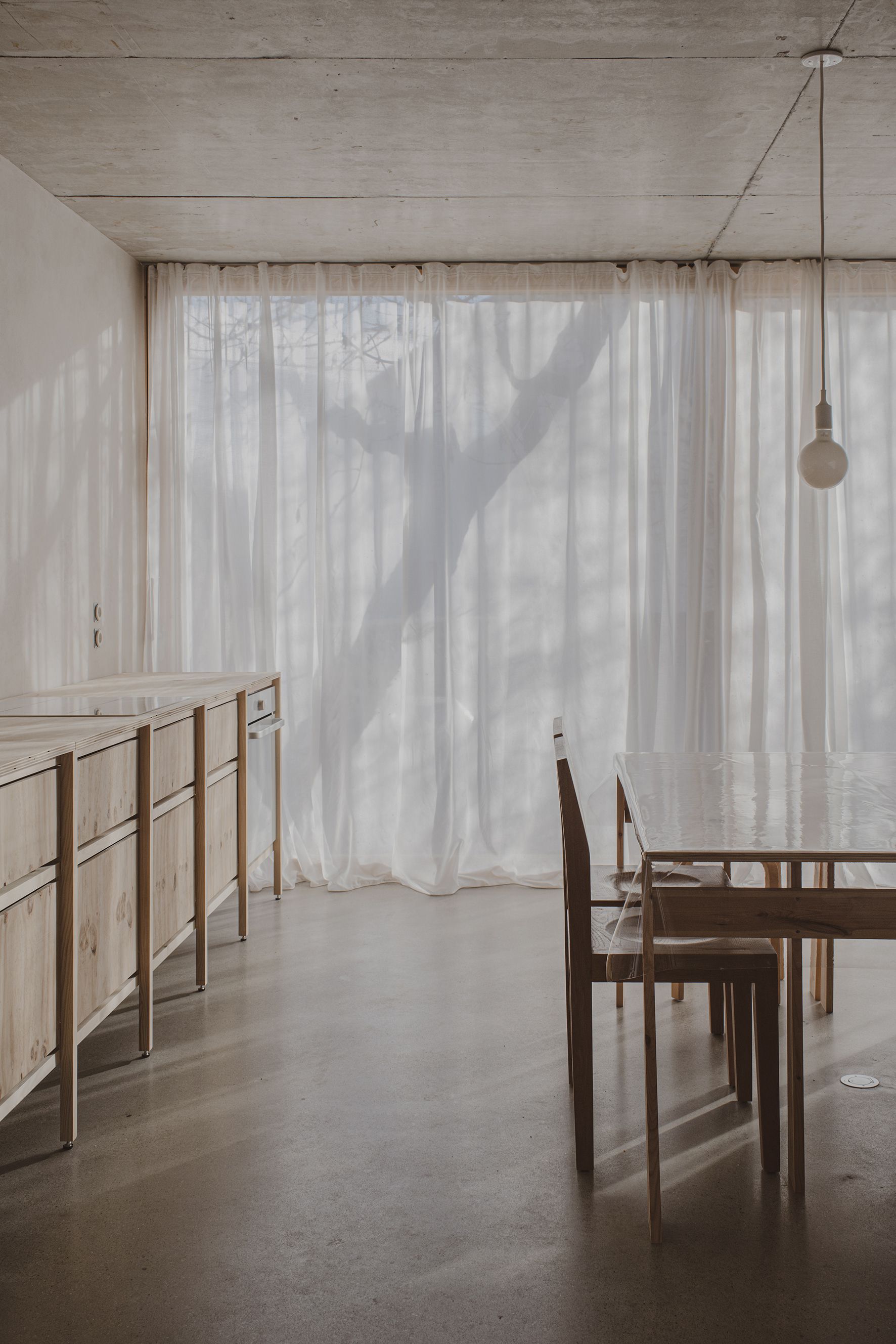
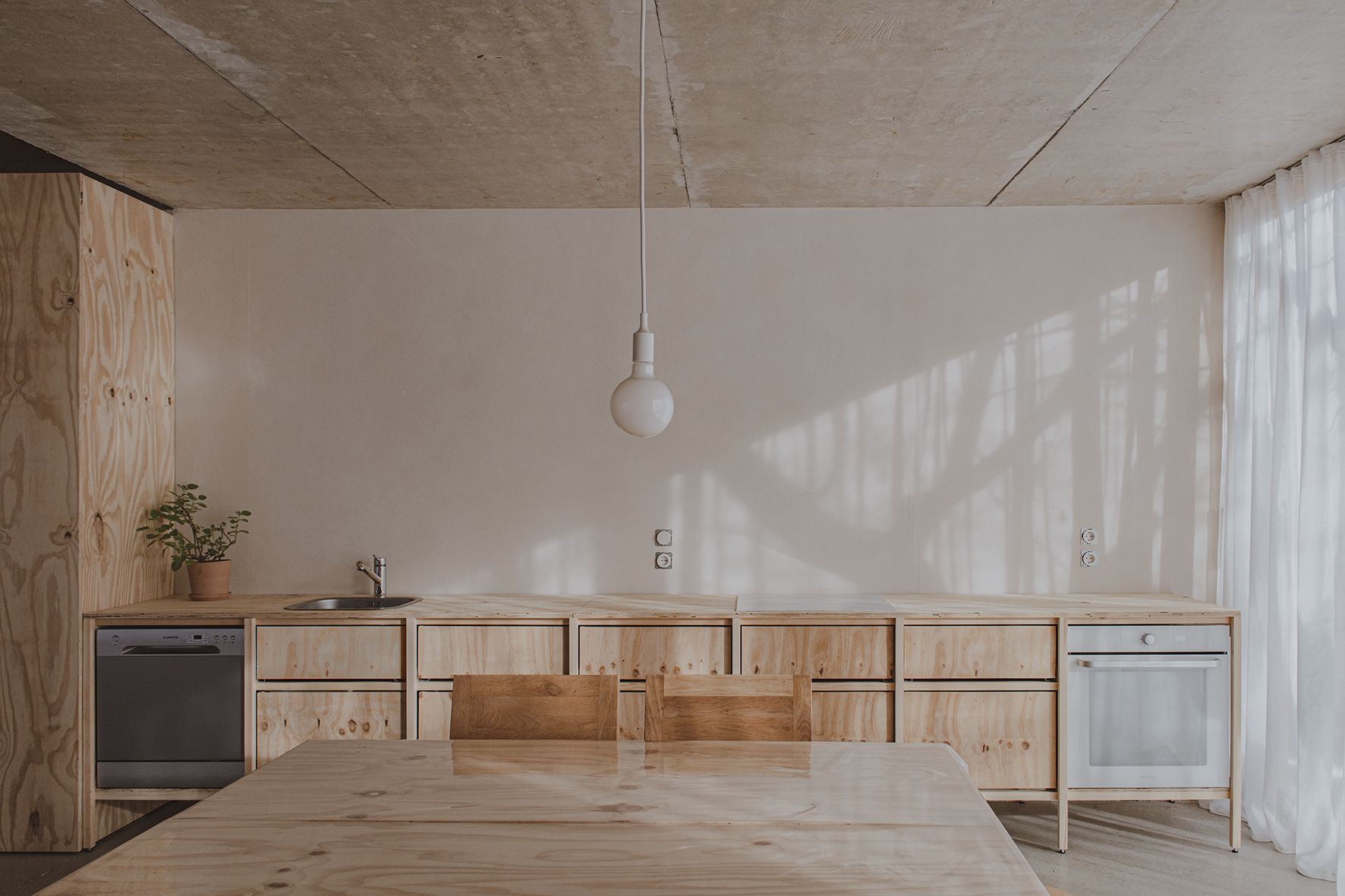
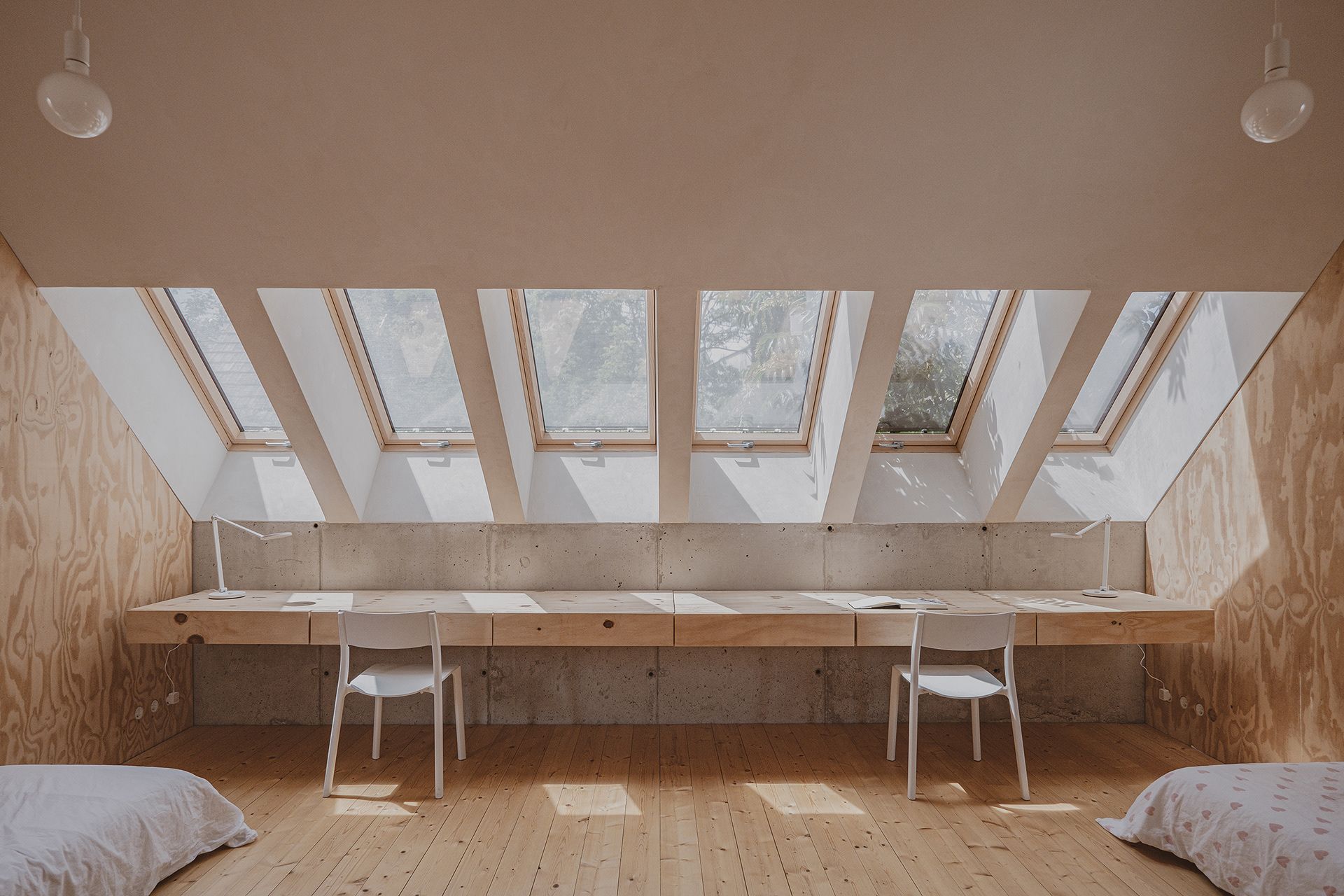
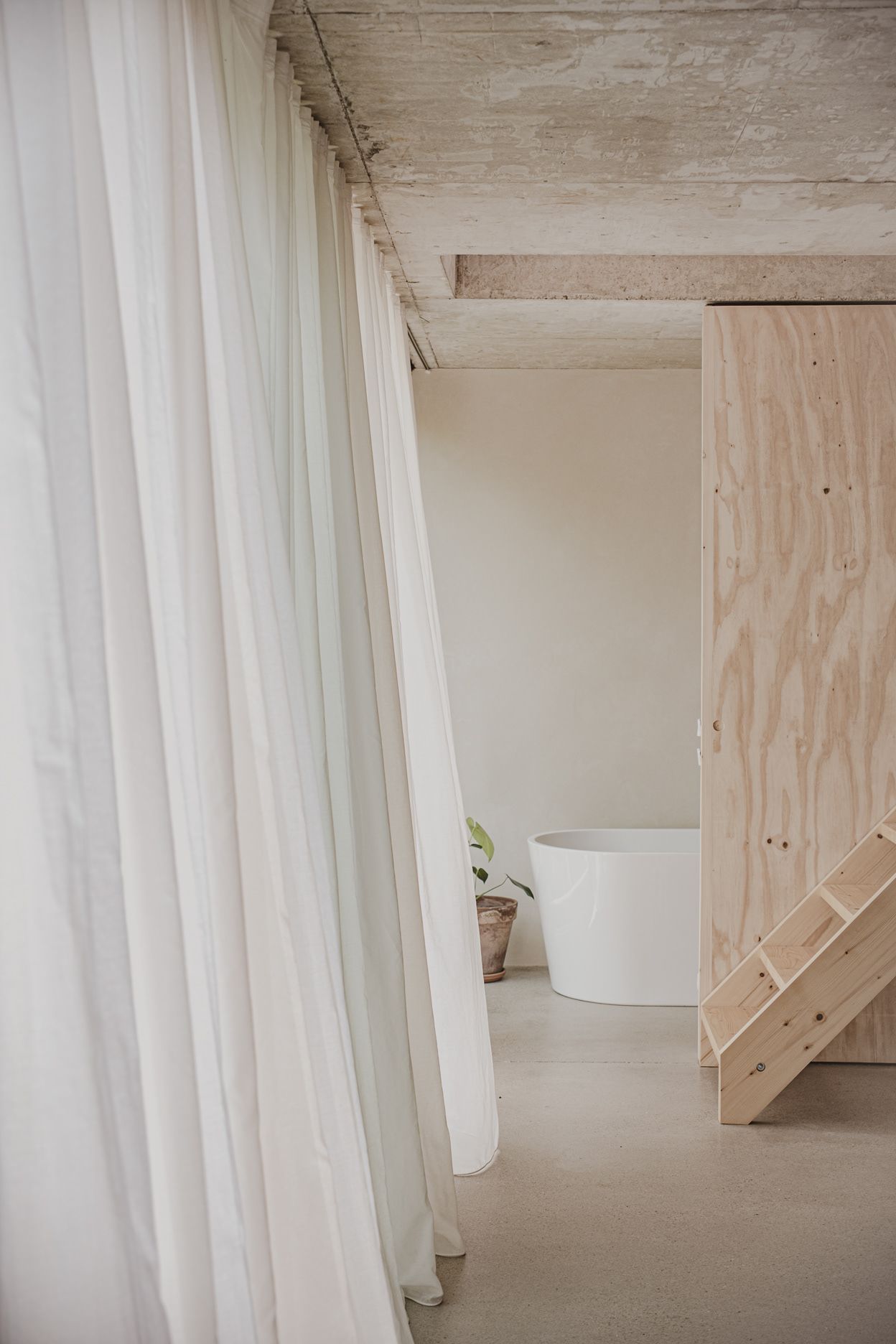
One of the key elements of the house is hempcrete, which functions as infill wall construction. Made from hemp shiv and a lime-based binder, the material has low embodied energy and is partially carbon-negative, binding CO₂ during its production. The consequences of this choice become truly tangible in everyday use. Hempcrete has excellent thermal and hygrothermal properties: the walls regulate indoor humidity, respond slowly to temperature changes, and create a stable interior climate. This is one of the building’s most important comfort values. The material’s surface is not concealed. Its texture and slightly rustic character form part of the interior design, making the building’s performance visibly present.
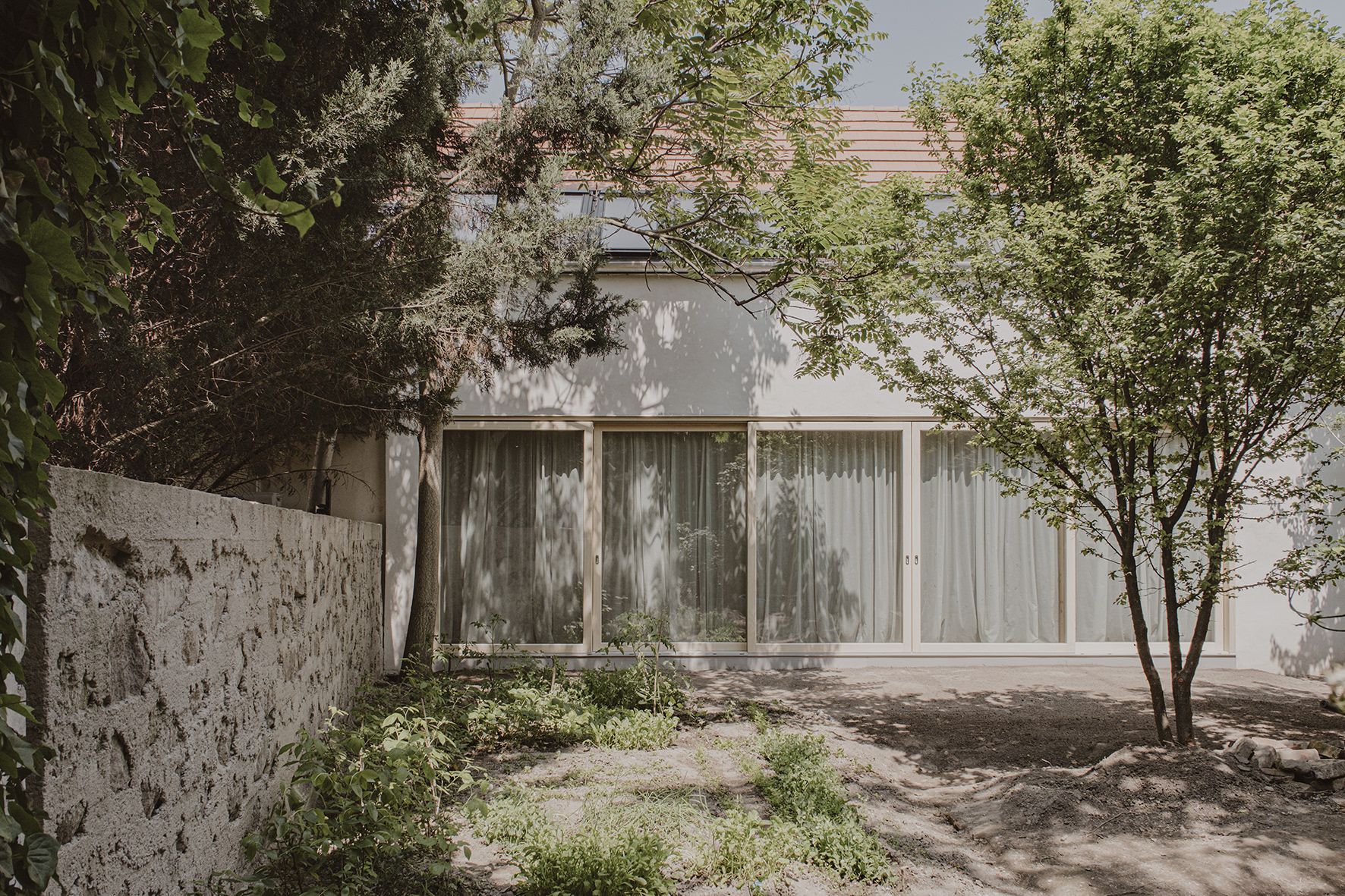
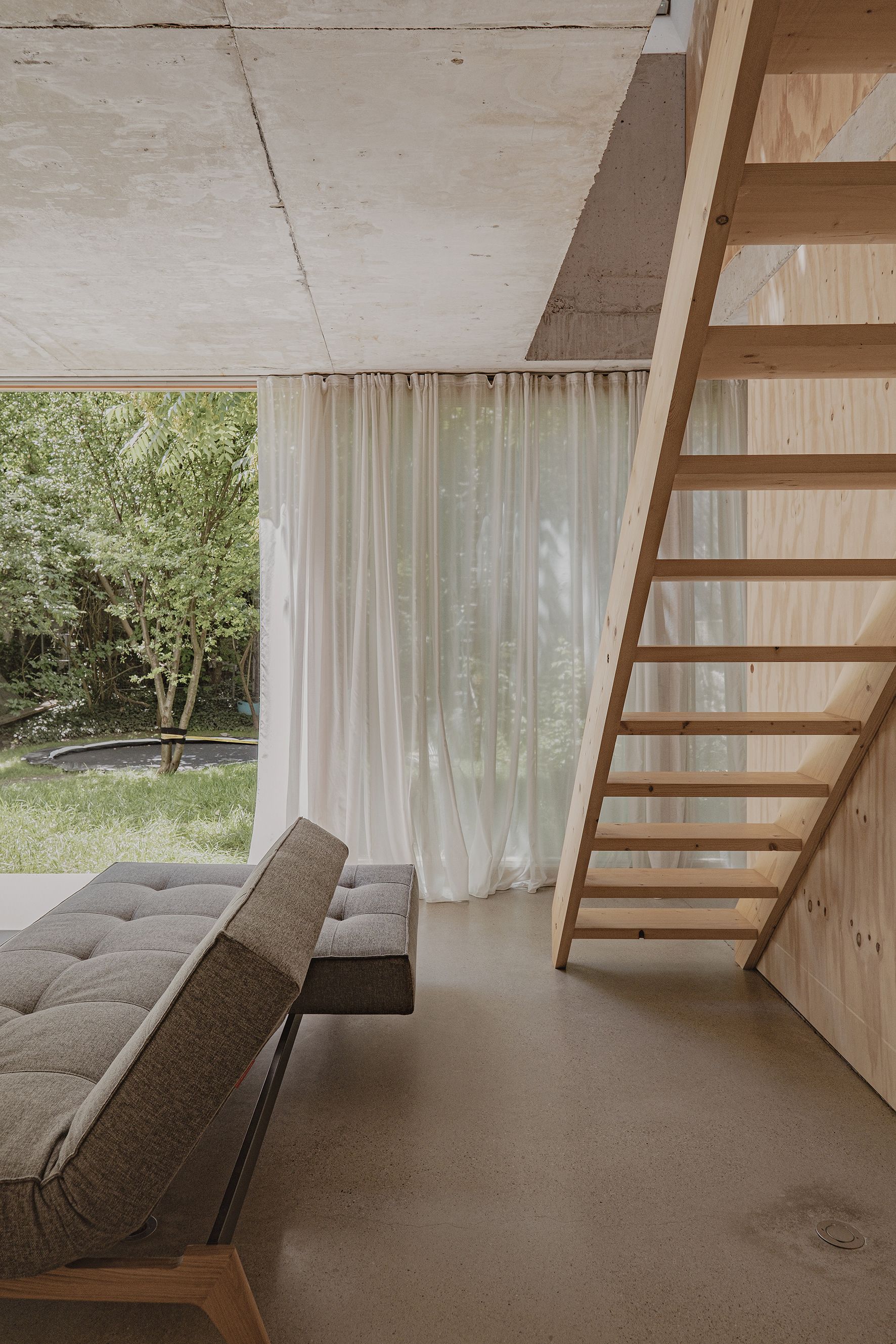
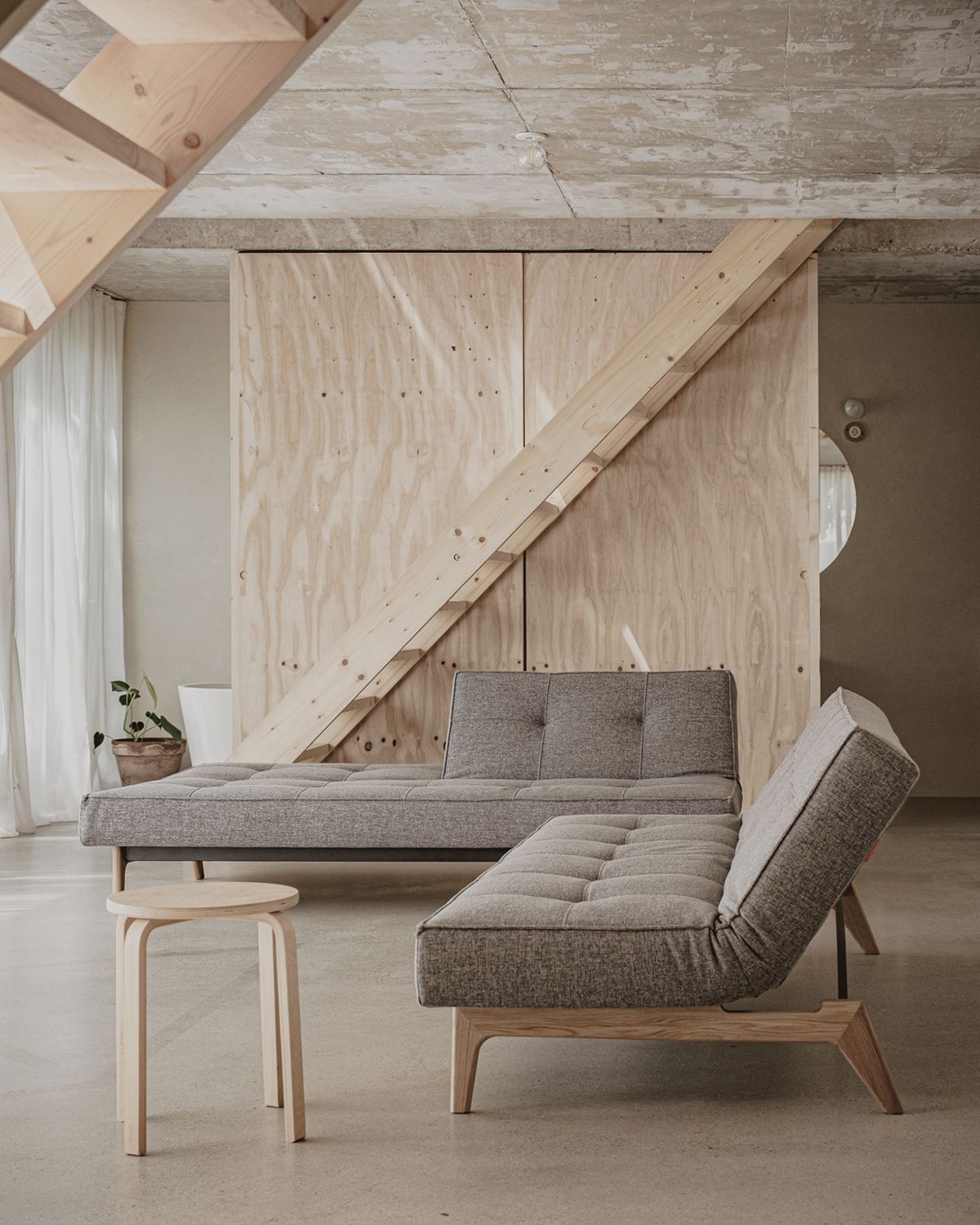
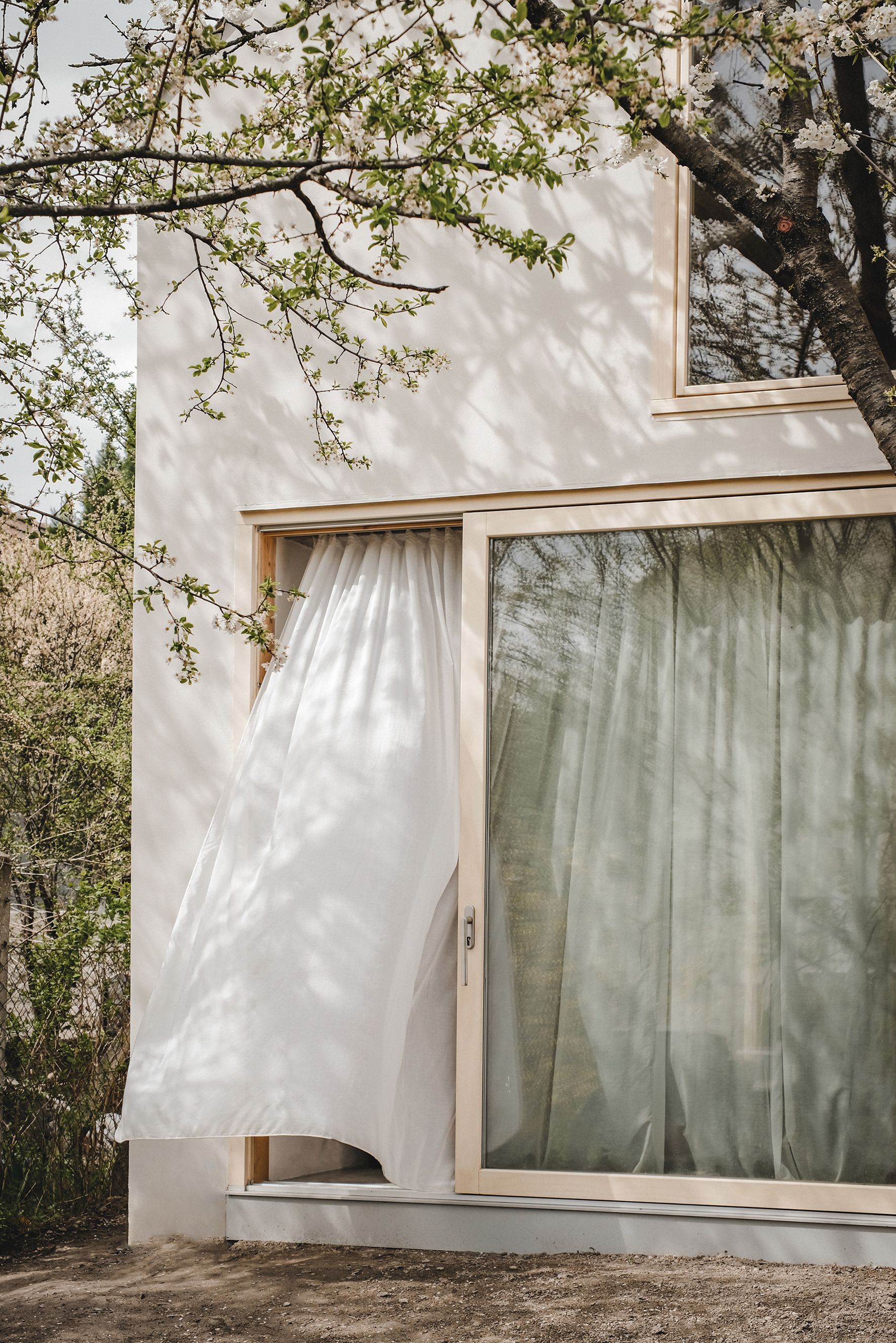
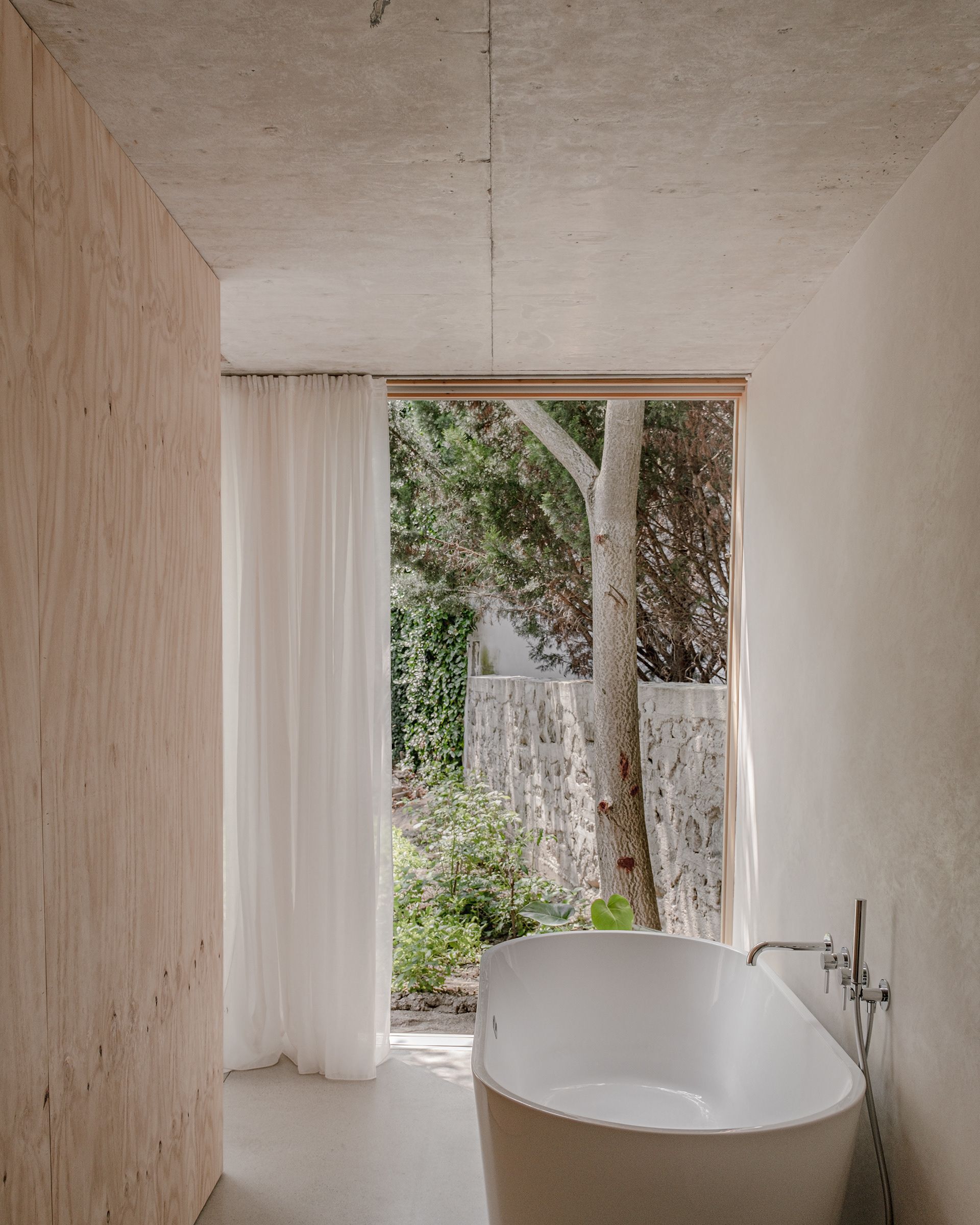
The floor plan system is clear and economical. Spaces are precisely sized, with clearly defined functions. The combined living–dining–kitchen area operates as a central space opening toward the garden, while the private zones are more restrained and quieter. Interior proportions serve usability and long-term durability. The design responds not to short-term visual impact, but to lasting residential quality. The house can only be fully understood together with its surroundings. The garden plays an active role in the building’s operation: it provides shading, cooling, and extends the interior spaces both visually and climatically. Large openings create a seasonally attuned relationship between inside and outside. In this sense, the garden also functions as a climate strategy—an architectural tool that reduces the building’s mechanical load while offering a natural spatial experience. Interior design decisions are material-driven. Natural surfaces, light tones, and a limited number of precisely chosen details define the spaces. The design reinforces the architectural logic, forming a coherent system with the structure. The aesthetic is timeless and does not follow trends. This approach is closely connected to long-term thinking about sustainability.
Projectroom: consistent thinking on a small scale
The architectural studio behind the Hempcrete House, projectroom, is generally characterized by moderation and systems-based thinking. Their projects often grow out of existing structures, local conditions, and economic realities, while consistently addressing the question of how a building can remain sustainable over the long term—in spatial organization, material use, and patterns of use. For the studio, environmental awareness is not an added layer or a communication tool, but a baseline condition of the design process, from material selection through spatial planning to the building’s later life cycle. In this sense, the Hempcrete House in Szentendre fits seamlessly into projectroom’s approach: a building that is both experimental and sober, technologically forward-looking, yet optimized for everyday use.
When quality takes the spotlight
The Hempcrete House in Szentendre received recognition in the residential building category of the PULSE Awards, within an international field where the focus lies not on iconic architecture but on the quality of thinking. The award highlights projects that respond to the challenges of contemporary architecture through moderate scale, regenerative material use, and long-term operational logic. At a time when the built environment accounts for a significant share of global emissions, such consistent, well-functioning examples come into sharp focus. The weight of the PULSE Award is largely defined by the composition of its jury. Decision-makers in the architectural categories include internationally renowned figures such as Kengo Kuma, Peter Lorenz, and Jan Vondrák, complemented by professionals representing urban history, urban planning, and interior design perspectives. This multi-layered background clearly favors projects that do not aim for quick impact, but offer coherent answers in material use, spatial organization, and performance.
Within this context, the recognition of a family house of this scale is a particularly strong statement. The award given to the Hempcrete House signals that international professional attention is increasingly turning toward restrained, responsible architecture—toward buildings that create real quality through fewer means, precise decisions, and a clear value system. In this sense, the award extends beyond a single building, making visible that environmentally conscious thinking in Central Europe is not only relevant, but also interpretable and competitive on an international level.
Fotók: projecktroom