


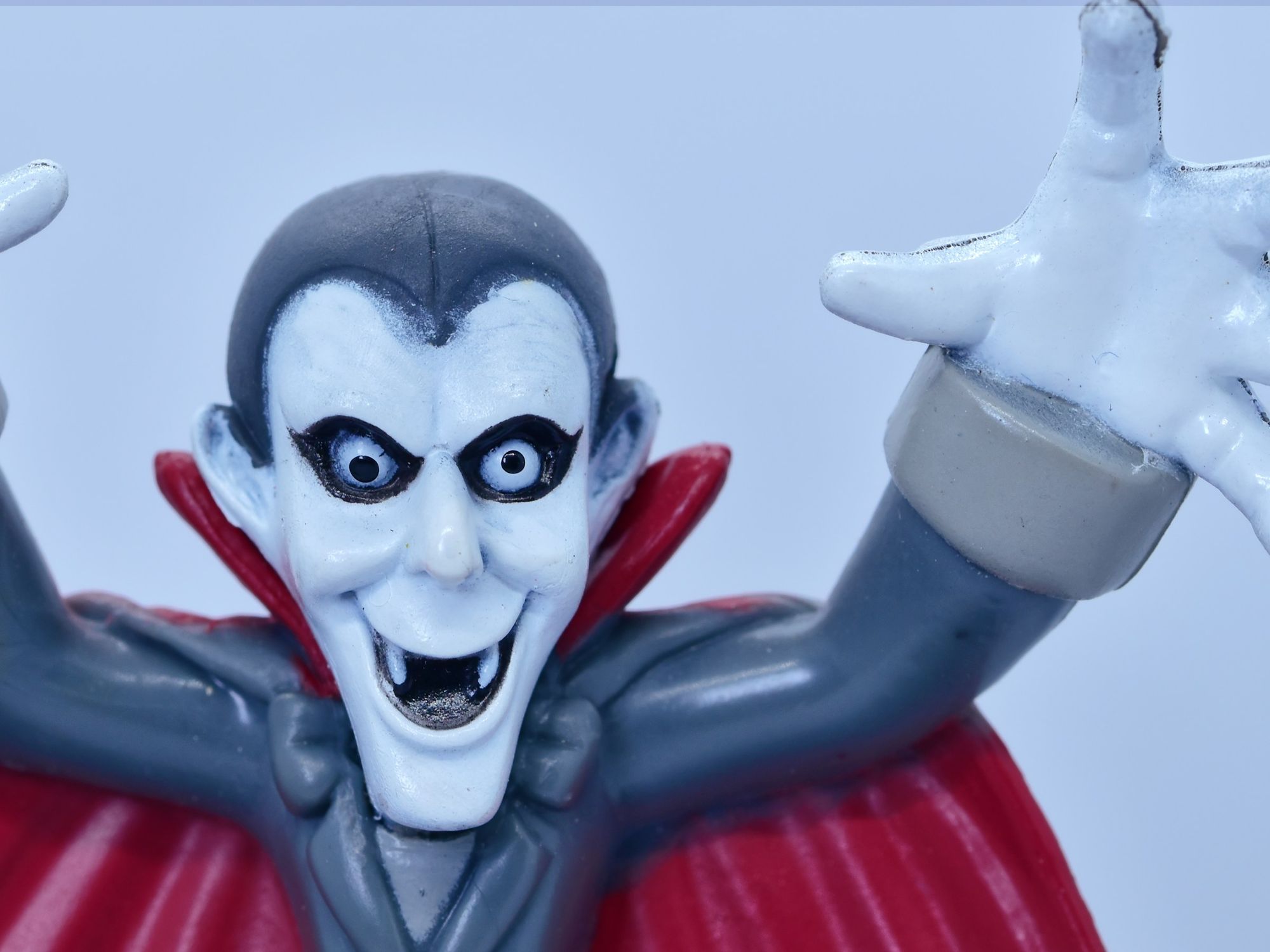
Today, Dracula lives in our imagination as an elegant count in a black cape, a bloodthirsty seducer. Yet the vampire-like figures of Transylvanian folk belief were far more varied. The stories of the strigoi weave together the return of the dead, communal fears and a belief in the world beyond the grave – and there isn’t a fang in sight.
Dracula has practically become a tourism genre in his own right: misty mountains, a medieval castle, a black cape and a rather poor sleep schedule come as standard. The supernatural figures of Romanian folklore, however, are considerably less predictable than pop culture’s elegant bloodsucker. The strigoi, for instance, can be either a living person or a returning dead person, and blood-sucking is not necessarily high on their agenda. What makes these stories unsettling is the possibility that death does not always settle everything. According to folk belief, someone laid to rest in a grave may still interfere in the affairs of the living.
Three Draculas Behind a Single Name
Today, vampires are almost inseparable from Transylvania. Our imagination supplies misty mountains, crumbling castles and a count who glides silently through the night, has been alive for centuries, dresses elegantly and maintains perfectly pale, wrinkle-free skin without the help of a single face serum. This image, however, is made up of several different stories and is only partly connected to Romanian folklore.
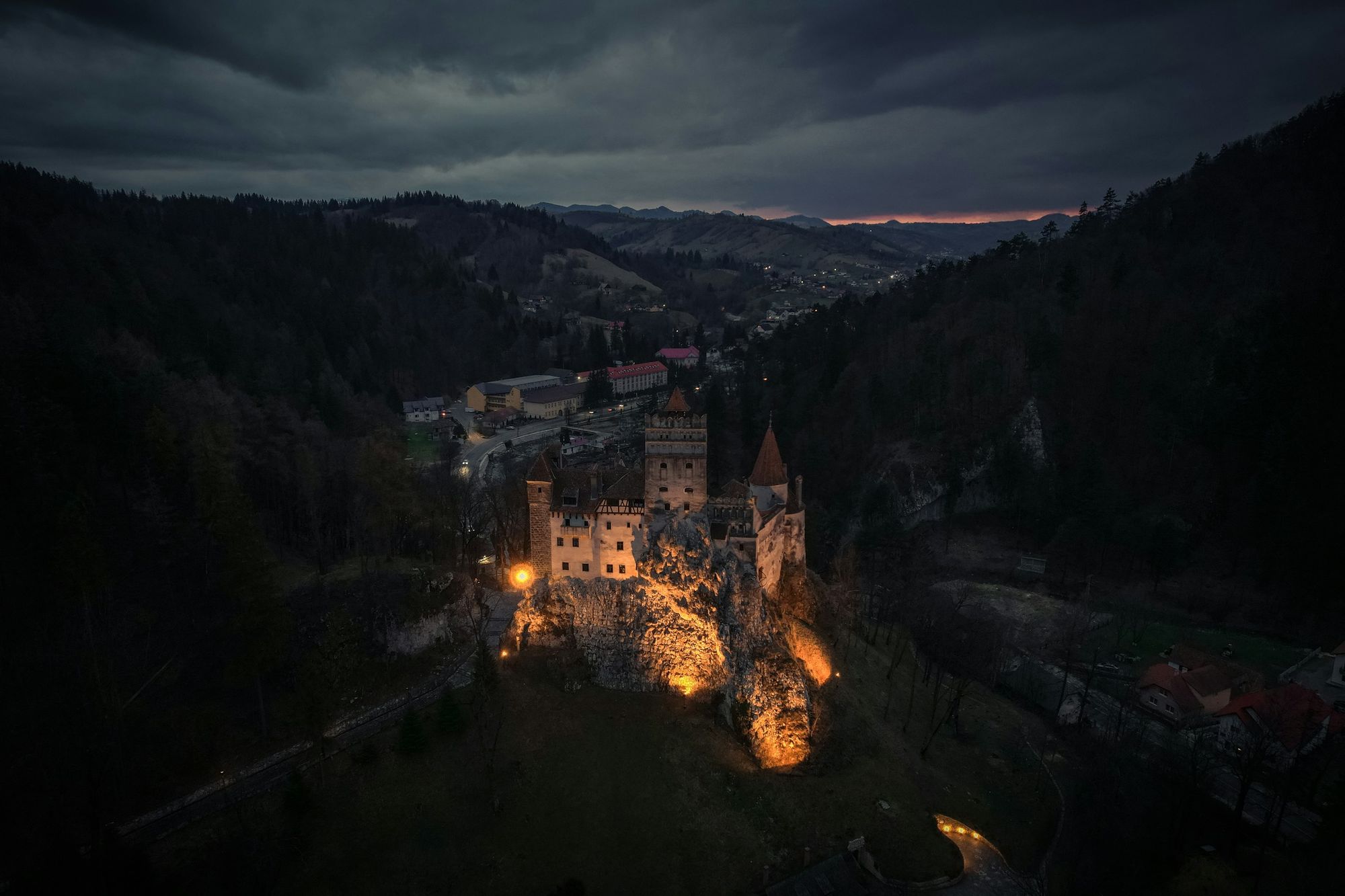
Behind the name Dracula, first of all, stands Vlad Țepeș, the fifteenth-century ruler of Wallachia, remembered by history for his brutal punishments, particularly impalement. The name Drăculea was connected to his family’s naming tradition; Vlad later became an important historical reference point for vampire legends. Yet the connection between the historical ruler and the supernatural bloodsucker is far less straightforward than their shared name might suggest.
The second Dracula is the protagonist of Irish writer Bram Stoker’s novel, published in 1897. The count is no longer simply a cruel ruler, but a being who lives for centuries and possesses superhuman abilities. He travels from Transylvania to England and sustains himself on the blood of the living. Stoker drew on an existing literary tradition: John Polidori’s 1819 short story The Vampyre and Sheridan Le Fanu’s novella Carmilla were both important precursors to the modern vampire tale.
The third Dracula is the figure we know from films, comics, tourist brochures and Halloween costumes. Over the decades, the count with the black cape and pointed fangs has become a cultural icon in his own right. Nothing illustrates this better than the fact that the book was adapted for the screen as early as 1931, in the dawn of sound cinema, forever linking the name of its star, Béla Lugosi, with that of the count. Either name is enough to conjure up a Transylvanian castle, preferably bathed in moonlight. Historical Vlad Țepeș, Stoker’s count and the supernatural figures of Romanian folklore, however, belong to three different stories, even if popular culture is happy to blur the boundaries between them.
Transylvania, a Land of the Western Imagination
The Transylvania of Stoker’s novel is both a geographical place and a literary construct. The mountainous landscape, the isolated castle and the locals portrayed as superstitious all contribute to the impression that the protagonist has arrived in an unfamiliar region, far removed from the modern world. The Irish author, incidentally, never visited Transylvania. He built the setting of his novel on the basis of his reading and other people’s accounts.
One important source was Scottish writer Emily Gerard, who wrote about the region’s beliefs towards the end of the nineteenth century. In her 1885 essay Transylvanian Superstitions, she introduced English readers to various aspects of local folk belief, including ideas about the return of the dead. Gerard’s writing also served as important background material for Stoker. Contemporary accounts should nevertheless be read with some distance: outside observers often interpreted the stories they heard through the lens of their own cultural assumptions, grouping different supernatural figures into categories more familiar to Western readers. A returning dead person could thus easily become a vampire, even when the original story involved no blood-sucking at all. For Western literature, the vampire was a recognisable, exciting character whose story could readily be continued and reshaped. Local folk belief, by contrast, presented a far more varied picture: the attributes and names of supernatural beings, as well as the stories associated with them, could differ from one region to another.
Transylvania’s later international image is partly the result of this process. The region’s multi-ethnic history, local traditions and distinctive geography gradually condensed into a single Gothic backdrop in popular culture. The world of Dracula therefore reveals at least as much about nineteenth-century Western imagination as it does about the region chosen as its setting.
Who Is the Strigoi?
One of the best-known supernatural figures in Romanian folk belief is the strigoi, a being whose meaning does not correspond precisely to the modern concept of a vampire. The word can refer to different creatures in different stories and traditions: it may describe someone who returns after death, but in certain beliefs it can also refer to a living person credited with supernatural powers. The stories associated with the term do not form a unified mythological system, and the strigoi does not mean exactly the same thing everywhere.
Like the modern vampire, the strigoi may be associated with blood, illness and death, but the motif of returning from the grave is important in its own right. In these stories, the deceased can continue to affect the world of the living: disturbing a family’s peace, bringing illness or other misfortunes, and upsetting the community’s established order. The figure does not appear as a bloodsucker in every story, nor does it possess the same characteristics in every version. Folk belief has no single central vampire handbook that everyone follows in exactly the same way.
Researchers studying Romanian folklore have drawn attention to precisely this diversity. The ethnographer Eleonora Sava, for example, examined the strigoi and its social functions through seventy stories collected in the Oaș region of north-western Romania during the 1970s. In her analysis, the returning dead figure is more than a frightening creature: the stories told about it are also connected to communal rules, social balance and the maintenance of traditional order. In folk belief, the supernatural does not necessarily belong to a separate world whose inhabitants occasionally intrude on human life. The worlds of the living and the dead may be much closer: in some stories, death does not bring relationships to a definitive end. The returning dead become threatening precisely because someone who should no longer be present nevertheless continues to take part in the lives of the living.
The term moroi also appears in accounts of Romanian folk belief, although its meaning and relationship to the strigoi are not entirely consistent across different sources. It is therefore unhelpful to treat these terms simply as different names for the same type of vampire. To understand local stories, it is important to consider where and when they were collected, as well as the vocabulary used by the community in question. In folklore, even monsters have their own regional dialects.
Why Does the Dead Return?
Stories about the returning dead also express the uncertainty surrounding death. Illness, the death of livestock or repeated misfortunes affecting a family were events for which no satisfactory explanation was always available. In some folk narratives, such troubles were attributed to a deceased person believed to have remained connected to the world of the living after death.
The reasons for returning varied from one version of the story to another. Some tales link supernatural danger to an unsettled death, the absence of proper funeral rites or conflicts within a family. In other cases, the emphasis is on the dead person interfering in the lives of the living in ways that violate the community’s established order. These motifs cannot be described as universal rules applying to every part of Romania, but they illustrate how the stories offered explanations for events that seemed inexplicable, alongside giving expression to fear.
If a community believed that the dead could return, its stories also established which signs to watch for, whom to turn to for help and how to restore the disrupted order. The supernatural being thus represented a threat, but also provided a framework through which the community could interpret its experiences.
In this world, death did not necessarily bring a person’s social role to an end. The deceased could remain present in stories about family, neighbours and the rules governing the community. The returning dead represented a dangerous version of this continuing relationship: someone who had already been buried but refused to stay in the place assigned to them. In this sense, the grave also marked the boundary of the community’s order, a boundary the dead were expected to respect just as much as the living.
What Can You Do About a Returning Dead Person?
Nineteenth-century accounts of Romanian folk belief also recorded various methods used against people suspected of being vampires or returning dead. According to Emily Gerard, the graves of suspected individuals could be opened, and different measures taken to render the bodies harmless. Her account includes the removal and burning of the heart, as well as other ritual acts associated with the grave.
These accounts may seem particularly disturbing today, but it is important to remember that they come from the writing of a nineteenth-century traveller. In some cases, it is unclear exactly where and when the rituals described were performed, or how common they were. The existence of documented beliefs does not mean that every Romanian community used the same methods, or that these practices were widespread.
In some stories, protection involved physically destroying the corpse; in others, certain objects and substances were believed to possess protective powers. Garlic, for instance, appears in several accounts dealing with folk beliefs in the region. In later vampire stories, these motifs developed into a recognisable set of rules: vampires have specific weaknesses that the living can exploit in order to survive. Garlic, the stake and sunlight have now become the essentials of a supernatural pest-control kit, even though the original folk beliefs were considerably less uniform.
In local traditions, the purpose of these practices was to eliminate the danger attributed to the dead and restore order among the living. The rituals therefore affected the community as a whole: making sense of fear collectively and finding ways to deal with it could be just as important as the specific actions involved. In modern films, by contrast, defending oneself against a vampire often takes the form of a spectacular showdown in which the hero knows exactly which rules govern the opponent. In folk narratives, uncertainty played a greater role. The community first had to decide whether the troubles really stemmed from the return of the dead, and then work out how to put an end to the danger. It was a somewhat more complicated process than simply reaching for a stake, but within the logic of these beliefs, that was precisely the point.
When Did the Strigoi Become a Vampire?
By the nineteenth century, the vampire had become a familiar figure in international literature. Motifs drawn from different European beliefs were brought together in new ways in Gothic novels, gradually giving rise to the vampire we know today: a long-lived, blood-sucking creature that takes human form and possesses distinctive abilities and weaknesses. There are genuine similarities between the Romanian strigoi and the Western vampire. Both may be associated with the return of the dead, the body and blood, and the idea that death does not necessarily sever a person’s connection with the living once and for all. The two figures, however, are not identical, and it would be misleading to interpret local beliefs according to the rules of the vampire that emerged later.
Bram Stoker’s Dracula was an important stage in this transformation. The novel brought together different folkloric motifs and earlier literary ideas in a single character, complete with his own backstory, social status and readily recognisable personality. The count is more than a returning dead person: he is an aristocratic, foreign and threatening figure whose presence in the novel calls into question the security of the modern world. Later film adaptations reinforced this image. Dracula increasingly became detached from different local traditions and evolved into an independent cultural icon. The varied supernatural beings of folklore were consequently overshadowed by a figure that was easier to recognise. To understand the stories of the strigoi, it is worth stepping back from this ready-made image of the vampire and remembering that local beliefs were concerned with different questions from those explored by modern horror.
Dracula as an Export Product
Today, the name Dracula has become one of Romania’s best-known international cultural references. Historical Vlad Țepeș, Stoker’s novel and the world of vampire films converge in tourism, with castles, medieval towns and Transylvanian landscapes serving as the backdrop to supernatural tales. Visitors often seek out the image created by the novel and its film adaptations, which is only partly connected to local history.
This cultural heritage offers both an opportunity and a source of simplification. International recognition draws attention to Transylvania, but it can also push the region’s complex history and the diversity of its local traditions into the background. External literary and cultural influences played a decisive role in the making of the Dracula myth, so the story is also about how a local belief becomes part of international culture.
Romanian folklore is therefore worth exploring beyond the castles and black capes. The stories of the strigoi reveal a world in which death, family and the order of the community were closely intertwined. In this world, a vampire did not need to be an elegant count to inspire fear: it was enough for the dead to refuse to stay in their graves.
Opening picture: Unsplash/Dinu J Nair