


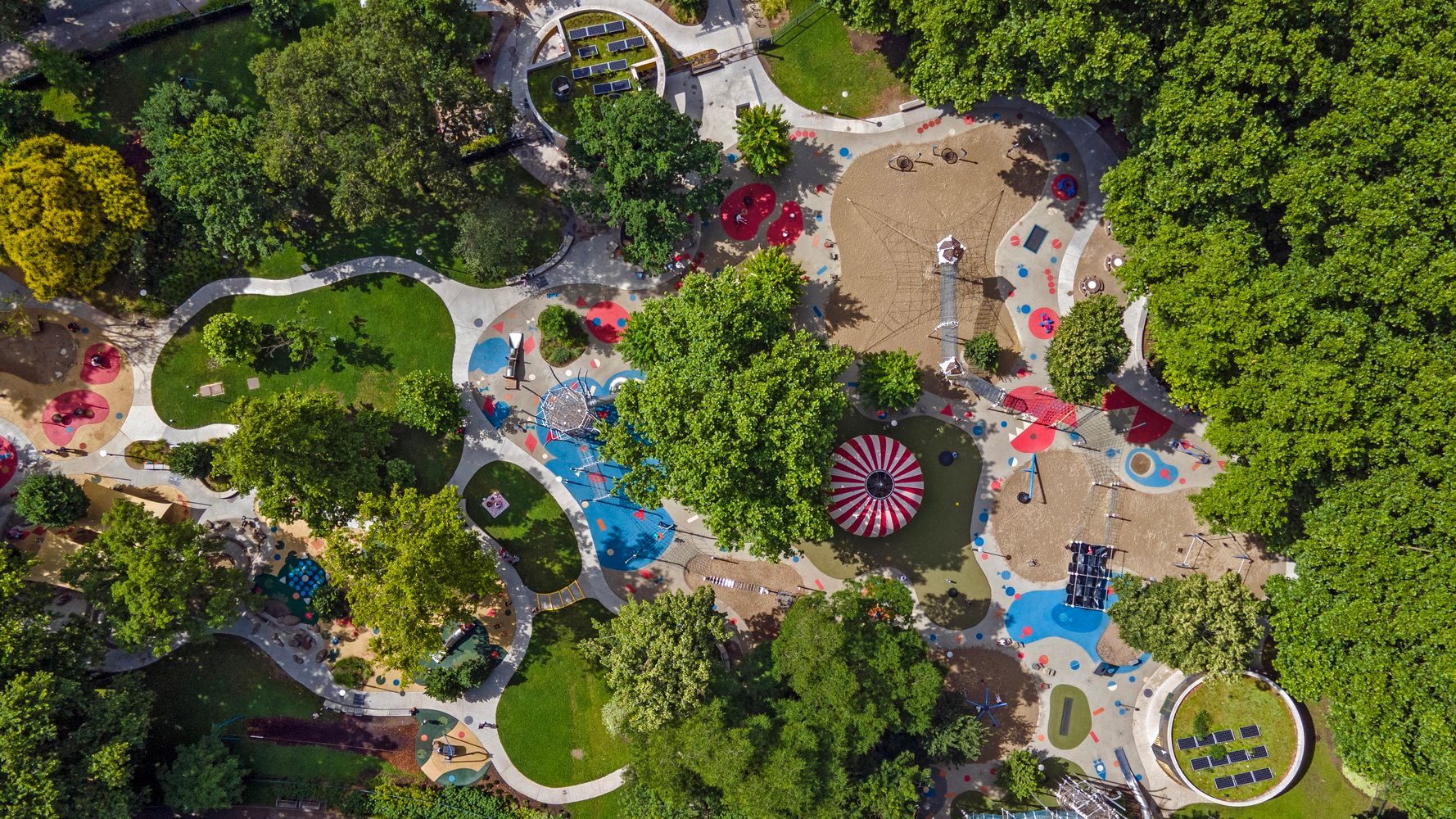
How did the representative promenade turn into a communal living room, and what does the way a city treats its green spaces reveal about it? Attila Glázer, author of Budapest 150 Parks, has been passionately researching and walking the capital’s public parks for years. In our interview, he talks about why the park is the most democratic urban space, how Millenáris rewrote Budapest’s “park life,” which locations condense the city’s state of mind—and why it’s time to finally banish the “Keep Off the Grass” signs.
How do you think the concept of the park has changed over the past 150 years—from a representative space to a communal living room?
I would go back as far as 1813, when the Beautification Committee of Pest announced a public competition to landscape Ökördűlő—today known as City Park (Városliget)—which was, incidentally, one of the world’s first public park design competitions. Green areas had been used spontaneously before that, but the idea of conscious communal use did not yet exist. So in Hungary, the term and meaning of the public park in today’s sense is roughly a century old. Representative spaces existed earlier, of course, but they were not “used” in the way we understand today. Conscious park use depends—unfortunately or fortunately—on how good people feel in their own skin. While for the aristocracy a castle park was clearly a space of recreation, other social classes simply worked and worked, then rested at home. Jumping forward in time, an interesting feature of the communist era was the creation of continuous green areas within housing estates, which in this respect are far more livable than most of today’s residential complexes. Anyone who was already aware back then may remember the bizarre sight of neighbor girls lying on the sunny side of ten-story blocks, covered in coconut-scented tanning oil. The revival—or if you prefer, the new era—of Budapest’s “park life” began with the creation of Millenáris Park in 2002. From that point on, most districts consciously began to think of parks as one of the pillars of well-being. At the same time, people gradually got used to the idea that you don’t only “go out” into nature on May 1st, and that park life exists beyond City Park—even on a tiny patch of grass. In my opinion, the biggest shift happened when ordinary people started traveling more. In many countries it’s completely natural that parks function as outdoor cafés, date spots, snack islands, and sporting paradises all at once—even in colder weather. Consciously or not, we picked up these good habits from there.
What does the way a city treats its green spaces reveal about it?
To me, it reveals everything—but I don’t want to be that subjective. If I look at it objectively and examine the social impact, it shows how important citizens’ well-being is to the city leadership. Those who have recognized it know that the park is the most democratic place. With few exceptions, parks are free to visit, accessible to everyone. There is no mandatory consumption, yet there is space and opportunity for encounters, for quiet contemplation, or for loud laughter. From an ecological point of view—perhaps it goes without saying—it’s like someone paying attention to their lungs and putting down the cigarette. I would leave aesthetics out of it for now. That’s truly a matter of taste.
Is there a park that, for you, condenses Budapest’s “state of mind”?
If I may, I wouldn’t mention just one example but several characteristics—both negative and positive. That’s what makes the picture complete. Kossuth Square is, in my view, the most striking example of the misinterpretation of a park. Perhaps a hundred years ago this is how they imagined the country’s main square, but today it feels as if you were standing at the entrance of a ballroom dance school reading, in huge red letters: DO NOT TOUCH EACH OTHER. In such an intensely maintained park, I would like to see people sitting, chatting, feeling free. That would make me feel that the surroundings of one of the world’s most magnificent buildings are welcoming, not disciplinary. I would banish the “KEEP OFF THE GRASS” sign from everywhere. If there is cultivated park use, and sufficient resources, demand, and expertise for maintenance, parks will remain beautiful. City Park (Városliget) is already an iconic place full of mixed emotions. While one half has been wonderfully renewed and plans are ready for the other half—where “everything a park user could dream of” will exist—we must not forget that the money spent on the new buildings constructed in the park could practically have renovated the entire capital’s green network.
Budapest has always been the country’s trendsetter, and there are examples that not only follow global trends but set them. Two parks immediately come to mind that represent the state of mind of the future. One is Thurzó Park in Újlipótváros. The municipality bought back a huge concrete lot, broke it up, commissioned a park design, and created perhaps the trendiest inner-city park in Budapest. If only this happened to all the vacant lots currently used as parking areas. The other is Pünkösdfürdő Park in Óbuda. What used to be a simple dike covered with mowed grass that burned yellow by summer is now an exemplary public park filled with biodiverse plantings—complete with all the functions one expects from such a place today.
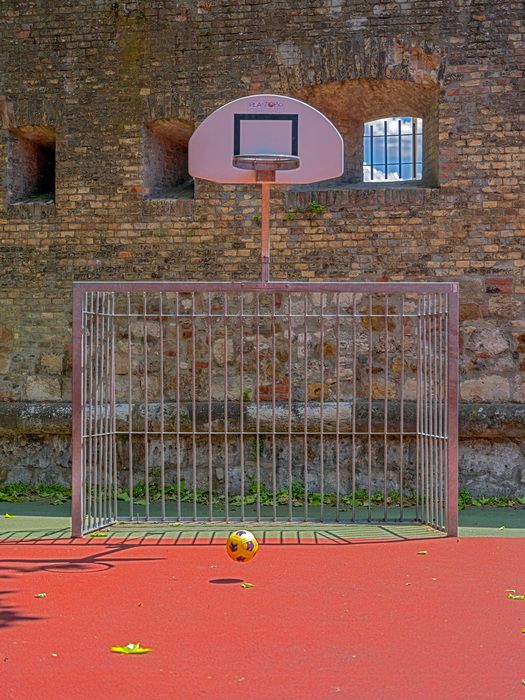
How did the list of 150 come together? Was it based on objective criteria or more of a personal map?
I’m a Libra—so it was both. Objective criteria included recognition, historical importance, quality, uniqueness, and the park’s current condition. But two important subjective aspects also influenced what ultimately made it into the book. One was balance. Three districts alone could have filled an entire book, but I wanted to show beautiful examples from every district. So many parks from Újbuda, District XIII, or even Csepel were left out. The other aspect was showcasing special places. That’s how hidden gems like the Koller Gallery Garden in the Buda Castle or the visitable private garden called Zöld Pagony made it into the book.
What was the most surprising discovery during your research?
The research itself wasn’t easy, because most online articles mention the same well-known places in a hundred different ways, usually tied to some current event. But two months of preparation were enough to extract all the information from the districts, including the smallest novelties. What surprised me most was that, with a few exceptions, there were hardly any “park-focused” articles. During my site visits, the biggest surprise was the demolition of my own prejudices—which I actually love. Tearing down old ideas and making room for new ones. Újpest and the “Nyócker” (District VIII) leapfrogged many districts in terms of maintaining and creating green spaces.
In the era of climate crisis and urban heat islands, how is the concept of the park being re-evaluated?
I don’t want to be naively idealistic. I know perfectly well that the overwhelming majority of urban residents consider the fight against global warming settled by pressing the ON button on their air conditioner—either not realizing, or fully aware, that while it cools the apartment, it heats the environment. And yet the obvious solution would be: head to the park! I won’t deny that we would need ten times as many benches, tables, public toilets, and drinking fountains for parks to truly become an alternative on a summer day—even as a workplace. But it’s no joke: the “park office” works. I go up to Gellért Hill even during heatwaves.
Which park rehabilitations of recent years do you consider truly successful—and why?
I’ve already mentioned a few lovable examples, but let me add one more particularly successful inner-city project. The dog-urine-smelling, disappointing state of Klauzál Square is a thing of the past. A true urban living room has taken its place. The park was rebuilt down to the last blade of grass—and it turned out so well that I’m almost afraid for it because of that. Regarding park renewals in general, there’s something many people might not realize: a park is alive, it is used, and it deteriorates quickly if not in good hands. Every year, 10% of its original investment cost should be spent on maintenance to keep it in its inauguration condition. In an overused inner-city park like Klauzál Square, even more is needed to prevent it from simply wearing down because so many people love and use it.
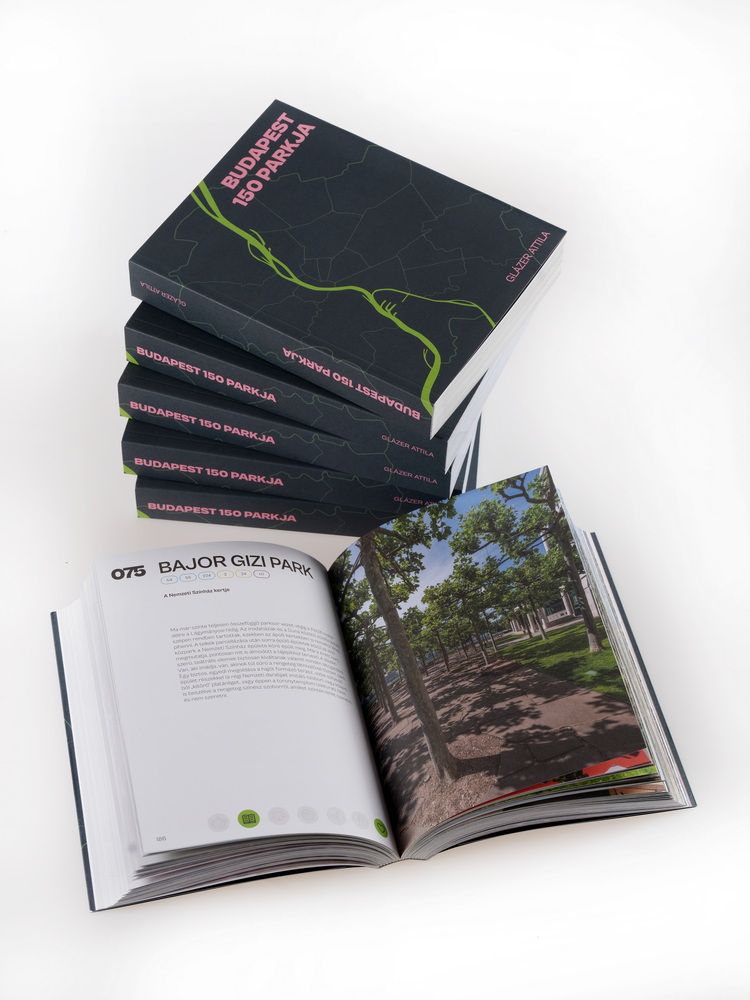
My book, Budapest 150 Parks, is partly about answering this very question. That’s why I wouldn’t single out more examples—because in the book I tell a bit about the greatness of each location, and with the help of icons I show what I think each place is best suited for: sports, relaxation, playgrounds, or closeness to nature. I structured the pages precisely so that people wouldn’t all rush to the same ten well-known, already overcrowded places, but instead discover the wonders closest to where they live. And if someone visits Budapest, let their destination be something other than City Park or Margaret Island.
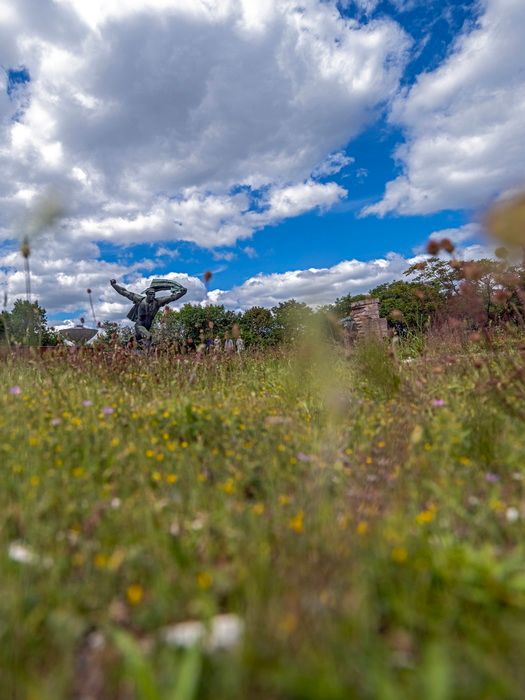
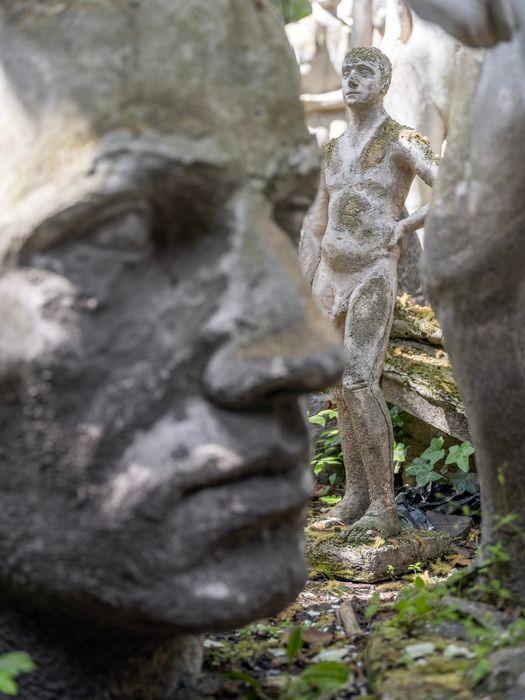
Photos: Glázer Attila