


What started as a response to gaps in university education has grown into a practice-oriented school offering up-to-date training across six creative and digital fields. LUMEN’s story reflects how technological acceleration, AI, and labor market demands are reshaping both the form and content of education.
How did the school start, and what were the first courses like?
We launched in 2014 under the name LUMEN Courses, but the story actually began a few years earlier. While still at university, we started organizing visualization courses mainly for fellow landscape architecture and architecture students. At the time, there was a growing demand for visualization skills, yet universities didn’t teach them—although they were very much expected. We recognized this gap and launched our first groups, in what we can fairly call a pioneering way. The feedback was extremely positive: students recommended the courses to one another, and based on their insights we continuously refined the curriculum. Encouraged by this early success, we gradually introduced courses in new subject areas. Since 2018, we have been offering training in six fields: visualization, technical design, graphic design, web development, film post-production, and online marketing. What we see is that trends in creative professions change extremely fast. Every year new software appears, or the focus shifts from one tool to another, and in recent years AI has brought about massive changes. Traditional education can only slowly respond to this pace, and alongside full-time work there is little time left for experimentation and learning. As a result, self-directed education has become essential for maintaining professional competitiveness.
How have students’ needs changed over the years?
Demand for market-based training like ours is fundamentally shaped by labor market needs and trends. When the profession or the world of work changes, training needs follow almost immediately. The changes move in several directions, but flexibility and specialization are probably the most decisive factors. Over the past decade, specialization has intensified within traditionally broad professions, while entirely new fields—especially in the digital domain—have emerged. Visualization, for example, has evolved from a complementary skill within design professions into an independent profession in its own right (although AI is now challenging this field as well). The fragmentation of online marketing is another good example, driven by the constant evolution of platforms and algorithms. The balance has clearly shifted from complex, static knowledge toward more specific, deeper, continuously updated expertise. In our courses, we also see that many people are interested only in certain subfields, or assume that completing a single course automatically means acquiring a full profession. Some schools take advantage of this by offering extremely narrow specializations.
We designed our curricula differently: our goal is to provide solid foundations that allow students—through creativity and practice—to continue developing independently and remain competitive in the job market. Short courses lasting a few weeks can be taken on their own if someone is interested in a specific topic, but the programs are also structured to build on one another, making it possible to gain comprehensive knowledge within a few months. Beyond fast-changing professional demands, Covid also had a major impact. Previously, we only offered in-person courses, and we had to switch to online education literally overnight. For many people, this format proved more convenient and easier to integrate into everyday life, so today most of our courses are delivered online.
What are the advantages of online versus in-person courses? Is there any difference in the knowledge or amount of practice?
It’s important to note that our online courses are also held live. We strongly believe that one of the greatest added values of learning is the continuous, direct presence of an instructor and the active relationship between teacher and students. Pre-recorded video materials offer greater flexibility, but they are more rigid in content and provide limited—or no—personal interaction. Live courses—whether online or in-person—allow us to adapt the curriculum to participants’ needs and to learn collectively from questions that arise during the sessions. The obvious advantage of live online courses is that there’s no travel time, and participants can join from the comfort of their home or office. In a broader sense, this also means that people living in rural areas or even abroad can attend our courses. In the past, we organized courses in cities like Győr, Pécs, and Debrecen, but the shift to online education opened up a borderless market. During the Covid years, demand for courses increased dramatically. There is no difference in the knowledge delivered between online and offline formats, and we place strong emphasis on continuous interaction and questions in both cases. Our courses are highly practice-oriented. Their backbone consists of exercises completed together during class, complemented by independent practice between sessions, which is then reviewed with the instructor. That said, online classes are—unfortunately—less personal by nature. In-person courses allow for more spontaneous connections among participants, often resulting in cohesive groups and a great atmosphere. Before Covid, it wasn’t uncommon for groups to go out together to a café or restaurant after class. As online formats become increasingly dominant across all areas of life, people’s attachment to specific services tends to loosen. In learning, this means that online courses are easier to abandon or cancel, as the group’s holding force is less tangible. This is a clear disadvantage compared to in-person formats and a challenge for educational institutions.
What options are available for those with very inflexible schedules or special learning needs? Is there individual study available?
Yes. For them, we recommend private tuition, which offers personalized scheduling, pacing, and learning materials. Through private study, participants can learn not only topics from our standard courses but also many other programs, at any time of the year, online, and from anywhere.
Top 5 Courses for 2026
As in previous years, we will launch group courses three times in 2026: starting in February, May, and October.
1. Online Marketing:
Online marketing evolves almost daily, so professionals in this field must constantly keep up with trends. Our online marketing course provides up-to-date knowledge through a teaching team made up of specialists experienced in specific platforms.
2. Video Editing and Post-Production:
Thanks in part to social media, video creation has become hugely popular. While many free online tools exist, standing out with professional-quality videos requires more advanced software such as After Effects, Premiere Pro, or DaVinci Resolve. Our e-learning video editing course has become especially popular.
3. Graphic Design and UX/UI:
For those who want to pursue graphic design seriously, mastering Photoshop, Illustrator, and InDesign is essential. These tools offer far greater creative freedom than online alternatives. At the same time, UX/UI design and Figma have become independent specializations, which we address with a highly practice-oriented course led by an experienced professional.
4. Visualization and AI Tools:
Visualization remains a flagship topic, with artificial intelligence playing an increasingly important role. Our courses cover different levels and applications of visualization, and we also dedicate special attention to the latest AI-based visualization tools.
5. ArchiCAD:
Our ArchiCAD course consistently receives excellent feedback. While many people know the software, few use it truly efficiently. Our curriculum is well-structured, highly practical, and continuously updated to reflect the program’s expanding features—making it equally valuable for beginners and advanced users.
The application deadline for courses starting in February 2026 is January 25, 2026. Up-to-date information on courses and registration is available on the website.
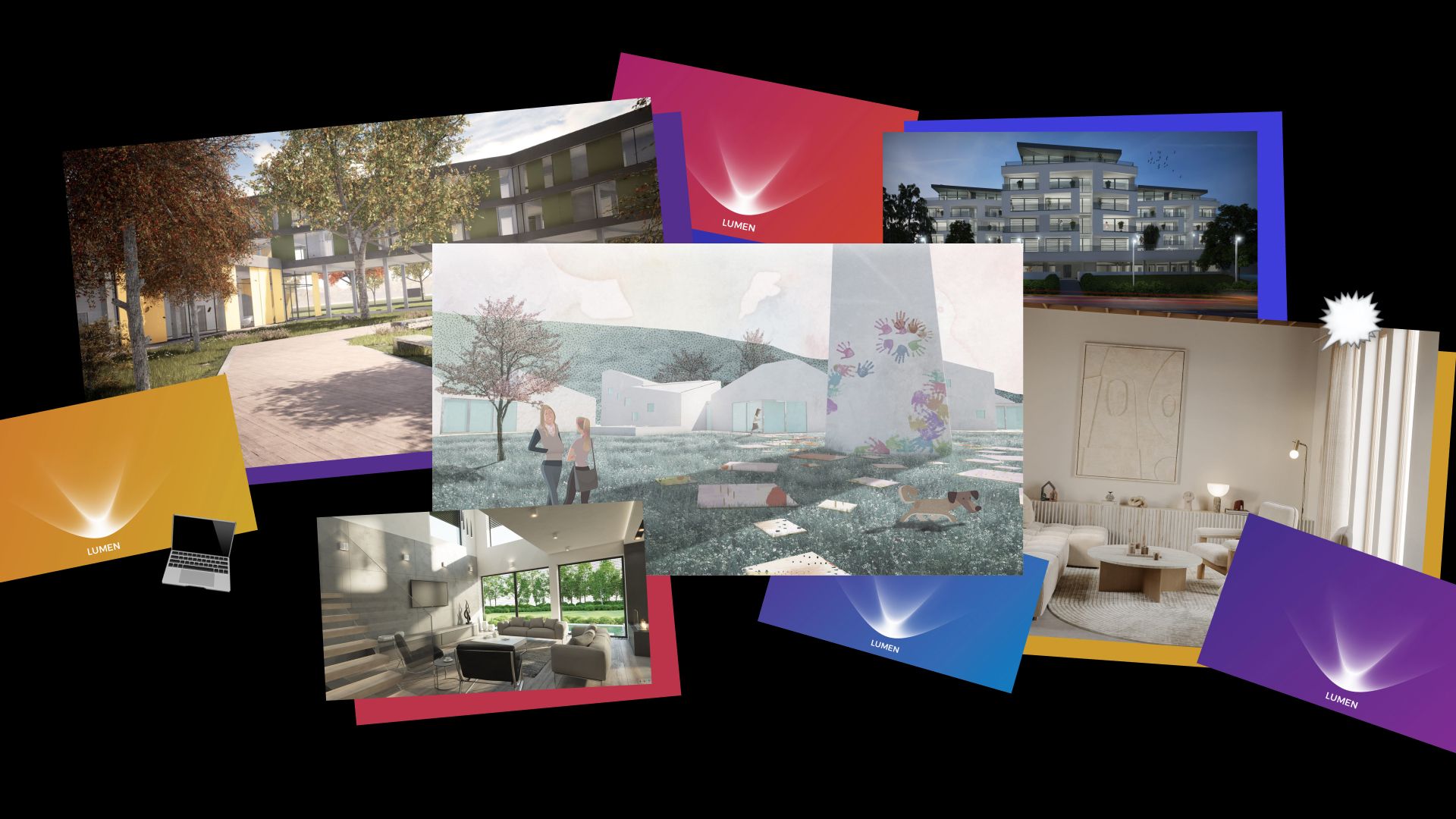
Creators of the cover image: Keresztesi Andrea Diána, Keczán László, Süttő Réka, Mészáros Orsolya, Tápler-Kapinya Tünde